
In the 2026 NSW market, a legal partner who simply drafts documents is a liability to your development’s margins. You’re likely already feeling the pressure of construction sector volatility and the tightening grip of the latest strata reforms. It’s a common frustration: regulatory delays and hidden joint venture costs can erode your project’s feasibility before the first sod is turned. We believe that Expert Strategy + Compliance Awareness = Protected Margins. In this climate, precision is your most valuable asset.
This guide provides a clear framework to compare the leading legal teams in the state, ensuring you find a commercial property lawyer sydney who acts as a strategic shield for your capital. You’ll gain the confidence to navigate the 2026 NSW Strata reforms and the new Modern Methods of Construction (MMC) approvals system without missing a beat. We’ll examine how to vet for fee transparency and identify a partner who anticipates insolvency risks before they become your problem. From the Sydney CBD to regional growth corridors, we’re outlining the pathway to a compliant, high-yield development project.
Key Takeaways
- Master the Property Development Formula where proactive legal strategy and risk mitigation combine to ensure long-term project viability.
- Access a practical framework to evaluate fee structures and choose a commercial property lawyer sydney who acts as a strategic advisor rather than a mere document drafter.
- Navigate the complexities of the 2026 NSW Strata reforms and the updated EP&A Act with confidence to avoid costly regulatory delays.
- Learn to protect your margins against construction sector volatility by implementing robust security of payment protocols and managed building contracts.
- Understand the specific legal nuances required for waterfront developments, where marine and property law must work in tandem to secure your investment.
Beyond Conveyancing: Why Specialist Property Development Lawyers are Vital in NSW
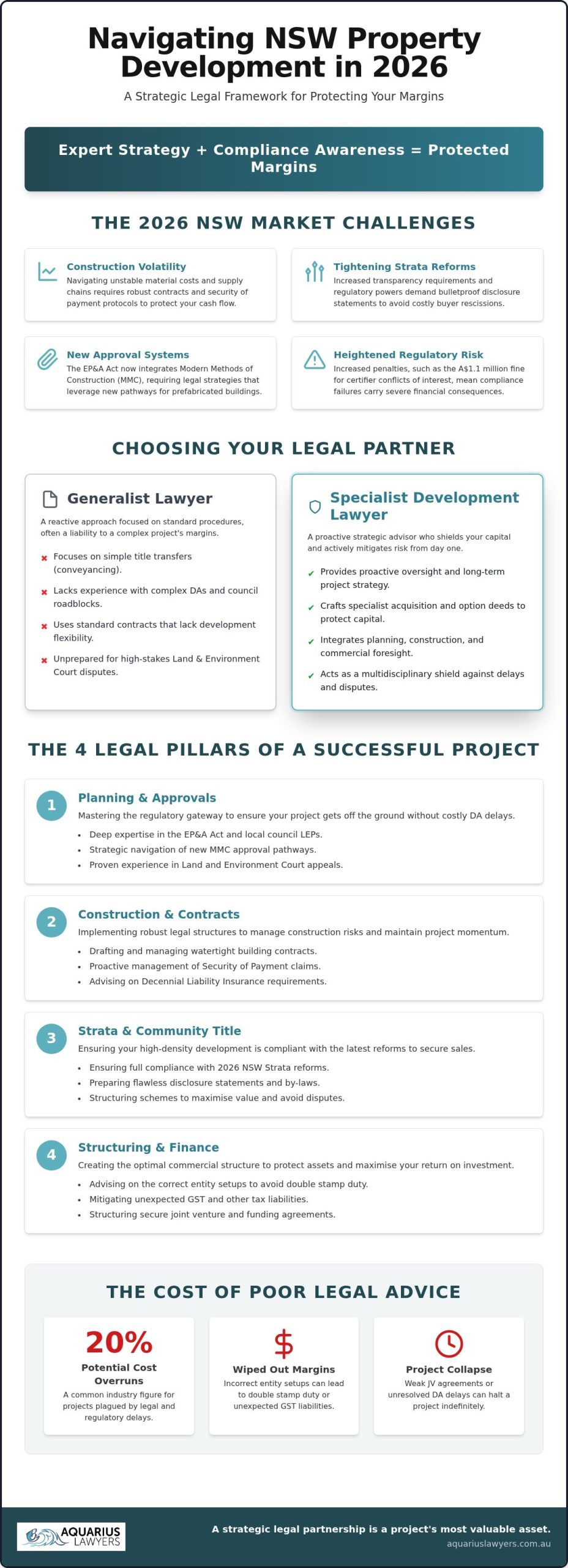
Successful property development is rarely a matter of luck. It’s the result of a precise equation: Legal Strategy + Risk Mitigation = Project Viability. While a residential conveyancer focuses on the simple transfer of title, a commercial property lawyer sydney developers trust looks far beyond the settlement date. They view the site through the lens of its future potential and the regulatory hurdles standing in the way of your first sale. This proactive oversight is what establishes a reliable pathway to profit in a volatile market.
Generalist practitioners often struggle with the intricacies of complex Development Applications (DAs). They might understand foundational Australian property law principles, but they often lack the tactical experience needed when a council creates roadblocks. In 2026, the stakes are higher. With the NSW Government’s recent A$32.3 million investment into building reforms, the legal landscape has shifted. Certifiers now face penalties up to A$1.1 million for conflict of interest breaches. You need a partner who understands these heightened risks and can navigate the new Modern Methods of Construction (MMC) pathways that formally recognise prefabricated buildings.
Development Law vs. General Property Law
Standard contracts are designed for certainty, but development requires flexibility. This is why specialist acquisitions and option deeds are essential. These documents allow you to secure a site while you perform due diligence or seek planning approval without committing your full capital upfront. If a dispute arises, you’ll likely find yourself in the Land and Environment Court. A generalist won’t have the specific litigation experience required to manage these high-stakes planning appeals. Property development law serves as a multidisciplinary shield that integrates planning, construction, and commercial foresight to neutralise project delays before they manifest.
The Cost of Legal Mistakes in the NSW Market
Poor legal structuring is a silent profit killer. We’ve seen projects where incorrect entity setups led to double stamp duty or unexpected GST liabilities that wiped out the entire margin. Industry data suggests a 20% cost overrun rule often applies to projects plagued by legal delays. Every week your DA sits in limbo is a week of interest payments and holding costs. We often reference cases where a failure to secure clear conditions precedent in a joint venture led to total project collapse when a partner couldn’t meet their funding obligations. Engaging a commercial property lawyer sydney ensures these hidden costs are identified and mitigated during the contract negotiation phase, not during construction. For developers seeking to manage these financial risks, Samios Partners offers expert advisory services to ensure tax compliance and cash flow stability throughout the project lifecycle.
To build a resilient project, you need a foundation supported by four distinct legal pillars. These aren’t just administrative checkboxes; they’re active strategic zones where a seasoned commercial property lawyer sydney balances government mandates with private profitability. In 2026, the synergy between these pillars has become more critical as the NSW Government streamlines approvals while simultaneously increasing penalties for non-compliance. Ignoring the interplay between planning, construction, strata, and structuring is a fast way to invite project failure.
The Environmental Planning and Assessment (EP&A) Act remains the central nervous system of NSW development. Recent reforms now formally recognise “prefabricated buildings,” integrating them into the approvals system to support Modern Methods of Construction (MMC). This shift means your legal strategy must adapt to faster modification pathways and simplified completion approvals. Simultaneously, construction law has evolved to manage the friction between speed and safety. Managing building contracts now requires a deep understanding of Security of Payment claims and the clarified framework for Decennial Liability Insurance to prevent cash flow blockages or long-term litigation. In tandem with legal safeguards, operational safety remains a priority; for instance, Acquired Awareness Traffic Management offers the specialised logistical support necessary to maintain site compliance and safety in complex development environments.
Strata and community title schemes are also facing a new reality. The 2026 NSW Strata reforms have introduced tighter transparency requirements and modernised the legislative framework to strengthen regulatory powers. If you’re developing high-density schemes, your disclosure statements must be bulletproof to avoid the risk of buyer rescission. Finally, commercial structuring serves as the final safeguard. Choosing between a unit trust, a joint venture, or a Special Purpose Vehicle (SPV) fundamentally changes your tax profile and liability exposure.
Getting a DA through a Sydney or regional council often feels like a negotiation rather than a process. Success requires more than just technical accuracy; it requires a proactive strategy for Voluntary Planning Agreements (VPAs). These agreements can make or break project feasibility by trading public benefits for development uplift. We align these negotiations with the Property and Development NSW Act 2006 to ensure all government land interactions are handled with precision. Handling community objections early through formal legal consultation prevents local opposition from stalling your progress for months.
Structuring for Risk and Tax Efficiency
Innovative developers are moving away from simple joint ventures toward more sophisticated SPV structures. An SPV keeps the project’s liabilities isolated from your main holdings, providing a clear boundary of risk. When you combine this with an Option Deed for site acquisition, you gain maximum control over the land with minimum upfront capital risk. Under the Conveyancing Act, off-the-plan disclosure requirements have become even more stringent. Failing to disclose minor variations can now give buyers a legal exit they didn’t have before. Our approach at Aquarius Lawyers focuses on creating robust disclosure packs that stand up to the highest levels of scrutiny. By integrating traditional experience with contemporary commercial pragmatism, we ensure your structure is as solid as the building itself.
Comparing the Top NSW Firms: Fee Structures and Specialisations
Selecting a legal partner requires looking past the glossy brochures to the underlying math of your project. We use a specific formula: Seniority + Specialisation = Efficiency. While a junior solicitor might offer a lower hourly rate, their lack of niche experience often results in more billable hours spent “researching” standard development hurdles. A seasoned commercial property lawyer sydney developers trust will identify risks in minutes that others might take hours to spot. This efficiency doesn’t just save on fees; it protects your timeline from the compounding costs of delay.
Modern firms are also distinguished by their level of technology integration. In 2026, manual processes are a red flag for inefficiency. Top-tier specialists utilise PEXA for seamless digital settlements and secure portals for real-time document access. Some are even adopting AI-driven contract review tools to flag anomalies in standard building contracts at high speed. This tech-forward approach ensures that your legal team moves as fast as the market, providing a competitive edge when bidding on tightly contested sites.
Decoding Legal Fee Models for Developers
Hourly rates remain common, but they can be a trap for the unwary. A junior rate of A$300 per hour can quickly exceed a partner’s A$800 rate if the task takes three times as long. For predictable phases like end-product settlements or standard acquisitions, fixed-fee arrangements are the gold standard. They provide absolute budget certainty and align the lawyer’s incentives with your project’s speed. For ongoing oversight, many developers now prefer retainer-based support. This ensures your legal strategist is available for quick consultations without the friction of a new cost disclosure for every phone call.
Assessing Firm Specialisations
The choice between a Tier 1 CBD firm and a boutique specialist often comes down to the project’s specific needs. Large firms offer massive resources, but boutique firms often provide more direct access to senior partners. Geography also plays a vital role. A firm with local knowledge in regional councils, such as Shellharbour, understands the specific nuances of local planning panels that a Sydney-centric firm might miss. This local insight is critical when navigating the Property and Development NSW Act 2006 and managing interactions with state-owned land. Before signing, evaluate their track record in the Land and Environment Court. A firm that knows how to win a planning appeal is a firm that knows how to draft a DA that avoids one in the first place.
How to Evaluate a Development Lawyer: A NSW Developer’s Checklist
Choosing a commercial property lawyer sydney requires a rigorous vetting process that goes beyond a simple Google search. You’re looking for a partner who can anticipate the friction points in the 2026 regulatory landscape before they stall your project. Use this checklist to ensure your legal team has the intellectual versatility to move between planning, construction, and commercial strategy without losing momentum. A mistake in the vetting phase is a mistake that multiplies across your entire project timeline.
- Verify specialist credentials: Look for a track record that specifically includes the Land and Environment Court and complex joint venture structuring.
- Assess 2026 regulatory knowledge: Ask how the August 2026 building reforms and the new Modern Methods of Construction (MMC) pathways will impact your specific site approvals.
- Review risk-allocation strategy: Ensure they have a clear method for managing construction sector insolvency risks within your building contracts.
- Confirm digital capabilities: PEXA accreditation is a baseline requirement; they should also offer secure digital portals for real-time document management.
The Due Diligence Phase
During your initial consultation, move past the pleasantries and ask direct questions. Inquire about their specific experience with the Local Government Area (LGA) where your site is located. A firm that understands the unique nuances of a specific regional council often has a more efficient pathway to approval. You must also check for potential conflicts of interest; a firm that represents the council you’re pitching to cannot provide the aggressive advocacy you need. Verifying that your legal partner carries sufficient professional indemnity insurance is a non-negotiable safeguard for protecting your capital in large-scale projects. This step ensures that your risk is managed from the very first meeting.
Evaluating Communication and Technology
The “innovative veteran” approach values results over ceremony. You need to know if you’ll be speaking to a Senior Partner or a junior clerk when a crisis hits your site at 4:00 PM on a Friday. Transparency in cost disclosure is equally vital. Your lawyer should provide a clear fee roadmap that aligns with your project milestones, rather than sending unexpected invoices. Modern firms use project management tools to track every document and deadline, ensuring nothing falls through the cracks. If you need a legal partner who combines this tech-savvy efficiency with decades of ground-level experience, contact Aquarius Lawyers to discuss how we can secure your next NSW development.
Strategic Legal Partnerships: The Aquarius Lawyers Advantage in Coastal and Commercial Projects
The intersection of land and water creates unique legal challenges that many firms overlook. In New South Wales, a waterfront development isn’t just a property project; it’s a marine project. Finding a commercial property lawyer sydney who understands the synergy between land and water is critical for long-term viability. We combine traditional property law expertise with a specialised understanding of maritime regulations. Our Principal, Katherine Hawes, known as “The Fish Lawyer,” provides the niche authority required to navigate these complex coastal environments. Whether you’re operating from the Sydney CBD or managing a regional site in Shellharbour, you need a partner who understands the local council nuances and the state-level maritime requirements.
We adopt a no-nonsense approach to commercial property transactions. This means we value results over ceremony. If a contractor fails to deliver or a joint venture partner defaults, our debt recovery and litigation teams move quickly to protect your interests. We believe that Proactive Strategy + Decisive Action = Project Security. By bridging the gap between high-level Sydney expertise and regional accessibility, we ensure your project remains on track regardless of its location. Our firm is built on the philosophy that a legal partner should be a facilitator of outcomes, not a source of detours. We use modern methodology to provide clarity in even the most stressful development scenarios.
Waterfront and Marine Development Specialists
Navigating the legalities of aquaculture and marine pollution is essential for any coastal build. A single environmental breach can lead to massive fines and permanent project shutdowns. Katherine Hawes’ niche expertise ensures that you’re compliant with the latest maritime regulations from day one. You can secure your development’s future with Aquarius Lawyers, knowing that we anticipate the unique environmental risks that generalist firms often miss. We treat your waterfront project as a holistic entity where the land meets the sea. This specialised oversight is vital for projects involving jetties, marinas, or coastal rezoning where traditional property law is only half the story.
A Full-Service Approach to Property Success
Success in property development requires a long-term view that encompasses your entire business structure. This includes integrating Wills and Estates into your broader development business plan to ensure your assets and project legacies are protected for the next generation. For mixed-use developments, we handle complex commercial lease negotiations that secure your long-term yield and tenant stability. A commercial property lawyer sydney developers rely on must be a strategic advisor who understands the commercial pragmatism of the 2026 market. Your final protection step is simple; you must organise a strategy session with a specialist to review your project’s legal health before the risk becomes a reality.
Securing Your Project’s Future in a Shifting Market
The 2026 NSW property market doesn’t reward hesitation. Success now relies on a specific formula: Expert Strategy + Local Insight = Project Viability. As we’ve explored, the difference between a high-yield development and a regulatory nightmare often comes down to the quality of your legal foresight. You now have a practical framework to evaluate fee models and a checklist to vet for genuine specialist credentials. Whether you’re navigating the latest strata reforms or managing the unique environmental risks of a coastal build, your legal partner must act as a proactive strategist who protects your margins at every turn.
Securing a commercial property lawyer sydney who understands both the CBD’s commercial pulse and regional council nuances is your strongest competitive advantage. Principal Katherine Hawes brings recognised expertise in both Marine and Property Law to the table, ensuring your waterfront or commercial project is built on a foundation of certainty. With fixed-fee options for transparent budgeting and offices in both Sydney and Shellharbour, we provide the no-nonsense guidance you need to succeed. Book a strategic consultation with Aquarius Lawyers today to ensure your next project is as resilient as it is profitable. We’re ready to help you turn your vision into a compliant, high-performing reality.
Frequently Asked Questions
What is the difference between a conveyancer and a property development lawyer in NSW?
A conveyancer typically handles the administrative transfer of title for existing residential properties. A property development lawyer manages the entire lifecycle of a project, from site acquisition and joint venture structuring to planning appeals and construction contracts. While a conveyancer focuses on the transaction, a commercial property lawyer sydney developers trust focuses on risk mitigation and project viability. They ensure your legal structure protects your capital against construction sector insolvency and planning delays.
How do the 2026 NSW Strata reforms affect new developments?
The 2026 NSW Strata reforms introduce significantly tighter transparency requirements and modernise the legislative framework to strengthen regulatory powers. Developers must now provide more comprehensive disclosure statements to avoid the risk of buyers rescinding contracts. These reforms also clarify the framework for Decennial Liability Insurance. Failing to adapt your off-the-plan contracts to these 2026 standards can lead to catastrophic delays and legal challenges during the settlement phase of your scheme.
What are the common legal mistakes property developers make in NSW?
One of the most frequent errors is poor entity structuring, which often leads to double stamp duty or unexpected GST liabilities. Developers also frequently fail to secure robust conditions precedent in joint venture agreements, leaving them vulnerable if a partner defaults. In coastal areas, ignoring the intersection of marine and property law is a major risk. A specialised commercial property lawyer sydney avoids these traps by building a multidisciplinary shield around your project margins.
How much should I budget for legal fees in a medium-sized NSW development?
Budgeting for legal fees depends on whether you choose hourly rates or fixed-fee arrangements. While industry rates vary by experience level, the total cost is often lower with a senior specialist who works more efficiently. For a medium-sized development, you should account for site acquisition, planning support, and end-product settlements. We recommend requesting a clear fee roadmap that aligns with your project milestones to ensure budget certainty throughout the development lifecycle.
Do I need a different lawyer for planning appeals in the Land and Environment Court?
You don’t necessarily need a separate firm if your chosen lawyer has litigation and mediation expertise. Many developers prefer a partner who handles both the initial contract drafting and any subsequent planning appeals in the Land and Environment Court. This continuity ensures that the legal strategist who understands your project’s history is the same person advocating for your DA. It reduces the time and cost associated with briefing an entirely new legal team.
Can Aquarius Lawyers help with regional NSW developments outside of Sydney?
Yes, Aquarius Lawyers provides direct support for projects across regional NSW and the Sydney metropolitan area. With offices in both Sydney and Shellharbour, we bridge the gap between high-level CBD expertise and local regional accessibility. This dual presence is particularly beneficial for coastal and waterfront developments where local planning nuances and marine law often collide. We ensure that developers have a trusted advisor who understands both the city’s commercial pulse and regional council requirements.
What is an Option Deed and why do developers use them?
An Option Deed is a legal agreement that gives a developer the right, but not the obligation, to purchase a site at a future date for a set price. Developers use these to secure land while they perform due diligence, arrange finance, or seek a Development Application (DA). It’s a pragmatic way to control a site with minimal upfront capital. This structure protects your margins by ensuring you only commit to the full purchase once the project’s feasibility is confirmed.
How does PEXA accreditation benefit property developers?
PEXA accreditation ensures that your property settlements occur in a secure, digital environment rather than through manual, paper-based processes. For developers, this means faster access to funds upon settlement and a significant reduction in administrative errors. It provides real-time tracking of the settlement process, which is vital when managing multiple off-the-plan sales simultaneously. Digital settlement capability is a baseline requirement for any modern firm acting as a strategic partner in the 2026 NSW market.
Disclaimer
Please note that legal rules change and this is not a substitute nor construed as legal advice. It is general information only.