
Your commercial fishing vessel is more than just a hull and an engine; it’s a complex business asset where the paperwork often holds more value than the physical boat. If the licences or quotas aren’t correctly secured, your investment is essentially dead in the water before you even leave the harbour. Most skippers and fleet owners understand the physical risks of the sea, but the regulatory risks on land are often where the real damage occurs. Engaging a fishing vessel purchase lawyer is the practical way to ensure your capital is protected and your entitlements are ironclad.
We agree that you shouldn’t have to worry about hidden debts or losing your quota because of a technicality in the contract wording. This article provides a clear pathway to securing a clean title and ensuring a seamless transfer of fishing entitlements under AFMA or NSW DPI requirements. We will examine the critical legal checks needed to identify encumbrances, verify compliance, and turn a complex acquisition into a straightforward business win.
Key Takeaways
- Understand why a commercial vessel acquisition is a business transaction where the licences and quotas often hold more value than the physical hull.
- Learn how to perform essential due diligence, including PPSR and Australian Shipping Register searches, to identify hidden debts and verify clear ownership.
- Discover how a specialist fishing vessel purchase lawyer protects your capital by navigating the specific complexities of AFMA and NSW DPI regulatory compliance.
- Master the mechanisms for securing Statutory Fishing Rights (SFRs) and transferring quota units to ensure your right to fish is legally protected at settlement.
- Identify the critical warranties and equipment schedules required in a robust contract of sale to safeguard your investment against regulatory issues or missing gear.
Why Buying a Commercial Fishing Vessel Requires Specialist Legal Counsel
Buying a weekend cruiser is a lifestyle choice. Buying a commercial fishing boat is a high-stakes business acquisition. The difference lies in the regulatory weight and the financial complexity attached to the vessel. When you engage a fishing vessel purchase lawyer, you aren’t just paying for a contract; you’re paying for the security of your future income. In this industry, the physical asset is often the least complex part of the deal.
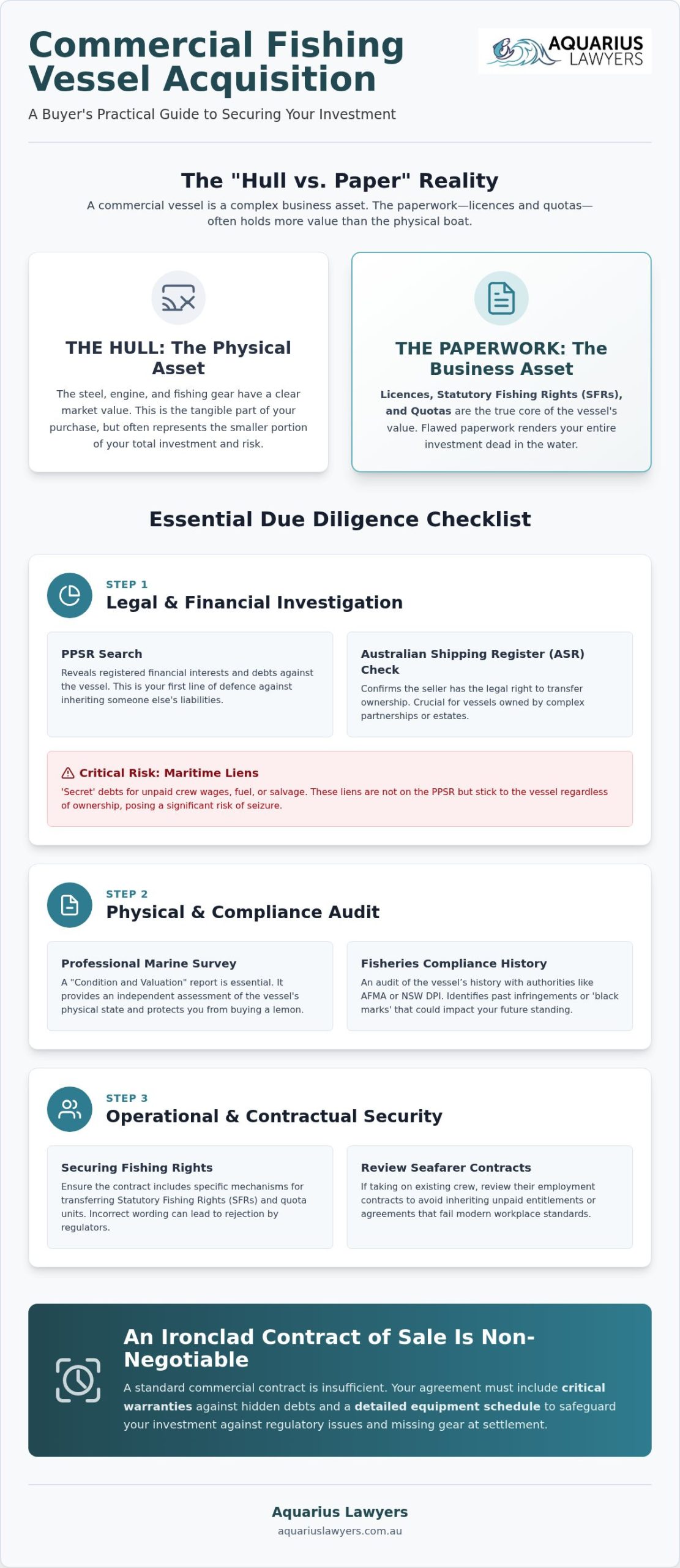
We call this the “Hull vs. Paper” reality. The steel, engines, and nets have a clear market value, but the “paper” (the licences, Statutory Fishing Rights (SFRs), and quotas) often constitutes the majority of the purchase price. If the paperwork is flawed, the vessel is essentially a floating liability. A specialist ensures that the value you’re paying for actually transfers to your name at settlement. Without this, you’re buying a very expensive ornament that isn’t allowed to work.
Financial risks in the maritime sector are also unique. Unlike a car or a house, a ship can carry “secret” debts known as maritime liens. These liens for unpaid wages, salvage, or fuel stick to the vessel regardless of who owns it. Without specific maritime due diligence, you could find your new investment arrested by authorities to pay off the previous owner’s debts. It is a harsh reality that requires a no-nonsense legal strategy to avoid.
The High Stakes of Maritime Transactions
The potential for financial loss is immense if quotas aren’t correctly transferred. Standard commercial contracts don’t account for the specific wording required by AFMA or state authorities. If the wording is off, the transfer might be rejected, leaving you with a boat but no right to fish. This non-compliance stops your operation immediately. Every day your vessel stays tied to the wharf post-purchase is a day of lost revenue and mounting overheads. A generalist solicitor simply won’t have the niche experience to anticipate these hurdles.
Navigating the Regulatory Maze
The Australian regulatory landscape is a patchwork of state and federal authorities. The Australian Maritime Safety Authority (AMSA) handles the vessel’s title and safety registration, while bodies like the NSW DPI manage the fishing entitlements. If your operations take you near the Australian Fishing Zone (AFZ) boundaries, you must also consider international law on ship registration. This ensures your vessel is correctly flagged and compliant with global jurisdictional requirements. Relying on a generalist to navigate these overlapping layers is a risk most commercial fishers simply cannot afford.
Essential Due Diligence: A Step-by-Step Checklist for Buyers
Skipping due diligence in a maritime context is like sailing into a storm without a compass. You aren’t just buying a boat; you’re inheriting its history. A fishing vessel purchase lawyer ensures that history doesn’t include unpaid bills or regulatory skeletons. Your checklist must begin with a Personal Property Securities Register (PPSR) search to identify registered debts. However, the PPSR doesn’t tell the whole story. You also need to verify the Australian Shipping Register (ASR) to confirm the seller actually has the legal right to transfer the title. If the vessel is owned by a family estate or a complex partnership, this step is non-negotiable.
Beyond the legal title, you need a professional marine survey. A “Condition and Valuation” report is your best defence against buying a lemon. This report should be paired with a deep audit of the vessel’s compliance history with fisheries authorities like AFMA or the NSW DPI. We look for past infringements or “black marks” that could affect your future licence standing. If you’re taking on the existing crew, you must also review seafarer employment contracts. You don’t want to be blindsided by unpaid entitlements or outdated agreements that don’t meet modern workplace standards.
Financial and Title Investigations
Maritime liens are the “ghosts” of the shipping industry. They don’t appear on the PPSR, yet they stay with the vessel. These can include unpaid salvage fees or crew wages from years ago. We also investigate the GST implications of the sale. In many commercial vessel transactions, the “going concern” exemption might apply, but getting this wrong can lead to a massive bill from the ATO. If you’re feeling overwhelmed by the paperwork, reaching out to the experts at Aquarius Lawyers is a smart first step to protect your cash flow.
Safety and Operational Compliance
You cannot operate without a valid Certificate of Survey and Certificate of Operation. We check for outstanding AMSA improvement notices or prohibitions that might require expensive refits before you can start fishing. When auditing the vessel’s safety gear, we often cross-reference against international benchmarks like the U.S. Coast Guard vessel safety standards to ensure the vessel’s equipment meets the highest safety requirements. Ensuring the vessel meets the current safety standards for its specific fishing class is the only way to guarantee you’ll be operational from day one.
Licences, Quotas, and Entitlements: Securing Your Right to Fish
Your ability to generate a return on investment depends entirely on the strength of your fishing entitlements. In the Australian industry, the “right to fish” is a tiered system of Commonwealth and State regulations. A fishing vessel purchase lawyer ensures that these invisible assets are as secure as the physical hull. We distinguish between Statutory Fishing Rights (SFRs) managed by AFMA and State-based licences governed by authorities like the NSW DPI. Getting this distinction wrong can mean the difference between a profitable season and a grounded fleet.
Transferring quota units and “effort” units requires precise timing. These aren’t just numbers on a page; they represent your legal harvest limits. We also validate the catch history attached to the vessel. In many fisheries, your future allocation is based on what has been caught in the past. If the seller’s records are inaccurate, your future business value drops. We also assess the risk of “latent” licences. These are permits that haven’t been active for some time. Governments often target these for buy-backs, so buying an inactive licence without a strategic plan is a gamble you don’t need to take.
Transferring Statutory Fishing Rights (SFRs)
The AFMA transfer process is notoriously rigid. It involves specific forms, strict timelines, and zero room for error. We ensure your contract of sale is contingent on the successful transfer of these rights. This protection means if the regulator rejects the transfer, you aren’t stuck with a vessel you can’t use. We also manage the transition of “temporary” vs “permanent” quota. This ensures you have immediate access to the current season’s allocation while the permanent title is being processed by the authorities.
NSW Specific Entitlements
In New South Wales, the process revolves around the Share Management Fisheries system. Every transaction must account for the Fisheries Business (FB) number. This number is the core identity of the commercial operation. It’s vital to ensure that every “share” required for your specific fishery is included in the deal. Missing even a small parcel of shares can prevent you from meeting the minimum requirements to operate. We bridge the gap between traditional maritime law and these modern management systems to keep your business moving.
Drafting a Robust Contract of Sale for a Fishing Vessel
A standard boat contract is rarely sufficient for a commercial transaction. While luxury yacht agreements focus on aesthetics and comfort, a commercial contract drafted by a fishing vessel purchase lawyer focuses on the tools of your trade. It must include detailed “Fishing Gear and Equipment” schedules. These lists should cover everything from specific nets and pots to high-end sonar electronics and engine spares. If it isn’t in the schedule, you can’t guarantee it will be on the boat at handover. We’ve seen too many deals sour because a seller stripped the vessel of valuable spares or electronics before the final delivery.
Your contract should also include clear warranties regarding the vessel’s regulatory standing and physical condition. We ensure the sale is contingent on “conditions precedent,” meaning the deal only proceeds if the marine survey is satisfactory and the licence transfers are approved. Another critical element is the apportionment of the purchase price. We help you split the total cost between the hull, the gear, and the goodwill or licences. This isn’t just paperwork; it’s a strategic move that affects your depreciation claims and future tax obligations.
Key Clauses Every Fisher Needs
The “No Encumbrances” warranty is your primary protection against the seller’s old debts. It guarantees the vessel is sold free of maritime liens or undisclosed security interests. We also include “specific performance” clauses. Because fishing quotas are unique assets that you can’t simply replace on the open market, this clause allows you to legally compel the seller to finish the transfer rather than just paying damages. If a conflict arises, we favour dispute resolution clauses that prioritise mediation over expensive, drawn-out litigation in the courts.
The Settlement Process
Settlement is where the strategy meets the reality of the exchange. We manage the flow of funds through secure legal trust accounts to ensure money only changes hands when all title requirements are met. The physical handover follows strict “Delivery” and “Acceptance” protocols, where you verify the gear matches the contract schedules. Once the keys are yours, we handle the post-settlement notifications to AMSA and relevant Fisheries departments. To ensure your next contract is watertight, contact Aquarius Lawyers to discuss your specific needs.
Why Aquarius Lawyers is the “Safe Harbour” for Your Next Purchase
Choosing the right legal partner is the final, most critical step in your acquisition journey. You need more than a solicitor; you need a fishing vessel purchase lawyer who understands that a delay in paperwork means a delay in profit. At Aquarius Lawyers, we provide direct access to Katherine Hawes, widely known as “The Fish Lawyer.” This niche authority means we don’t spend time learning the basics of maritime law at your expense. We already know the specific pressures of the Australian industry and the intricacies of AFMA and NSW DPI compliance.
Our firm takes a no-nonsense Australian approach to commercial negotiations. We value results over ceremony. This means we focus on clear, strategic pathways to get you on the water faster. To provide complete cost certainty, we offer fixed-fee options for vessel conveyancing and contract reviews. You won’t be surprised by hidden costs or billable minutes that don’t add value. From your initial enquiry through to the final regulatory approval of your quotas, we offer comprehensive support that bridges the gap between traditional law and modern fisheries management.
Industry-Specific Strategic Advice
We don’t just read the law; we live and breathe the commercial fishing industry. Our technology-integrated approach allows us to speed up the due diligence process, identifying potential encumbrances or regulatory issues in hours rather than days. This proactive risk management is designed to prevent future fisheries prosecutions before they even start. By auditing your compliance standing during the purchase phase, we ensure your new business starts on a foundation of legal integrity. It’s about more than just a transaction; it’s about long-term operational security.
Start Your Acquisition with Confidence
Your journey should begin with a solid legal foundation. We encourage you to book a consultation to review your Heads of Agreement or Letter of Intent before you sign. This early intervention often saves thousands in future litigation or contract disputes. With locations in Sydney and Shellharbour, we are strategically positioned to serve the entire NSW coast, offering regional accessibility with metropolitan expertise. Don’t leave your commercial investment to chance. Contact Aquarius Lawyers today to secure your commercial fishing future.
Secure Your Commercial Future on the Water
Purchasing a commercial fishing vessel is a sophisticated business acquisition where the regulatory entitlements often carry more weight than the physical boat. Success in this industry depends on a clear title, verified catch histories, and the seamless transfer of Statutory Fishing Rights. By following a structured due diligence process and drafting a contract that accounts for specific gear and quotas, you protect your capital from the hidden risks of maritime liens and non-compliance.
Engaging a fishing vessel purchase lawyer is the most practical step you can take to ensure your investment is legally watertight from the start. Principal Katherine Hawes, known as “The Fish Lawyer,” specialises in AFMA and NSW DPI compliance to provide the niche authority your transaction requires. We offer fixed-fee maritime conveyancing to give you cost certainty while you focus on getting your fleet back to sea.
Protect your investment—get “The Fish Lawyer” on your side today
With a steady, no-nonsense guide by your side, you can navigate the complexities of maritime law and move forward with total confidence in your new commercial venture.
Frequently Asked Questions
Do I need a separate lawyer for the boat and the fishing licence?
No, you should engage a single specialist who understands the intersection of maritime and fisheries law. A generalist solicitor might successfully transfer the vessel’s title but fail to secure the underlying fishing entitlements. Using one fishing vessel purchase lawyer ensures that the physical asset and the “paper” rights move together at settlement, preventing a situation where you own a boat but lack the legal right to use it.
What is a maritime lien, and how does it affect my purchase?
A maritime lien is a privileged claim against the vessel itself for debts like unpaid crew wages, salvage fees, or fuel costs. Unlike a standard debt, this lien “travels” with the hull regardless of ownership changes. If you purchase a vessel with an active lien, you effectively inherit the debt. We perform specific maritime due diligence to identify these risks, as they often don’t appear on standard Australian debt registers.
Can I use a standard REINSW or Law Society contract for a fishing vessel?
No, standard property or commercial contracts are completely unsuitable for maritime acquisitions. They lack the necessary clauses for fishing gear schedules, quota transfers, and regulatory warranties required by AFMA or the NSW DPI. Using an “off-the-shelf” agreement leaves you exposed to significant financial risk. You need a bespoke contract that recognises the vessel as a regulated business tool, not just a piece of property.
How long does it typically take to transfer a commercial fishing licence in NSW?
The timeline for a licence transfer in NSW generally takes several weeks, depending on the current processing times at the NSW DPI. The speed of the transfer relies on the accuracy of the paperwork and the specific requirements of the Share Management Fishery involved. We manage this process proactively to ensure all forms are lodged correctly the first time, avoiding the common administrative delays that can ground a fleet.
What happens if the vessel fails survey after I have signed the contract?
If your contract includes a “subject to survey” clause, you have the right to withdraw from the sale or negotiate a price reduction to cover necessary repairs. Without this specific condition precedent, you could be legally forced to complete the purchase of a non-compliant vessel. We ensure these protective clauses are standard in every agreement to give you a clear exit path if the marine survey reveals structural or safety issues.
Are there specific GST exemptions for commercial fishing vessels?
Yes, many commercial vessel sales qualify for the “Going Concern” GST exemption if the boat is sold as part of an active, operating business. This can save you 10% on the purchase price at settlement. However, the contract must be specifically worded to meet ATO requirements for this exemption. We review the financial structure of the deal to ensure you aren’t paying unnecessary tax on your investment.
Do I need to notify AFMA if I am only buying a portion of a vessel?
Yes, any change in ownership interests must be registered with both AFMA and the Australian Shipping Register. Even a partial sale affects the legal responsibility for the vessel’s operations and its fishing rights. Failing to notify the authorities can lead to compliance issues or the suspension of Statutory Fishing Rights. We handle these notifications as part of our comprehensive settlement service to keep your entitlements secure.
How much does a fishing vessel purchase lawyer cost in Australia?
The cost of legal services for a vessel purchase depends on the complexity of the transaction and the amount of due diligence required. At Aquarius Lawyers, we prioritise cost certainty by offering fixed-fee options for maritime conveyancing and contract reviews. This “no-nonsense” approach ensures you know exactly what your legal overheads are before the process begins, allowing you to budget effectively for your new commercial acquisition.
Disclaimer
Please note that legal rules change and this is not a substitute nor construed as legal advice. It is general information only.