
Could the label on your fishing crew paperwork determine whether you can challenge your dismissal? Not by itself. If you’re searching for “unfair dismissal fishing crew”, first consider whether the real working relationship made you an employee or an independent contractor. How the work was directed and carried out may matter more than the title in an agreement.
It’s understandable to be unsure about your rights, particularly when work at sea involves specific arrangements and records. In Australia, an unfair dismissal application generally must be lodged with the Fair Work Commission within 21 days after the dismissal takes effect. That deadline is strict, so check your options promptly.
This guide explains how unfair dismissal rules may apply to fishing crew, which facts and documents may help establish your work status, and how unfair dismissal differs from other possible claims, such as general protections or a contract claim. Eligibility can depend on the employment relationship, the applicable workplace relations system and other requirements. Reviewing the facts early can help you identify a pathway before taking an irreversible step.
Key Takeaways
- For an unfair dismissal fishing crew claim, the working arrangement matters. A contract label alone may not settle whether you were an employee.
- Compare unfair dismissal, general protections and contract-related options to identify which issue best fits your circumstances.
- Keep relevant messages, agreements, rosters and other work documents, and make a clear record of what happened.
- Check the applicable eligibility rules and filing deadline promptly. The right pathway can depend on your work arrangement and circumstances.
- Seek advice that considers both employment law and the realities of fishing operations, including practical implications for the business.
Unfair dismissal and fishing crew work: what the claim is about
A dismissal can leave you unsure whether you’ve lost only your role or also access to workplace protections. For fishing crew, the answer depends on more than the job title. Start with three questions: what was your working relationship, how did the dismissal happen, and what evidence supports your account?
What does unfair dismissal mean in Australia?
Under the Fair Work Act 2009, an eligible employee may ask the Fair Work Commission to assess whether their dismissal was harsh, unjust or unreasonable. The Commission considers the circumstances, including the reason given and how the process was handled. This overview of what unfair dismissal means explains the broad concept, but Australian eligibility and legal requirements depend on Australian law.
No single label decides whether a dismissal qualifies. The Commission considers the relevant facts, and not every dismissal that feels unfair will meet the legal test or the requirements for an application. An alleged breach of an agreement or termination for a prohibited reason may raise different legal questions. Identifying the right pathway requires a closer look at your circumstances.
Why fishing crew arrangements need a closer look
“Fishing crew” describes a role, not necessarily a legal employment status. A crew member might be an employee or work under another arrangement. That distinction can affect which protections or options are available. A contract is relevant, but its wording alone may not settle the question. The actual relationship matters too.
Start by gathering facts about how the work operated. Consider:
- Agreements, engagement messages and records describing your role.
- Work patterns, including how trips, shifts or seasonal periods were arranged.
- Payment records and how your earnings were calculated.
- Who directed your work, set expectations or controlled how tasks were done.
A seasonal role or payment linked to a trip doesn’t decide your status by itself. These details help build a clearer picture of the arrangement and the events leading to dismissal.
Status, circumstances and evidence all matter. The wording on a contract or crew list doesn’t decide the claim alone. For marine-sector context alongside employment questions, see Aquarius Lawyers’ Seafood and Marine Legal Services.
Employee, contractor or crew member: identify the working relationship
Your worker status can affect whether an unfair dismissal claim is available or whether another legal option needs to be considered. In an unfair dismissal fishing crew matter, don’t assume that being called a “contractor”, receiving trip-based payments or working only during a season settles the question. Assess the arrangement against current Australian rules and the facts of your engagement.
A contractual label is evidence, but the full circumstances of the work determine how the relationship should be assessed. A written agreement matters, as do the instructions you received, how the work operated in practice and whether the arrangement changed over time. No single detail should be treated as a complete legal test.
Which facts may help clarify a fishing crew member’s status?
Build a factual record rather than relying on a job title. Consider who set your duties, trip schedules, work methods and operational expectations. Record whether you could refuse work or arrange for another person to perform it, and who supplied essential equipment. Payment records and documents about leave or ongoing work may also help explain the arrangement.
Relevant material may include:
- Contracts, engagement messages and documents recording changes to agreed terms.
- Rosters, trip records, directions and communications about duties.
- Payment records and information about equipment, leave or continuing work.
These are useful points to examine, not a tick-box formula. The legal significance of each fact depends on the complete working relationship and the rules that apply to your circumstances.
Does seasonal or voyage-based work change the position?
Seasonal or voyage-based work describes when and how you worked. On its own, it doesn’t establish whether you were an employee or an independent contractor. Consider whether your duties, level of direction, payment arrangements or expectations differed between trips or seasons. Records from different periods may help show whether the arrangement stayed consistent or changed.
Before selecting a claim pathway, check whether you and the business fall within the relevant Australian workplace relations system and confirm the current eligibility requirements. If the work was connected to a commercial fishing operation, advice that considers both employment questions and marine-sector context may help you assess the evidence and next steps. See Aquarius Lawyers’ Seafood and Marine Legal Services information for related sector context.
Unfair dismissal or another workplace dispute: compare the possible pathways
A dismissal may raise more than one legal question, but the right pathway depends on what happened, your work status and the rules that apply. If an unfair dismissal fishing crew claim appears uncertain, don’t assume there’s no other issue to assess. General protections and contract-related disputes involve different questions, processes and time limits. Get advice before deciding whether a claim can be made or whether pathways can be pursued together.
| Possible pathway | Issue to examine | Questions for advice |
|---|---|---|
| Unfair dismissal | Whether an eligible employee’s dismissal may have been harsh, unjust or unreasonable. | Do you meet the current eligibility rules? What reason and process did the employer rely on? |
| General protections | Whether an employee experienced adverse treatment, such as dismissal, for a reason prohibited by workplace law. | Did the issue involve a workplace right, complaint or other protected matter? What evidence connects it to the decision? |
| Contract-related dispute | Whether an agreement’s terms were followed, including terms about ending the arrangement or payment. | What does the agreement say? Is the concern about termination, unpaid entitlements or another term? |
When should you investigate a different legal pathway?
Look beyond the dismissal itself if you believe the decision was connected to a workplace right, a complaint or another protected reason. That may warrant tailored advice about general protections, but it doesn’t establish that a claim will succeed. A disagreement about unpaid entitlements or what a contract requires may call for a different analysis from whether the dismissal was unfair.
Keep the issues distinct. Don’t assume claims can always be combined or pursued at the same time. Different pathways can have different legal tests, processes and filing limits, so check the current requirements promptly rather than relying on a deadline that applies to another type of claim.
What should fishing businesses consider before responding?
If you’re responsible for a crew decision, identify the reason for dismissal and preserve the records that support it, such as relevant instructions, communications and decision notes. Commercial pressure, trip changes or operational disruption may explain the context, but they don’t automatically establish a lawful reason or process.
Keep any explanation accurate and consistent with the records. Avoid retaliatory conduct, hurried accounts or altering documents after a dispute emerges. A careful review can help clarify the employment issue while accounting for the realities of fishing operations. For related marine-sector context, see Seafood and Marine Legal Services.
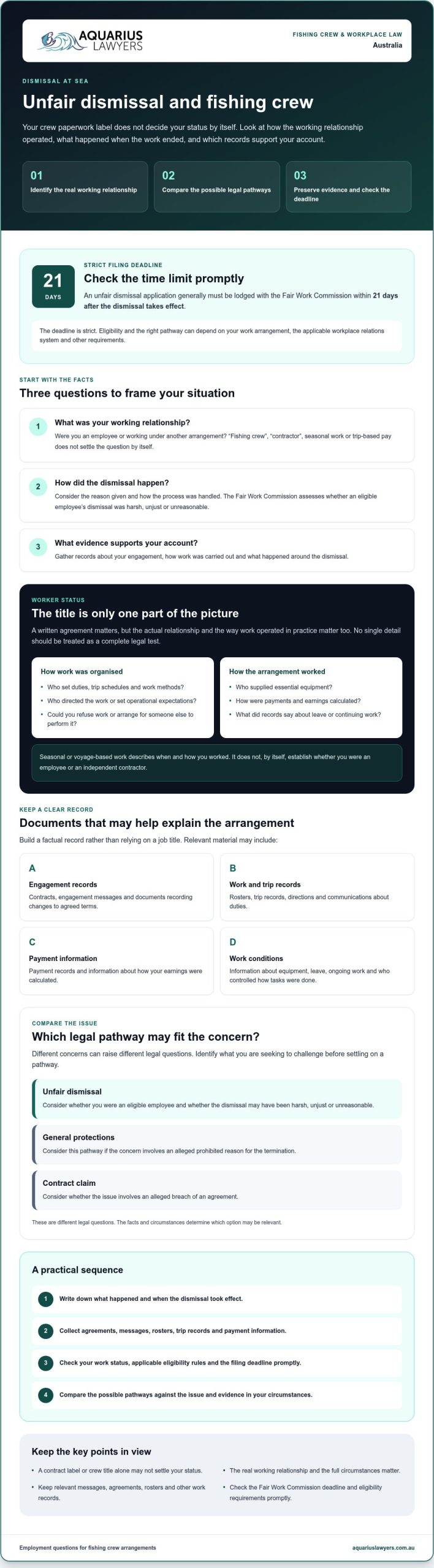
Fishing Crew Dismissal: Evidence and Timing
Clear records can help a lawyer understand what happened and assess which options may be available. Act promptly. If you’re considering an unfair dismissal fishing crew application, the Fair Work Commission’s time limit is generally 21 days after the dismissal takes effect. The deadline is strict, and an extension is only available in exceptional circumstances. Don’t wait for every detail to be resolved before checking the rules that apply to you.
Which records may help a lawyer assess the dismissal?
Keep relevant material you already hold or are authorised to access. Don’t enter accounts, devices or systems without permission, or take confidential business information you’re not entitled to have. Preserve original records without editing or annotating them. If you need to explain a document or when you received it, make a separate note.
Start with these practical steps:
- Record events. Write a dated chronology of key events and conversations, including who was involved and what was said. Separate what you remember directly from anything you’ve been told.
- Gather relevant documents. Collect your contract or engagement terms, rosters, payslips, written directions and communications about the dismissal, where available.
- Preserve records. Keep original emails, messages and documents in their existing form. Note where each item came from and when you received it.
- Check the deadline and get advice. Confirm the current filing requirements for the legal pathway you’re considering, then seek advice promptly.
Prompt, organised records can help a lawyer assess your options against the timeline and evidence, without having to reconstruct events from memory. You don’t need to decide the merits of a claim on your own. Gathering material supports an informed assessment; it doesn’t predict an outcome.
Why should you check deadlines promptly?
For an unfair dismissal application, the Fair Work Commission generally requires an application within 21 days after the dismissal takes effect. Check the date carefully and verify the current rule with the Commission or a lawyer. Different legal pathways can have different time limits, so don’t assume the unfair dismissal deadline also applies to another type of claim.
Raising the issue with the business or waiting for an internal response doesn’t automatically pause an external filing deadline. Don’t rely on an extension being granted; extensions are limited to exceptional circumstances. If the date or pathway is unclear, ask for legal advice promptly. For guidance that considers fishing operations and marine-sector context, discuss your fishing crew dismissal options.
Choosing legal help for an unfair dismissal involving fishing crew
Advice can help you identify the right questions before choosing a response. For an unfair dismissal fishing crew matter, a lawyer should assess more than the dismissal letter: worker status, the workplace relations system that applies, possible legal pathways, available evidence and urgent dates. In a fishing business, the advice may also need to account for how crew arrangements fit with vessel operations and commercial commitments.
What should you ask before engaging a lawyer?
Ask how the lawyer will assess whether you were an employee or contractor, which protections may apply, and whether unfair dismissal or another pathway needs to be considered. Ask which documents would help and which deadlines should be checked first. Before proceeding, clarify who will handle the matter, how you’ll receive updates and what work the engagement covers.
These questions help you assess whether the advice is focused on your facts, rather than assumptions based on a job title or standard form contract. Bring the records you have, such as your agreement, rosters, payment documents and dismissal communications. You can also prepare a short timeline and list the points you’re unsure about.
How marine and employment context can inform the advice
Fishing crew arrangements can involve voyage-based work, seasonal patterns and operational directions that need careful explanation. A lawyer familiar with employment law and the marine sector can ask how duties were assigned, how trips were organised and what records exist, then consider how those facts affect your options. If you’re an employer, advice can also help you assess the decision-making record and its practical implications for the fishing operation.
Aquarius Lawyers provides marine, fisheries and employment law services. Principal Solicitor Katherine Hawes is known as The Fish Lawyer. That marine-sector context may be relevant when assessing a workplace dispute connected to commercial fishing, but it cannot guarantee a particular result. For broader maritime context, see the firm’s Seafood and Marine Legal Services information.
Before you commit to a claim or response, get advice on your specific circumstances. Aquarius Lawyers can provide legal advice and representation on employment and marine-sector matters.
Take the next step with a clear plan
For an unfair dismissal fishing crew matter, start with the real working relationship, not just the label in an agreement. The right legal pathway depends on your circumstances, and organised records can help clarify what happened and which options need review.
Check relevant deadlines promptly, preserve documents you’re entitled to access, and get advice before making decisions that may affect your position. Aquarius Lawyers provides marine, fisheries and employment law services, which can help put workplace questions in the context of commercial fishing operations.
Contact Aquarius Lawyers to discuss your fishing crew dismissal and assess your circumstances, evidence and possible next steps.
Frequently Asked Questions
Can a fishing crew member make an unfair dismissal claim in Australia?
Yes, a fishing crew member may be able to apply if they were legally an employee and meet the current eligibility requirements. An unfair dismissal fishing crew claim depends on more than the crew role: the applicable workplace relations system, length of employment and other eligibility rules may matter. The Fair Work Commission considers whether the dismissal was harsh, unjust or unreasonable. Get advice on your work arrangement before assuming you qualify.
Does calling a fishing crew member a contractor prevent an unfair dismissal claim?
No, the contractor label alone doesn’t settle the worker’s legal status. The agreement is relevant, but the actual working relationship also matters. A lawyer may examine who directed the work, how duties were carried out, who supplied equipment and whether the worker could delegate tasks. The significance of each fact depends on the whole arrangement. If you were called a contractor but worked under the business’s direction, seek advice before ruling out employment protections.
How long do I have to lodge an unfair dismissal application?
You generally have 21 days after the dismissal takes effect to lodge an unfair dismissal application with the Fair Work Commission. The deadline is strict, and an extension is only granted in exceptional circumstances. Check the effective dismissal date and current Commission requirements promptly. Don’t assume that discussing the matter with your employer, seeking an internal review or waiting for a response will pause the filing deadline.
What evidence should a fishing crew member keep after being dismissed?
Keep records you’re authorised to access, including your contract, rosters, payslips, written directions and communications about the dismissal. Make a dated chronology of key events and conversations while your memory is clear. Preserve original documents and messages unchanged, and note where each came from. Don’t access the employer’s systems without permission or take confidential material you’re not entitled to hold. These records can help a lawyer assess your work arrangement and the dismissal.
Can a fishing business dismiss a crew member for seasonal or operational reasons?
A seasonal change or operational pressure may be relevant context, but it doesn’t automatically determine whether a dismissal is lawful or fair. The reason given, how the decision was made and the applicable workplace rules may all need review. For example, the end of a fishing season doesn’t by itself answer whether a particular employment arrangement ended as expected. Businesses should keep accurate records and get advice before relying on operational circumstances as justification.
Is unfair dismissal the only legal option after a fishing crew dismissal?
No. Depending on the facts, a dismissal may raise other questions, such as whether it was connected to a workplace right or whether contract terms or unpaid entitlements are in dispute. These issues can involve different legal tests, processes and time limits. A worker who doesn’t qualify for unfair dismissal may still have another issue worth assessing. Don’t assume different claims can always be combined or pursued at the same time; get advice on the available pathway.
Should I speak to a lawyer before responding to a dismissal?
Speaking to a lawyer promptly can help you understand your status, possible legal pathways, evidence and urgent dates before you respond. This can be especially useful if you’re asked to sign an agreement, provide a formal account or accept a proposed resolution. Gather relevant records you’re entitled to access and prepare a short timeline. Ask about the lawyer’s employment law experience, understanding of marine-sector work, communication approach and scope of representation.
Disclaimer
Please note that legal rules change and this is not a substitute nor construed as legal advice. It is general information only.