
An informal promise to pay or a dispute raised by email won’t protect your company from a statutory demand deadline. For a statutory demand response, the first priority is to act within 21 days of service. That period can’t be extended.
A demand isn’t itself a court order. But if your company doesn’t respond in time, it may be presumed insolvent and the creditor can seek to have it wound up. Paying, negotiating and applying to set aside the demand are different pathways. Negotiation alone doesn’t stop the clock. An application under section 459G of the Corporations Act 2001 (Cth) must be filed and served within the 21-day period.
If you believe the debt is wrong or disputed, quickly organise the relevant contracts, invoices, payment records and correspondence. This guide explains what to assess, which evidence may matter and how to choose a response suited to your company’s position. Aquarius Lawyers provides strategic advice and representation for businesses, drawing on over two decades of legal and commercial experience.
Key Takeaways
- A statutory demand isn’t a winding-up order. Understand what the notice requires before deciding how to respond.
- A statutory demand response nsw may involve payment, resolution discussions or a formal challenge. The right pathway depends on the debt and the evidence.
- Record when and how the demand was served, then gather the contracts, invoices, payment records and correspondence that support your company’s position.
- A concise chronology and organised documents can focus legal review of the demand, possible grounds to challenge it and your next steps.
Statutory demand response NSW: understand the notice and act promptly
A statutory demand is a formal written demand requiring a company to pay a debt that is due and payable. Issued under section 459E of the Corporations Act 2001 (Cth), it can start a process that allows a creditor to seek to wind up the company if the demand isn’t dealt with in time. This guide concerns statutory demands served on companies, not personal demands to individuals. A sound statutory demand response NSW starts with understanding what the notice does and doesn’t do.
What does receiving a statutory demand mean for your company?
Receiving a demand is serious, but it isn’t a court decision and doesn’t automatically close your business. The creditor may rely on the statutory process to apply to a court for a winding-up order. That order is a court decision to put the company into liquidation; the demand itself is not the order.
The process relates to insolvency, which concerns a company’s ability to pay its debts. For a plain-English background to understanding insolvency, see this overview. The demand’s immediate significance is the strict response window, not an automatic finding that your company is insolvent.
Why should you treat the response timeframe as urgent?
A company has 21 days after service to respond. The period can’t be extended. If your company doesn’t comply within that time, it may be presumed insolvent, allowing the creditor to apply to wind it up. That presumption can make it harder to defend a later winding-up application.
Check the service date immediately. Keep the envelope, email or other delivery record with the demand, and confirm the applicable deadline without delay. If you intend to apply to set the demand aside under section 459G, the application and supporting affidavit must be filed with the court and served on the creditor within the 21-day period. An informal dispute or payment discussion alone doesn’t preserve that formal option.
Can you dispute a statutory demand or should you pay it?
There isn’t one response that suits every company. Paying, negotiating and applying to set aside a demand are separate pathways. Your decision should reflect the debt, the supporting documents and the time available. For a statutory demand response nsw, don’t assume that sending a dispute letter or discussing repayment protects your position.
Pay
If the debt is owed and the company can pay, payment may resolve the demand. Check the amount and payment details carefully, and keep evidence of the payment.
Seek a negotiated resolution
If the company accepts some or all of the debt but needs different payment terms, discussions with the creditor may be relevant. Negotiations don’t automatically pause the statutory deadline.
Consider a formal challenge
If there may be a genuine dispute, an offsetting claim or a defect in the demand that causes substantial injustice, get prompt legal advice about whether an application to set it aside is available.
What facts may support challenging a demand?
Start with the basis of the debt. Compare the demand with the contract, invoices, payment records and relevant correspondence. Identify exactly which amount is disputed and why. For example, records may show a payment the creditor hasn’t accounted for, or a disagreement about whether contracted work was completed. These facts need legal assessment; a disagreement alone doesn’t guarantee that the demand will be set aside.
When might payment or negotiated resolution be considered?
Your company’s evidence, position on the debt and remaining time all matter. A demand may include an amount your company accepts and another amount it disputes. Get advice before choosing a pathway, particularly if the deadline is close. A request for more time, settlement proposal or ongoing correspondence shouldn’t be treated as a substitute for any formal step required by law.
A clear view of the debt and supporting documents helps focus the next decision. Aquarius Lawyers’ commercial legal advice can help assess the demand, available evidence and response options.
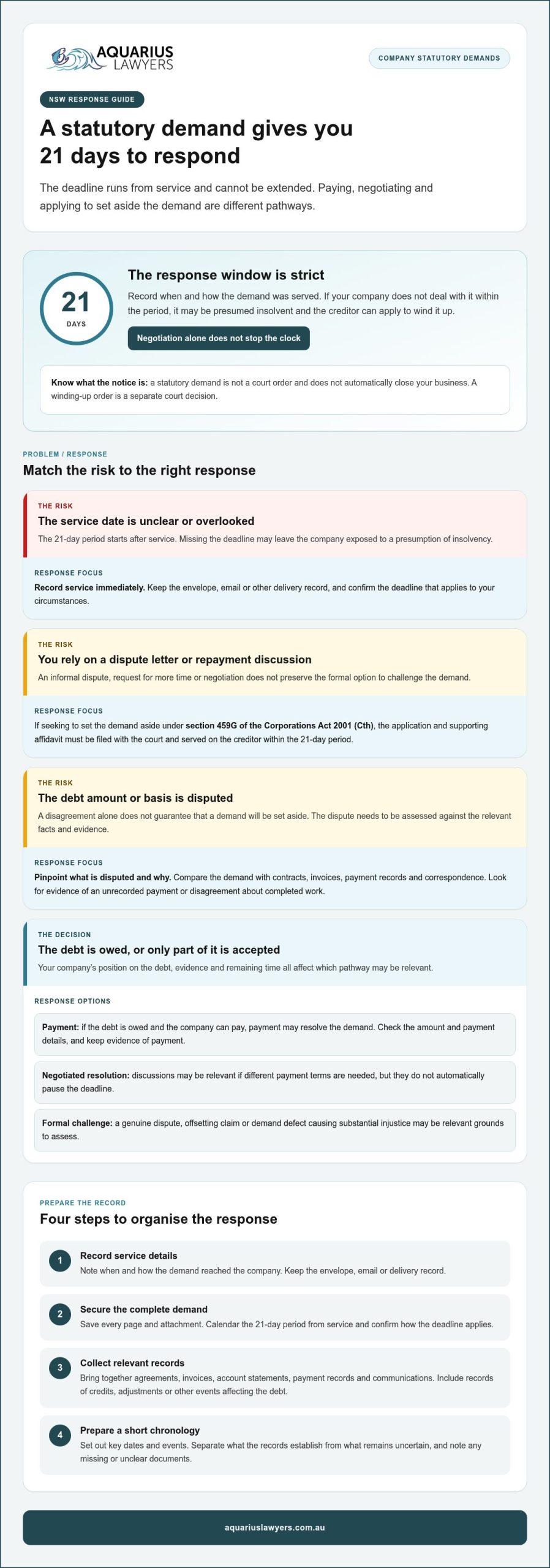
How to prepare a statutory demand response in NSW
A clear record helps you and your lawyer assess the demand promptly. Work through these steps as soon as you receive it:
- 1. Record service details. Note when and how the demand reached the company. Keep the envelope, email or delivery record.
- 2. Secure the complete demand. Save every page and attachment, then calendar the 21-day period from service. Confirm how the deadline applies to your circumstances instead of relying on an estimated date.
- 3. Collect the relevant records. Bring together the underlying agreements, invoices, account statements, payment records and communications with the creditor. Include documents showing credits, adjustments or other events that affect the alleged debt.
- 4. Prepare a short chronology. Set out key dates and events, and distinguish what the records establish from what remains uncertain. This gives legal review a focused starting point.
What documents should you organise first?
Start with the demand and the records explaining how the debt arose. Add evidence of payments, disputed work, agreed variations or other relevant events. Keep documents in date order and identify gaps, such as a missing invoice or an unclear account entry. Don’t alter original records; note questions separately.
What should you ask a lawyer to assess?
Ask for an urgent review of the service date and deadline, the basis and amount of the debt, possible grounds to challenge the demand, and any formal response steps available. If a court application may be needed, filing and service requirements must be checked against current law and court procedure. Under section 459G, an application to set aside and supporting affidavit must be filed and served within the 21-day period.
This organised statutory demand response NSW record can help focus commercial legal advice. For wider business context, read the commercial law guide. Discuss your statutory demand with Aquarius Lawyers.
Get a strategic statutory demand response with Aquarius Lawyers
A statutory demand response NSW should reflect both the legal position and your company’s commercial circumstances. Commercial legal advice can assess the demand against the available records, identify issues that need attention and clarify which response pathways may be open. Aquarius Lawyers provides strategic advice and representation for businesses, drawing on over two decades of legal and commercial experience.
How does legal advice help you choose the next step?
A focused review connects the debt and supporting evidence to your company’s position. A concise chronology can show how the account developed, what the company accepts or disputes, and where the documents leave questions unanswered. This helps direct attention to service of the demand, the basis of the debt, potential grounds to challenge it and any formal requirements that apply.
Advice can clarify the steps and timing involved, but no particular result can be guaranteed. The appropriate advice or representation depends on your company’s circumstances and the material available.
What should you have ready for an initial discussion?
Bring the complete demand and any envelope or delivery record showing when it arrived. Gather the underlying agreements, invoices, account records, payment evidence and key correspondence with the creditor. Add a short chronology and clearly mark what is confirmed, disputed or still uncertain. Organised instructions help keep the review focused, especially when time is limited.
For wider context on legal support for business decisions, read the commercial law guide. If your company has received a demand, act promptly and discuss the available response options with Aquarius Lawyers.
Discuss your statutory demand response with Aquarius Lawyers.
Protect your company’s position with a clear next step
A statutory demand requires prompt, deliberate action. Confirm when it was served, keep the deadline in view and assess the debt against your company’s records. Payment, negotiated resolution and a formal challenge are distinct pathways. The right option depends on the evidence and your company’s circumstances. An informal exchange with the creditor doesn’t replace a required formal step.
A well-prepared statutory demand response nsw begins with a clear chronology and organised documents. Commercial legal advice can help assess the demand, evidence and available options before you decide how to proceed. Aquarius Lawyers provides commercial legal advice, debt recovery and litigation services, backed by over two decades of legal and commercial experience. No particular outcome can be promised, but informed advice can help you understand the issues and plan your next move.
Act while time remains. Discuss your statutory demand response with Aquarius Lawyers and take a clear, informed step towards protecting your company’s position.
Frequently Asked Questions
Is a statutory demand the same as a court order?
No. A statutory demand is a formal notice to a company, not a court order or winding-up decision. If the company doesn’t respond as required, the creditor may take further legal steps, which can include applying to wind up the company. That outcome isn’t automatic. Get prompt advice on the specific demand, service details and legal requirements that apply.
How long do you have to respond to a statutory demand in NSW?
A company generally has 21 days after service to respond to a statutory demand. The date and method of service can affect how the deadline is calculated, so check the service information straight away. If you plan to apply to set the demand aside, strict procedural requirements apply. The application and supporting affidavit must be filed with the court and served on the creditor within that period.
Can you challenge a statutory demand if you dispute the debt?
Yes. A genuine dispute about the debt may support a formal application to set aside a demand, but simply telling the creditor you disagree isn’t enough. You’ll need evidence and must meet the applicable legal requirements. A possible offsetting claim or a defect in the demand may also need assessment. Organise the relevant agreements, invoices, payment records and correspondence, then seek prompt advice about your statutory demand response NSW.
What happens if a company ignores a statutory demand?
If a company doesn’t respond in the legally required way within the applicable period, it may be presumed insolvent. The creditor can then apply to a court to wind up the company, but liquidation doesn’t happen automatically because a demand was ignored. Check when and how the demand was served, confirm the deadline and promptly ask a lawyer to assess the company’s remaining options.
Should you negotiate with a creditor after receiving a statutory demand?
Negotiations may help your company pursue a commercial resolution, but don’t assume that correspondence or a payment proposal suspends the formal deadline. Keep communications clear and in writing, and organise records that support your company’s position. At the same time, get advice on the required response and any formal steps available. Don’t rely on an informal exchange alone.
Disclaimer
Please note that legal rules change and this is not a substitute nor construed as legal advice. It is general information only.