
Does a commercial property eviction notice in NSW mean you have to leave your business premises straight away? Not necessarily. The notice must be assessed against your lease and the rules that apply to your tenancy. The label on the document alone does not establish whether the landlord can end the lease or take possession. If you’ve received one, response dates, access to your premises and business continuity may all need urgent attention.
Acting before you understand the notice could affect your position. The right response depends on what the notice alleges, what your lease says and whether the premises are covered by retail leasing laws or another commercial leasing framework.
This article explains how to assess the notice, which documents and dates to organise, and how to consider practical next steps. It also explains why a lease dispute does not always mean the landlord has an immediate right to possession, and how legal advice can help you make informed decisions.
Key Takeaways
- A commercial property eviction notice in NSW does not automatically mean you must leave immediately. Its effect depends on the wording, your lease and applicable legal requirements.
- Check the named parties, premises, reason, dates and requested response. These details can help identify issues that need urgent attention.
- Record when and how the notice arrived, keep the original, and gather your lease, variations, payment records and relevant communications.
- Consider whether direct communication, negotiation or formal legal steps may suit your situation. Legal advice can help clarify your options.
Commercial property eviction notices in NSW: what does one mean?
A commercial property eviction notice in NSW is a communication about a commercial lease that requires your attention. It may allege a breach, require you to take action or state that the landlord intends to end the lease. The word “eviction” can sound final, but the document’s effect depends on its wording, the lease terms and the laws that apply to the premises.
Receiving a notice does not, by itself, establish that the lease has ended or that the landlord can immediately take possession. First identify what the notice asks you to do and any date by which it requires a response. Then check the type of lease and the capacity in which you received it.
Read the notice alongside the lease to understand what action is required and what the document may mean.
How a commercial lease differs from a residential tenancy
Do not assume the rules for renting a home apply to business premises. Commercial leasing follows a different legal framework. General commercial leases are primarily governed by the lease and the Conveyancing Act 1919 (NSW). A retail shop lease may also be subject to the Retail Leases Act 1994 (NSW). The applicable rules depend on the lease and premises, not simply the label used in a notice.
This distinction matters because notice requirements and available processes can differ. Check the lease and how the premises are used to establish whether it is a retail lease or another type of commercial lease.
Who may issue or receive a commercial property notice?
A landlord, tenant or authorised representative, such as a property manager or solicitor, may send or receive lease correspondence. Check who the notice names, who sent or signed it, and who it is addressed to. Your role shapes the practical response. A tenant may need to assess the alleged breach and preserve business records, while a landlord should check that the notice and any proposed next step align with the lease and applicable requirements.
If you’re unsure how the document affects your position, legal advice can help you review the lease, notice and relevant records before deciding what to do.
Is a commercial property eviction notice in NSW valid?
A notice does not automatically end your lease or give the landlord an immediate right to take possession. To assess its effect, compare the wording with the lease and the legal requirements that apply to your tenancy. Check the named parties, premises, stated reason, dates and any action or response requested. An error may be relevant, but it does not automatically make every notice invalid.
Whether a notice is valid depends on its terms, the circumstances and the rules that apply to the lease. A commercial property eviction notice in NSW may raise different issues depending on its contents, so assess the document itself rather than relying on its label.
What to check in the notice and commercial lease
Find the lease clauses covering breaches, termination, notices and how notices must be served. Check whether the notice was sent to the correct party and address, and whether the method of service is permitted by the lease. Then compare the allegations with your records. For example, if the notice refers to unpaid rent, compare the amount and dates with your payment records and rent ledger. For a non-rent breach under a general commercial lease, section 129 of the Conveyancing Act 1919 (NSW) generally requires a notice to identify the breach, require it to be remedied and allow a reasonable time.
Why the reason for the notice matters
The process may differ depending on whether the notice concerns unpaid rent, another alleged breach or the end of a lease term. Section 129’s notice requirement does not apply to non-payment of rent, but your lease may set out a notice process before further action. Do not assume one deadline or remedy applies to every situation. Retail shop leases may also be subject to the Retail Leases Act 1994 (NSW), so identify the lease type before deciding how to respond.
If the notice’s effect remains unclear, a solicitor can review the document, lease and supporting records to help you assess your options. Aquarius Lawyers provides commercial property legal services to help you understand the issues raised and make informed decisions.
Next steps after a commercial property eviction notice
Respond methodically. If you’re dealing with a commercial property eviction notice in NSW, do not ignore it, but do not take irreversible steps before you understand the lease and your legal position. The relevant dates depend on the notice, the lease and applicable requirements. Note every date stated in the document and seek advice promptly if you are unsure what it requires.
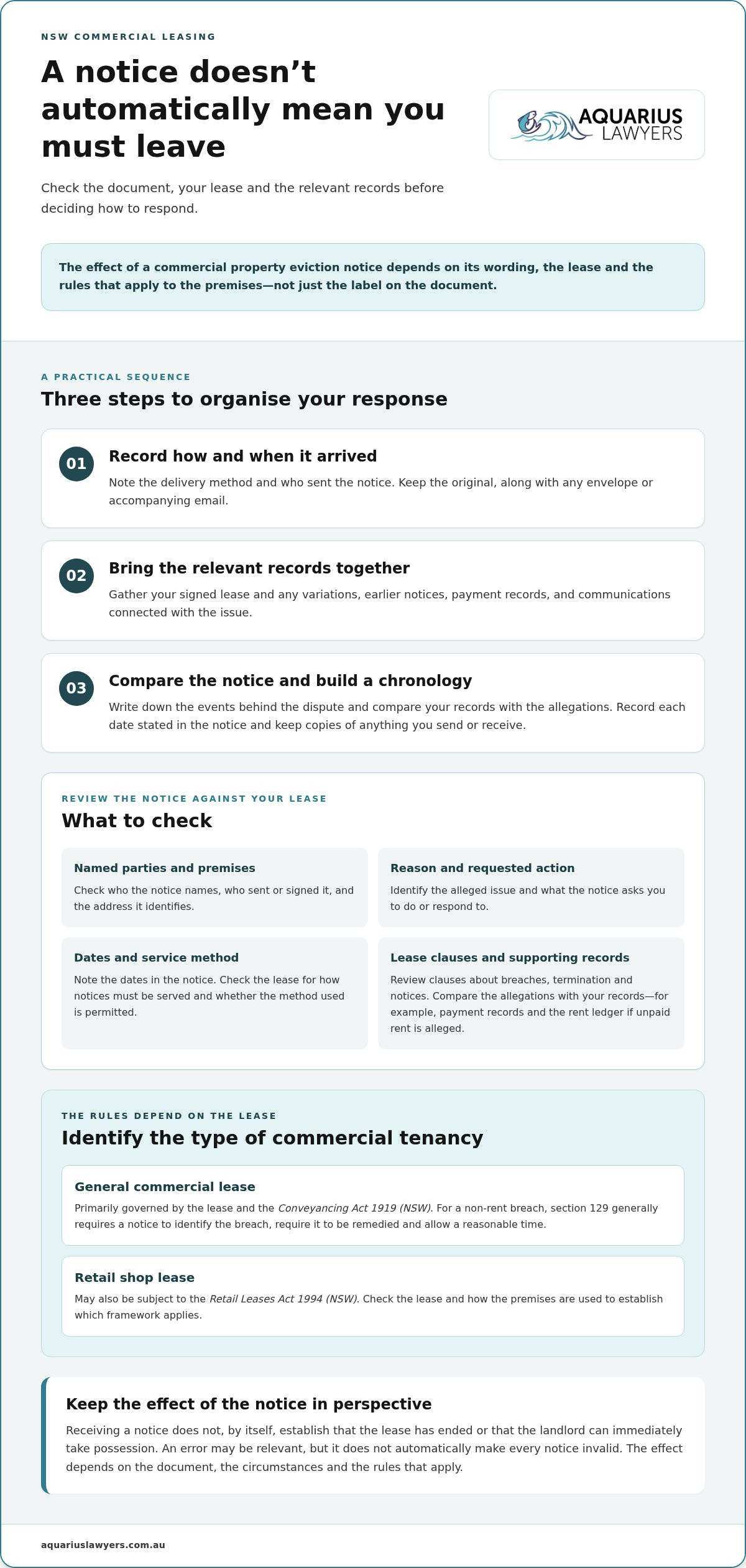
- Record when and how the notice arrived, including the delivery method and who sent it. Keep the original and save any envelope or email that came with it.
- Gather the signed lease and variations, earlier notices, payment records and communications relevant to the issue raised.
- Write down the events behind the dispute and compare your records with the notice. Keep copies of anything you send or receive.
How to organise documents and key dates
Build a chronology of the notice, relevant events, payments and communications. Record the response date stated in the notice, but do not assume it is the only deadline that matters. Keep documents together in a secure folder, with clear file names and copies of emails or messages. An organised record helps you explain the sequence accurately and identify missing information.
What to do if you are the landlord issuing a notice
Before sending a notice or acting on one already issued, review the lease, the alleged issue and the legal basis for the proposed step. Check that the notice is addressed and delivered as the lease and applicable requirements demand. Preserve supporting records, such as relevant correspondence or payment information, and keep a dated account of communications. A procedural error may affect your position, so do not treat possession as automatic.
Whether you’re a tenant assessing a response or a landlord considering next steps, legal advice can help clarify the notice’s effect and your options. Arrange a review of your commercial property matter with Aquarius Lawyers before making a decision that may affect your lease or business operations.
Resolving a commercial property eviction notice dispute in NSW
There is no single response that suits every lease dispute. The right path depends on the notice, the lease terms, the evidence and the potential effect on your business. You might clarify the issue directly, negotiate a practical arrangement or take formal legal steps. Before making commitments, consider how they could affect your lease and operations.
Choosing a proportionate way forward
Clear, measured communication may help both parties identify what is disputed and whether a solution is possible. For example, you could ask the other party to explain an unclear allegation or set out your position in writing. Keep the discussion focused on the lease terms and relevant records. If direct discussions stall, a negotiated resolution or formal process may be appropriate, depending on the facts and commercial impact.
For retail lease disputes, mediation through the NSW Small Business Commissioner may form part of the resolution pathway before a matter goes to the NSW Civil and Administrative Tribunal. Non-retail commercial lease disputes may require court proceedings. The available process depends on the lease and circumstances.
When legal advice can help protect your position
A solicitor can review the lease, notice and supporting records together, then explain potential risks, obligations and options. That review can help you understand what a response may mean before you agree to terms, stop operating or take steps that are difficult to reverse. Advice can also help you prepare for discussions or assess whether a formal process may be relevant.
A commercial property dispute can affect access to your premises, business continuity and valuable commercial assets. Aquarius Lawyers’ Property Legal Services can help you understand the issues and make informed decisions about next steps. If you’ve received or are considering a commercial property eviction notice in NSW, seek advice before acting so you can weigh the legal and commercial implications.
Choose your next step with confidence
A commercial property dispute can affect more than your right to occupy premises. It may also affect staff, customers, stock and your ability to keep trading. Treat a commercial property eviction notice in NSW as a decision point. Consider what your business needs, what commitments you can make and which risks need attention before you respond.
Clear legal advice can help you make a considered plan. A solicitor can explain how the dispute may affect your position and help you weigh practical options, without promising a particular result. You can then decide how to proceed with a better understanding of the issues.
Get clear advice about your commercial property issue from Aquarius Lawyers and take a measured next step. A clear plan can help you focus on protecting your position and moving your business forward.
Frequently Asked Questions
Can a landlord evict a commercial tenant without notice?
There is no safe answer without considering the lease, the reason possession is sought and the relevant legal requirements. If a landlord says the lease has ended, identify the clause they rely on and the event they say triggered it. For example, check whether the claim concerns a breach, expiry or another lease provision. Get advice before treating the landlord’s position as settled or responding in a way that could affect your rights.
Can a landlord change the locks after sending a commercial eviction notice?
A notice alone does not establish whether a lock change is lawful in your situation. If access has been restricted, record what you need to retrieve or keep operating, such as stock, equipment or business records. Ask for the landlord’s position in writing and avoid confrontation at the premises. A solicitor can assess the lease and circumstances, including whether an urgent practical arrangement should be discussed.
What should I do if I receive a commercial property eviction notice in NSW?
As well as reviewing the notice, consider what your business needs to keep functioning if access or occupancy becomes disputed. Identify time-sensitive deliveries, customer commitments and equipment that may be difficult to move. Avoid making admissions or agreeing to a departure date before you understand the implications. Legal advice about a commercial property eviction notice in NSW can help you assess your position and plan a measured response.
Does residential tenancy law apply to a commercial property eviction notice in NSW?
Do not rely on residential tenancy rules to assess a notice about business premises. To identify the relevant legal framework, provide your solicitor with the full lease and any documents describing the premises’ permitted use. A shop open to customers may raise different leasing questions from premises used only for storage or production. The lease and actual circumstances both matter, so do not classify the arrangement from the business name alone.
How long does a commercial eviction notice take in NSW?
Rather than rely on a general estimate, distinguish the date to respond to the notice from any later termination or possession step. Those dates may not mean the same thing. Read the document for each stated event, then consider how the lease and applicable requirements affect the timing. If court proceedings are mentioned or commenced, get advice on the relevant procedural dates and what they require you to do.
Disclaimer
Please note that legal rules change and this is not a substitute nor construed as legal advice. It is general information only.