
If you’re researching “creating a testamentary trust Australia”, the key question is not simply whether a trust has potential benefits. It’s whether its rules give your beneficiaries the right balance of support and control. The answer depends on who you want to benefit, who should manage the inheritance and whether your estate plan can sensibly accommodate the ongoing administration.
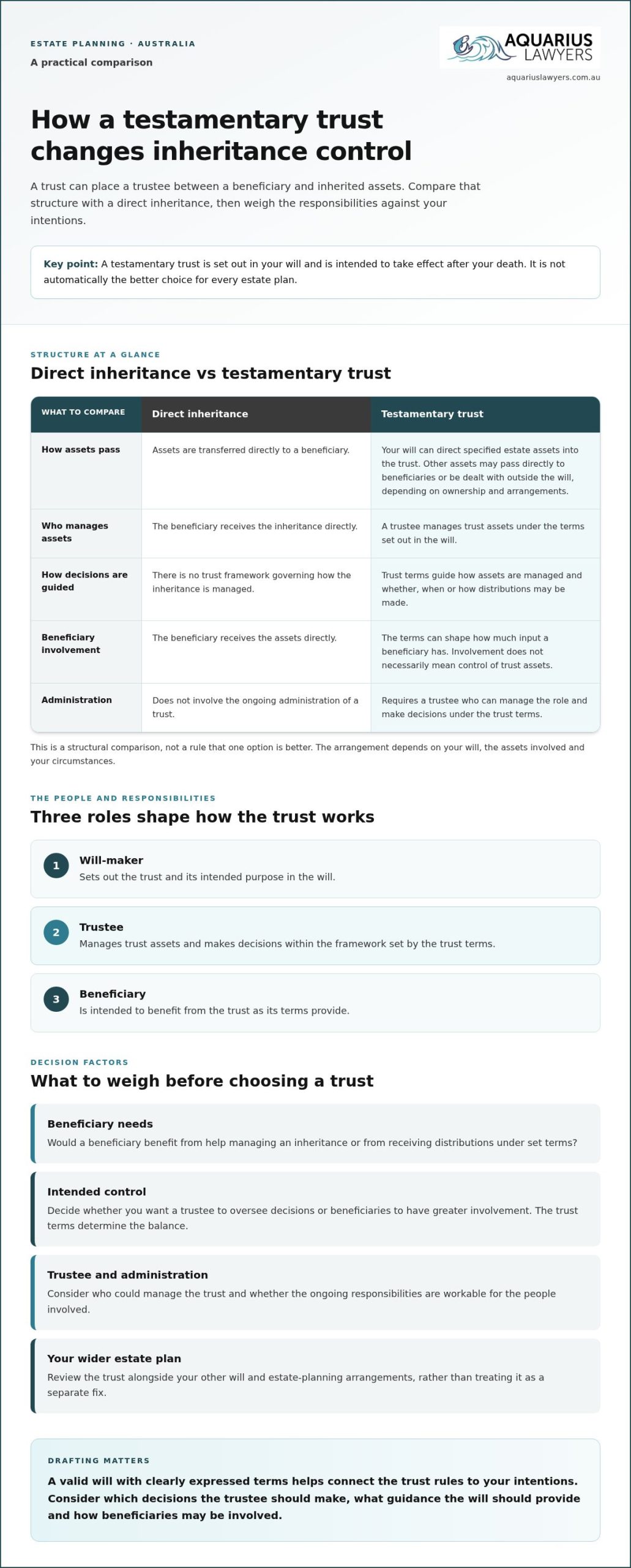
A testamentary trust is set out in your will and is intended to take effect after your death. Unlike a direct inheritance, it places a trustee between a beneficiary and the assets, shaping how those assets are managed and distributed. That structure may suit some families, but it is not automatically the better choice. Weigh your beneficiaries’ circumstances against the responsibilities involved.
This guide explains how the structure works, which decisions need careful thought and what to consider when preparing or reviewing your will. The aim is to help you assess whether a testamentary trust fits your intentions, not to assume that every estate plan needs one.
Key Takeaways
- A testamentary trust is created through your will and is intended to take effect after your death. Its terms guide how trust assets are managed and distributed.
- Understand the distinct roles of the will-maker, trustee and beneficiaries before deciding who should manage the inheritance.
- When considering creating a testamentary trust in Australia, weigh your beneficiaries’ needs and the level of control you want against the administration involved.
- Prepare details about your assets, intended beneficiaries and decision-making preferences so you can discuss a tailored will with a solicitor.
What is a testamentary trust in Australia, and when does it begin?
A testamentary trust is established under a will, with a trustee holding and managing assets for beneficiaries according to the will’s terms. It lets you direct how some inheritance is managed instead of transferring those assets directly to a beneficiary. The specific arrangements depend on the wording of the will and the law applying to the estate.
The process starts with the trust provisions in your will. The trust is intended to take effect after your death, when the trustee administers any assets allocated to it under those provisions. The will must be valid, and the terms should clearly express your intentions. If you’re considering creating a testamentary trust in Australia, tailored legal advice can help ensure the wording reflects your plans and the requirements that apply to your circumstances.
Not every asset necessarily passes through the trust. Your will can direct specified estate assets into it and leave others directly to beneficiaries. Some property may also be dealt with outside the will, depending on its ownership and arrangements. Make an inventory of your assets and identify which ones your will can direct. Estate planning advice can help you consider the trust as part of your wider estate plan.
How is a testamentary trust different from a trust created during your lifetime?
The main difference is when the trust is created and how it relates to your estate. A testamentary trust is provided for in a will and is intended to begin after the will-maker dies. A lifetime trust is established while its creator is alive and operates under its own trust arrangements. Both involve a trustee managing assets for beneficiaries, but their timing and connection to an estate differ. This is a structural distinction, not a rule that one option is better. Tax and other consequences depend on the trust’s terms and individual circumstances. For a foundational overview of the parties and structure, see What is a Testamentary Trust?
How a testamentary trust works: beneficiaries, trustee and control
Once the trust is operating, its terms define who makes decisions and who may benefit. The three key roles are:
- Will-maker: the person whose will sets out the trust and its intended purpose.
- Trustee: the person or entity appointed to manage the trust assets under its terms.
- Beneficiary: a person or entity the trust is intended to benefit, as the terms provide.
A trustee manages trust assets and makes decisions within the framework set by the trust terms. The role is not simply to hand over an inheritance. The terms guide how assets are managed and whether, when or how distributions may be made. Clear drafting helps connect those rules to your intentions.
Choosing a trustee is a practical decision about responsibility, judgement and alignment with your wishes. Consider whether the person can manage the role and make decisions for the trust’s purposes, including when beneficiaries have different needs. The appointment should work with the trust terms, not be considered separately from them.
What decisions shape control of the trust?
Trust terms can set a framework for managing assets and making distributions, subject to legal review. They can also affect how much input beneficiaries have. For example, you might want a beneficiary to receive support while another person oversees decisions. The balance depends on the drafting. A beneficiary may have some involvement in one trust, but that does not mean every beneficiary controls trust assets.
When creating a testamentary trust, consider which decisions you want the trustee to make, what guidance the will should provide and how beneficiary involvement should work. Too little direction may leave important choices unclear. Overly narrow terms may not suit changing circumstances. Discussing control arrangements as part of your estate planning advice can help align the trust with your intended beneficiaries and wider will.
When might a testamentary trust suit your estate plan?
A testamentary trust may be worth considering if you want an inheritance managed under specific terms rather than transferred directly. Whether it suits your estate plan depends on your intended beneficiaries, the control you want to provide and whether the ongoing administration is proportionate to your needs.
Suitability depends on your objectives and how the trust is designed. A trust can provide a structured way to manage assets, but it cannot guarantee tax savings, asset protection or a particular outcome for a beneficiary. The practical question when creating a testamentary trust in Australia is whether the structure addresses a real need without adding unnecessary complexity.
What should you weigh before choosing this structure?
Use these points to frame your decision:
- Beneficiary needs: Would a beneficiary benefit from help managing an inheritance or from receiving distributions under set terms?
- Intended control: Do you want a trustee to oversee decisions, or do you intend beneficiaries to have greater involvement? The trust terms determine the balance.
- Administration: Consider who could manage the trust and whether the ongoing responsibilities are workable for the people involved.
- Estate complexity: Review the trust alongside your other will and estate-planning arrangements, rather than treating it as a separate fix.
Other implications need careful consideration. Tax treatment depends on the trust’s terms, its assets and beneficiaries’ circumstances. Family-law considerations and any effect on government benefits, including social security, also require individual advice. Do not assume that assets held in a trust are automatically protected from claims or ignored when benefits are assessed. The outcome can depend on control, beneficiaries and the details of the arrangement.
Ask a solicitor to assess the proposed structure against your goals and the relevant law. Discuss your estate planning options before deciding whether the additional structure is justified.
Creating a testamentary trust: plan the will and get advice
Start by identifying the trust’s purpose. Decide what you want it to do for its intended beneficiaries, then make sure the will and trust terms support that aim. If you’re considering creating a testamentary trust in Australia, prepare information about your assets, family circumstances and preferred decision-making arrangements before speaking with a solicitor.
Use this preparation list to organise the discussion:
- Your assets: Note what you own and any existing ownership or trust arrangements that may affect your estate plan.
- Intended beneficiaries: Identify who you want to benefit and any circumstances that may shape how they receive or manage an inheritance.
- Trustee arrangements: Consider who could take on the role and whether you have an alternative in mind.
- Your preferences: Write down how much discretion you want the trustee to have and which decisions the trust terms should guide.
The will and trust terms need to work together. Their drafting should reflect your intentions and meet the legal requirements that apply to your circumstances. Avoid relying on a generic template to settle trustee powers or distributions. Unclear or unsuitable terms may not express the arrangements you intended. Obtain tailored advice before finalising the will.
What should you discuss with an estate lawyer?
Discuss the trust’s purpose, intended beneficiaries, trustee choice and the balance of control you want. Explain how the trust should fit your wider estate plan and family circumstances, including any other assets or arrangements that could affect your intentions. Estate planning legal services can help you consider these decisions together and shape the will and trust terms around your objectives.
How Aquarius Lawyers can help with trust planning
Aquarius Lawyers provides Wills and Estates services, including establishment of trusts and asset protection in estate-planning matters. Advice can help you develop a clear, practical plan without assuming a particular tax or asset-protection outcome. Discuss your estate-planning needs with Aquarius Lawyers.
Make your next estate-planning decision with clarity
Write a short statement of what you want the inheritance arrangement to achieve. Then consider whether the level of trustee discretion and beneficiary involvement feels right. If those choices are difficult to settle, seek advice before putting them into a will. The decision about creating a testamentary trust in Australia should reflect your family’s needs and objectives, not an assumption that a trust is automatically safer or more effective.
Aquarius Lawyers provides Wills and Estates services, including establishment of trusts and advice on asset protection in estate-planning matters. Legal advice can help shape the arrangements around your intentions, while recognising that tax and asset-protection outcomes depend on individual circumstances. A considered discussion can help you move forward with a plan you understand and can explain to those affected.
Discuss your will and trust planning with Aquarius Lawyers, and take a confident next step towards an estate plan shaped around what matters to you.
Frequently Asked Questions
Does a testamentary trust come into effect before or after the will-maker dies?
It is intended to take effect after the will-maker dies, not while they are alive. Until then, the will-maker can review their estate plan and seek advice about changes. After death, the estate is administered and any trust provisions are acted on under the will. The timing and operation depend on the will’s terms and the administration of the estate.
Can a testamentary trust be included in any will?
A will can provide for a testamentary trust, but it is not a standard clause that suits every document. The will must be valid, and its provisions need to work together clearly. If you’re considering creating a testamentary trust in Australia, the drafting should identify the intended beneficiaries and explain how the trust is to operate. Ask a solicitor to review the whole will and the relevant state or territory requirements.
Who can be a trustee of a testamentary trust?
The will-maker can nominate a trustee in the will. Choose someone who can handle financial decisions, follow the trust terms and act reliably over time. Consider whether that person understands the beneficiaries’ needs and can manage potential disagreements. It is also sensible to discuss a backup arrangement so the plan does not rely on one person being able or willing to serve when the trust begins.
Does a testamentary trust protect an inheritance from relationship breakdown or creditors?
No structure guarantees that an inheritance will be protected from a relationship property claim or creditors. The outcome can depend on the trust terms, who controls it, how assets are distributed and the specific legal circumstances. For example, assets distributed directly to a beneficiary may be treated differently from assets retained in a trust. Obtain advice before relying on a trust for protection.
Are testamentary trusts automatically tax-effective?
No. Tax treatment depends on the trust’s terms, the source of its assets, distributions and each beneficiary’s circumstances. For example, special tax treatment for some income received by minors is linked to income generated from assets of the deceased estate. Income from assets added later may be treated differently. Tax rules can change, so get current tax advice before relying on a projected benefit.
Disclaimer
Please note that legal rules change and this is not a substitute nor construed as legal advice. It is general information only.