Biosecurity compliance for aquaculture farms in Australia means meeting the requirements that apply to your workplace and putting effective biosecurity controls into practice. These obligations may arise at local, state or territory, and national levels. A farm biosecurity plan supports daily management, but does not replace applicable legal requirements.
Protecting stock health depends on practical decisions across the farm. The challenge is linking operational controls to the rules that apply to your site, production activities and stock movements. A clear approach helps you identify what needs attention, who is responsible and which records support your decisions.
This guide explains how to assess disease and pest risks, manage transmission pathways and understand the regulatory framework that applies across Australia. It also shows how to plan testing and audits around the questions your farm needs to answer. Use it as a starting point to review current procedures, identify gaps and decide when a legal issue needs closer attention.
Key Takeaways
- Map how stock, water, people, equipment and farm activities could carry disease, then build practical controls into daily routines.
- Assess disease and pest risks before bringing in broodstock, seed stock or genetic material, and monitor stock health and water quality.
- Identify the local, state or territory, and national requirements that apply to your farm, including rules for aquatic animal movements and waste disposal.
- Plan testing and audit needs around your farm’s risks, production system and monitoring programme rather than relying on a one-size-fits-all budget.
- Get legal advice when biosecurity issues affect your aquaculture operations, licences, commercial arrangements or regulatory obligations.
Controls for disease transmission routes
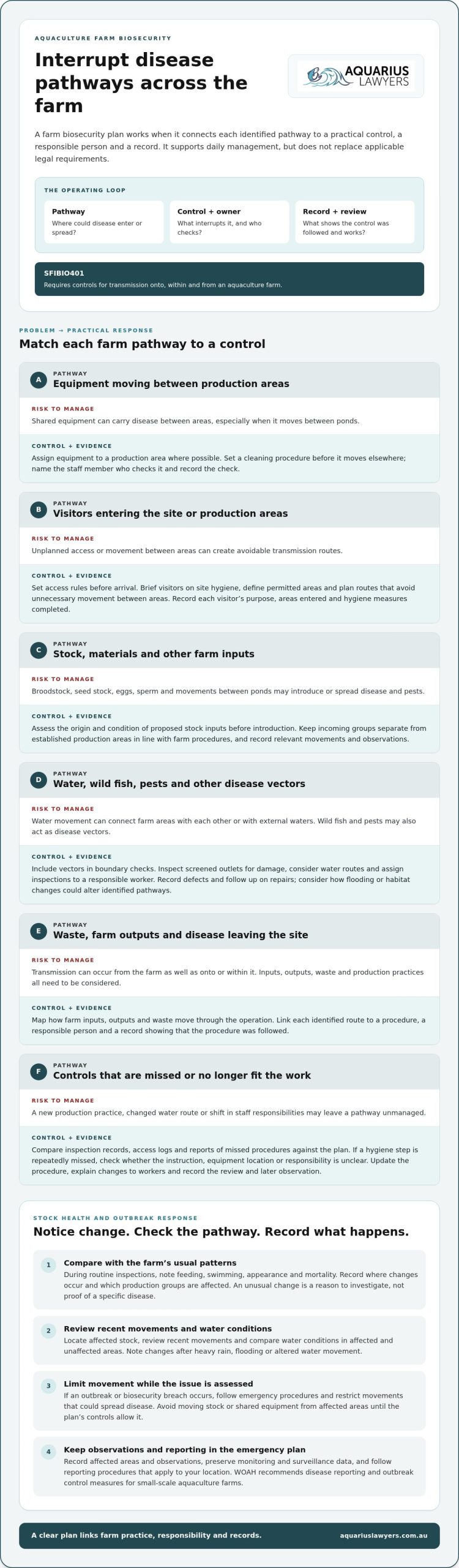
Use the farm biosecurity plan to connect each identified pathway with a control and a person responsible. SFIBIO401 requires controls for transmission onto, within and from an aquaculture farm. Map how stock, water, staff, visitors, equipment, waste and farm outputs move through your operation. For each route, note the point where disease could enter or spread, the procedure intended to interrupt it, and the record that shows the procedure was followed.
Make controls fit the work being done. For example, assign equipment to a production area where possible, and set a cleaning procedure before it moves elsewhere. Specify which staff member checks it and where that check is recorded. Review production practices that involve moving stock or materials between ponds, since those steps can connect otherwise separate areas. SFIBIO401 performance evidence includes applying controls to farm inputs, outputs, disease-vector movement and production practices.
Set visitor access rules before arrival. Your procedure can define permitted areas, explain site hygiene requirements and name the staff member responsible for briefing visitors. Use an access record to note each visitor’s purpose, areas entered and required hygiene measures completed. If a visitor must enter a production area, plan a route that avoids unnecessary movement between areas. Display the rules at the entry point and include them in staff induction.
Include wild fish, pests and other disease vectors in boundary checks. Inspect screened outlets for damage, for example, and consider whether water movement could connect farm areas with external waters. Barron River Redclaw Farm uses pond design, screened outlets and flood-aware infrastructure to help prevent escapes. At your site, assign inspections to a responsible worker, record defects and follow up on repairs. Consider how flooding or habitat changes could alter the pathways identified in your plan.
Test whether each control works in practice. SFIBIO401 requires workers to monitor whether measures effectively address identified risks and retain monitoring and surveillance data. Compare inspection records, access logs and reports of missed procedures against the risks in your plan. If staff repeatedly miss a hygiene step, identify whether the instruction, equipment location or responsibility is unclear. Record the change made and the later observation used to assess it.
Review controls when farm activities or site conditions change. A new production practice, altered water route or change in staff responsibilities may create a pathway the existing procedure does not address. Update the relevant instruction, explain the change to workers and record the review. SFIBIO401 also expects controls to become part of workers’ routines and the work of people they supervise. That ongoing cycle helps keep the plan connected to actual farm operations.
Identifying aquatic disease and pest threats
Establish a health baseline before changes in stock, water or weather make diagnosis more difficult. During routine inspections, compare feeding, swimming, appearance and mortality with the farm’s usual patterns. Record where changes occur and which production groups are affected. A sudden change in one pond but not another may help focus an investigation on shared water, equipment or recent stock movements. Treat unusual changes as a reason to investigate, not proof of a specific disease.
Water quality and climate conditions can change the risk picture. Less predictable climate conditions may coincide with changing water quality, invasive species or emerging aquatic diseases. Track water conditions alongside stock observations, noting changes after heavy rain, flooding or altered water movement. This context helps you assess threats and identify which parts of the system need closer attention. Barron River Redclaw Farm uses water quality control and pond monitoring to help manage stock health and reduce stress.
Assess health risks before introducing broodstock, seed stock, eggs or sperm. Review the origin and condition of each proposed input, then consider whether its movement could introduce disease or pests. Keep incoming groups separate from established production areas in line with the farm’s procedures. Also consider how water, wild fish, equipment and other vectors could move between ponds or across the farm boundary. Controlled water movement and habitat management can help reduce these pathways.
If an outbreak or biosecurity breach occurs, follow the farm’s emergency procedures, restrict movements that could spread disease and record affected areas and observations. WOAH recommends that small-scale aquaculture farms include disease reporting and outbreak control in their biosecurity measures. Follow the reporting procedures that apply to your location.
Investigate signs of disease in a clear sequence: identify what changed, locate affected stock, review recent movements and compare water conditions in affected and unaffected areas. Preserve relevant observations and surveillance data to track how the issue develops. Avoid moving stock or shared equipment from affected areas until the plan’s controls allow it. These steps help limit further transmission while the cause is assessed.
Include reporting procedures in the farm’s emergency plan instead of improvising during an outbreak. WOAH recommends measures covering risk assessment, training, monitoring, emergency procedures, disease reporting and outbreak control. Specify who records observations, manages movement restrictions and follows the farm’s reporting process. Staff awareness and careful stock handling, practices used at Barron River Redclaw Farm, can support earlier detection and a more coordinated response.
Australian biosecurity regulatory requirements
There isn’t one checklist that replaces the requirements applying to every Australian aquaculture workplace. Your farm must account for applicable state or territory health and safety, biosecurity and environmental requirements, alongside relevant local and national rules. The SFIBIO401 unit expects workers to understand local, state and national regulatory requirements for aquaculture biosecurity. For biosecurity compliance for aquaculture farms, start by listing the rules and approvals relevant to your site, species, production activities and planned stock movements.
Keep the training framework separate from the farm’s legal obligations. SFIBIO401 describes workplace biosecurity skills; it does not itself impose licensing, legislative or certification requirements. The unit states that no such requirements apply to the unit at the time of publication. It still requires workers to follow the requirements that apply at their workplace. Use this distinction when assigning staff training: completing a unit is not a substitute for understanding site-specific obligations.
The Australian farm biosecurity risk matrix helps you prioritise action. Ratings from 1 to 2 are negligible and require no action; ratings from 3 to 5 are low, where ongoing monitoring may be required. Ratings from 6 to 10 are medium and call for active risk management. Ratings from 12 to 15 are high and call for intervention. Ratings from 16 to 25 are extreme and call for urgent intervention. Record the risk, selected response and review evidence.
Requirements for aquatic animal movements can depend on the receiving jurisdiction. Before an intrastate or interstate movement, contact the authority in the receiving state or territory to determine the applicable requirements. Build this step into purchasing and dispatch procedures, rather than waiting until stock is ready to move. Record the proposed route, destination, stock details and the authority’s guidance alongside the movement records.
Waste handling needs its own compliance pathway. Prepare disposal procedures with local, state, territory and Commonwealth government requirements in mind. Identify waste streams, how each is handled, and who is responsible for following the procedure. Review those steps when farm activities or waste types change. The Australian generic aquaculture farm biosecurity plan, published in January 2017, can inform planning, but your procedures still need to address the requirements applicable to your workplace.
A practical approach to biosecurity compliance for aquaculture farms links each obligation to a routine check. Assign responsibility for monitoring changes in applicable requirements, movement procedures and waste practices. Keep current procedures accessible to workers, and record staff training, risk reviews and corrective actions. SFIBIO401 also requires workers to apply controls through their routines and monitor their effectiveness. A clear record connects each obligation to an operational step and evidence that the step was completed.
How much does aquaculture biosecurity compliance cost in Australia, including testing and audits?
Plan testing and audits around the decisions they need to support, rather than treating them as routine paperwork. A testing plan should state the question, the material or area to examine, the method, the responsible person and how results will be assessed. For example, reviewing a new stock source should focus on the information needed to assess it before introduction. A site audit, by contrast, examines whether procedures are clear, current and followed in practice.
Define the audit scope before the review begins. Identify the locations, activities and documents covered, then assign someone to provide each item. A simple audit schedule might cover document control, staff induction records, supplier information, movement approvals and follow-up on earlier findings. These areas help auditors trace how decisions move from planning into daily work, without assuming that every farm needs the same review.
Make documents easy to interpret. Give each procedure a title, version date, responsible role and approval record. Keep superseded copies separate from current instructions so staff do not rely on outdated processes. A document register can show where the current version is stored and which operational areas use it. During an audit, this makes it easier to distinguish between a missing document and one that exists but is difficult to find.
Testing also needs a clear record from request to decision. Document why a sample or assessment was selected, who collected it, where it came from and how the result relates to the question. Follow the relevant laboratory or technical protocol for sample handling and interpretation. Keep the report with the decision it informed, such as whether a proposed process needs review or further investigation. This creates a useful evidence trail without treating a test result as a complete audit.
After a review, classify findings by their practical effect. Separate unclear instructions, incomplete records and procedures that no longer match farm operations. Assign each finding to a responsible person, record the corrective action and set a review point in the farm’s schedule. Close the item only when evidence shows the action is complete. This keeps the audit report from becoming a static document with unresolved actions.
Prepare staff for an audit by explaining its scope and how to locate relevant records. Ask workers to describe the process they follow in their own words, then compare their account with the written procedure. Differences can show where instructions need clarification or training needs attention. A focused review links the written system, staff practice and supporting evidence, giving farm management a practical basis for improving procedures and planning future assessments.
Aquarius Lawyers: Marine Law
Aquarius Lawyers provides Aquaculture Law for farms facing legal questions about biosecurity obligations, operational decisions or aquaculture licences. Turn to the firm when requirements intersect with stock movements, licence conditions, commercial agreements or proposed changes to farm operations. Marine Law and Fisheries Law may also be relevant to issues involving aquatic environments, marine activities or fisheries rules.
Legal advice can help you understand how obligations affect your business, identify issues with contracts or licences, and plan a response to regulatory concerns. Bring relevant licence documents, agreements, correspondence and biosecurity records to clarify the issue and the decisions you face.
Contact Aquarius Lawyers to discuss legal issues affecting your aquaculture business.
Make biosecurity part of your next business decision
Biosecurity compliance for aquaculture farms is more than an operational task. It can affect decisions about expanding production, changing stock sources, transferring an aquaculture licence or responding to regulatory concerns. Bring legal and operational planning together early, so you can consider the implications for your farm and commercial arrangements before making decisions.
Aquarius Lawyers provides Aquaculture Law, Fisheries Law and Marine Law. This support may be relevant when a biosecurity issue intersects with your licence, fisheries obligations or marine operations. Prepare documents related to the decision, such as relevant agreements, licence records or regulator correspondence, to help clarify the issue.
Take the next step by contacting Aquarius Lawyers about your aquaculture legal matter. With a clear view of the legal issues, you can move forward with greater confidence in your next business decision.
Frequently Asked Questions
What biosecurity laws and regulations apply to aquaculture farms in Australia?
Requirements depend on the rules that apply to your workplace and activities. These may include state or territory health and safety, biosecurity and environmental requirements, as well as relevant local and national rules. Your farm’s species, location, production methods and stock movements can affect which obligations apply. Map these requirements against your operations, then record the related procedures and responsible staff members.
Which state or territory biosecurity requirements apply to aquaculture farms in Australia?
The applicable requirements include those in the state or territory where your farm operates. Movement rules may also apply in the receiving jurisdiction, and the specific requirements depend on the activity, species and movement involved. Before moving aquatic animals to another state or territory, contact the receiving jurisdiction’s authority to determine its requirements. Record the destination and guidance received, then incorporate the relevant steps into your purchasing or dispatch process.
What records and biosecurity plans must Australian aquaculture farms maintain?
Keep a current farm biosecurity plan and workplace procedures that staff can access. Under SFIBIO401, stock and equipment records support traceability of farm inputs and outputs, while monitoring and surveillance data must be retained. For practical use, connect each record to the relevant production area, movement or observation. The unit’s assessment also requires access to the organisation’s biosecurity plan and workplace biosecurity procedures; it does not itself create a universal farm record list.
What are the requirements for reporting suspected aquatic animal diseases and notifiable pests in Australia?
Follow the reporting procedures that apply to your location and the farm’s emergency plan. Requirements may depend on the suspected disease or pest and the state or territory involved. Record the observation, affected stock or area and relevant movements, then use the applicable reporting channel. Do not assume a suspected issue is exempt from reporting because its cause is uncertain. Keep a record of who was notified and any directions received.
What farm practices help prevent disease and pest entry and spread in aquaculture?
Make biosecurity part of everyday work, not a task reserved for inspections. Train staff to recognise unusual stock behaviour, follow site procedures and report missed controls during handovers. Review practices when suppliers, production methods or site conditions change. Risk assessment, training, monitoring, record keeping and outbreak procedures work together: observations help identify emerging concerns, while clear responsibilities support consistent action across shifts.
What are Australia’s rules for moving live aquatic animals, eggs, feed, and equipment between farms or states?
Before dispatching aquatic animals, determine the receiving state or territory’s requirements, which can differ by destination. Assess disease risks before introducing broodstock, seed stock or genetic material such as eggs or sperm. Apply farm-level controls to feed and equipment: use manufactured feed wherever possible, and manage equipment movements under workplace procedures. Keep traceability records so you can identify the source, destination and pathway associated with each input.
Disclaimer
Please note that legal rules change and this is not a substitute nor construed as legal advice. It is general information only.