
After probate is granted what next nsw follows a fixed order: you secure estate assets, publish a Notice of Intended Distribution, settle debts and tax, then distribute only when the waiting periods expire. Once the Supreme Court of NSW issues a grant of probate (probate papers), you must meet those statutory duties or you carry personal financial liability for unpaid claims. Professional guidance helps you handle complex estate distributions and meet regulatory requirements without exposing your own finances.
Key Takeaways: After probate is granted in NSW, you must collect assets, publish a Notice of Intended Distribution, and settle all debts before distributing the remaining estate.
- Wait at least 30 days after publishing your notice before distributing any estate funds.
- Except when estates are tiny and cash-only, DIY administration risks personal liability for debts.
- Apply to the Supreme Court for an executor’s commission to receive payment for work.
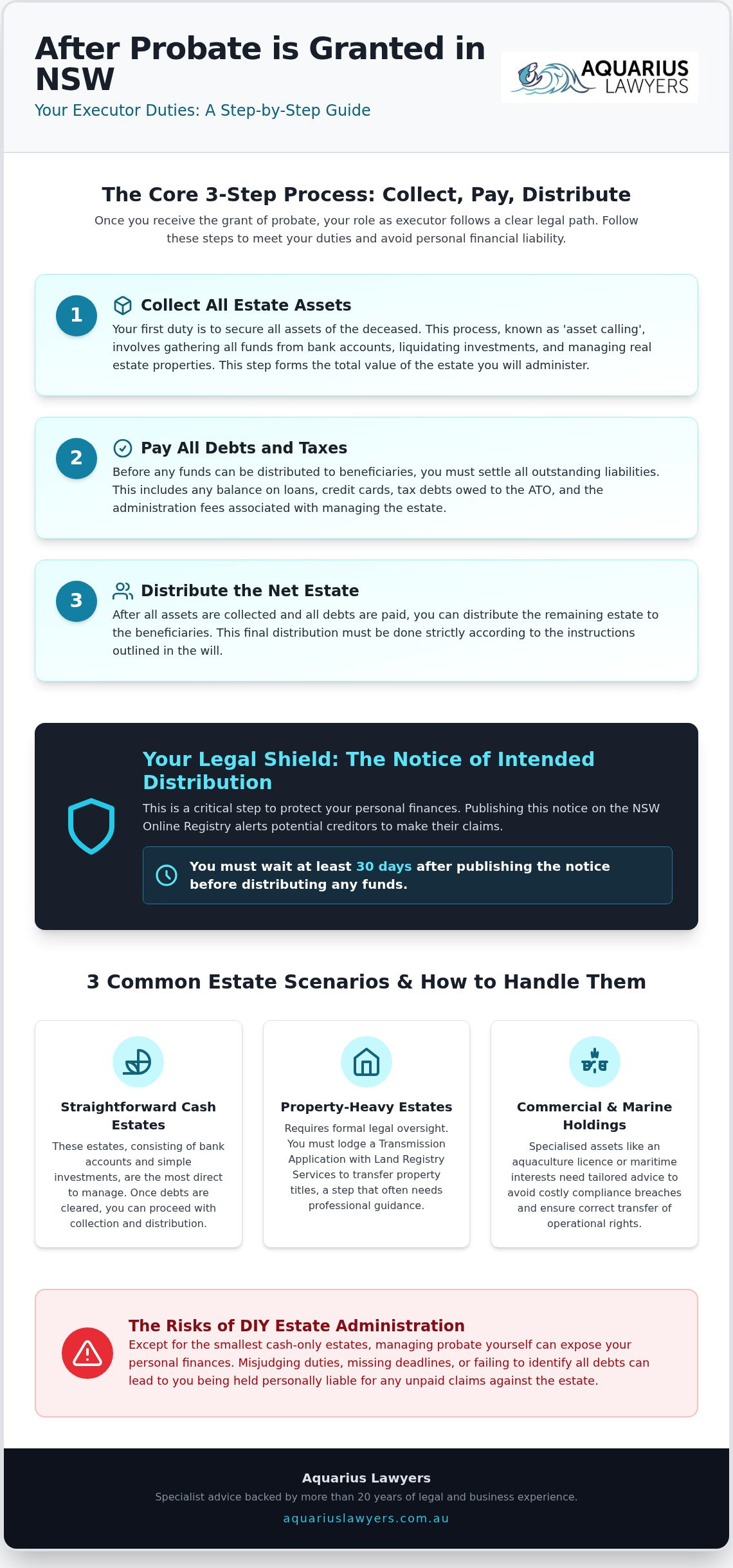
3 Estate Scenarios: Match Your Path to the Assets You Hold
Your administration path depends on asset complexity, beneficiary dynamics, and specific liabilities after you receive probate papers (grant of probate). Executors often misjudge how estate structure dictates immediate duties, and failing to categorize your situation early risks personal financial liability for unpaid debts.
Three typical situations shape the first move:
- Straightforward cash estates: bank accounts and simple investments suit direct collection once debts are cleared.
- Property-heavy estates: sales and Transmission Applications demand formal legal oversight before you transfer title.
- Commercial or marine holdings: specialised assets, an aquaculture licence, or maritime interests need tailored advice from Aquarius Lawyers so you avoid costly compliance breaches.
Managing these responsibilities without support creates operational and legal risk for you as executor.
After probate is granted what next nsw: collect, pay, then distribute
After you receive probate papers, you collect the deceased’s assets, pay outstanding debts, and distribute the remaining estate to beneficiaries.
- Asset calling: Gather all funds from bank accounts, liquid investments, and real estate.
- Debt settlement: Pay off balance liabilities, including tax debts and administration fees.
- Licence transfers: Execute formal transfers for commercial assets or an aquaculture licence where operational rights must pass to a surviving entity or beneficiary.
- Final distribution: Distribute the net estate strictly according to the will instructions.
Early action prevents disputes. You must handle legal administration carefully because commercial property or corporate assets carry serious strategic implications. Structural choices in business management mirror challenges in industry advocacy, as covered in our note on commercial fishing industry advocacy. Correct handling of probate application documentation protects you from personal liability.
Publish the Notice of Intended Distribution Before You Release Funds
Publishing a Notice of Intended Distribution protects you from personal liability when you transfer estate assets to beneficiaries. This statutory public notice alerts potential creditors to submit their claims against the estate within a fixed timeframe.
Submitting this notice soon after you receive probate papers prevents unnecessary delay in asset administration. The notice works as an official shield against late personal liability claims on your own assets. You must allow creditors a waiting period of at least 30 days from the publication date before distributing any funds.
You expose your personal finances if you distribute estate money early without this legal defence. Obtaining probate is the first step; completing statutory public notices secures your role. Delaying the notice extends your risk exposure. Aquarius Lawyers helps you secure statutory protections while you complete the remaining administration steps.
Transfer Personal and Real Property Without Title Delays
Transferring real estate requires specific forms to Land Registry Services alongside your probate papers. You must lodge a Transmission Application to register property under an executor or beneficiary name.
Executors often overlook commercial assets or specialist permits during this process. Primary land titles still demand physical title deeds or electronic conveyancing workspace registration.
For personal property such as bank accounts and shares, present certified copies of your grant to each institution. Commercial operations need tailored handling: an aquaculture licence transfer demands secondary approvals from the Department of Primary Industries. Failing to secure those permits risks immediate operational halts. When you distribute complex assets, specialist probate advice helps you avoid administrative delays and regulatory penalties.
Claim Legacy Interest and Executor Commission Under Court Rules
You can legally claim an executor’s commission by filing a formal application with the Supreme Court of NSW.
Executors often miscalculate legacy interest by relying on informal agreements rather than statutory rules. Applying court guidelines precisely prevents costly personal liability. Secure court approval or written beneficiary consent before taking payments from the estate; unapproved payments expose you to personal financial claims.
Statutory rules require interest to accrue on unpaid specific gifts, known as overdue legacies, if distribution takes longer than twelve months after the death. You must account for asset liquidity, administration delays, and court schedules to protect estate funds.
After you obtain probate papers, submit detailed accounts to substantiate your claim for work performed. Applying for an executor’s commission (payment for your time and trouble administering the estate) rewards effort and demands meticulous record-keeping. For estate administration support, consult Aquarius Lawyers to navigate your duties safely.
Professional Fees Versus DIY: What Each Route Costs You
Self-administering an estate risks costly errors; hiring legal professionals supports compliance and safeguards family wealth. Administering without legal assistance creates exposure to interest penalties on late gifts. Administrative mistakes frequently delay real estate transfers, and professional guidance prevents those distribution bottlenecks.
Unpaid gifts to beneficiaries accrue interest at court-mandated rates if unpaid twelve months after death. Professional fee structures vary depending on firm resources and case complexity, as shown by comparative analysis samples across legal providers.
| Administration Route | Operational Cost Factors | Financial Risk Profile |
|---|---|---|
| Legal Assistance | Professional service fees | Low risk of penalty interest |
| Self-Administered (DIY) | Personal time and filing charges | High risk of administrative errors |
Self-administration suits tiny estates, while legal support fits complex real estate portfolios.
Tip: Factor market fee variances into the estate account early to avoid unexpected shortfalls during final distribution.
Ask for a clear fee comparison before you lock in your administration route.
DIY Administration Risks That Hit Your Personal Finances
Administering an estate without legal help exposes you to personal financial liability if you miscalculate tax debts or distribute assets incorrectly. Managing probate papers without professional oversight often leads to costly errors.
Beneficiaries can sue you personally for missing funds, and creditors hold you accountable for unpaid liabilities. Self-administered estates frequently derail over mismanaged trusts or flawed probate submissions. Legal missteps can trigger immediate licence impacts or force the liquidation of maritime assets.
Situation: you hold an estate with commercial permits and maritime assets and try to finalise transfers alone.
Action: you miss a secondary approval on an aquaculture licence or file incomplete transmission papers.
Outcome: operations halt, creditors press claims, and you face personal exposure for unpaid liabilities.
DIY fits simple estates with cash assets, while complex cases require legal support. Aquarius Lawyers protects you from severe litigation risks so you can protect you, your family, or your business through sound administration.
Frequently asked questions
What must be done after probate is granted?
You must collect the estate assets, clear any outstanding liabilities, and safeguard property during administration. Notify banks, register the official probate papers with asset registers, and secure commercial assets or physical property. Verify tax obligations and keep complete accounting records.
When can an estate be distributed?
You can distribute the estate safely once the statutory notice period expires and you have settled all valid debts. Distributing assets too early exposes you to personal financial liability if unexpected creditors or family provision claims arise. Professional guidance helps you set the correct timing to protect your position.
How are personal and real property transferred?
You transfer real estate by filing the legal transmission application with the land registry using your probate papers. Personal items, funds, and commercial entities require submitting certified copies of the grant to relevant institutions. Transferring complex holdings such as an aquaculture licence or maritime assets requires formal regulatory approval from state authorities.
What notice period is required before distributing assets?
You must publish an online notice of intended distribution and allow at least 30 days for potential claimants to respond. Waiting at least six months from the date of death before a final distribution provides strong legal protection against personal liability. This step helps you meet statutory duties before releasing funds to beneficiaries.
Is a grant of probate necessary?
A formal grant is necessary whenever banks, land registries, or asset registers require official court authority before releasing high-value assets. Smaller estates with minimal funds or property held as joint tenants may not require full court authorisation. Tailored legal advice helps you handle your specific asset structure while managing legal risks.
Next Steps After Probate Is Granted in NSW
Obtaining probate papers is the first hurdle in legal administration. Executors face strict duties when liquidating assets, settling debts, and distributing legacies to beneficiaries in Sydney and across New South Wales. Protecting personal liability requires meticulous asset transfers, particularly when handling commercial holdings or specialised permits such as an aquaculture licence transfer.
Executing these tasks correctly prevents costly legal disputes. Led by Katherine Hawes, Principal Solicitor, the Aquarius Lawyers team brings over 20 years of legal and business experience to secure estate administration and mitigate legal risks.
If you need professional support to finalise an estate safely, contact Aquarius Lawyers today.
Disclaimer
Please note that legal rules change and this is not a substitute nor construed as legal advice. It is general information only.