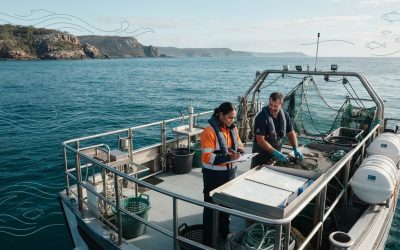
You have spent decades building a multi-generational legacy on the water, yet a single interaction with fisheries officers can put your entire future at risk in less than an hour. It is a gut-wrenching reality for many skippers when the line between a routine inspection and a formal afma investigation process begins to blur. We understand the weight of that pressure, especially with the constant anxiety regarding vessel seizure or fines that can now reach A$165,000 for serious breaches.
You deserve absolute clarity when dealing with complex Commonwealth regulations and the confusion of overlapping State laws. This guide provides the strategic legal insight you need to protect your livelihood and your family’s future. We will walk you through the 2026 compliance landscape, explain your rights during a boarding or interview, and show you how early professional intervention is often the only way to avoid criminal prosecution or licence suspension.
Key Takeaways
- Identify the specific operational triggers, such as VMS anomalies and aerial surveillance, that can initiate a formal inquiry under the Fisheries Management Act 1991.
- Navigate the five critical stages of the afma investigation process to ensure you remain compliant while protecting your commercial fishing licence.
- Learn how to balance your Section 167 ‘Duty to Assist’ with your legal right to silence during formal interviews and at-sea boardings.
- Understand the full spectrum of potential outcomes, from no further action and formal warnings to the risk of heavy fines and criminal prosecution.
- Discover why engaging a Fisheries Law specialist early provides a strategic shield that can be the difference between a warning and a total loss of livelihood.
What Triggers the AFMA Investigation Process?
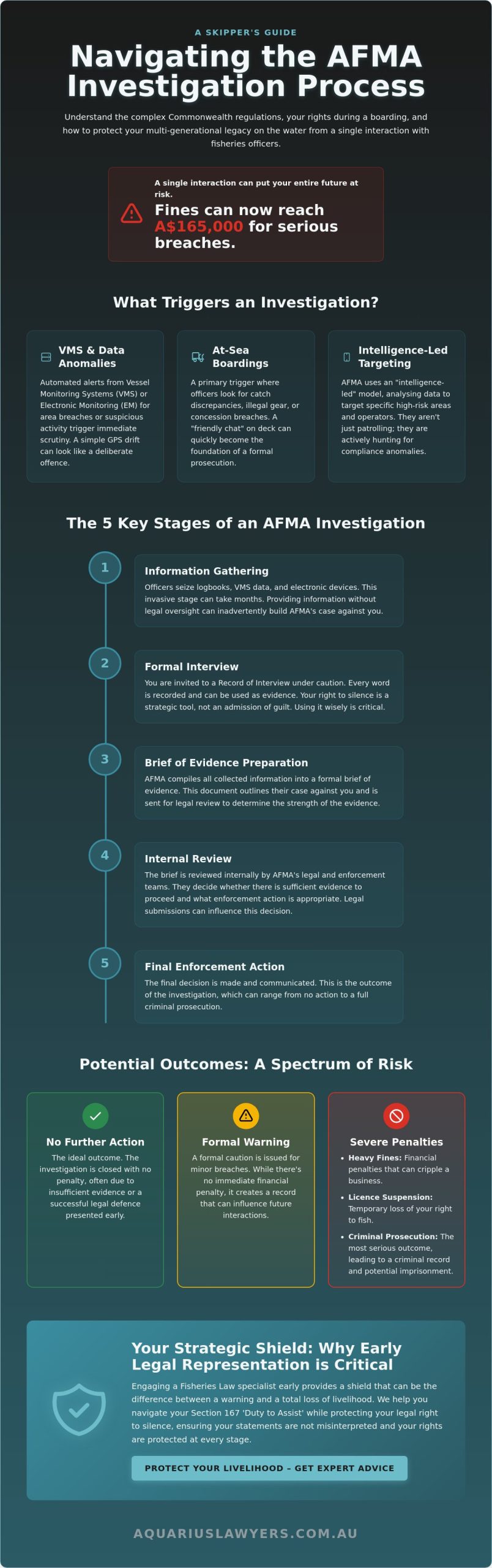
An afma investigation process is a formal inquiry conducted by the Australian Fisheries Management Authority (AFMA) into suspected breaches of the Fisheries Management Act 1991. While the ocean is vast, the regulatory net is incredibly tight. In 2026, AFMA has moved away from broad patrols in favour of a surgical, “intelligence-led” policing model. This approach relies on the National Compliance and Enforcement Program 2025-2027, which uses data analytics to target specific high-risk areas and operators. They aren’t just patrolling; they’re hunting for anomalies.
Distinguishing between a routine inspection and a formal investigation is the first step in protecting your livelihood. A routine inspection is a standard check of your gear, catch, and paperwork to ensure compliance. However, the moment an officer suspects a breach has occurred, the nature of the interaction shifts. This transition is often subtle but legally significant. If an officer begins to caution you or asks questions designed to elicit an admission, you’ve moved from a check-up to a formal investigation. Recognising this shift allows you to pause and seek advice from a Fisheries Law specialist before making statements that could be used against you.
Vessel Monitoring Systems (VMS) and Data Anomalies
VMS acts as a silent witness that never sleeps. Automated alerts for area breaches or suspicious gear usage trigger immediate scrutiny from AFMA’s compliance centre. With the expansion of mandatory Electronic Monitoring (EM) across the Northern Prawn Fishery and other sectors between July 2026 and April 2027, the volume of data being analysed has surged. Technical malfunctions are a significant risk here. A simple GPS drift or a momentary power loss on your VMS unit can look like a deliberate attempt to fish in a closed zone. We recommend keeping meticulous independent paper logs. These manual records serve as your primary evidence to counter automated data that might misrepresent your vessel’s actual movements.
At-Sea Boardings and Inspections
At-sea boardings remain a primary trigger for the afma investigation process. During these procedures, officers look for catch discrepancies, illegal gear configurations, or breaches of concession conditions. It’s common for a “friendly chat” on the deck to be the foundation of a later prosecution. Officers are trained to gather evidence from the moment they step aboard. You should document the boarding process from your perspective by taking photos of gear and recording the names of the officers involved. If the questioning moves beyond operational basics and into “why” or “how” an alleged breach occurred, the investigation is officially underway.
The 5 Key Stages of an AFMA Investigation
Understanding the roadmap of an afma investigation process is essential for any commercial operator. It is not a singular event but a structured legal sequence governed by the Fisheries Management Act 1991. Each stage represents a gate where the right strategy can significantly influence the final outcome. The process generally follows five distinct phases: Information Gathering, Formal Interviews, Preparation of a Brief of Evidence, Internal Review, and Final Enforcement Action.
The Information Gathering Phase
This initial stage is often the longest and most invasive part of the inquiry. AFMA officers have extensive powers to seize logbooks, VMS data, and even vessel computers or personal electronic devices if they’re operating under a warrant. Many operators mistakenly believe that voluntary cooperation will lead to a quicker resolution. In reality, providing information without legal oversight can inadvertently fill gaps in AFMA’s case. The timeline here is unpredictable; investigations can take several months to progress as officers cross-reference catch data with satellite records and crew statements. Seeking advice from a Fisheries Law expert early in this sequence can often shift the trajectory of the entire matter.
The second stage involves the Formal Interview. This is where you’re invited to provide a Record of Interview under caution. It’s a high-stakes environment where every word is recorded and carries significant legal weight. Anything you say can be used as evidence in court later. Silence is a legal right, and choosing when to exercise it is a strategic decision rather than an admission of guilt. We find that many skippers feel a psychological need to explain themselves immediately, but waiting for legal counsel is the only way to ensure your statements aren’t misinterpreted.
The Brief of Evidence and Legal Review
Once the facts are collected, AFMA compiles a Brief of Evidence. In a fisheries law context, this document includes every piece of technical data, witness statement, and physical evidence gathered during the afma investigation process. For serious offences, such as those carrying the A$165,000 maximum penalty for individuals, this brief is sent to the Commonwealth Director of Public Prosecutions (CDPP). The CDPP then decides if there’s a reasonable prospect of conviction and if the prosecution is in the public interest.
The final stages involve an internal review followed by enforcement action. This ranges from a No Further Action letter, which is the ideal result, to formal warnings, infringement notices, or a full-scale criminal prosecution in the Federal Court. A specialist lawyer looks for evidentiary gaps at this stage, such as technical failures in VMS tracking or procedural errors during the boarding, to challenge the validity of the brief before it ever reaches a magistrate. Strategic intervention during the review phase is often the last chance to resolve a matter through administrative channels rather than a public trial.
Your Rights and Obligations: Navigating Section 167
Dealing with fisheries officers requires a steady hand and a clear head. The afma investigation process often hinges on the early interactions between a crew and the boarding party. At the heart of these encounters is Section 167 of the Fisheries Management Act 1991, which outlines your duty to assist. This section is frequently misunderstood. It creates a legal equation where your requirement to provide “reasonable assistance” must be balanced against your fundamental right to silence. Getting this balance wrong can be the difference between a minor administrative follow-up and a full-scale prosecution.
You have a legal obligation to help officers perform their duties. This includes showing your fishing concessions, allowing access to the vessel’s hold, and pulling up gear for inspection. However, this duty doesn’t extend to answering questions that might incriminate you. Refusing to help with physical inspections can lead to a charge of obstructing a fisheries officer, which carries heavy penalties. Conversely, talking too much can provide the missing link AFMA needs to build a case. Never participate in a formal record of interview without a specialist lawyer present. A professional advisor acts as a shield, ensuring you satisfy your Section 167 obligations without signing away your livelihood.
The Right to Silence in Fisheries Law
The right to silence is your most powerful tool during an investigation. AFMA officers are highly trained to maintain a conversational tone, making you feel as though you’re just “clearing things up.” Don’t be misled. Any “off the record” comments made on the deck or in the galley can be transcribed into a Brief of Evidence later. You’re generally required to provide your name, address, and details of your fishing concession. Beyond those basics, you can legally remain silent. Maintaining a “no-nonsense” composure under psychological pressure is difficult, but it’s essential. Silence isn’t an admission of guilt; it’s a strategic pause that allows your legal team to review the facts before you commit to a statement.
Obligations of the Master and Crew
The Master of the vessel carries the heaviest burden of responsibility. In a practical, at-sea environment, reasonable assistance means ensuring the safety of the boarding party and providing access to logs and VMS hardware. It’s vital to remember that the actions of a deckhand can create liability for the licence holder. If a crew member makes speculative guesses about catch weights or location data, those statements can be used to justify further seizure of equipment. You should instruct your crew to remain factual and refer all non-operational questions to the Skipper. Managing your crew’s input ensures that AFMA receives accurate data rather than speculative comments that could trigger a more intense afma investigation process.
Outcomes of the Investigation: From Warnings to Prosecution
The conclusion of the afma investigation process isn’t always a courtroom drama. Outcomes range from administrative cautions to life-altering financial penalties. For many skippers, the best-case scenario is a “No Further Action” letter. This occurs when your legal team successfully explains an anomaly or demonstrates that the evidence is insufficient to prove a breach. If you reach this result, your record remains clean and your operations continue without interruption.
However, if AFMA believes a minor breach occurred, they may issue a formal warning or an infringement notice. While these avoid a day in court, they aren’t harmless. A formal warning stays on your compliance record and increases your risk-based priority for future inspections. Infringement notices involve on-the-spot fines that, once paid, essentially act as an admission of the offence. For serious breaches, such as illegal area entry or fishing without a concession, you face criminal prosecution in the Federal Court. As of 2026, individuals can face fines up to A$165,000, while companies may be liable for significantly more. If you are facing any of these outcomes, you should contact our Fisheries Law team to discuss your options immediately.
The ‘Show Cause’ Notice: Your Final Opportunity
A ‘Show Cause’ notice is perhaps the most critical document you will ever receive. It is a formal letter stating that AFMA is considering suspending or cancelling your fishing licence. This is not a suggestion; it is a direct threat to your livelihood. You are given a specific window to provide a persuasive submission explaining why this action should not be taken. This is your final opportunity to present mitigating circumstances. We often use evidence of gear failure, GPS technical glitches, or extreme weather conditions to influence the decision-maker. A well-drafted, evidence-backed response can often downgrade a suspension to a manageable fine or a simple caution.
Vessel Seizure and Forfeiture
In extreme cases, AFMA has the power to seize your vessel and its catch. This usually happens when the suspected breach is severe or if there’s a risk of continued illegal activity. The financial impact of a vessel “tie-up” is often more devastating than the fine itself. Every day your boat sits at the wharf is a day of lost revenue and mounting port fees. There is a legal process known as “Bonding” where you can seek the return of your property by providing a financial security to the Commonwealth. This process is complex and requires urgent legal intervention to ensure your vessel is back on the water while the afma investigation process continues in the background.
Why Strategic Legal Representation is Critical
Commercial fishing exists at a high-pressure intersection of Marine Law, Criminal Law, and complex maritime regulations. Managing the afma investigation process effectively requires more than just basic legal knowledge. It demands a strategic “innovative veteran” approach that understands the unique rhythms of the industry. We act as a professional shield, ensuring that technical data doesn’t become a weapon used against your business. Without a specialist advocate, a simple misunderstanding of a regulation can spiral into a costly legal battle that threatens your family’s future.
Early intervention is the most effective way to protect your interests. Calling a lawyer while officers are still on your deck is always more effective than calling one after a summons arrives in the mail. We help you manage the flow of information from the very first minute. This proactive stance allows us to clarify technical anomalies in real-time, preventing the “snowball effect” where a minor query turns into a multi-month afma investigation process. We bridge the gap between the practicalities of a working vessel and the rigid requirements of Commonwealth law.
The Aquarius Lawyers Advantage
Principal Katherine Hawes brings a niche understanding of Australian fisheries compliance that generalist firms often lack. We don’t just understand the law; we understand the gear, the VMS hardware, and the daily realities of working at sea. Our “no-nonsense” approach when dealing with AFMA investigators and the Commonwealth Director of Public Prosecutions (CDPP) focuses on one goal: keeping your boats on the water. We prioritise cost-effective, pragmatic resolutions over unnecessary litigation, ensuring your business remains viable throughout the inquiry.
Next Steps: What to Do if AFMA Contacts You
If AFMA contacts you regarding a potential breach, you must take immediate, protective steps. Secure your logbooks, notify your crew to remain polite but guarded, and avoid making speculative statements. It’s also wise to conduct an independent legal audit of your compliance systems to identify vulnerabilities before they trigger an official inquiry. Preparation is your best defence against the uncertainty of a regulatory investigation. If you are currently facing scrutiny or have received a notice from the authorities, you need to act quickly.
Contact Aquarius Lawyers today for a confidential consultation to discuss your situation and secure your professional legal shield.
Secure Your Future on the Water
The regulatory landscape in 2026 demands a proactive mindset. You’ve seen how VMS anomalies and at-sea boardings can quickly trigger a formal inquiry that puts your vessel at risk. Understanding the afma investigation process is your first line of defence, but knowledge alone isn’t enough when your commercial licence is on the line. Success often comes down to early intervention and a clear understanding of your Section 167 rights. It’s about balancing your duty to assist with the strategic use of your right to silence to ensure a technical glitch doesn’t become a career-ending charge.
Don’t leave your multi-generational legacy to chance. Led by Katherine Hawes, Australia’s renowned ‘Fish Lawyer’, our team provides specialist expertise in the *Fisheries Management Act 1991*. We have a proven track record in defending fisheries prosecutions and offer the steady, no-nonsense guidance you need to navigate these high-stakes storms. Protect your licence and livelihood-speak with The Fish Lawyer today. With the right strategy and a trusted advisor by your side, you can move past the stress of an investigation and get back to work with total confidence.
Frequently Asked Questions
What should I do if an AFMA officer boards my vessel?
Remain calm and provide the basic identification and concession details required by law. You have a legal duty to provide “reasonable assistance” under Section 167, which includes allowing access to your hold and gear. However, you should avoid discussing the specifics of your fishing activity or answering “why” questions until you have sought legal advice. Politely inform the officers that you’re happy to assist with the physical inspection but will reserve comment on operational matters.
Can AFMA seize my boat during an investigation?
Yes, AFMA has the authority to seize a commercial vessel and its catch if they suspect a serious breach of the Fisheries Management Act 1991. This typically occurs when there is a risk of continued illegal activity or if the evidence on board is critical to a prosecution. If your boat is seized, you can apply for “Bonding,” which involves providing a financial security to the Commonwealth to have the vessel released while the afma investigation process continues.
Do I have to answer all questions during an AFMA interview?
No, you are only legally required to provide your name, address, and details regarding your fishing concession. Beyond these basic facts, you have a fundamental right to silence. While officers may encourage you to “clear things up” in a conversational way, these statements often end up in a Brief of Evidence. It’s always safer to politely decline to answer further questions until a specialist lawyer is present to protect your interests.
What is a ‘Show Cause’ notice in fisheries law?
A ‘Show Cause’ notice is a formal document stating that AFMA is considering taking administrative action against your licence, such as suspension or cancellation. It is your final opportunity to provide a written submission explaining why such action is not justified. You must act quickly and strategically during this window, as a well-drafted response using evidence like gear failure or weather data can often prevent the total loss of your livelihood.
How long does an AFMA investigation typically take?
The timeline of an afma investigation process depends on the complexity of the case and the volume of data involved. While some matters are resolved within weeks, investigations involving VMS anomalies or extensive electronic monitoring data can take several months to reach a conclusion. AFMA conducted 223 domestic boat inspections in 2025, and the subsequent analysis of logs and witness statements from such events is often a methodical and lengthy procedure.
Can I lose my commercial fishing licence for a first-time offence?
Yes, even a first-time offence can lead to licence suspension or cancellation if the breach is deemed serious or reckless. Many fisheries offences are “strict liability,” meaning AFMA doesn’t need to prove you intended to break the law. With maximum fines for individuals reaching A$165,000 for certain offences in 2026, the stakes are incredibly high. Early legal intervention is the most effective way to mitigate these risks and protect your long-term right to fish.
What is the difference between a state and a Commonwealth fisheries investigation?
The primary difference lies in the jurisdiction and the species being targeted. State investigations generally cover inshore waters and species managed by state governments, while Commonwealth investigations are led by AFMA and cover the Australian Fishing Zone (AFZ). There is often a complex overlap in these laws, especially when vessels move between jurisdictions. Understanding which set of regulations applies to your specific concession is vital for maintaining compliance and defending against alleged breaches.
Should I sign the statement provided by the fisheries officer at the end of a boarding?
No, you aren’t legally required to sign an officer’s notebook or a prepared statement at the end of an inspection. Signing a document on the spot means you are agreeing to the officer’s version of events, which may be incomplete or misinterpreted. It’s better to request a copy of the notes and inform the officer that you will review them with your legal representative before providing any formal acknowledgement or signature.
Disclaimer
Please note that legal rules change and this is not a substitute nor construed as legal advice. It is general information only.