A “no” from the Department of Primary Industries and Regional Development (DPIRD) isn’t the final word on your maritime future; it’s often just the start of a strategic legal process. If you’re facing a refusal or permit conditions that make your business unviable, appealing an aquaculture licence decision in NSW is your most effective path to protecting your capital. You’ve likely poured significant investment into your site, and feeling like bureaucratic delays are sinking your project is a frustration we understand deeply.
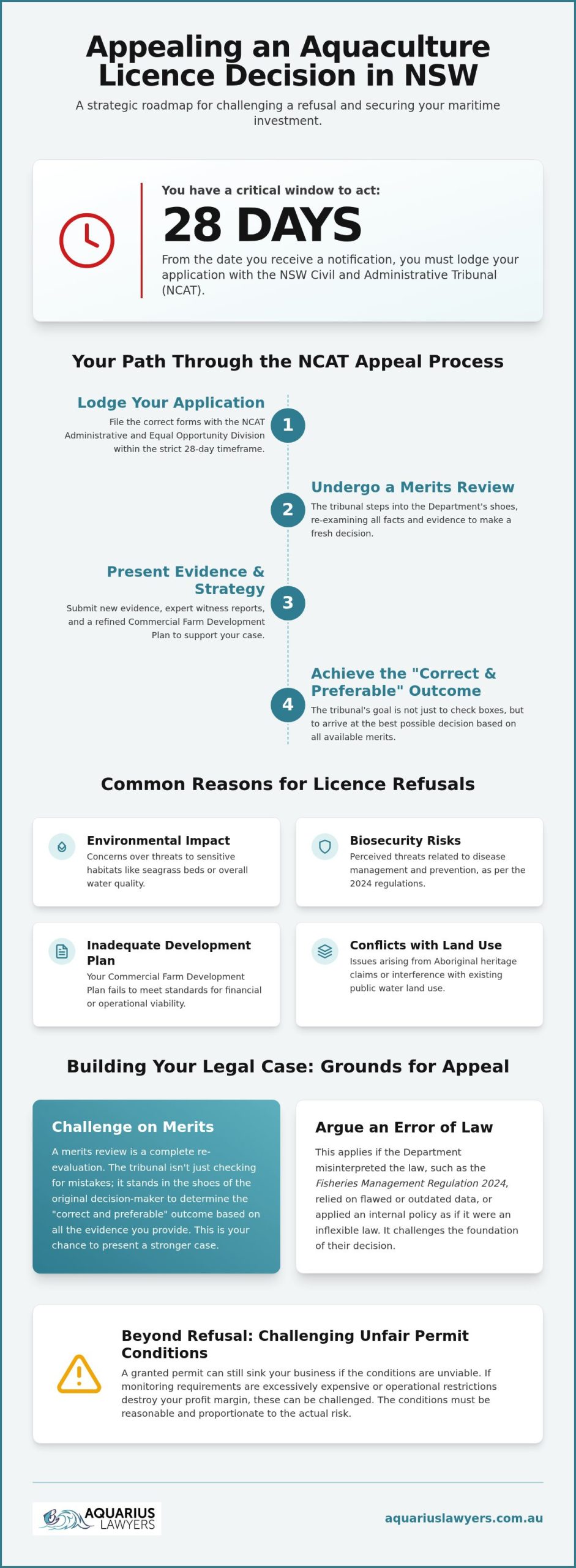
This guide provides the exact roadmap for challenging a refusal and securing your maritime investment. We’ll break down the critical 28-day deadline for the NSW Civil and Administrative Tribunal (NCAT), explain the transition from internal reviews to merits-based appeals, and show you how to align your case with the Fisheries Management (Aquaculture) Regulation 2024. By layering legal expertise with a pragmatic approach to the DPIRD’s culture, you can gain the clarity needed to turn a regulatory setback into a successful operational outcome.
Key Takeaways
- You have exactly 28 days from receiving a notification to lodge your application with the NCAT Administrative and Equal Opportunity Division.
- Understand how a merits review allows the tribunal to step into the Department’s shoes and make the “correct and preferable” decision for your permit.
- Discover how expert marine witnesses and a refined Commercial Farm Development Plan can turn a refusal around when appealing aquaculture licence decision nsw.
- Identify procedural errors or unfair conditions that threaten your maritime investment, ensuring your business remains viable and compliant.
Understanding Your Aquaculture Licence Decision in NSW
Receiving a formal notice from the Department can feel like your entire maritime investment is hanging by a thread. Whether it’s a flat refusal, a suspension, or the imposition of restrictive conditions, these decisions are governed strictly by the Fisheries Management Act 1994. This legislation acts as the rulebook for the NSW seafood industry. If you’re considering appealing aquaculture licence decision nsw, you must first identify the specific nature of the Department’s move. Is it a total block, or are the conditions simply making your operations unviable? Clear Evidence + Regulatory Alignment = A Viable Operation.
Your most critical asset right now is the “Statement of Reasons”. This document is the Department’s logic laid bare. It explains the “why” behind the “no”. Without this, you’re essentially shadow-boxing. It reveals if the decision was triggered by a specific biosecurity policy, a perceived environmental risk, or a technical oversight in your paperwork. We treat this document as the foundation of your strategy, as it highlights exactly which facts the Department has misinterpreted or overlooked.
Common Reasons for Permit Refusals
Most refusals stem from a few predictable pressure points. Environmental impact concerns, such as threats to seagrass or water quality, are frequent hurdles. Biosecurity risks are also high on the list, particularly with the industry’s focus on managing disease spread under the 2024 regulations. Often, the issue is as simple as an inadequate Commercial Farm Development Plan. If your business plan doesn’t meet the Department’s standards for financial and operational viability, they won’t hesitate to refuse the application. Conflicts with Aboriginal heritage, existing public water land use, or land-side infrastructure often arise; in these instances, reports from ML Traffic Engineers Australia can help address transport and access concerns that might otherwise impede your project’s approval.
In NSW, the regulatory structure is a synergy between permits and leases. An aquaculture lease gives you the right to occupy a specific area of water, but the permit is what actually authorises the activity. It’s the difference between owning the shopfront and having the right to trade. For corporate permit holders, the Department requires up-to-date ASIC extracts to verify the company’s standing. If the Department’s decision feels disconnected from the facts, the NSW Civil and Administrative Tribunal (NCAT) serves as the independent venue for a merits review. This process allows for a fresh look at the evidence to ensure the “correct and preferable” outcome is achieved.
Class A (extensive) disputes, common in oyster farming, usually centre on spatial planning and water access. Class B (intensive) disputes, involving land-based systems, focus more on waste discharge and biosecurity protocols. Knowing your class is essential because the evidence required to challenge a decision varies significantly between the two. When you’re appealing aquaculture licence decision nsw, your strategy must be tailored to these specific operational realities to be successful.
Legal Grounds for Appealing a Fisheries Decision
A refusal or a set of restrictive conditions is not a dead end; it’s a legal position open to challenge. When you’re appealing aquaculture licence decision nsw, your primary tool is the merits review. In this process, the tribunal doesn’t just check if the Department followed the rules. It actually stands in the shoes of the original decision-maker to determine the “correct and preferable” outcome based on all available evidence. This is a powerful mechanism. It means that if you provide better data or a more robust environmental plan, the tribunal can overrule the Department’s initial stance.
Beyond merits, we look for an “Error of Law”. This occurs if the Department misinterpreted the Fisheries Management (Aquaculture) Regulation 2024 or applied a policy as if it were an inflexible law. Factual errors are equally common. If the Department relied on outdated oyster mortality data or ignored your specific site’s biosecurity history, the decision rests on a flawed foundation. Understanding the NCAT external appeal process is essential for navigating these complexities and ensuring your maritime investment is protected by accurate data.
Challenging Unfair Permit Conditions
Conditions are often where the real battle lies. A permit might be granted, but if the environmental monitoring requirements are so expensive they eat your entire profit margin, the permit is practically useless. We apply a “reasonableness” test here. Is the monitoring frequency truly necessary for the species being cultivated? If the conditions make your maritime investment commercially unviable, they can be challenged and potentially removed. This ensures that the regulatory burden stays proportionate to the actual environmental risk.
Procedural Fairness and Your Rights
Many operators don’t realise they have a fundamental right to procedural fairness. This is a common gap in government guidance. You have a right to be heard before a negative decision is finalised. If the Department failed to consider relevant information you provided, or if there’s evidence of bias or pre-judgment in the assessment, the decision may be legally invalid. This isn’t about technicalities; it’s about ensuring a fair go for your business. If you suspect your application wasn’t handled with an open mind, speaking with a fisheries law expert can help clarify your standing. Ensuring the Department follows a fair process is just as vital as the technical data in your application.
The NCAT Appeal Process: A Step-by-Step Guide
Timing is everything in fisheries law. The most critical factor you face isn’t just the strength of your evidence; it’s the calendar. You have exactly 28 days from the date you’re notified of a decision to lodge an application for review. If you miss this window, your chances of appealing aquaculture licence decision nsw drop significantly. This application is filed within the Administrative and Equal Opportunity Division of the tribunal, a venue designed specifically to handle disputes between citizens and government agencies. Expert Advice + Prompt Filing = Protected Assets.
While the clock is ticking on your filing, you must also consider a “Stay” application. A stay is a legal order that allows you to keep operating under your existing conditions while the appeal is heard. Without it, a suspension or cancellation takes effect immediately, potentially killing your stock or causing a total loss of market access. The NCAT external appeals process is structured to provide a fair hearing, but it’s your responsibility to ensure your business doesn’t sink while waiting for a tribunal date.
Preparing Your NCAT Application
Your application isn’t just a form; it’s a strategic document. You’ll need to draft “Points of Claim” that clearly outline your legal arguments and identify where the Department went wrong. You must also pay the required filing fees and begin organising your “T-Documents”. These are the Department’s internal files relating to your case. They often contain the raw data, emails, and internal memos that reveal the true logic behind their decision. Reviewing these documents is often the first time an operator sees the actual evidence used against them.
The Compulsory Conference Stage
Before a case goes to a full hearing, NCAT usually requires a compulsory conference. This is a formal mediation session where both parties sit down to see if a middle ground exists. It’s a prime opportunity to negotiate permit conditions or resolve factual disputes without the cost of a full trial. Katherine Hawes, known across the industry as “The Fish Lawyer”, represents your commercial interests during these high-stakes negotiations. If a settlement can’t be reached, the matter proceeds to a formal hearing where a tribunal member will make a final, binding decision. Most successful outcomes are actually secured at this mediation stage, saving you time and preserving your working relationship with the Department.
Strategy and Evidence: How to Win Your Appeal
Winning an appeal requires more than just passion; it requires cold, hard data. When you’re appealing aquaculture licence decision nsw, your strategy must focus on dismantling the Department’s technical justifications. This is where the synergy between legal expertise and scientific evidence becomes your greatest advantage. We don’t just argue that the decision was “unfair”; we prove that it was based on flawed methodology or incomplete information. Robust Data + Expert Testimony = A Successful Reversal.
Your Commercial Farm Development Plan (CFDP) is often the first document a tribunal scrutinises. If the Department refused your permit based on “commercial unviability,” we refine this plan to demonstrate the true economic and operational strength of your project. Similarly, a detailed biosecurity plan serves as a powerful defensive legal tool. It shows the tribunal that you’ve anticipated risks like White Spot Syndrome or Pacific Oyster Mortality Syndrome (POMS) with more sophisticated protocols than the Department’s standard assessment assumes.
Cross-examination is where the Department’s case often unravels. Katherine Hawes, known as “The Fish Lawyer”, uses her niche expertise to question Departmental officers on their specific findings. If their site assessment was rushed or their environmental modelling was based on outdated oyster mortality rates, cross-examination brings these failures into the light. This process ensures the tribunal sees the gaps in the Department’s logic, moving you closer to the “correct and preferable” decision. If your maritime investment is on the line, contact Aquarius Lawyers to start building your evidence-based appeal strategy today.
Gathering Expert Evidence
Independent evidence is your most persuasive asset. Expert evidence in NCAT proceedings refers to specialised knowledge provided by an independent professional to assist the tribunal in understanding complex technical or scientific issues beyond the expertise of a layperson. We frequently commission independent water quality reports or ecological impact studies to counter the Department’s internal findings. Economic evidence is also vital. Proving that your site can contribute to the NSW Government’s target of doubling the sector’s output to $300 million by 2030 can be a highly persuasive argument for granting a permit.
Reviewing the Departmental File
The T-Documents provided by the Department are a goldmine for your legal team. We analyse internal emails and notes for signs of procedural error or pre-judgment that never made it into the formal refusal notice. Sometimes, the “hidden” reasons for a refusal, such as an internal policy shift that hasn’t been legislated, only appear in these internal memos. By identifying these inconsistencies and leveraging previous tribunal wins in similar finfish or oyster cases, we build a narrative of regulatory overreach that the tribunal can act upon.
How Aquarius Lawyers Secures Your Aquaculture Future
Marine law isn’t a side hustle for us; it’s our core focus. We develop bespoke legal strategies that recognise the distinct differences between extensive oyster leases and intensive land-based finfish operations. When you’re appealing aquaculture licence decision nsw, you need a partner who understands the industry’s rhythm as well as the tribunal’s rules. Specialized Knowledge + Strategic Litigation = Commercial Certainty. We provide clear pathways for operators facing permit cancellations or unviable conditions, ensuring your business has the best possible chance of a successful merits review.
We offer fixed-fee options for initial decision reviews and NCAT filings to give you price certainty from the outset. Our team is deeply versed in the NSW Oyster Industry Sustainable Aquaculture Strategy (OISAS), ensuring your appeal aligns with current sustainability benchmarks and industry best practices. Our expertise means we can identify when a Departmental decision contradicts the very sustainability goals the government claims to support. You get direct access to Principal Katherine Hawes, “The Fish Lawyer,” whose reputation in the sector provides the intellectual versatility needed to navigate complex regulatory hurdles.
Why Niche Expertise Matters in Fisheries Law
A general commercial lawyer might understand a contract, but they often lack the deep-water experience needed for maritime tribunals. We’ve built a track record in NSW courts by focusing exclusively on the intersection of law and the sea. This means we don’t just look at your permit; we look at how it interacts with your property rights and long-term aquaculture leases. Protecting your investment requires a “no-nonsense” advisor who knows how the Department operates behind the scenes. This synergy between traditional experience and modern methodology allows us to frame your appeal in a way that resonates with tribunal members and addresses the technical realities of your site.
Next Steps: Protecting Your Investment
The 28-day deadline is unforgiving. If you’ve received a refusal or restrictive conditions, your first move should be requesting an urgent review of your Statement of Reasons. We’ll help you dissect this document to find the factual gaps and procedural errors mentioned earlier in this guide. Identifying these flaws early is the most effective way of appealing aquaculture licence decision nsw and protecting your capital. Booking a strategy session allows us to assess your appeal prospects with a clear, pragmatic lens. Don’t let bureaucratic delays sink your maritime future. Organise a consultation with Aquarius Lawyers today to secure the pathway forward for your business.
Secure Your Maritime Investment Today
Challenging a permit refusal requires a blend of technical data and sharp legal strategy. The 28-day statutory deadline is your most immediate hurdle, but it’s also your opening to a merits review where the “correct and preferable” decision can finally be reached. By leveraging independent expert evidence and a refined Commercial Farm Development Plan, you can challenge restrictive conditions that threaten your business’s viability. Successfully appealing aquaculture licence decision nsw is about more than just paperwork; it’s about ensuring the Department’s logic holds up under the scrutiny of the law.
Principal Katherine Hawes is a recognised expert in Maritime and Fisheries Law with specialised experience in the NCAT Administrative and Equal Opportunity Division. As a Sydney-based firm with extensive regional NSW coverage, we provide the no-nonsense advocacy needed to protect your aquaculture leases. Your hard work in the water deserves a fair go and a clear pathway to growth. Don’t let an administrative error stall your progress. Speak with The Fish Lawyer about your NSW aquaculture appeal and take the first step toward a proactive resolution. We’re here to help you get back to what you do best: farming the sea.
Frequently Asked Questions
How long do I have to appeal an aquaculture licence decision in NSW?
You have exactly 28 days from the date you receive notification of the decision to lodge your application for review with the NSW Civil and Administrative Tribunal (NCAT). This is a strict statutory deadline. Missing this window usually means losing your right to challenge the decision entirely. If you’re considering appealing aquaculture licence decision nsw, you must act immediately to ensure your paperwork is filed correctly and your maritime investment remains protected from administrative finality.
Can I continue to farm my lease while an appeal is in progress?
You cannot automatically continue operations if your permit has been suspended or cancelled; however, you can apply for a “Stay” of proceedings. A Stay is a legal order that puts the Department’s decision on hold while the tribunal considers your case. This is essential for maintaining stock health and business cash flow. Without a granted Stay, any activity on the lease must stop immediately until the final hearing concludes or the decision is overturned.
What is the difference between a merits review and a judicial review?
A merits review involves the tribunal looking at all the evidence again to make the “correct and preferable” decision for your business. It’s a fresh start where the tribunal can substitute its own decision for the Department’s. In contrast, a judicial review only examines whether the Department followed the correct legal process and stayed within its authority. Most aquaculture disputes benefit more from a merits review because it addresses the technical and commercial realities of your farm.
How much does it cost to appeal a fisheries decision at NCAT?
Appealing a fisheries decision involves an NCAT filing fee, which is subject to annual adjustments every July. While the application fee itself is a relatively small administrative cost, the total investment in an appeal usually includes expert witness reports and legal representation. For commercial operators, these costs are often a necessary protection for their capital. We recommend checking the current tribunal fee schedule for the 2026-27 financial year before lodging your documents.
Do I need a lawyer for an aquaculture permit appeal?
You aren’t legally required to have a lawyer at NCAT, but the complexity of the Fisheries Management Act 1994 makes professional guidance a significant advantage. The Department will be represented by their own legal team and technical experts. Having a specialist like “The Fish Lawyer” ensures your cross-examination of Departmental officers is effective and your evidence aligns with tribunal standards. Professional representation often makes the difference between a successful reversal and a costly refusal.
Can the Department cancel my permit without notice?
The Department is generally required to provide notice and a right to be heard before cancelling a permit, as part of your right to procedural fairness. However, in extreme cases involving urgent biosecurity risks or immediate environmental threats, they may act more swiftly. If your permit is cancelled without a fair opportunity to respond, this may form a strong legal ground for appealing aquaculture licence decision nsw based on a denial of natural justice.
What happens if I win my appeal at NCAT?
If you win your appeal, the tribunal can set aside the Department’s decision entirely, vary the restrictive conditions, or send the matter back to the Department for a fresh determination with specific directions. This outcome can restore your right to farm, remove unviable environmental monitoring requirements, and provide the legal certainty needed to continue your operations. Winning at NCAT effectively replaces the Department’s “no” with a legally binding “yes” that aligns with the evidence.
Can I appeal a decision regarding a fish-out (Class F) permit?
Yes, decisions regarding Class F (fish-out) permits are reviewable by NCAT just like Class A or B permits. Whether your application for a new fish-out facility was refused or your existing permit was hit with restrictive conditions, you have the right to seek a merits review. These cases often centre on biosecurity and escape prevention protocols. We apply the same strategic evidence-gathering process to Class F disputes to ensure your commercial recreational fishing venture remains viable.
Disclaimer
Please note that legal rules change and this is not a substitute nor construed as legal advice. It is general information only.