Your most significant business risk isn’t a sudden drop in water quality or a shift in market prices; it’s a missing permit hidden in a legislative blind spot. In the Australian sector, a robust aquaculture business plan legal strategy is the difference between a thriving farm and a costly regulatory shutdown. We understand that the overlap of state and federal regulations feels like an impenetrable wall, especially when you’re trying to secure serious investment. It’s a common frustration that can stall even the most innovative marine projects before the first cage is submerged.
This guide cuts through the noise to provide a clear pathway for your operations. We’ll show you how to master the complex legal framework, from the Fisheries Management Act to the brand-new Queensland Fisheries and Other Legislation (Aquaculture Authorities) Amendment Regulation 2026 that commenced on 27 April. By the end of this article, you’ll know how to build a bank-ready business plan that satisfies both strict regulators and cautious investors. We’re breaking down the dual application process and mandatory compliance codes into a streamlined formula for your success.
Key Takeaways
- Learn how to transform your business plan into a dual-purpose document that satisfies both bank requirements and strict regulatory standards.
- Gain clarity on jurisdictional boundaries to ensure your operation aligns perfectly with the Fisheries Management Act and state-specific licensing.
- Discover the specific legal strategies required to mitigate biosecurity and environmental risks while maintaining a profitable bottom line.
- Use our essential checklist to secure your aquaculture business plan legal foundation, including choosing the right corporate structure and protecting your IP.
- Understand how a specialised approach to marine law can streamline your application process and provide a proactive defence for your commercial assets.
Why Your Aquaculture Business Plan Needs a Legal-First Foundation
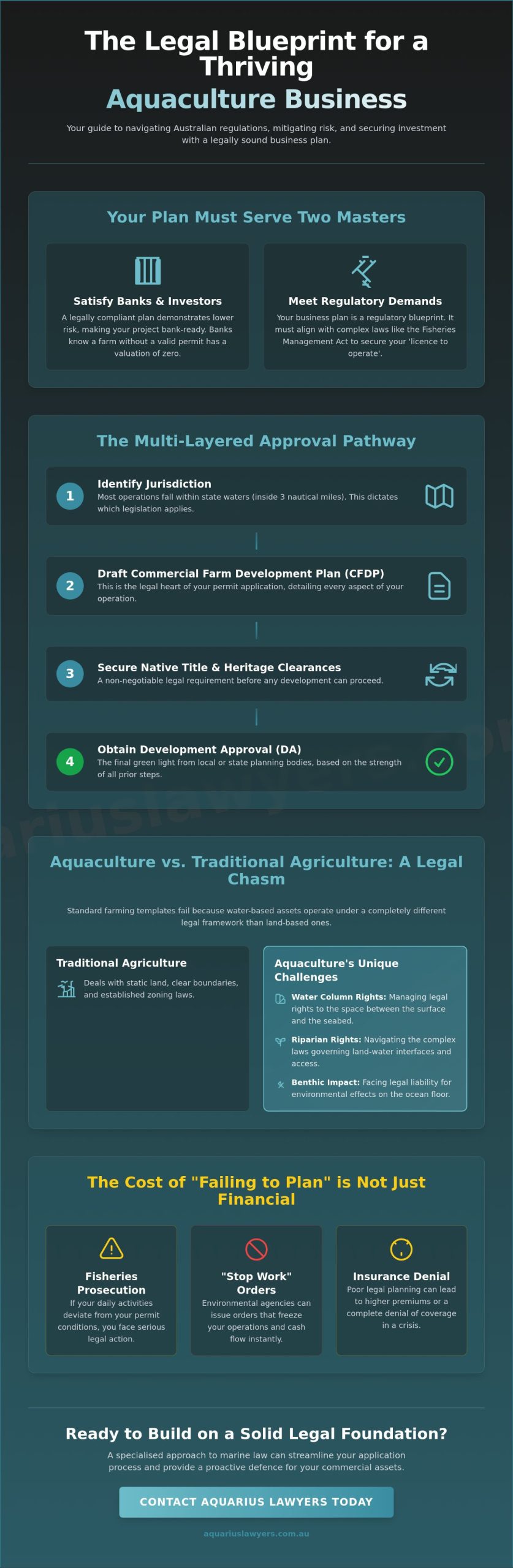
Most entrepreneurs treat their business plan as a high-stakes sales pitch for investors. In the marine sector, that’s a narrow view that invites disaster. Your documentation must function as both a financial roadmap and a regulatory blueprint. When you develop an aquaculture business plan legal strategy, you’re building the framework that allows your business to exist in the eyes of the law. Australian banks frequently prioritise legal compliance over projected yields. They know that a farm without a valid permit has a valuation of zero. Without a “licence to operate” backed by solid legal standing, you risk total project failure before the first fingerlings even arrive.
Success in Aquaculture in Australia requires a sophisticated blend of traditional maritime law and modern methodology. We see too many operators focus on the tech while ignoring the statutes. A legal-first foundation ensures that your innovative breeding techniques or automated feeding systems don’t run foul of heritage or environmental protections. It’s about creating a synergy where your legal strategy protects your commercial assets and your technological edge.
The Legal Cost of “Failing to Plan”
Operational drift is a silent killer in this industry. If your daily activities deviate from the specific conditions of your permits, you face the very real threat of fisheries prosecution. A robust aquaculture business plan legal framework prevents environmental agencies from issuing “stop-work” orders that can freeze your cash flow instantly. Beyond the regulators, your insurance provider is watching. Poor planning often results in higher premiums or a complete denial of coverage when a crisis hits. You can’t afford to treat compliance as an afterthought.
Aquaculture vs. Traditional Agriculture: The Legal Divide
Don’t reach for a standard farming template. Land-based zoning is a world away from the complex web of maritime and riparian rights. While a traditional farmer owns or leases a static patch of dirt, you’re dealing with seabed leases and water column rights subject to shifting tides and overlapping jurisdictions. Standard agricultural models fail to account for the fluid nature of water-based assets.
- Water Column Rights: Managing the space between the surface and the seabed.
- Riparian Rights: Navigating the legalities of land-water interfaces.
- Benthic Impact: Legal liability for what happens on the ocean floor.
These unique factors mean your plan must be purpose-built for the water, not adapted from the land.
Navigating the Regulatory Maze: Licences, Permits, and CFDPs
Getting your operation off the ground requires more than just a good site and a solid yield forecast. You need a map through the Australian regulatory maze. The first step is identifying your jurisdiction. While Commonwealth waters begin three nautical miles offshore, most Australian operations exist within state waters. This means your aquaculture business plan legal strategy must align with specific state legislation, such as the Fisheries Management Act 1994 in NSW. Each state has its own set of hurdles, and missing one can lead to a complete stop-work order before you’ve even stocked your first tank.
The hierarchy of approvals is strict. After determining your jurisdiction, you must draft your Commercial Farm Development Plan (CFDP) as a core component of your permit application. This is followed by securing Native Title and Aboriginal fishing heritage clearances, which are non-negotiable legal requirements. Finally, you’ll need to obtain Development Approval (DA) from your local council or state planning body. It’s a multi-layered process where each approval depends on the strength of the previous one. If you’re feeling overwhelmed by the paperwork, consulting an expert in aquaculture law can help you navigate these hurdles efficiently.
Understanding the Commercial Farm Development Plan (CFDP)
The CFDP is the legal heart of your aquaculture permit. In NSW, this document must cover five essential components: business details, a comprehensive site description, species and culture methods, environmental management, and production feasibility. Proving “production feasibility” is often where new entrants struggle. The Department of Primary Industries needs to see that your business is commercially viable and not just a hobby. You must provide data-backed evidence that your chosen species will thrive in your specific location using your proposed technology. This section of your plan acts as your primary evidence of competence to the regulator.
Water Access and Seabed Leases
Water access involves a distinct legal shift from traditional land ownership. You’re rarely dealing with freehold land; instead, you’re negotiating Crown Land leases for the use of the water column or seabed. These leases are competitive and highly regulated. To streamline the process, many states have established designated Aquaculture Development Zones. Securing a spot in these zones often grants you priority processing because the heavy lifting of environmental impact assessments has already been partially completed. However, lease negotiations can still fail if you don’t account for public access rights or existing maritime traffic. A common pitfall is failing to realise that a seabed lease doesn’t automatically grant you exclusive use of the water surface above it.
Mitigating Operational Risks: Environment, Biosecurity, and Labour
A common objection among new operators is that Australian regulations are too restrictive to allow for real profit. This is a misconception that can lead to expensive shortcuts. In reality, strict compliance is your most effective risk management tool. By integrating a comprehensive aquaculture business plan legal strategy, you transform regulatory hurdles into a competitive advantage. Smart operators don’t just meet the minimum standards; they use these frameworks to build a “litigation-proof” business that attracts high-level investment and secures long-term tenure.
Environmental Impact Statements (EIS) are often viewed as a bureaucratic finish line, but their legal implications extend far into your daily operations. Australia operates under a strict “polluter pays” principle. This means any nutrient discharge or habitat modification beyond your approved limits can result in massive fines or the loss of your lease. Your plan must document how you intend to monitor and mitigate these impacts in real-time. This proactive stance protects you from the “stop-work” orders that can cripple a farm’s cash flow in a single afternoon.
Environmental Compliance and “Polluter Pays” Principles
Your waste management protocols should aim to exceed minimum EPA standards. This isn’t just about being “green”; it’s about legal survival. Documenting proactive environmental stewardship within your aquaculture business plan legal framework provides a clear paper trail of compliance. If an incident occurs downstream, your records serve as evidence that your site was operating within its legal parameters. We recommend using automated monitoring technology to provide the objective data that regulators and courts respect.
Biosecurity as a Legal Defence
Biosecurity is frequently the most overlooked area of maritime liability. If a disease outbreak occurs, you must report “notifiable diseases” immediately under Australian law. Failure to do so can lead to criminal prosecution. Beyond state penalties, you face civil liability if your farm is identified as the source of cross-contamination for neighbouring operations. Documented biosecurity measures act as a robust “due diligence” defence, proving you took all reasonable steps to prevent the spread of pathogens. This documentation is your primary shield against negligence claims that could otherwise bankrupt your company.
Seafarer Rights and Maritime Employment Law
The Fair Work Act applies to your staff even when they are kilometres offshore. Managing a marine workforce involves unique challenges that standard employment contracts don’t cover. You must address specific Occupational Health and Safety (OHS) requirements for divers, boat crews, and technicians working in high-risk environments. Contracts should clearly define roles, safety protocols, and the specific maritime awards that apply. Effective employment law drafting ensures that your team is protected and your business is shielded from unfair dismissal claims or OHS prosecutions.
The Legal Drafting Checklist for Your Business Plan
Once you’ve navigated the external regulatory maze, you must turn your attention inward. Your aquaculture business plan legal strategy needs to address the structural integrity of the business itself. It’s not enough to have the right permits; you need a corporate vehicle that protects your personal assets and a contractual framework that secures your revenue. We often see operators focus so heavily on the biology that they leave their intellectual property or supplier agreements to chance. This is a mistake that can lead to expensive litigation down the track.
A comprehensive checklist should cover everything from your initial setup to how you’ll handle a fallout with a partner. We recommend including specific mediation clauses in all your agreements. This keeps you out of the Supreme Court and in a controlled environment where disputes can be resolved quickly and quietly. Protecting your proprietary breeding techniques or unique tech integrations through robust IP clauses is also essential for maintaining your competitive edge in a growing market. If you are ready to formalise your structure, we can help you draft the commercial law documents required to secure your venture.
Selecting the Right Business Structure
Choosing between a sole trader, partnership, or Pty Ltd company isn’t just an administrative task. It’s a fundamental decision about risk. A company structure offers significant liability protection, which is vital in high-risk marine environments where equipment failure or environmental incidents can occur. Additionally, your structure impacts your eligibility for government aquaculture grants and your tax status as a primary producer. Most commercial lenders favour a Pty Ltd structure because it demonstrates a level of professional maturity and financial separation that partnerships often lack. Investors entering this space should also seek dedicated aquaculture investment legal help to ensure their chosen structure aligns with both compliance requirements and capital protection goals.
Drafting Enforceable Offtake and Supply Agreements
Your revenue stream is only as secure as your offtake contracts. These legally binding future-sales agreements prove to banks that there’s a market for your product before you’ve even harvested. Equally important is protecting the “seed and feed” chain. If your supplier fails to deliver, your entire production cycle could collapse. You must ensure your contracts include specific “Force Majeure” clauses that account for natural disasters like cyclones or sudden water temperature spikes. These clauses protect you from being held in breach of contract when the elements are against you. A well-drafted agreement is your best defence against supply chain volatility.
Implementing Your Strategy with “The Fish Lawyer”
Implementing your aquaculture business plan legal strategy requires more than just a template; it requires a partner who understands the rhythm of the water and the rigour of the law. Aquarius Lawyers, led by Katherine Hawes, known across the industry as “The Fish Lawyer,” brings an “innovative veteran” approach to the table. We blend decades of traditional maritime expertise with modern, tech-forward methodology to ensure your operation isn’t just compliant, but commercially resilient. This combination of high-level strategy and down-to-earth pragmatism provides the clarity you need to move forward with confidence.
Startups often struggle with the unpredictable costs of legal advice. We solve this by offering fixed-fee corporate support, providing certainty for your budget during the critical early stages of development. Our firm integrates contemporary compliance management tools to streamline the paperwork, moving you from the planning phase to active production faster. It’s about efficiency and proactive protection. We value results over ceremony, ensuring that every legal step we take serves a clear commercial purpose for your farm.
Why Niche Expertise Matters in Aquaculture
A general commercial lawyer might understand a contract, but they rarely understand the specific bureaucracy of NSW Fisheries or the nuances of the Fisheries Management Act. Specialist fisheries solicitors see the pitfalls before you trip over them. We’ve successfully resolved complex aquaculture development approval issues where generalist firms were bogged down by the multi-agency requirements of local councils and state departments. Having a guide who speaks the language of both the boardroom and the boat deck makes a tangible difference to your timeline. We help you navigate the system, rather than fighting against it.
Next Steps: From Plan to Production
Building a bank-ready aquaculture business plan legal framework is the first step toward a sustainable legacy. As you scale, your “licence to operate” requires ongoing legal oversight to manage shifting state regulations and environmental mandates. For those looking to attract capital into their operation, understanding the full scope of aquaculture investment legal help available to Australian investors is a critical next step in protecting your growing enterprise. We offer the intellectual versatility to move between different areas of focus, from debt recovery and employment law to complex international maritime disputes. Don’t leave your investment to chance or generic advice that fails to account for the unique risks of the marine environment.
The path to a successful harvest begins with a solid legal foundation. Organise a consultation with Aquarius Lawyers to secure your aquaculture future and ensure your business is built to last. We’re ready to help you turn your plan into a productive reality.
Securing Your Future on the Water
Building a successful marine enterprise in Australia requires more than just biological expertise; it demands a solid regulatory foundation. We’ve explored how a robust aquaculture business plan legal strategy acts as your shield against operational risks and your passport to securing institutional investment. From navigating the complexities of the Fisheries Management Act to drafting airtight biosecurity protocols, your documentation is the heartbeat of your commercial viability. It’s the difference between a project that stalls at the permit stage and one that thrives across multiple harvest cycles.
Principal Katherine Hawes, widely recognised as “The Fish Lawyer,” provides the specialised expertise in Australian Fisheries Law needed to create strategic pathways for your investment. By combining traditional maritime wisdom with modern legal tools, we ensure your “licence to operate” remains secure as you scale. Our approach is designed to provide clarity and confidence in an often-turbulent regulatory environment.
Secure your aquaculture venture with expert legal advice from Aquarius Lawyers. With the right legal framework in place, you’re free to focus on what you do best: growing a sustainable and profitable future in the Australian blue economy.
Frequently Asked Questions
Do I need a fisheries lawyer to start an aquaculture business in Australia?
While you aren’t legally required to hire a solicitor, it’s a strategic move that prevents costly regulatory delays. A specialist ensures your aquaculture business plan legal strategy meets the high standards of both state departments and commercial lenders. We provide the niche expertise to navigate overlapping jurisdictions, helping you avoid the common pitfalls that often lead to permit rejections or expensive litigation down the track.
What is a Commercial Farm Development Plan (CFDP) and is it legally required?
A CFDP is a mandatory document in states like New South Wales that outlines your operation’s commercial and environmental viability. It’s a legal prerequisite for obtaining an aquaculture permit. The plan must prove you have the technical competence and financial capacity to manage the site responsibly. Without an approved CFDP, the Department of Primary Industries won’t grant the necessary licences to begin your operations.
How do I get an aquaculture licence in New South Wales?
Securing a licence involves a multi-stage application through the NSW Department of Primary Industries. You must first submit a comprehensive CFDP and secure a lease for the specific water column or land area. Additionally, you’ll need Development Approval from your local council or state planning body. It’s a rigorous process that requires your aquaculture business plan legal framework to be airtight from the very first submission.
Can I farm fish on private land without a maritime lease?
Yes, you can operate a land-based farm on private property, but you still need an aquaculture permit. While you won’t need a maritime lease, you must comply with local council zoning and secure water access rights. You’re also required to meet the same biosecurity and environmental standards as offshore farms. The legal focus shifts from seabed rights to terrestrial planning and water discharge regulations.
What are the legal penalties for non-compliance in aquaculture?
Non-compliance can result in heavy financial penalties, the immediate suspension of your permits, or even criminal prosecution. For serious environmental breaches or biosecurity failures, regulators have the power to cancel your “licence to operate” permanently. Beyond government fines, you risk the forfeiture of performance bonds or bank guarantees. Consistent documentation and proactive legal oversight are your best defences against these severe commercial risks.
How does the Fisheries Management Act 1994 affect my business plan?
This Act is the primary legislation governing the industry and dictates how you must manage species and habitats. Your business plan must demonstrate a clear pathway to compliance with every relevant section of the Act. It influences everything from your stocking densities to your disease reporting protocols. Aligning your operations with this statute is essential for maintaining your legal standing and securing long-term tenure.
What insurance is legally required for an aquaculture farm in Australia?
Most state leases mandate that you hold significant public liability insurance and workers’ compensation for all staff. Depending on your location and the species you farm, you may also be required to hold environmental liability insurance. This covers the potential costs of habitat restoration or pollution cleanup. It’s vital to check your specific lease conditions, as failing to maintain the required coverage is a breach of contract.
How do I protect my aquaculture business from environmental litigation?
Protection begins with a rigorous Environmental Impact Statement (EIS) and strict adherence to your approved management plans. You should maintain transparent, real-time monitoring records for all water quality and waste discharge data. These records serve as your primary evidence of due diligence if a third party or regulator initiates a legal challenge. Proactive compliance is the most effective way to shield your assets from environmental claims.
Disclaimer
Please note that legal rules change and this is not a substitute nor construed as legal advice. It is general information only.