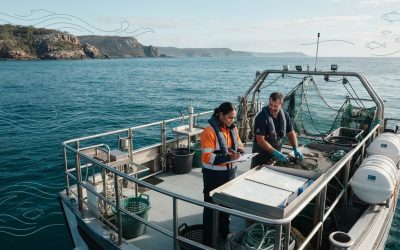
In the high-stakes environment of the NSW coastline, a single administrative oversight in your logbook isn’t just a paperwork error; it’s a direct threat to your family’s livelihood and your hard-earned quota. With over 6,800 offences detected by authorities in the 2023-24 period, the reality of commercial fishing fines nsw is that the Department of Primary Industries often operates on a “strict liability” basis. This means your intent doesn’t matter; if the breach occurred, the penalty follows regardless of whether it was an honest mistake.
It’s exhausting to keep up with the FisherMobile app and evolving regulations while you’re focused on the physical demands of the sea. The fear of vessel forfeiture or licence cancellation is a heavy weight for any operator to carry. We understand that your quota is more than just a number; it’s your future. This article provides a clear pathway to managing NSW fisheries penalties and explains how a proactive legal strategy can safeguard your commercial interests. We’ll examine common pitfalls, the mechanics of risk-based compliance audits, and the specific steps you can take to avoid a criminal record while retaining your essential fishing units.
Key Takeaways
- Stay ahead of the 2026 enforcement landscape by understanding how AI-enhanced VMS and drone surveillance impact your daily operations.
- Navigate the “strict liability” trap where even minor logbook errors can result in significant commercial fishing fines nsw and immediate threats to your livelihood.
- Master the jurisdictional complexities of the 3-nautical-mile limit to ensure your gear and reporting remain compliant across State and Commonwealth waters.
- Utilise proactive compliance audits protected by Legal Professional Privilege to identify and fix vulnerabilities before they reach the courtroom.
- Learn how a specialised maritime legal strategy defends both your professional reputation and your long-term commercial quota.
Commercial Fishing Fines in NSW: The 2026 Regulatory Landscape
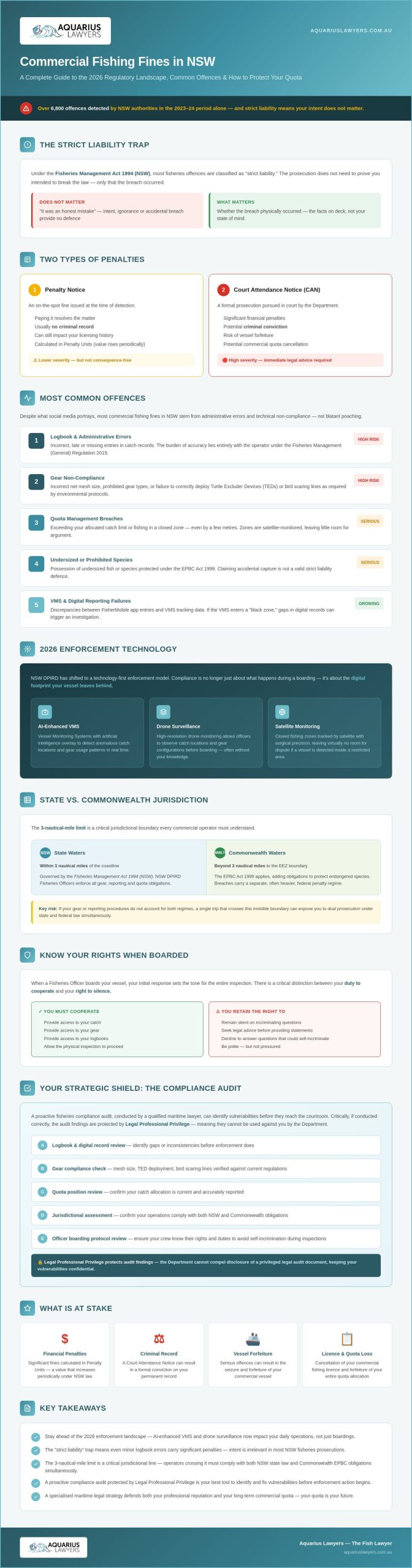
Commercial fishing fines nsw are more than just a cost of doing business; they are a direct enforcement of the Fisheries Management Act 1994 (NSW). If you receive a penalty, you’re being held accountable to a framework designed to preserve the state’s aquatic resources. In 2026, this enforcement has become increasingly sophisticated. The NSW Department of Primary Industries and Regional Development (DPIRD) has shifted toward AI-enhanced Vessel Monitoring Systems (VMS) and high-resolution drone surveillance. These tools allow authorities to monitor catch locations and gear usage with surgical precision, often before an officer even sets foot on your deck. This modern approach to Fisheries management means that compliance is no longer just about what happens during a boarding; it’s about the digital footprint your vessel leaves behind.
Understanding the difference between a Penalty Notice and a Court Attendance Notice (CAN) is vital for your survival in the industry. A Penalty Notice is an on-the-spot fine. Paying it usually resolves the matter without a criminal record, though it can still impact your licensing history. A CAN is far more serious. It signifies that the Department is pursuing a formal prosecution in court. This path can lead to significant fines, a criminal conviction, and the potential forfeiture of your vessel or commercial quota. Penalties are calculated using “Penalty Units,” a monetary value that increases periodically. For 2026, ensuring you know the current dollar value per unit is the first step in assessing your financial exposure.
The Role of NSW DPIRD and Fisheries Officers
Fisheries Officers possess broad search and seizure powers that can feel intrusive during a long shift. When you hear that “knock on the hull” and an officer boards your vessel, your initial response sets the tone for the entire inspection. You have a legal “duty to assist” the officer, which includes providing access to your catch, gear, and logbooks. However, this duty has limits. While you must cooperate with the physical inspection, you retain the right to legal silence regarding questions that might incriminate you. It’s a delicate balance: be polite and helpful with the equipment, but don’t feel pressured to provide statements without legal advice.
Strict Liability: Why Your Intent Often Does Not Matter
Most fisheries offences are classified as “strict liability.” This is a legal trap for the unwary. In these cases, the prosecution doesn’t need to prove you intended to break the law; they only need to prove the act occurred. If you’re found with undersized fish or the wrong net mesh, claiming “it was an accident” won’t serve as a valid legal defence. This high standard of accountability is mirrored at the federal level, where the Environment Protection and Biodiversity Conservation Act 1999 (EPBC Act) intersects with state laws to protect endangered species, adding another layer of risk for commercial operators who fail to maintain perfect compliance.
Common Offences and the “Strict Liability” Trap
While social media often focuses on dramatic seizures of undersized fish, the everyday reality of commercial fishing fines nsw is far more bureaucratic. Most penalties actually stem from administrative errors or technical gear non-compliance rather than blatant poaching. Under the Fisheries Management (General) Regulation 2019, the burden of accuracy lies entirely on the operator. This regulatory framework covers everything from the precision of your net’s mesh size to the specific timing of your catch reports. If the paperwork doesn’t match the reality on the deck, the “strict liability” nature of these laws means a fine is almost certain.
Quota management breaches are particularly high-risk. Exceeding your allocated catch or fishing in a closed zone, even by a few metres, can trigger immediate enforcement action. These zones are often monitored by satellite, leaving little room for argument. Similarly, failing to follow environmental protocols, such as the correct deployment of bird scaring lines or Turtle Excluder Devices (TEDs), can lead to investigations that threaten your licence. These rules are designed to protect the broader ecosystem, but for a busy fisher, they represent a complex web of daily obligations that are easy to trip over.
Digital Record Keeping and VMS Consistency
The transition to digital reporting via the FisherMobile app has introduced new technical vulnerabilities. If your Vessel Monitoring System (VMS) unit enters a “black zone” and fails to report your position correctly, you may be flagged for unauthorised activity. It’s critical to regularly audit your “Catch and Effort” records against your physical landing receipts to spot discrepancies before the Department does. Digital errors are frequently treated with the same severity as physical poaching, making a professional compliance review a sensible insurance policy for your quota.
Physical Vessel and Gear Compliance
Gear compliance is about more than just the nets in the water; it extends to every piece of equipment on your boat. Carrying “unauthorised gear” is a significant legal risk, even if that gear isn’t currently in use. If an officer finds a net with an illegal mesh size on your vessel, the law often assumes it’s there for use. You must also ensure your vessel markings and safety equipment meet both NSW fisheries and AMSA standards. “The Fish Lawyer” approach involves identifying these physical risks during on-site inspections, ensuring your vessel is a shield against prosecution rather than a target.
State vs. Commonwealth: Navigating the Australian Jurisdictional Maze
The 3-nautical-mile limit is the invisible line that defines your legal reality. Inside this boundary, you are under the jurisdiction of NSW state authorities. Cross it, and you enter Commonwealth waters managed by the Australian Fisheries Management Authority (AFMA). This division is governed by the Offshore Constitutional Settlement (OCS), a series of agreements that determine which government manages specific species and zones. For many operators, confusion arises when target species move across this line, leading to commercial fishing fines nsw that often stem from simple spatial errors.
A common but dangerous defence in court is claiming a mistake of location. Stating “I thought I was in Commonwealth waters” is a risky strategy that rarely succeeds. Because most fisheries offences are strict liability, the prosecution only needs to prove you were in the wrong spot with the wrong gear or catch. It is a binary outcome. You are either compliant, or you are not. This is particularly complex in Joint Authority fisheries, where both state and federal regulations overlap. In these zones, the “who is in charge” question requires a sophisticated understanding of current management orders. Accurate GPS tracking + current management maps = your best insurance against jurisdictional fines.
NSW Fisheries Management: Local Pitfalls
Local knowledge is your best defence against state-level penalties. Regulations in Sydney Harbour are vastly different from the prawn trawl rules on the North Coast. Regional fishing closures can change seasonally with little notice, making a daily check of the DPIRD website essential. The Fisheries Management (General) Regulation 2019 is the foundational document that every NSW operator must master to maintain their licence and avoid costly administrative errors.
Commonwealth Waters and International Obligations
When you head into the Australian Fishing Zone (AFZ), the legal stakes increase. You are no longer just dealing with local laws; you are operating under international treaties regarding migratory species like tuna and billfish. AFMA has introduced 2026 updates to its reporting protocols that require NSW-based operators to harmonise their digital logs with federal standards. Failure to align these systems creates data discrepancies. These gaps are often the first thing auditors look for when building a case for a Commonwealth-level prosecution.
The Fisheries Compliance Audit: Your Strategic Shield
Most ranking content focuses on how to pay a penalty notice, but the real strategy for long-term success is preventing commercial fishing fines nsw before they ever hit your desk. A proactive audit isn’t just an expense; it’s an investment in your quota’s security. Consider this: a single mid-range fine in a NSW Local Court can easily exceed A$7,000 plus professional costs. In contrast, a lawyer-led audit is a fraction of that cost and provides something a standard check-list cannot: Legal Professional Privilege (LPP). Because the audit is conducted by legal counsel, the findings are protected. If we identify a vulnerability, it stays between us while we fix it, rather than becoming a roadmap for a DPI investigator’s prosecution.
Establishing a “due diligence” framework is your best defence in a strict liability environment. By documenting your compliance efforts, you create a paper trail that demonstrates you took all reasonable steps to prevent a breach. This isn’t just good legal strategy; it’s good business. Proven compliance records often lead to lower commercial insurance premiums, as insurers view your operation as a lower risk. Proactive compliance + Documented SOPs = Strategic immunity. This formula ensures that when an inspector boards your vessel, you aren’t scrambling for answers; you’re presenting a professional, audited operation.
The 5-Step Audit Process
- Step 1: Historical Record Review. We analyse the last 24 months of your logbooks and FisherMobile data to spot patterns that might trigger a digital red flag.
- Step 2: Physical Inspection. We walk the deck to verify vessel markings, safety equipment, and gear specifications against current regulations.
- Step 3: Gap Analysis. We pinpoint exactly where your current operation falls short of the 2026 standards.
- Step 4: Remediation. We help you implement staff training and update your Standard Operating Procedures (SOPs) to close those gaps.
- Step 5: Certification. You receive a formal legal opinion on your compliance status, providing peace of mind for you and your investors.
Self-Audit vs. External Legal Counsel
Operator blindness is a genuine threat to your livelihood. When you’re on the water every day, it’s easy to miss the small, incremental changes in gear wear or reporting habits that lead to a fine. If you conduct a self-audit, your notes aren’t protected. Any “confession” of a mistake in your own records can be subpoenaed and used against you in court. External legal counsel provides the necessary distance and LPP protection to be brutally honest about your risks without handing the DPI the evidence they need for a conviction. Don’t leave your quota to chance. It’s time to protect your livelihood before the inspector arrives; book a compliance audit with Aquarius Lawyers to secure your future on the water.
Defending Your Quota: Why Partner with ‘The Fish Lawyer’
Katherine Hawes, known nationally as ‘The Fish Lawyer’, brings over 20 years of no-nonsense experience to the maritime industry. Most generalist law firms treat a fisheries matter like a standard traffic offence. They don’t understand that for a commercial master, a conviction is not just a bill; it is a potential strike against a multi-million dollar quota. We manage the criminal side of commercial fishing fines nsw while simultaneously protecting the commercial integrity of your fishing business. This dual-track strategy ensures that a mistake in the present doesn’t bankrupt your future. Expertise + Industry Knowledge = Protected Assets.
Speaking the language of the industry matters when your livelihood is on the line. When we sit down with family-run fishing businesses, we aren’t just talking about sections of an Act; we’re talking about net mesh, VMS logs, and seasonal closures. Our commitment is to provide pragmatic, cost-effective outcomes that keep your boats in the water and your records clean. We focus on results over ceremony, offering a steady, common-sense guide through the most stressful legal challenges a fisher can face.
Success in the Local Court and Beyond
Specialised representation in the Local Court can be the difference between a career-ending conviction and a manageable outcome. We frequently aim for “Section 10” dismissals, where the court finds the offence proven but chooses not to record a conviction. This is vital for commercial masters who need to maintain a clean record for licensing and professional standing. In regional NSW, our proactive audits and targeted legal defences have repeatedly saved licences by identifying systemic issues before they reached the prosecution stage. Whether it’s a minor reporting error or a complex gear violation, we fight to ensure the penalty is proportionate to the reality of the situation.
Next Steps: Securing Your Commercial Future
You can organise a consultation at our Sydney or Shellharbour offices to review your current compliance or defend a pending notice. We take an “innovative veteran” approach, using the latest digital tools to ensure your records are bulletproof while relying on decades of traditional legal credentials. Don’t wait for a DPI summons to arrive before you take your legal strategy seriously. Proactive defence is always more efficient than reactive damage control. Don’t risk your quota-Contact The Fish Lawyer at Aquarius Lawyers today.
Secure Your Livelihood on the NSW Coast
The 2026 enforcement landscape leaves no room for administrative drift. As we’ve explored, the “strict liability” nature of commercial fishing fines nsw means that even an honest mistake in your digital logbook can trigger a chain reaction that threatens your commercial quota. Success on the water now requires a blend of traditional maritime skill and precise regulatory compliance. By mastering the jurisdictional boundaries between State and Commonwealth waters and identifying vulnerabilities before an inspector boards your vessel, you transform your legal standing from reactive to resilient.
Principal Katherine Hawes, nationally recognised as ‘The Fish Lawyer’, provides the specialised expertise needed to navigate both NSW DPI and AFMA regulations. With offices in Sydney and Shellharbour, our team offers local support tailored to the unique pressures of the Australian fishing industry. We believe that a proactive defence is the most cost-effective way to manage your risk. Don’t wait for a court attendance notice to seek advice. Take the lead and Protect your commercial fishing future-Organise a Compliance Audit with The Fish Lawyer today. We’re here to ensure you stay where you belong: on the water, with your licence and your future secure.
Frequently Asked Questions
What is the difference between an AFMA fine and a NSW DPI fine?
The primary difference is jurisdictional, as AFMA manages Commonwealth waters from 3 to 200 nautical miles offshore, while the NSW DPI oversees state waters from the shoreline to the 3-nautical-mile limit. While AFMA focuses on offshore fisheries and international obligations, the NSW DPI enforces local regulations under the Fisheries Management Act 1994. Both agencies can issue commercial fishing fines nsw operators must address promptly to avoid demerit points.
Can I lose my commercial fishing licence for a first-time logbook error?
Yes, it’s possible to face licence suspension or cancellation even for a first-time error if the breach is deemed serious or involves a strict liability offence. The NSW DPI employs a demerit point system where certain convictions or penalty notices lead to points against your fishing business. Accumulating these points can trigger a mandatory suspension, regardless of your prior clean record or lack of intent.
How much does a fisheries compliance audit cost in Australia?
The cost of a fisheries compliance audit depends on the scale of your operation, the number of vessels, and the complexity of your quota holdings. Rather than a fixed fee, we view the audit as a strategic investment that is significantly cheaper than the legal costs and professional fees associated with a single mid-range prosecution. It provides a documented due diligence framework that helps safeguard your commercial future.
What should I do if a Fisheries Officer asks to board my vessel?
You have a legal duty to assist the officer, which includes providing access to your catch, gear, and digital reporting tools like FisherMobile. While you must cooperate with the physical inspection, you aren’t required to answer questions that might incriminate you. Be polite, follow their directives regarding the vessel’s operation, and contact a maritime solicitor as soon as the inspection concludes to document the event.
Is it possible to appeal a fisheries penalty notice in NSW?
You can appeal a fisheries penalty notice by requesting an internal review from the NSW DPI or by electing to have the matter heard in the Local Court. An internal review is often an efficient first step to correct administrative errors. If you choose the court path, you’ll have the opportunity to present a formal defence, though you should seek legal advice first to avoid the risk of a criminal record.
Does a compliance audit cover environmental regulations for aquaculture?
Yes, our audits are comprehensive and cover the specific environmental and waste management obligations tied to aquaculture permits in NSW. We verify that your operations align with your permit conditions and any site-specific environmental impact statements. This proactive check ensures you avoid penalties related to habitat damage, unauthorised species interactions, or biosecurity breaches.
How long do I have to dispute a fisheries fine before it goes to court?
You typically have 28 days from the date a penalty notice is issued to either pay the fine or elect to have the matter heard in court. If you do nothing, the matter may be referred to Revenue NSW for enforcement, which adds extra costs and limits your ability to dispute the charge. Acting within this window is critical for protecting your commercial standing and your licence.
Can a lawyer help me if my vessel has already been seized?
A specialised solicitor can assist by negotiating with the Department for the release of your vessel or by filing an urgent application in court for its return. Vessel seizure is an aggressive enforcement tactic used during serious investigations. We work to resolve the underlying charge while fighting to get your boat and gear back to work as quickly as the law allows.
Disclaimer
Please note that legal rules change and this is not a substitute nor construed as legal advice. It is general information only.