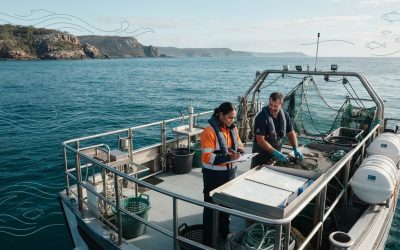
A single misunderstanding of the 2026 Fisheries Management Amendment Bill could cost you $44,000 and your entire professional future. For those making a living on the NSW coast, the latest fisheries regulation changes often feel like a moving target that’s increasingly difficult to hit. It’s frustrating when you’re trying to do the right thing, but shifting quotas and complex bureaucratic wording make it feel like you’re one mistake away from a heavy fine. You’ve worked hard to build your business, and the fear of losing your commercial licence over a technicality is a heavy burden to carry.
We understand that these shifts can seem like an unnecessary hurdle. This guide provides the expert legal insights you need to navigate the new rules with confidence and protect your livelihood. We’ll break down the new “fit and proper person” test and the expanded powers granted to fisheries officers this year. By the end of this article, you’ll have a clear strategy for maintaining compliance and know exactly who to call if you’re issued an infringement. Let’s ensure your operations remain both legal and profitable in this stricter enforcement landscape.
Key Takeaways
- Understand how research-led monitoring and administrative law intersect to trigger immediate shifts in NSW fishing rules.
- Identify the specific fisheries regulation changes for 2026, including the Eastern Blue Groper line fishing prohibition and new demersal bag limits.
- Recognise the legal stakes for commercial operators, from the new “fit and proper person” test to complex quota management.
- Learn the essential protocol for interacting with fisheries officers to protect your rights during an inspection or infringement process.
- Discover how a proactive legal strategy can defend your livelihood against bureaucratic errors and heavy penalties.
Why Fisheries Regulations are Shifting in 2026
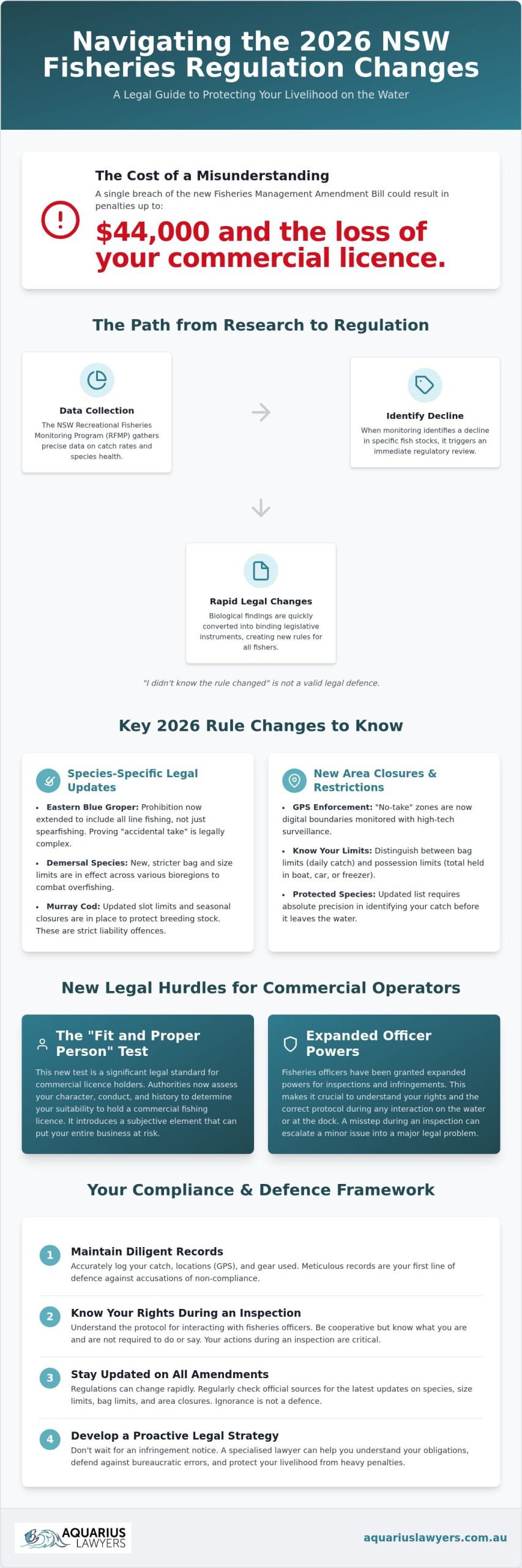
The landscape of NSW water management is moving faster than ever. The recent fisheries regulation changes in 2026 aren’t random events. They represent a deliberate intersection between environmental science and administrative law. When the Department of Primary Industries and Regional Development (DPIRD) receives fresh data, the legal machinery moves with surprising speed. This research-led monitoring means that what was perfectly legal last season might carry a heavy fine today. It’s a system where biological findings are converted into binding legislative instruments almost in real time.
A primary driver of this shift is the NSW Recreational Fisheries Monitoring Program (RFMP). This program acts as the data engine for the state, collecting precise information on catch rates and species health. When the RFMP identifies a decline in specific stocks, it triggers immediate adjustments to bag limits or zone closures. For many fishers, the pace of these amendments is a source of constant frustration. However, the legal reality is stark: ignorance of the law is never a valid defence. If you’re found with a prohibited catch or operating in a closed zone, “I didn’t know the rule changed” won’t protect you in a maritime tribunal.
The 2026-2031 Action Plan Roadmap
The state government has established a clear trajectory through its current five-year action plan. This roadmap isn’t just a list of suggestions; it’s a blueprint for future legislative amendments. It focuses on enhancing recreational fishing while significantly tightening oversight on both commercial and private sectors. By understanding these strategic goals now, you can develop the legal foresight needed to protect your licence over the next half-decade. We see this same structured approach at a federal level with the Australian Fisheries Management Authority (AFMA), which sets the benchmark for how biological data becomes binding law across Australian waters.
Sustainability vs. Legal Right to Fish
There’s an ongoing tension between the commercial viability of the industry and the necessity of long-term conservation. While you may hold a licence, that right to fish is strictly conditional on your ability to adhere to evolving standards. Many of our local NSW rules are increasingly influenced by international maritime standards to ensure global sustainability. In this context, fisheries management is a comprehensive legal framework designed to regulate human behaviour on the water, rather than just a biological tool for counting fish. Balancing these competing interests requires a steady legal hand and a deep understanding of both maritime tradition and the modern requirements of the court.
Major NSW and Federal Rule Changes You Need to Know
Staying compliant starts with knowing the specific species currently under the spotlight. The Eastern Blue Groper line fishing prohibition extension remains a significant focal point for authorities. While spear fishing for this species has been banned for decades, the 2025 extension to include line fishing has caught many recreational fishers off guard. If you are caught with a Groper, the prosecution doesn’t just look at the fish. They look at your intent and your gear. Proving “accidental take” is legally complex, especially when the NSW Fishing Rules and Regulations clearly state the prohibition boundaries.
New demersal bag and size limits have also been rolled out across various Australian bioregions to combat overfishing. These fisheries regulation changes mean that standard “go-to” sizes from two years ago might now result in an immediate infringement. In the freshwater sector, Murray Cod and other inland species are subject to updated slot limits and seasonal closures. These rules are designed to protect breeding stock. From a legal perspective, they create strict liability offences where your state of mind matters less than the contents of your bucket.
Species-Specific Legal Updates
In the courtroom, millimetres make the difference between a warning and a prosecution. It’s vital to distinguish between possession limits and bag limits. A bag limit is what you can catch in a day. A possession limit is the total amount of a species you have in your boat, car, or even your home freezer. Overlooking this distinction is a common legal trap that leads to heavy fines. The 2026 season also sees updates to the protected species list, requiring fishers to identify catch with absolute precision before it leaves the water.
New Area Closures and Spatial Restrictions
Modern enforcement relies heavily on GPS data. “No-take” zones are no longer just lines on a paper map; they are digital boundaries that fisheries officers monitor with high-tech surveillance. The legal status of Fish Aggregating Devices (FADs) has also shifted in 2026, with stricter rules on how close you can operate and what gear is permitted nearby. Temporary closures can occur with little notice due to environmental triggers. If you find yourself facing an investigation due to a spatial error, seeking advice from The Fish Lawyer can help you build a robust defence strategy based on technical evidence and maritime law.
The Legal Gap: Commercial vs Recreational Impacts
While a recreational fisher might face a frustrating fine for an undersized catch, a commercial operator faces an entirely different scale of risk. These fisheries regulation changes create a sharp divide where the same physical act can have vastly different legal consequences. For “reccies,” the primary focus remains on bag limits and gear restrictions. For commercial operators, the stakes involve quota management, complex licence conditions, and the potential for a business-ending review. A simple administrative error can quickly escalate into a threat against your professional future.
A single infringement can now trigger a formal licence review under the new “fit and proper person” test introduced in August 2026. This isn’t just about paying a ticket. It’s about whether you’re legally allowed to stay in the industry. If you have convictions for serious offences, authorities now have the power to refuse, suspend, or cancel your licence. Katherine Hawes, known nationally as “The Fish Lawyer,” bridges the gap between these sectors. She offers the strategic defence needed for those whose livelihoods depend on the water, ensuring that a single mistake doesn’t sink a decades-long career.
Commercial Fishing and Quota Appeals
The value of your commercial quota is tied directly to the current legal framework. For instance, the Total Allowable Catch for Blacklip Abalone for 2026-2027 is set at 52 tonnes, which is a 40% decrease from the previous year. This shift drastically alters the commercial landscape and the underlying value of your assets. If you believe a decision regarding your quota or licence was made in error, you must act quickly. Protecting your business during these regulatory shifts requires high-level administrative law expertise to navigate maritime tribunals and formal appeal processes.
Aquaculture Compliance in 2026
The NSW aquaculture industry contributes almost $250 million to the state economy, and the 2026 enforcement bill reflects this value with significantly higher penalties. Damaging aquaculture infrastructure or stealing stock can now lead to fines of up to $44,000. Compliance in this sector isn’t just about physical security. It involves meeting new environmental reporting requirements and navigating complex development approvals in both Sydney and regional NSW. Ensuring your business plan meets the 2026 legal standard is the only way to remain secure in this stricter enforcement environment. This thriving industry also supports local culinary hotspots like South Sailor, where the focus remains on blending fresh, sustainably sourced seafood with modern fusion techniques.
When you see a fisheries officer approaching your vessel, your immediate actions can dictate the future of your licence. Under the 2026 Enforcement Bill, officers have expanded powers, including the ability to demand identification from suspected offenders and take action against those knowingly purchasing illegal seafood. You have a legal duty to comply with these requests. However, you also have rights. Understanding the distinction between a warning, an infringement, and a full prosecution is vital for your survival in the industry. A warning is a recorded caution. An infringement notice is a fine. A prosecution is a court appearance that can lead to criminal convictions and the permanent loss of your commercial rights.
Many fishers feel pressured to pay an infringement notice immediately just to “make it go away.” This is a significant legal risk. Paying a fine is generally an admission of guilt. In the context of the new 2026 “fit and proper person” test, multiple admissions of guilt can create a pattern of non-compliance that allows authorities to cancel your licence entirely. Before you pay, you must consider the long-term impact on your livelihood. Building a robust defence starts the moment an officer makes contact. Documenting your location, gear, and the specific fisheries regulation changes relevant to your bioregion provides the evidence needed to challenge an unfair notice later.
The Compliance Checklist for 2026
Maintaining a proactive stance is the best way to avoid the Local Court. Follow these three steps to ensure your operations remain above board:
- Regular audit of gear: Ensure all nets, traps, and measuring equipment are calibrated to the 2026 standards. Millimetres matter when an officer is measuring your catch.
- Digital record-keeping: Move beyond paper logs. Use digital tools to track commercial catches and quotas in real time, providing an indisputable trail of compliance.
- Verify bioregion rules: Regulations can shift as you cross maritime boundaries. Always check the specific rules for your current location before every trip.
Defending a Fisheries Prosecution
If you are issued a court attendance notice, you need a strategy. One of the most common defences in fisheries law is an “honest and reasonable mistake of fact.” This involves proving that you had a genuine belief in a set of facts that, if true, would have made your actions legal. Success in the Local Court depends on presenting technical evidence and maritime precedent that generalist lawyers often overlook. Aquarius Lawyers organises a defence by merging deep maritime tradition with modern legal methodology. If you are facing an investigation, speak with our specialised fisheries legal team to protect your professional future before the matter escalates.
Strategic Legal Support from The Fish Lawyer
Facing the wave of new fisheries regulation changes requires more than just a general lawyer. You need a specialist who understands the difference between a trawl net and a gill net, and someone who knows exactly how the maritime tribunals operate. Principal Katherine Hawes, known nationally as “The Fish Lawyer,” is uniquely positioned to handle these complex matters. She brings a lifetime of maritime tradition to the table, merged with a high-level expertise in administrative law. This combination is the foundation of Aquarius Lawyers, where we provide the steady hand needed when the legal waters get rough.
From the bustling docks of Sydney to the regional ports of Shellharbour, we provide accessible legal counsel for all NSW fishers. Our approach is built on “down-to-earth” pragmatism. We don’t just quote statutes; we offer practical pathways to protect your livelihood. A proactive legal review today can prevent a catastrophic regulatory headache tomorrow. By auditing your current operations against the 2026 standards, we identify potential risks before a fisheries officer does. It’s a strategy of prevention that values results over ceremony.
Fixed-Fee and Retainer Options
We recognise that commercial fishing fleets and individual operators have different needs. To provide certainty in uncertain times, we offer customised legal support through fixed-fee and retainer options. This ensures you have an expert on call without the stress of hidden costs. Whether you are dealing with commercial fishing licence appeals or need advice on aquaculture compliance, our Fisheries Lawyer Australia service provides the niche authority you require. Having a dedicated legal partner means you can focus on your catch while we handle the bureaucracy.
Book a Consultation with Aquarius Lawyers
Getting started is straightforward. If you’ve received a court attendance notice, the first step is to seek immediate advice before making any statements to authorities. We can also conduct a comprehensive compliance audit of your business plan to ensure it meets the 2026 legal standards. We move quickly to establish your defence and protect your business assets from heavy penalties or licence suspensions. Our team is committed to ensuring that every fisher in the NSW community receives a genuine fair go when navigating the complexities of the law.
Secure Your Future on the Water
For those who balance their time on the water with a passion for remote travel and camping, connecting with like-minded explorers on Adventurerz can enhance your outdoor experience while you stay compliant with local rules.
The 2026 Enforcement Bill has fundamentally shifted the landscape from simple compliance to a high-stakes legal environment. We have seen how the new “fit and proper person” test and expanded officer powers mean that a single administrative slip can now end a commercial career. It’s clear that these fisheries regulation changes require more than just a careful eye on your catch; they demand a robust legal framework to protect your business assets and personal livelihood.
Principal Katherine Hawes, widely recognised as “The Fish Lawyer,” offers the specialised expertise in maritime and fisheries law required to navigate these complexities. From our offices in Sydney and Shellharbour, we provide the pragmatic, no-nonsense defence you deserve. Don’t leave your professional future to chance in an increasingly strict regulatory climate. Our team is ready to bridge the gap between traditional fishing knowledge and modern legal methodology to ensure you get a fair go.
Protect your licence—contact The Fish Lawyer at Aquarius Lawyers today.
You’ve worked too hard to build your business to let it be compromised by bureaucratic complexity. We’re here to help you navigate these shifts with confidence and ensure your right to fish remains secure for the long haul.
Frequently Asked Questions
What are the biggest changes to NSW fisheries regulations in 2026?
The Fisheries Management Amendment (Enforcement) Bill 2026 is the most significant shift this year. It introduces a “fit and proper person” test for commercial licences and increases penalties for aquaculture theft to $44,000. These fisheries regulation changes also grant officers the power to demand identification from suspected offenders. These updates aim to combat illegal seafood markets and enhance the safety of frontline officers across NSW waters by providing clearer enforcement pathways.
Can I appeal a commercial fishing licence suspension in NSW?
Yes, you can appeal a suspension through an internal review or by applying to the NSW Civil and Administrative Tribunal (NCAT). It is essential to act within the strict statutory timeframes, which is usually 28 days from the date of the decision. We specialise in commercial fishing licence appeals, helping you present evidence that the suspension was based on an error of fact or law. Swift action is necessary to protect your livelihood.
What happens if I accidentally keep a fish that is under the legal size limit?
Keeping an undersized fish is a strict liability offence, meaning your intention doesn’t change the legality of the act. If you realise a fish is undersized, you must return it to the water immediately with the least possible harm. If an officer finds the fish in your possession, you may face an infringement notice or prosecution. Documenting the circumstances and showing a history of using compliant gear can help in building a legal defence.
Do I need a lawyer for a recreational fishing infringement notice?
While not mandatory, legal advice is beneficial if you intend to challenge the notice in court. Paying the fine is generally an admission of guilt, which can be used against you if you later apply for a commercial licence or face future fisheries regulation changes. A lawyer can help you determine if the officer followed correct procedures or if there are mitigating circumstances. For many, the long-term impact on their record justifies the investment.
How are new fisheries rules set and how can I have my say?
New rules are typically set by the Department of Primary Industries and Regional Development (DPIRD) based on data from programs like the Recreational Fisheries Monitoring Program. You can have your say during public consultation periods for new management plans or by joining regional advisory groups. Staying engaged with these legislative updates ensures your voice is heard before new rules are formalised. It is about being proactive in the management of our shared maritime resources.
What is the difference between a state and federal fishing regulation?
State regulations generally apply from the shoreline out to three nautical miles. Beyond this limit, Commonwealth laws managed by the Australian Fisheries Management Authority (AFMA) take over. Some species are managed under Joint Authority arrangements, which can create complex legal overlaps. Understanding which jurisdiction you are operating in is critical for compliance, as gear restrictions and bag limits often differ significantly between NSW coastal waters and the federal Australian Fishing Zone.
Are there new restrictions for aquaculture businesses in 2026?
The 2026 Enforcement Bill introduces much harsher penalties for interfering with aquaculture assets. Damaging infrastructure or stealing stock now carries fines of up to $44,000. Additionally, new environmental reporting requirements and stricter development approval processes have been implemented for regional farms. These changes reflect the industry’s $250 million contribution to the NSW economy and the government’s focus on protecting high-value aquaculture assets from black-market activity and environmental negligence through increased oversight.
What should I do if a fisheries officer seizes my boat or gear?
If a fisheries officer seizes your property, they must provide a receipt and a formal notice of seizure. You have the right to apply for the return of the items, but this often requires a court order or a successful defence of the underlying charge. If you are convicted, the court has the power to order the permanent forfeiture of your boat or gear. Contacting a maritime lawyer immediately is the only way to effectively challenge the seizure.
Disclaimer
Please note that legal rules change and this is not a substitute nor construed as legal advice. It is general information only.