
Your commercial fishing business isn’t just the boat or the gear; it’s a sophisticated bundle of legal rights that can easily lose value if your exit strategy is flawed. When you’re selling a commercial fishing business nsw, the difference between a lucrative retirement and a legal headache often comes down to how you handle the 2026 regulatory landscape. You’ve worked hard for your shares, and it’s natural to feel anxious about government clawbacks or whether your ITQs are valued correctly in a market that generates over A$90 million in annual wild harvest value.
Strategic legal oversight + precise asset valuation = a clean exit. This guide ensures you protect your legacy and maximise your sale price by navigating the complexities of the Fisheries Management Act. We’ll preview the critical 10 August 2026 management fee snapshot, explain the latest transfer requirements for endorsements, and outline the essential steps to shield your retirement savings from post-sale claims.
Key Takeaways
- Learn how to accurately value your Individual Transferable Quotas (ITQs) and endorsements in a 2026 market driven by sustainability-first management.
- Understand why selling a commercial fishing business nsw requires a specialised legal strategy to navigate the Fisheries Management Act and avoid government clawbacks.
- Compare the benefits of asset sales versus share sales to determine which structure best protects your retirement savings from hidden liabilities.
- Discover how to conduct a proactive ‘Fisheries Audit’ to identify compliance gaps before they derail your due diligence process.
- Master the settlement process by using secure escrow arrangements to manage the administrative handovers of licences and equipment.
Selling a Commercial Fishing Business in NSW: The 2026 Landscape
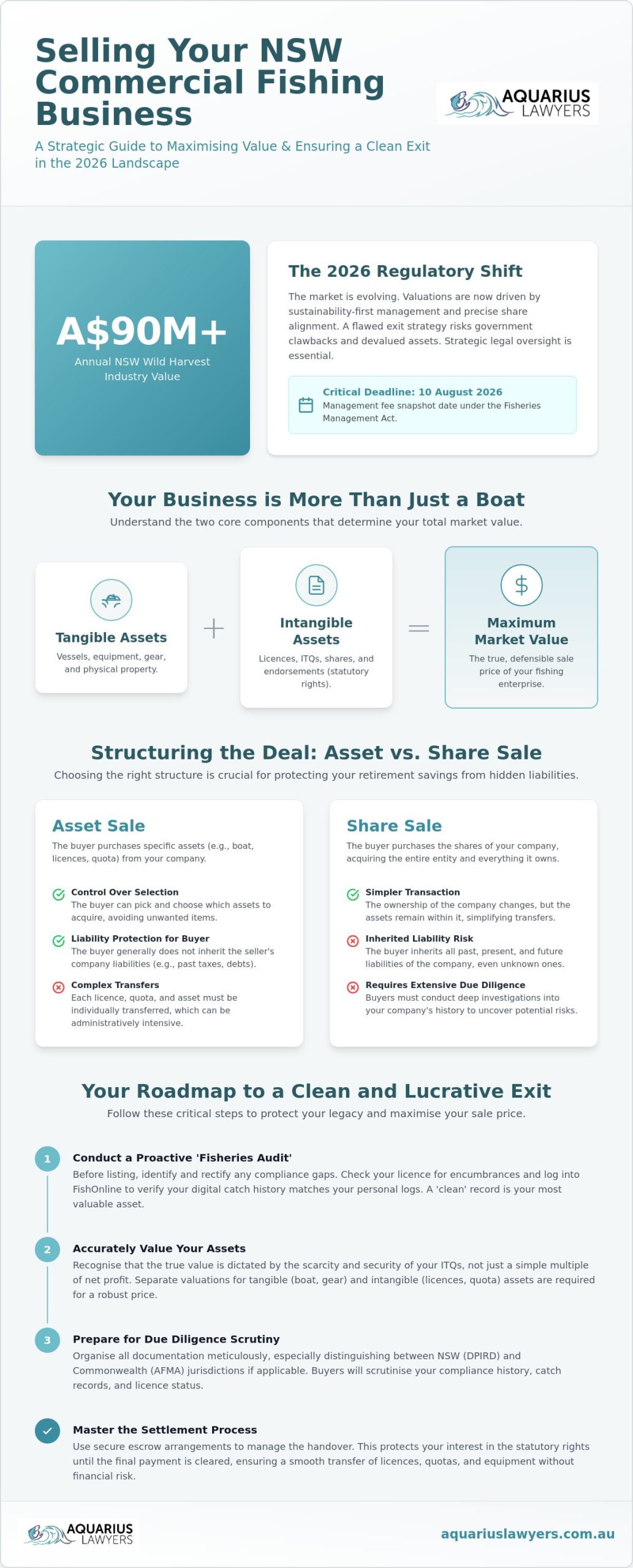
The 2026 market for commercial fishing enterprises is defined by a shift toward high-precision share management. With the NSW wild harvest industry valued at approximately A$90 million annually, the stakes for a clean exit have never been higher. When you’re selling a commercial fishing business nsw, you aren’t just offloading a vessel or a shed full of nets; you’re transferring a complex portfolio of statutory rights. Unlike a standard retail sale where you hand over a lease and some stock, a fisheries sale involves the movement of state-granted privileges. These rights are subject to strict compliance under the Fisheries Management Act 1994, meaning a single administrative error can devalue your entire asset pool.
Valuations in 2026 are increasingly tied to sustainability-first management. Buyers are no longer just looking at catch history; they’re scrutinising how your Individual Transferable Quotas (ITQs) align with new harvest strategies for species like snapper and mulloway. As “The Fish Lawyer,” I’ve seen how the “bundle of rights” concept confuses sellers. Your business is an equation: Tangible Assets (boats and gear) + Intangible Assets (licences, shares, and endorsements) = Total Market Value. If you don’t treat the intangible components with the same care as your hull maintenance, you’re leaving money on the table. You need a strategist who understands the “messy” bits of quota transfers, not just a standard conveyancer who treats this like a suburban house sale.
State vs Commonwealth Jurisdictions
Before listing your business, you must clearly delineate where your authority to fish originates. Most small to medium operations fall under NSW State rules managed by the Department of Primary Industries and Regional Development (DPIRD). However, if you’re “dual-hatted,” you might also hold permits from the Australian Fisheries Management Authority (AFMA) for Commonwealth-managed waters. The legal implications of a sale are vastly different between the two. Documentation must be organised according to the specific Fisheries Management Act that governs each endorsement. Mixing these up during the due diligence phase can lead to significant delays or even the collapse of the deal if the buyer loses confidence in your regulatory standing.
Defining the 2026 ‘Sale of Business’ Agreement
A handshake deal in the fishing industry is a recipe for a Local Court disaster. A robust 2026 contract must go beyond the basics. It needs specific clauses covering the 10 August 2026 management fee snapshot date and the A$320 share transfer fees. Essential protection clauses should address “catch and effort” reporting accuracy and indemnity against past compliance breaches. A ‘Fisheries Business Sale’ is a transfer of both tangible assets and statutory rights. Without a formal agreement that recognises this duality, you risk being held liable for the buyer’s future mismanagement or losing your final instalment because of an unresolved “clawback” issue.
Auditing Your Assets: Licences, Quotas, and ITQs
Before you even think about a price tag, you need to know exactly what’s on the table. In the context of selling a commercial fishing business nsw, your asset list is divided into two camps: the gear you can touch and the rights that let you use it. From Estuary General endorsements to Ocean Hauling shares, each component carries a different market weight. Generic business brokers often try to value these operations using a simple multiple of net profit, but that’s a dangerous oversimplification. In 2026, the true value of your business is dictated by the scarcity and security of your Individual Transferable Quotas (ITQs).
Check your licence for encumbrances immediately. A ‘clean’ licence is your most valuable asset, so ensure there are no pending prosecutions or unresolved compliance notices from the DPIRD. You should also log into FishOnline to verify your digital catch history. Buyers will scrutinise this data to confirm your quota usage and effort levels match your claims. If there’s a discrepancy between your personal logs and the official record, it will likely derail the sale at the eleventh hour. Use this simple formula to gauge your position: (Verified Catch History + Clean Licence Status) × Market Scarcity = Maximum Asset Valuation.
Statutory Fishing Rights (SFRs) vs. Personal Property
The law views your boat as personal property, but your fishing rights are statutory. This distinction is vital for your protection. While a boat can be sold with a standard bill of sale, statutory rights require a formal approval process through the Department. Protecting your interest in the quota until the final payment clears is a non-negotiable step. You don’t want to transfer the shares only to find the buyer’s finance has fallen through. It’s a smart move to consult a fisheries law expert to ensure your contract keeps a legal ‘lien’ over the rights until settlement is complete.
The 2026 Quota Transfer Process
Precision is the priority when lodging the ‘Transfer of Shares’ or ‘Transfer of Licence’ forms. As of August 2025, the fee for a manual transfer of quota is A$240, while a registration of dealing in shares sits at A$320. Timing these lodgements is a delicate balancing act. If you lodge too early, you lose your right to fish before you’re paid; too late, and the buyer faces a ‘gap period’ where the vessel sits idle. In 2026, quota is the currency of the industry, and its transfer must be handled with the same security as a bank wire.
Structuring the Deal: Asset Sale vs. Share Sale
When you’re selling a commercial fishing business nsw, the structure of the transaction is just as critical as the final figure on the contract. You have two primary paths to settlement: an asset sale or a share sale. Most multi-generational fishing families opt for an asset sale because it allows for a “clean break.” You sell the boat, the nets, and the specific NSW fisheries shares, but you keep the company shell. A share sale, conversely, involves the buyer taking over your entire company, including its history and any potential legal baggage that comes with it.
I always tell my clients that the best results come from a synergy between your accountant and “The Fish Lawyer.” While your accountant manages the Capital Gains Tax (CGT) consequences and depreciation schedules, I ensure the contract protects your interest in the quota until the final cent is paid. Goodwill is another tricky area in 2026. In an industry where fish stocks fluctuate and DPIRD regulations evolve, goodwill is often tied to your catch history and local reputation. It’s the premium a buyer pays for a “turnkey” operation that is ready to fish from day one without the struggle of establishing new market connections.
Asset Sale: The Clean Break Approach
Small-scale fishers usually choose this route to limit future liability. By selling assets individually, you ensure that any past operational issues don’t follow the buyer, which simplifies the due diligence process. A major benefit here is the GST ‘Going Concern’ exemption. If you sell the business as an active, operational unit, you might avoid a 10% GST hit on the sale price. Just don’t forget the ‘Excluded Assets’ list. If you want to keep that custom-built oyster grader or your personal gear, they must be explicitly listed in the contract to avoid disputes at the boat ramp.
Share Sale: For Larger Fleet Operations
For operations involving multiple vessels and company-held endorsements, a share sale is often more efficient. It avoids the administrative slog of manually transferring each individual licence and boat registration through DPIRD and AMSA. However, this convenience comes with a catch: the buyer inherits every legal mistake the company has ever made. This is why comprehensive warranties and indemnities are non-negotiable for the seller. You must guarantee that the company has no hidden debts or pending fisheries prosecutions. While an asset sale offers a clean break through the individual transfer of gear and licences, a share sale provides operational continuity by transferring the entire company entity.
The Due Diligence Gauntlet: Preparing for Scrutiny
Due diligence is the buyer’s right to verify every claim you make about the business. When you’re selling a commercial fishing business nsw, this phase is often the most intense part of the transaction. Buyers in 2026 are sophisticated; they won’t just take your word for the health of your catch history or the condition of your hull. You need to be proactive. If you wait for the buyer to find a problem, you lose your leverage. Instead, prepare a comprehensive data room that addresses the following five steps:
- Step 1: Conduct a ‘Fisheries Audit’. You must identify any compliance ‘skeletons’ in the closet, such as old gear infringements or misreported logbook entries, before they surface during the buyer’s investigation.
- Step 2: Organise five years of catch and effort reporting data. Buyers need to see consistency. Providing half a decade of data proves the reliability of your ITQs and the viability of your fishing grounds.
- Step 3: Verify the survey status. Ensure maritime safety compliance is up to date for all vessels. An expired survey can stall a sale for months.
- Step 4: Review employee and share-fisher contracts. Determine if your current arrangements are legally transferable or if new agreements need to be drafted for the incoming owner.
- Step 5: Prepare a ‘Statement of Compliance’. This document should specifically address your adherence to 2026 digital reporting standards, giving the buyer confidence in your administrative record-keeping.
Compliance History: The Deal Breaker
A history of ‘minor’ infringements can easily spook a sophisticated buyer. They see a pattern of non-compliance as a risk to the licences they are about to purchase. Under NSW law, you have a legal requirement for ‘full and frank’ disclosure regarding any pending prosecutions or past sanctions. Attempting to hide these issues is a recipe for a post-sale litigation nightmare. I often work with sellers to ‘clean up’ or explain these compliance issues before the business hits the market. If you’re concerned about your record, it’s vital to get expert legal advice to frame these issues correctly during negotiations.
Vessel and Gear Inspection
The legal standard for ‘merchantable quality’ applies even in the rugged context of commercial fishing. Your gear must be fit for its intended purpose at the time of transfer. Most contracts will include a ‘subject to survey’ clause, allowing the buyer to pull out if a marine surveyor finds significant structural issues. To protect yourself, ensure your maintenance logs are impeccable and be honest about the age and wear of your equipment. This transparency prevents the buyer from attempting to ‘gazump’ you by demanding a price reduction at the eleventh hour based on gear condition.
Finalising the Sale with Aquarius Lawyers
The settlement table is where years of hard work finally convert into financial security. When you’re selling a commercial fishing business nsw, the final handover is a high-stakes administrative event. We act as the steady hand at this stage, using an “innovative veteran” approach that balances traditional maritime wisdom with modern legal efficiency. Our priority is ensuring that the funds are secured in escrow before any digital fishing records or shareholdings are officially transferred in the DPIRD system. This protects you from the risk of a buyer gaining control of your quotas before the bank has cleared the final payment.
Once the contract is signed, your post-sale obligations begin. You must formally notify the Department and ensure all catch reporting is finalised up to the minute of transfer. Leaving these loose ends can result in unexpected administrative penalties that eat into your profit. We also look beyond the immediate transaction. For many fishers, this exit is the foundation of their retirement. By integrating the sale proceeds into your Wills and Estates planning, we help you protect that hard-earned legacy for the next generation. It’s about ensuring your “fair go” continues long after you’ve left the water.
The Aquarius Advantage: Pragmatic Maritime Law
We don’t just push paper; we use technology to streamline the transfer of your digital fishing records, ensuring a seamless transition for both parties. Our team, led by Principal Katherine Hawes, offers fixed-fee options for contract reviews and licence transfer management, giving you cost certainty in an often unpredictable market. We understand the synergy between statutory rights and commercial contracts. If you’re ready to start this process, you should Contact Aquarius Lawyers for a confidential exit strategy session. We handle the “messy” parts of the law so you can focus on your future.
Next Steps: Your Pathway to a Fair Go
Your first step is organising an initial consultation to value your unique ‘bundle of rights’. We’ll help you set a realistic timeline for selling a commercial fishing business nsw in 2026, aligning with seasonal closures and the critical August management fee deadlines. This strategic timing ensures you don’t get stuck paying for next year’s fees just as you’re trying to exit the industry. Aquarius Lawyers is committed to protecting the livelihoods of NSW fishers through every stage of the business lifecycle.
Secure Your Legacy on Dry Land
Success in selling a commercial fishing business nsw depends on your ability to prove the value of your statutory rights while shielding yourself from future liabilities. You’ve navigated the tides for years; your exit deserves the same level of precision. By auditing your ITQs early and choosing the right sale structure, you turn a complex regulatory hurdle into a clean, profitable break. A well-executed sale ensures that your catch history and endorsements are valued at their peak in the 2026 market.
Principal Katherine Hawes, known nationally as “The Fish Lawyer,” provides the down-to-earth, expert guidance regional and Sydney-based fishers need to satisfy the Fisheries Management Act. We combine high-level strategy with practical maritime experience to ensure your licences are transferred without a hitch. Don’t let administrative “clawbacks” or compliance skeletons derail your retirement plans. We specialise in the messy legal details so you can walk away with your savings intact.
Secure your retirement-book a strategy session with The Fish Lawyer today. It’s time to enjoy the rewards of your hard work with total peace of mind and the confidence of a job well done.
Frequently Asked Questions
Do I need a specialised lawyer to sell my NSW fishing business?
Yes. General commercial lawyers often lack the niche expertise required to navigate the Fisheries Management Act 1994. A specialist ensures your “bundle of rights” is transferred correctly and that all DPIRD requirements are met to prevent the sale from being voided. Expert oversight acts as a safeguard against government clawbacks and ensures your contract specifically addresses the unique volatility of the fisheries market.
Can I sell my fishing licence separately from my boat and gear?
You can unbundle your assets. In NSW, licences, shares, and endorsements are statutory rights that can be sold independently of physical assets like vessels or nets. This is a common strategy for selling a commercial fishing business nsw when a buyer only needs your quota to expand an existing fleet. It requires a precise Asset Sale agreement to ensure the unbundling doesn’t trigger unexpected regulatory issues.
How long does the DPIRD licence transfer process take in 2026?
You should allow at least four to eight weeks for formal approval. While digital systems have improved, the Department still requires a thorough review of the “Application for Approval of Transfer.” It’s critical not to make final financial commitments before DPIRD approves the lodgement. We recommend starting the paperwork well in advance of your desired settlement date to avoid any seasonal fishing closures or fee deadlines.
What happens to my fishing quota if the buyer’s payment fails after transfer?
You risk losing the asset unless your contract includes a specific legal lien or “retention of title” clause. Once DPIRD registers the transfer, the buyer legally owns the shares in the eyes of the state. A well-drafted contract ensures that the formal transfer only occurs after funds are cleared in escrow. This proactive step is the only way to protect your interest in the quota during the settlement phase.
Am I liable for the buyer’s fishing infringements after I sell the business?
No, provided the transfer is legally finalised and the DPIRD records are officially updated. You remain liable for any breaches that occurred while you were the owner. Using a “Statement of Compliance” and clear indemnity clauses in your sale agreement is essential. These documents protect you from being dragged into future disputes or court proceedings involving the new owner’s operational mistakes on the water.
How is ‘goodwill’ calculated for a commercial fishing business in NSW?
Goodwill is the premium a buyer pays for your established catch history and market reputation. It’s the value that exists beyond your physical gear and ITQs. When selling a commercial fishing business nsw, you justify this figure by providing five years of consistent catch and effort data. A strong record of reliability and market connections turns a simple asset list into a lucrative, turnkey business opportunity.
Does the 2026 ‘sustainability-first’ policy affect my right to sell?
The policy doesn’t remove your right to sell, but it heavily influences your business valuation. New harvest strategies for species like snapper or yellowtail kingfish mean buyers are more selective about which endorsements they acquire. Your assets are now judged by how they align with long-term environmental quotas. Legal verification of your ITQs is now the most important factor in securing a fair market price.
Can a foreign buyer purchase my NSW commercial fishing business?
Yes, but they must comply with Australian foreign investment laws and meet specific NSW licensing criteria. A foreign entity cannot hold a licence without a nominated “eligible fisher” who meets local residency or work requirements. This adds a layer of complexity to the due diligence process. It requires specialised maritime legal oversight to ensure the buyer can actually operate the business they are purchasing.
Disclaimer
Please note that legal rules change and this is not a substitute nor construed as legal advice. It is general information only.