Did you know that a maritime lien travels with the vessel and remains enforceable against you, even if you had no idea the debt existed? Under the Admiralty Act 1988, these invisible claims for unpaid wages or salvage don’t need to be registered to be valid. Buying a commercial fishing vessel involves more than just a hull inspection; you’re often stepping into a web of legal obligations. To protect your capital, you need a commercial vessel purchase agreement that acts as a shield against the previous owner’s liabilities.
You want a smooth transition that keeps your business on the water rather than tied up in legal disputes. It’s natural to feel uncertain about AMSA compliance transfers or the complexities of shifting fishing quotas between entities. This guide shows you how to secure your maritime assets and avoid hidden liabilities with a legally sound commercial vessel purchase agreement. We will explore the mandatory 14-day notification windows, the non-transferable nature of Certificates of Operation, and the specific PPSR search strategies you must use to ensure your title is truly clear before settlement.
Key Takeaways
- Understand why a standard boat contract is insufficient for commercial marine businesses and how a tailored commercial vessel purchase agreement protects you from unique industry risks.
- Discover how to identify and block “invisible” maritime liens that attach to the hull, ensuring you don’t inherit the previous owner’s unpaid wages or fuel bills.
- Learn the critical difference between a Certificate of Survey and a Certificate of Operation to ensure your new asset is legally compliant for immediate commercial use.
- Master the due diligence process for verifying inventory and safety equipment to prevent costly disputes over electronics, nets, and machinery after settlement.
- Recognise the strategic steps required to successfully transfer statutory fishing quotas and aquaculture licences alongside the physical vessel asset.
Understanding the Commercial Vessel Purchase Agreement in Australia
A commercial vessel purchase agreement is the binding legal document that governs the transfer of a commercial fishing vessel or other maritime asset. It’s the primary mechanism for shifting risk from the buyer to the seller. While it might be tempting to use a standard template or a recreational boat contract, doing so exposes you to massive liabilities. Commercial operations are governed by a complex web of legislation, including the Marine Safety (Domestic Commercial Vessel) National Law Act 2012. Your contract is your first line of defence against commercial disputes that can sideline your fleet for months.
Standard recreational contracts are usually “as is, where is” documents. They don’t account for the transfer of business-critical items like Certificates of Survey or the transition of a Safety Management System. In a commercial context, you aren’t just buying a boat; you’re buying a business asset that must meet strict AMSA standards. If the contract fails to align with these regulations, you might find yourself owning a vessel that you cannot legally operate or insure.
Why Commercial Transactions Require Specific Marine Law Expertise
Commercial vessels are unique assets because they carry their debts with them. Under Australian law, statutory and maritime liens attach directly to the hull. This means you could buy a vessel only to have it arrested in port because the previous owner didn’t pay the crew or the fuel supplier. Expert Marine Law advice ensures these invisible liabilities are identified and extinguished before settlement. We combine 20 years of experience with modern methodology to protect your interests in these high-stakes transactions.
Key Parties and Vessel Identification
Precise identification is the bedrock of a watertight agreement. You must include the Hull Identification Number (HIN) and the Official Number allocated by the Australian Shipping Registration Office. If you are buying from a company, you need to verify the seller’s authority through ASIC searches. This ensures the person signing the contract actually has the power to transfer the asset. Whether you’re operating as an individual or through a corporate structure, our seafood and marine legal services team can help you structure the purchase to maximise asset protection. Failing to verify these details can lead to a defective transfer of title, leaving you with a commercial vessel purchase agreement that isn’t worth the paper it’s printed on.
Essential Clauses for a Watertight Vessel Contract
A solid commercial vessel purchase agreement transforms a risky handshake into a secure investment. You need to be precise about how money changes hands. We recommend using escrow arrangements for deposits to ensure funds are only released when specific milestones are met. This protects your capital if the seller fails to meet their obligations. You should also include an exhaustive inventory list. A commercial fishing vessel often carries hundreds of thousands of dollars in specialised gear; if it isn’t in the contract, don’t expect it to be on the boat at handover. Specify everything from the brand of the sonar to the age of the nets and safety rafts.
Warranties and representations are your legal safety net. Demand that the seller guarantees the vessel is free from undisclosed encumbrances and that they have the full legal right to sell the asset. If you need assistance drafting these protective terms, our team at seafood and marine legal services can ensure your interests are prioritised. The goal is to create a clear record of what is being sold and the condition it’s in, leaving no room for disputes later.
Conditions Precedent: Protecting Your Deposit
Conditions precedent are the “get out of jail free” cards in your contract. You must make the sale “subject to survey” and “subject to finance”. This gives you a specific window, usually 7 to 14 days, to have an AMSA-accredited surveyor inspect the hull and machinery. If the survey reveals major defects, you can either walk away with your deposit intact or negotiate a price reduction to cover the repairs. Never skip a sea trial. Under AMSA Exemption 07, you can conduct dynamic trials under load to ensure the vessel performs as promised before the commercial vessel purchase agreement becomes unconditional.
Delivery and Risk Transfer
The contract must define exactly when the risk of loss or damage passes from the seller to you. Usually, this happens at the moment of physical handover or upon the execution of the Bill of Sale. You need to follow the AMSA ship registration guidelines to lodge your interest within the mandatory 14-day window. Proper documentation is the only way to prove you are the rightful owner. If you’re unsure about the settlement process, it’s wise to consult Aquarius Lawyers to finalise the paperwork correctly.
Managing Maritime Liens and Encumbrances: The Invisible Risks
Maritime liens represent one of the most significant risks when you sign a commercial vessel purchase agreement. Unlike traditional property where debts are recorded against an owner, maritime liens “attach” directly to the vessel itself. This means the debt follows the hull, not the person who incurred it. If a previous owner has unpaid crew wages, outstanding fuel bills, or repair costs from a shipyard, those creditors can legally arrest the vessel to recover their funds. Under the Admiralty Act 1988, these claims can be enforced against you even if you are an innocent purchaser with no knowledge of the debt.
Protecting yourself requires a robust “Warranty of Title” clause. This provision forces the seller to guarantee that the vessel is free from all statutory and maritime liens at the time of settlement. Because these liens are often “invisible” and don’t appear on standard registers, your contract must be your primary shield. You should insist on warranties that cover all operational debts up to the exact minute of handover. Without these protections, your new commercial asset could be seized by the Federal Court of Australia shortly after you take delivery.
Conducting a Thorough PPSR Search
A critical step in your due diligence is using the Personal Property Securities Register (PPSR) boat search. In Australia, security interests like bank loans or corporate charges must be registered here to be perfected. However, simply searching the selling company’s ABN is a common mistake. You must search against the vessel’s Hull Identification Number (HIN) or its Official Number. If a bank holds a registered charge, you must ensure they provide a deed of release at settlement. We often recommend that a portion of the purchase price be paid directly to the financier to ensure the encumbrance is discharged immediately.
Strategic Indemnities for the Buyer
Standard clauses often fall short when dealing with high-value marine assets. You need specific indemnities that require the seller to compensate you for any pre-existing claims, including statutory liens from port authorities or government bodies. This is where Asset Protection Legal Services become vital. We help you draft indemnities that survive the settlement date, providing a pathway for legal recourse if a hidden debt surfaces six months later. By combining these contractual protections with thorough searches, you move from a position of uncertainty to one of strategic confidence. Your commercial vessel purchase agreement should never be finalised until every potential encumbrance is identified and addressed.
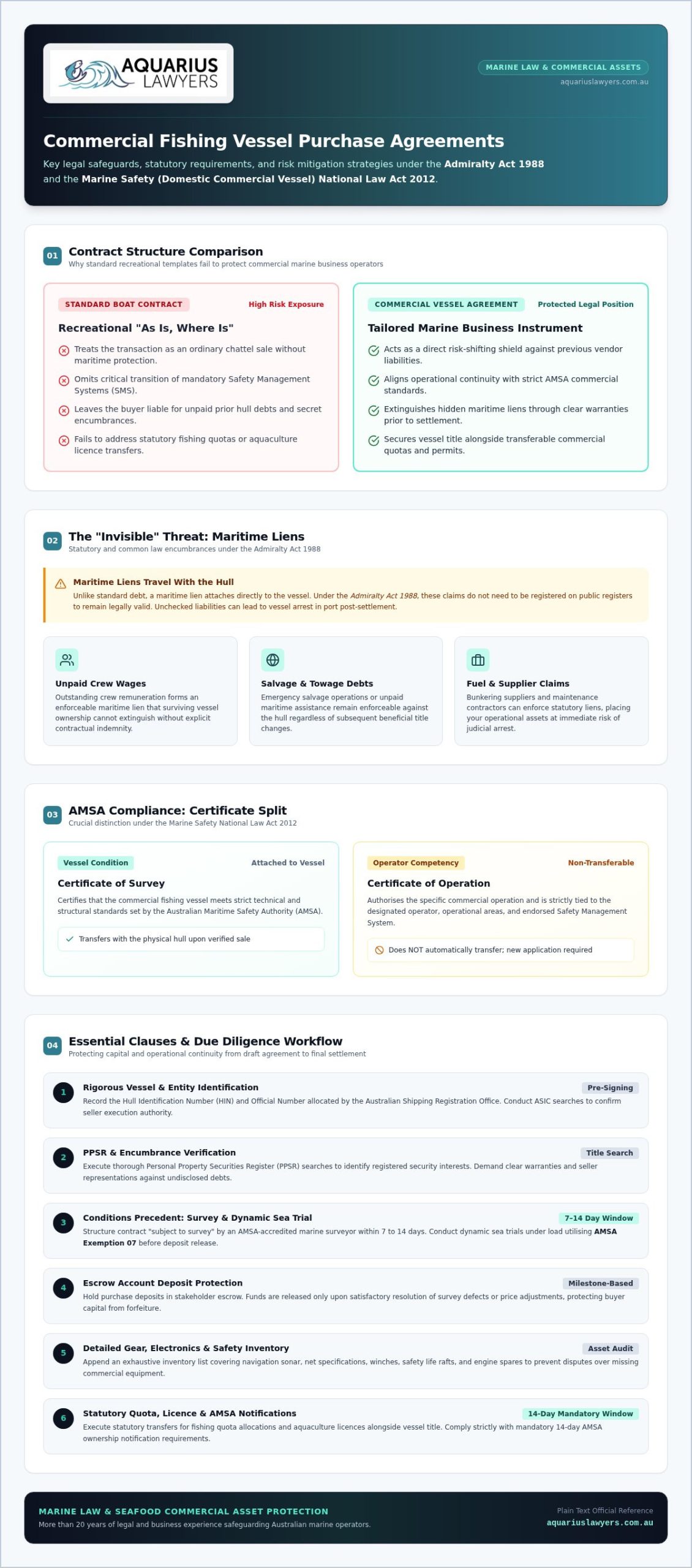
Due Diligence Checklist: Protecting Your Marine Business Assets
Due diligence is the bridge between a signed commercial vessel purchase agreement and a successful business launch. You must verify the AMSA Certificate of Survey (CoS) status immediately. Under the National Law, the CoS attaches to the vessel and is transferable, but the Certificate of Operation (CoO) is not. You’ll need to develop your own Safety Management System and apply for a new CoO before you start working. Review the maintenance logs and classification society records to confirm structural integrity. If the seller has outstanding marine pollution fines or hasn’t met their environmental stewardship obligations, those liabilities could complicate your future operations.
You should also assess any potential licence impacts if the vessel is sold with specific quotas. A vessel’s value is tied to its ability to generate revenue; if the gear doesn’t meet current data management requirements for mandatory reporting, your efficiency will suffer. Checking for “malicious damage” or poorly executed repairs is essential, especially since commercial fishing vessels represent 40.7% of all serious marine incidents reported to AMSA. Thoroughly investigating these details ensures your commercial vessel purchase agreement reflects the true state of the asset.
Fisheries and Licence Due Diligence
Your commercial fishing vessel is only as valuable as the water it is legally allowed to work in. You need to verify that any included fishing quota is valid and transferable under the relevant state or federal law. A history of compliance issues can lead to licence suspension, which immediately guts the value of your business. It is wise to consult a fisheries lawyer australia to review the quota history. This prevents you from inadvertently inheriting a situation that requires a fisheries prosecution defence shortly after settlement.
Physical and Operational Inspections
Hire a qualified marine surveyor who understands the rigours of commercial operations rather than just pleasure craft. They must assess the hull and machinery under load during a dynamic sea trial. If the vessel is transitioning ownership, you must ensure the safety equipment meets the specific requirements of your proposed area of operation. You should also verify that all electronics and monitoring systems are compatible with current industry standards. Secure your marine assets by booking a due diligence review with Aquarius Lawyers.
Strategic Legal Support: Moving from Draft to Settlement
Moving from a draft contract to a final settlement requires a combination of traditional legal expertise and modern efficiency. At Aquarius Lawyers, we combine over 20 years of experience with advanced technology to ensure your commercial vessel purchase agreement is executed without delay. By integrating AI into our review process, we identify risks faster and more accurately than manual methods alone. Our expertise + AI = reduced legal costs for you. This synergy allows us to focus on the high-level strategy of your transaction while ensuring every detail is legally sound.
Settlement is the moment where your preparation meets reality. We manage the exchange of documents and funds to ensure you receive a clear title. The Time is Now to secure your business future. Once settlement occurs, your obligations don’t stop. You must notify AMSA of the transfer within 14 days and update your marine insurance policies immediately. We act as your trusted advisor, not just for this transaction, but throughout the lifecycle of your marine business, helping you manage everything from licence impacts to commercial asset protection.
How Technology Streamlines Your Vessel Purchase
We don’t believe in outdated, slow legal processes. Our methodology uses AI to scan your commercial vessel purchase agreement for hidden liabilities that might escape a standard review. This technology helps us manage digital seafarer records and vessel files efficiently, providing cost-effective solutions for water-based business owners. You get the benefit of a mentor who is both academically distinguished and practically experienced, backed by tools that ensure nothing is missed. This approach turns a complex legal requirement into a streamlined business outcome.
Finalising the Transaction and Title Transfer
A successful settlement requires a final checklist to ensure all loose ends are tied. You need to verify that the Bill of Sale is executed correctly and that all Seafood And Marine Legal Services are integrated into your business structure. This includes ensuring your fishing quotas and aquaculture licences are transferred alongside the physical hull. Contact Katherine Hawes, “The Fish Lawyer”, for a strategic review of your purchase agreement before you sign. We ensure your transition from buyer to operator is seamless, allowing you to focus on what you do best: running your business on the water.
Secure Your Future on the Australian Water
Securing a commercial asset in the marine industry requires more than just a survey and a handshake. You’ve seen how invisible maritime liens can threaten your capital and how complex AMSA compliance can be. By focusing on a watertight commercial vessel purchase agreement, you ensure that your business starts on solid ground. You must remain proactive about due diligence, especially regarding fishing quotas and safety management systems, to avoid being sidelined by regulatory issues. A well-drafted contract is your best tool for long-term asset protection.
We bring over 20 years of marine law experience to every transaction. Our innovative veteran approach combines deep industry knowledge with modern technology to provide cost-effective, strategic results for our clients. We specialise in commercial fishing vessel acquisitions and understand the unique pressures you face as a maritime business owner. When you are ready to take the next step, secure your maritime investment with expert legal advice from Aquarius Lawyers. We are here to help you navigate the legal currents with confidence and common sense. Your success on the water is our priority.
Frequently Asked Questions
What is a maritime lien and why does it matter to a buyer?
A maritime lien is a legal claim that attaches directly to the vessel’s hull for debts like unpaid crew wages or salvage costs. It matters to you because these liens follow the ship regardless of who owns it. If you buy a boat with an existing lien, creditors can arrest the vessel in the Federal Court to recover their money. This makes your commercial vessel purchase agreement a vital tool for securing warranties against these invisible debts.
Do I need a lawyer for a commercial vessel purchase agreement?
You need a lawyer to manage the unique risks associated with commercial marine transactions. Standard recreational contracts don’t cover the transfer of Certificates of Survey or the complexities of AMSA registration. Specialist counsel ensures your contract includes specific protections for your business assets. We combine traditional experience with modern technology to identify risks early. This proactive approach helps you avoid costly disputes and ensures your operation remains legally compliant from day one.
How do I check if a vessel has any outstanding debts in Australia?
You can check for outstanding debts by searching the Personal Property Securities Register (PPSR) using the vessel’s Hull Identification Number or Official Number. It’s also essential to search the Australian General Shipping Register for ship mortgages. However, since maritime liens aren’t always registered, you must rely on strong contractual indemnities. We help you conduct these searches and draft the necessary clauses to ensure you don’t inherit the seller’s financial burdens at settlement.
What is the difference between a Bill of Sale and a purchase agreement?
The commercial vessel purchase agreement is the contract that outlines the terms, conditions, and warranties governing the whole transaction. In contrast, the Bill of Sale is the specific legal document used to transfer ownership on the shipping register. You sign the agreement first to lock in the deal, while the Bill of Sale is executed at settlement. Both documents are necessary to ensure a smooth and legally recognised transfer of title under Australian law.
Can I transfer a commercial fishing licence with the vessel?
You cannot automatically transfer a commercial fishing licence just by buying the boat. The vessel is a physical asset, while the licence is a statutory right granted by fisheries authorities. You must lodge separate transfer applications with the relevant state or federal regulator to move the licence or quota into your name. Failing to coordinate these transfers correctly can leave you with a boat that you aren’t legally allowed to use for commercial fishing.
What happens if the vessel fails its sea trial after I sign the contract?
If the vessel fails its sea trial, your options depend on the conditions precedent in your contract. If you included a “subject to sea trial” clause, you can usually terminate the agreement and receive a full refund of your deposit. You might also choose to negotiate a lower price to account for the identified mechanical issues. It’s vital to ensure these rights are clearly defined in your contract before you head out on the water.
Are there specific GST implications for buying a commercial vessel?
GST applies to most commercial vessel sales unless the transaction qualifies as a “going concern”. If you’re buying a vessel as part of an active fishing business, you might not have to pay GST on the purchase price. However, you must meet specific ATO requirements for this to apply. You should always seek professional advice to determine if the sale is GST-inclusive, as miscalculating this can result in a significant and unexpected tax liability.
How long does the legal process for a vessel transfer typically take?
The legal process for a vessel transfer typically takes between four and six weeks. This timeframe accounts for the initial due diligence, conducting a professional survey, and completing a sea trial. You also need time to arrange finance and prepare the final transfer documents for AMSA. While technology can speed up the contract review process, coordinating all parties and regulators often takes several weeks to ensure a watertight and secure settlement for your business.