
A decision made before your first sale can shape your personal exposure, ownership rights and obligations to others. If you’re weighing the legal risks of starting a business in Australia, start by looking at your planned structure, working relationships and commitments.
It’s reasonable to be unsure which registrations, licences and industry rules apply to your plans. Other risks can come from informal agreements that leave responsibilities unclear or a business name that doesn’t protect your brand. Addressing these issues early can help you make informed decisions before commitments become harder to change.
This guide covers key risks to assess before launch, from structure and liability to contracts, intellectual property, employment and regulatory requirements. You’ll find practical questions to work through and information to gather before making important decisions.
Key Takeaways
- Map the legal risks of starting a business australia by assessing your activities, customers, workers, assets and intended markets.
- Compare sole trader, partnership, company and trust structures to understand how ownership, control and personal exposure may differ.
- Check which registrations, licences, contracts and compliance requirements apply to the way your business will operate.
- Before making commitments, record unanswered legal questions and document how ownership, decisions and responsibilities will work.
Legal risks of starting a business in Australia: identify your exposure before launch
Start with your actual business plans, not a generic setup checklist. The legal risks of starting a business in Australia depend on what you do, who you serve, whether you engage workers, what assets you use and where you plan to operate or sell.
Separate general setup questions from those specific to your business. Ownership, decision-making and written agreements deserve attention in many business models. Other checks may apply if you employ staff, handle personal information, use commercial assets or work in a regulated industry. Identify which issues could affect your plans, then verify the requirements that apply to your activities.
Which early decisions can create legal exposure?
Before committing, write down who will own the business, what it will do, who its customers and suppliers will be, and whether you plan to engage workers. Note who will make decisions, contribute assets and take responsibility for key tasks. These details can reveal where expectations differ before those differences become disputes.
For example, co-founders may have different views about who can approve a major commitment, how profits are shared or what happens if one person wants to leave. Agree on these matters and record the terms. Leaving them to informal conversations can make responsibilities and intentions harder to establish later.
Why requirements vary between Australian businesses
A business selling directly to customers may need to consider different issues from one supplying other businesses. Engaging staff or operating in a regulated industry can also affect which requirements apply. A checklist prepared for another business may miss obligations linked to your activities, products or operating arrangements.
Check current requirements against guidance from the relevant government agencies and regulators. Where you’re uncertain how a requirement applies to your plans, get tailored legal advice before making a commitment.
Assess your business risks before trading begins.
Business structure and ownership: understand liability, control and asset exposure
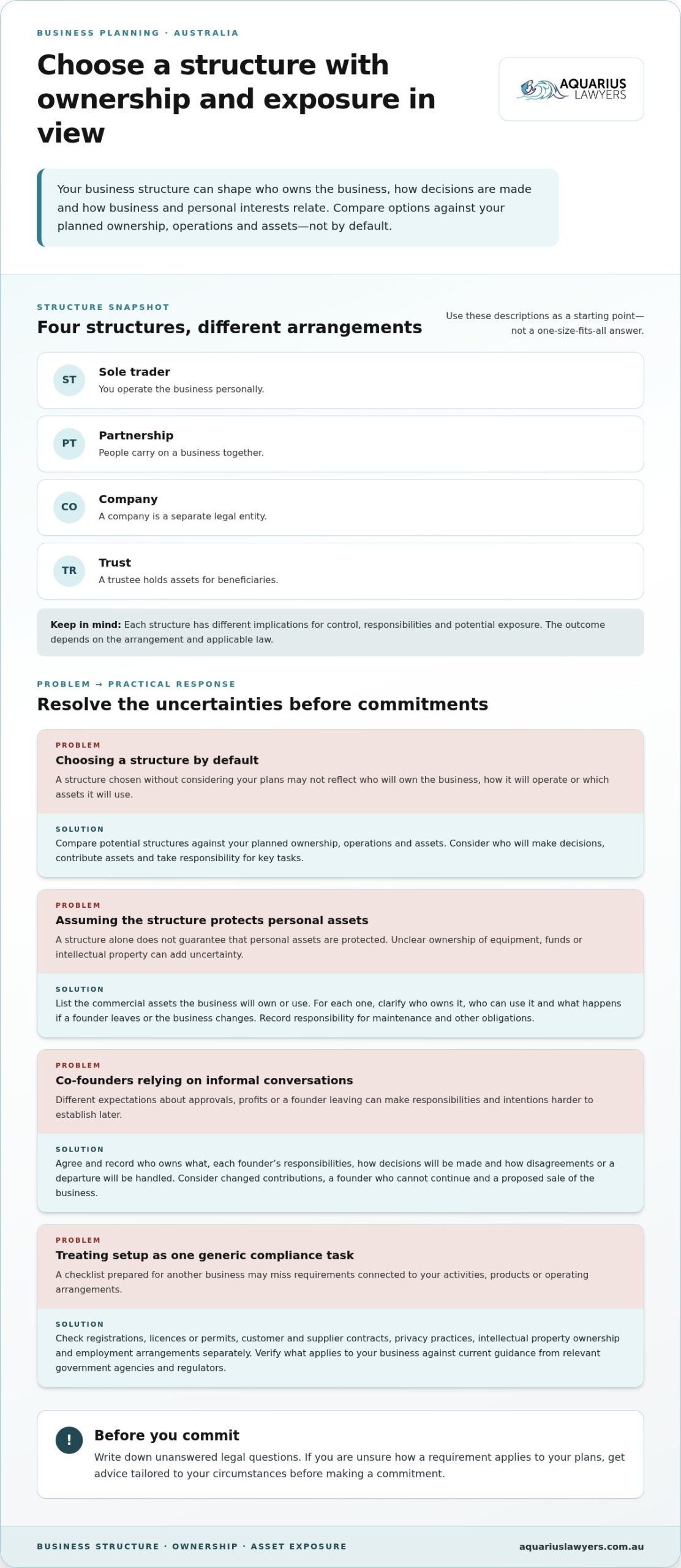
Your business structure affects more than administration. It can shape who owns the business, how decisions are made and how business and personal interests relate. Compare potential structures against your planned ownership, operations and assets rather than choosing one by default.
At a high level, a sole trader operates the business personally; a partnership involves people carrying on a business together; a company is a separate legal entity; and a trust is an arrangement where a trustee holds assets for beneficiaries. Each structure has different implications for control, responsibilities and potential exposure. The outcome depends on the arrangement and applicable law, so no structure should be treated as a universal solution.
Structure shapes control and potential exposure. List the assets the business will own or use, including equipment, intellectual property and other commercial assets. Consider who will own each asset, who can use it and what happens if a founder leaves or the business changes. A structure alone doesn’t guarantee that personal assets are protected. If asset exposure is a concern, asset protection legal services can help you examine the risks as part of your planning.
How can the structure affect personal exposure?
Think through how the business will hold assets, enter agreements and allocate responsibilities. If you contribute equipment or funds, clarify whether they become business assets, remain your personal property for the business to use, or form part of another agreed arrangement. Record the terms, including who is responsible for maintenance or other obligations. These details can affect ownership and what happens if the business changes. Get advice tailored to your circumstances before relying on assumptions about separation.
What should co-founders agree before trading?
Set out the working relationship in clear terms. Agree who owns what, each founder’s responsibilities, how decisions will be made and how disagreements or a founder’s departure will be handled. Consider how to deal with changed contributions, a founder who cannot continue, or a proposed sale of the business. Recording these points early can reduce ambiguity later. Commercial legal advice can help test whether the proposed structure and agreements reflect the founders’ intentions.
Registrations, licences, contracts and compliance: where start-up risks emerge
Setup tasks matter because each connects to how your business will operate. Treat registrations, licences, customer terms, supplier agreements and worker arrangements as separate checks, not one generic compliance task. The requirements depend on your activities, customers, workers and intended markets. Verify them against current guidance that applies to your business and its operations.
Depending on your circumstances, areas to examine may include business and tax registrations, industry licences or permits, customer and supplier contracts, consumer-facing claims, privacy practices, intellectual property ownership and employment arrangements. Not every business has the same obligations. Check each area against what you actually plan to do.
What should you check before accepting customers or suppliers?
Review written terms before taking orders or agreeing to supply goods or services. Check that the agreement describes what you will provide, the delivery expectations, payment arrangements and each party’s responsibilities. Consider what happens if a delivery is delayed, work changes, goods are defective or either party wants to end the arrangement. Clear terms can reduce uncertainty when a problem arises.
Check that your advertising and other statements to customers accurately describe your offer. If you collect personal information, make sure your processes reflect how you collect, use and store it. Also confirm who owns the business name, logo, website content and other branding, and whether the business has permission to use them. Registering a business name doesn’t by itself establish ownership of every brand element.
When do staffing and industry rules need attention?
If you plan to engage staff, review the proposed employment arrangements before work starts. Consider the role, the work to be performed and the terms being offered. Don’t assume an arrangement is suitable based on its label alone. In a regulated industry, licences or permits may apply to particular activities. Verify current national and relevant state or territory requirements for your specific operations.
Use this review to identify gaps before trading, then seek tailored commercial legal advice if the application of a requirement or agreement is unclear. Early planning gives you the chance to address issues before they become part of customer, supplier or staffing arrangements.
A practical legal risk plan for starting a business in Australia
A clear process turns broad concerns into decisions you can act on. Use this plan to organise the legal risks of starting a business australia-wide before commitments become difficult to change:
- Map your activities: describe what you’ll sell or provide, who you’ll serve and where you plan to operate.
- Identify exposure: note who owns the business, what assets it will use and where responsibilities or expectations could be unclear.
- Check requirements: verify relevant registrations, licences and other requirements against current guidance from the relevant government agencies and regulators.
- Document arrangements: record agreed terms with co-founders, customers, suppliers and workers, as relevant.
- Review changes: revisit your assessment when your activities, staffing, assets or markets change.
Keep a record of unanswered questions as well. A written list helps you focus on the decisions that need attention before you sign an agreement, commit assets or begin trading.
What information should you prepare for a legal review?
Gather your proposed business structure and ownership plans, a description of your activities, and the customer arrangements you expect to use. Include planned staffing, key business and commercial assets, supplier relationships and any industry-specific activities. Add draft agreements and any registration or licence information you have gathered. This gives your adviser a practical picture of the proposed business and helps focus the discussion on decisions that may need attention before launch.
When should you seek tailored legal guidance?
Consider legal advice before you commit if ownership is complex, an important agreement is approaching, a licence requirement remains unclear, or founders haven’t resolved expectations about control and responsibilities. Advice can help you examine the proposed arrangements and identify the questions to resolve next.
This guide is educational and doesn’t replace advice tailored to your proposed business. Aquarius Lawyers provides commercial legal services to help you assess your plans and legal strategy. Learn about Aquarius Lawyers.
Set your business up with a clear legal strategy
Your launch is the beginning of a business journey, not the last point at which legal planning matters. As your business develops, new opportunities can bring different commitments and risks. Revisit your legal arrangements when your activities, ownership, staffing or markets change, rather than treating setup as a one-off task.
A practical legal perspective can help connect commercial decisions with their implications before you act. Aquarius Lawyers provides commercial legal services, drawing on more than 20 years of legal and business experience to offer grounded advice for businesses.
Give your plans a considered legal foundation. Review Aquarius Lawyers’ business legal services and bring your questions to a Legal Strategy Session.
Frequently Asked Questions
What are the main legal risks of starting a business in Australia?
Common risk areas include choosing a structure without understanding potential exposure, overlooking a relevant registration or licence, unclear agreements, inaccurate customer-facing claims, mishandling personal information, uncertain worker arrangements and intellectual property disputes. The risks depend on your activities, the people you deal with, the assets involved and where you operate. This guide covers common issues, not every possible risk or a conclusion about your obligations.
Do I need to choose a business structure before starting a business?
It’s sensible to consider your structure early because it can affect who owns the business, who makes decisions and how potential exposure is managed. Common options include operating as a sole trader, in a partnership, through a company or using a trust. There’s no single structure that suits every founder. Your plans, ownership arrangements and circumstances determine which factors matter, so assess them before setting up.
Can I start a business in Australia without registering a company?
Operating a business and registering a company are separate questions. A company is one possible business structure, but choosing not to register one doesn’t automatically settle what other steps may apply. Depending on your activities and circumstances, you may need to consider other business registrations or licences. Check current requirements through relevant Australian government agencies and regulators before you begin operating.
What contracts should a new business consider before trading?
Consider written agreements that fit your actual working relationships. These may include customer terms, supplier agreements, arrangements between co-founders and employment or contractor documents if you engage workers. A service agreement, for example, can clarify the agreed scope, responsibilities and what happens if the arrangement changes. The right documents depend on how your business operates, so avoid relying on templates that don’t reflect the deal you intend to make.
When should I get legal advice about starting a business?
Seek tailored guidance before committing to a structure, ownership arrangement or important contract if you’re unsure how it affects your plans. Advice can also help when a proposed activity may require a licence or founders haven’t agreed on control and responsibilities. Bring your business details and unresolved questions to the discussion. To discuss your plans with Aquarius Lawyers, Book a Legal Strategy Session.
Disclaimer
Please note that legal rules change and this is not a substitute nor construed as legal advice. It is general information only.