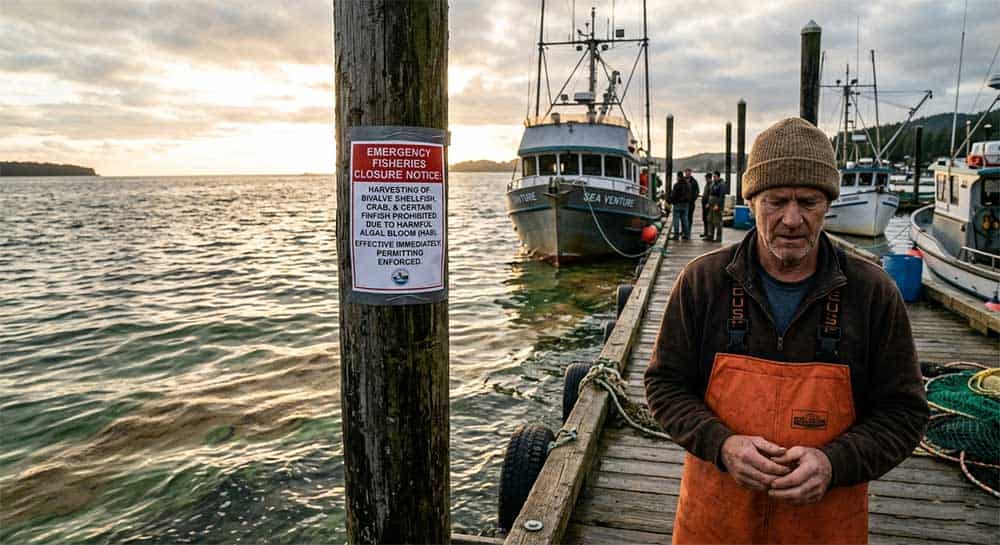
Harmful algal blooms (HABs) are no longer rare, isolated events. Warmer waters, altered ocean currents, nutrient runoff and extreme weather patterns are contributing to more frequent and more intense bloom events across Australian and international fisheries. For commercial fishers, aquaculture operators, processors and exporters, the consequences can be immediate and severe: emergency closures, stock mortality, product recalls, export suspensions and contractual disputes.
From a legal and risk management perspective, algal blooms sit at the intersection of environmental regulation, food safety law, biosecurity, insurance and commercial contracting. For seafood enterprises, the challenge is not simply responding to a bloom – it is building a business structure that can withstand one.
This article outlines the legal framework surrounding emergency fisheries closures in Australia and practical business continuity strategies to mitigate legal and commercial risk.
The Regulatory Framework for Emergency Closures
Emergency closures linked to algal blooms are typically implemented under state and Commonwealth fisheries legislation, public health law and, in some cases, biosecurity powers.
Key legal mechanisms include:
- Ministerial or Director-General powers to close fisheries, defined zones or species classes where public health or environmental risks arise
- Temporary prohibitions on harvesting, landing, transporting or selling affected species
- Mandatory recall or product withdrawal obligations under food safety legislation
- Conditions imposed on aquaculture licences requiring reporting, sampling and compliance with testing protocols
- Biosecurity directions restricting movement of stock or equipment
These powers are intentionally broad. Regulators must be able to act quickly where toxins such as paralytic shellfish poisoning (PSP), domoic acid or ciguatoxin pose risks to human health.
Importantly, closures can occur with little notice and without prior consultation. While administrative law principles still apply, the urgency of public health protection often limits practical avenues for immediate challenge.
Triggers for Closure
Closures are generally triggered by:
- Detection of toxin levels exceeding regulatory thresholds
- Satellite or monitoring data indicating bloom formation
- Mortality events in wild or farmed stock
- Laboratory confirmation of harmful algal species
- Public health advisories or illness reports
For aquaculture operators, licence conditions typically require routine sampling and immediate reporting of abnormal events. Failure to report promptly can expose operators to regulatory penalties in addition to the commercial impacts of the bloom itself.
Legal Risks for Seafood Businesses
Algal bloom events generate multiple layers of legal exposure.
Regulatory non-compliance
• Harvesting or selling product from a closed area can result in prosecution, licence suspension or cancellation
• Failure to comply with recall orders or traceability requirements may attract significant penalties
• Inaccurate record-keeping during a crisis can compound enforcement risk
Contractual breach
• Inability to supply product under domestic or export contracts
• Failure to meet quality specifications where toxin contamination is detected
• Disputes over force majeure clauses
Export market access
• Suspension of export approvals where importing countries impose heightened testing
• Delays in certification and inspection processes
• Heightened scrutiny of food safety management systems
Insurance disputes
• Uncertainty as to whether losses fall within business interruption, marine or stock mortality policies
• Exclusions relating to pollution, contamination or “gradual deterioration”
• Delays in notification that prejudice claims
Directors’ duties
• Exposure where boards fail to implement adequate risk management systems
• Potential shareholder scrutiny in larger integrated seafood enterprises
For vertically integrated operators — particularly those exporting live or chilled product — the commercial ripple effect can extend far beyond the harvest site.
Force Majeure and Contract Allocation of Risk
One of the most common legal questions arising from emergency closures is whether a supplier can rely on force majeure.
The answer depends entirely on contractual drafting.
Relevant considerations include:
- Whether “government action,” “natural disaster,” or “disease or contamination events” are expressly included
- Whether the clause requires the event to be unforeseeable
- Notice requirements and timeframes
- Mitigation obligations
- Termination rights after prolonged suspension
Courts interpret force majeure clauses narrowly. If algal blooms are a known seasonal risk in a particular region, foreseeability arguments may arise unless the clause is carefully drafted.
Seafood businesses should review:
- Supply agreements
• Offtake agreements
• Processing contracts
• Export distribution agreements
Risk allocation should be deliberate — not left to generic boilerplate.
Insurance Coverage Gaps
Insurance disputes following algal bloom events are common.
Issues frequently encountered include:
- Whether a government closure order is required before business interruption cover is triggered
- Whether contamination exclusions apply
- Whether losses caused by oxygen depletion (rather than toxin contamination) fall within policy wording
- Aggregation clauses limiting recovery
Aquaculture mortality policies may cover sudden stock death but exclude losses arising from gradual environmental change. Business interruption policies may require physical damage to insured property, creating uncertainty where the loss is regulatory rather than physical.
Regular policy review is critical, particularly as climate-related events become more frequent. Enterprises should:
- Seek tailored endorsements for HAB-related closures
- Confirm coverage for government-mandated shutdowns
- Clarify waiting periods and sub-limits
- Ensure timely notification protocols are embedded in crisis plans
Climate Change and Foreseeability
As climate modelling increasingly predicts intensified marine heatwaves and nutrient-driven bloom events, a new legal question emerges: at what point does a bloom cease to be “unforeseeable”?
Foreseeability affects:
- Insurance interpretation
- Negligence risk in aquaculture site selection
- Investor disclosure obligations
- Climate risk reporting under corporate governance frameworks
Larger seafood companies may be required to disclose climate-related operational risks in financial reporting. Failure to adequately consider bloom exposure in risk registers could attract regulatory scrutiny.
In this context, HABs are shifting from being characterised as isolated environmental events to foreseeable operational risks requiring structured management.
Business Continuity Planning
Effective response to algal bloom events requires both operational and legal preparedness.
Key elements of a defensible business continuity framework include:
- Documented bloom response protocols integrated into food safety programs
- Clear internal reporting lines and regulator notification procedures
- Pre-drafted customer communications templates
- Contract registers identifying force majeure notice requirements
- Insurance notification checklists
- Alternative harvest area or species diversification strategies
- Cold storage and inventory management contingencies
- Financial modelling for closure scenarios
For aquaculture operators specifically:
- Site diversification across geographic zones
- Investment in early warning monitoring technology
- Aeration or mitigation infrastructure where feasible
- Adaptive harvest scheduling
The objective is not to eliminate risk — that is impossible — but to demonstrate reasonable foresight and structured mitigation.
Regulatory Engagement and Transparency
Regulators generally prefer cooperative engagement during bloom events. Proactive communication can materially reduce enforcement exposure.
Best practice includes:
- Early notification of suspected bloom conditions
- Transparent disclosure of testing results
- Cooperation in traceability investigations
- Maintaining detailed contemporaneous records
In enforcement contexts, regulators assess not only the underlying event but also the operator’s conduct. Demonstrated diligence, accurate records and timely reporting can significantly influence outcomes.
Compensation and Relief Mechanisms
In some jurisdictions, industry assistance packages may follow prolonged closures. However:
- Compensation is rarely automatic
- Eligibility criteria are often narrow
- Payments may not cover full commercial losses
- Timing of relief can be delayed
Operators should not assume government support will offset losses. Legal review of eligibility criteria is essential before relying on proposed packages in financial planning.
Supply Chain and Reputational Risk
Beyond immediate closure impacts, algal blooms can affect brand reputation.
Export customers may:
- Impose additional testing requirements
- Seek warranties or indemnities
- Diversify sourcing away from affected regions
Clear communication strategies are essential to reassure buyers regarding food safety controls and compliance systems.
Traceability and documentation are critical in demonstrating that unaffected product remains safe and compliant.
Strategic Takeaways for Seafood Enterprises
Algal blooms are environmental events — but their consequences are legal and commercial.
Seafood businesses should:
- Review contractual force majeure and risk allocation clauses
- Audit insurance coverage for closure and contamination scenarios
- Embed bloom response protocols into food safety systems
- Maintain robust regulatory reporting procedures
- Diversify operational exposure where commercially feasible
- Integrate climate risk assessment into governance frameworks
In an era of intensifying marine variability, emergency fisheries closures are likely to become more frequent. The enterprises that withstand them will be those that treat bloom risk not as an anomaly, but as a core component of strategic planning.
For aquaculture operators and commercial fishers alike, resilience now requires legal preparedness as much as operational expertise.