
Introduction
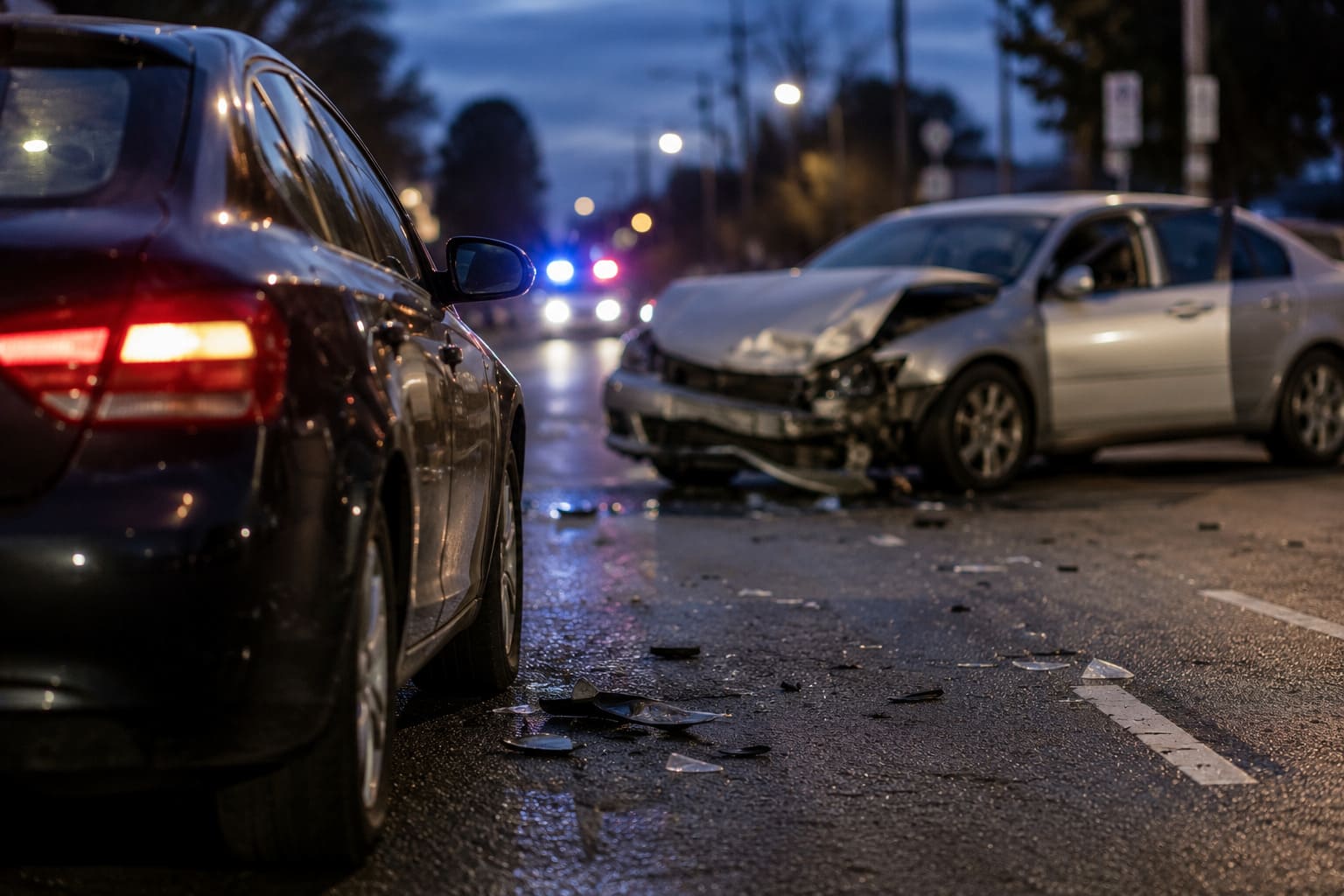
Being involved in a motor vehicle accident can be a frightening and stressful experience. In the moments immediately following a collision, many drivers panic, particularly where someone has been injured, alcohol or drugs may be involved, or they fear they have caused the accident.
However, leaving the scene of an accident without complying with your legal obligations can often make the situation significantly worse.
In New South Wales, drivers involved in traffic accidents have clear legal duties under the Road Rules 2014 (NSW) and the Road Transport Act 2013 (NSW). Failing to stop, failing to provide assistance, or failing to exchange details may result in substantial fines, demerit points, licence disqualification and, in more serious cases, criminal prosecution and imprisonment.
Importantly, not every allegation of failing to stop is straightforward. The prosecution must prove the relevant offence beyond reasonable doubt, and there may be circumstances where a legal defence is available.
This article explains what NSW law requires after a traffic accident, the penalties that may apply, and what you should do if you are under investigation.
What Must You Do After a Traffic Accident?
If you are involved in a traffic accident, the law generally requires you to:
- Stop your vehicle
- Remain at the scene where required
- Provide assistance if it is safe to do so
- Exchange required details
- Report the accident when legally required.
These obligations apply whether or not you believe the accident was your fault.
What is a Traffic Accident?
A traffic accident may involve:
- Another motor vehicle
- A pedestrian
- A cyclist
- A motorcyclist
- A parked vehicle
- Private property
- Public infrastructure
- An animal.
Even relatively minor collisions can trigger legal obligations.
When Must You Stop?
Drivers must stop if they are involved in an accident that results in:
- Injury or death
- Damage to another vehicle
- Damage to property
- Damage to public infrastructure
- Injury to an animal in some circumstances.
Simply slowing down before driving away will generally not satisfy the legal requirement.
Exchanging Details
Where required, drivers should provide:
- Their name
- Address
- Vehicle registration details
- Driver’s licence details where appropriate
- Vehicle owner’s details if requested and applicable.
Providing false information may constitute a separate offence.
Rendering Assistance
If someone is injured, drivers are expected to provide reasonable assistance where it is safe to do so.
This may include:
- Calling Triple Zero (000)
- Remaining with injured persons
- Directing traffic where safe
- Waiting for emergency services
- Cooperating with police.
Drivers should avoid moving seriously injured people unless there is an immediate danger.
Reporting an Accident to Police
Certain accidents must be reported to NSW Police.
This commonly includes accidents involving:
- Injury
- Death
- Drivers who fail to stop
- Suspected drink or drug driving
- Vehicles requiring towing because of the accident
- Circumstances where required information cannot be exchanged.
Failing to report an accident when required may itself constitute an offence.
Why Do Drivers Leave the Scene?
People leave accident scenes for many reasons.
Common examples include:
- Panic
- Shock
- Fear
- Alcohol consumption
- Drug use
- Outstanding warrants
- Driving whilst suspended
- Fear of prosecution
- Misunderstanding legal obligations.
While panic may explain behaviour, it does not automatically provide a legal defence.
Police Investigations
Police investigate failing-to-stop allegations using a wide range of evidence.
This may include:
- CCTV footage
- Dashcam recordings
- ANPR (Automatic Number Plate Recognition)
- Witness statements
- Vehicle damage
- Forensic evidence
- Mobile phone data
- Admissions
- Accident reconstruction.
In many cases, investigators identify vehicles long after the collision occurred.
Hit and Run Offences
The expression “hit and run” is commonly used by the public.
Legally, the allegations may involve offences relating to:
- Failing to stop
- Failing to exchange particulars
- Failing to report
- Dangerous driving
- Negligent driving
- Drink driving
- Drug driving.
Several offences may arise from the same incident.
Serious Accidents
Where an accident results in serious injury or death, failing to stop becomes significantly more serious.
These investigations often involve:
- Specialist crash investigators
- Forensic examinations
- Electronic vehicle data
- Medical evidence
- Expert accident reconstruction.
The consequences of conviction can be severe.
What if You Didn’t Realise There Had Been an Accident?
Occasionally drivers genuinely claim they were unaware that an accident had occurred.
Examples might include:
- Very minor contact
- Loud environmental noise
- Heavy vehicles
- Limited visibility.
Whether this explanation is accepted depends upon the available evidence.
What if You Were Afraid?
Fear following an accident is understandable.
However, leaving the scene because you were frightened generally does not excuse failing to comply with legal obligations.
Seeking legal advice immediately after such an incident is important.
Penalties
The penalty imposed depends upon:
- The seriousness of the accident
- Whether injuries occurred
- Prior driving history
- Other related offences
- Whether the driver later cooperated with police.
Possible outcomes include:
- Fines
- Demerit points
- Licence disqualification
- Community Correction Orders
- Intensive Correction Orders
- Imprisonment in serious cases.
Possible Defences
Every case depends upon its own facts.
Potential defences may include:
You Were Not the Driver
Police must prove who was driving the vehicle.
Ownership alone does not establish guilt.
No Accident Occurred
Occasionally the prosecution may struggle to prove that a reportable accident actually occurred.
You Did Stop
Disputes sometimes arise regarding whether the driver:
- Stopped
- Exchanged details
- Rendered assistance.
Witness evidence often becomes important.
Lack of Knowledge
Where the prosecution cannot prove the driver knew, or ought reasonably to have known, that an accident occurred, a defence may arise depending upon the legislation and facts.
Police Cannot Prove the Case
The prosecution must prove every element beyond reasonable doubt.
Weaknesses in identification, witness evidence or forensic evidence may affect the prosecution case.
What Should You Do if Police Contact You?
If police contact you regarding an accident:
- Remain polite
- Provide identifying information where legally required
- Avoid making admissions
- Do not speculate
- Seek legal advice before participating in a formal interview.
Statements made immediately after an incident often become important evidence.
Will a Conviction Affect My Licence?
It may.
Depending upon the offence, a conviction may result in:
- Licence suspension
- Licence disqualification
- Demerit points
- Increased insurance premiums
- Employment consequences for professional drivers.
Avoiding a conviction or reducing the seriousness of the charge may therefore be particularly important.
Why Early Legal Advice Matters
An experienced criminal lawyer can:
- Review the police evidence
- Advise whether the prosecution can prove the offence
- Identify available defences
- Negotiate with prosecutors where appropriate
- Prepare sentencing submissions
- Represent you throughout court proceedings.
Early legal advice often improves the prospects of achieving the best possible outcome.
How Aquarius Lawyers Can Help
Aquarius Lawyers represents clients throughout NSW charged with traffic and criminal offences, including allegations of failing to stop after a traffic accident.
We can assist by:
- Reviewing police evidence
- Advising on your legal obligations
- Assessing available defences
- Representing clients during police interviews
- Appearing in Local Court proceedings
- Negotiating with prosecutors where appropriate
- Preparing comprehensive sentencing submissions where necessary.
Every traffic accident is different. The surrounding circumstances, available evidence and your personal situation all influence the outcome.
If you have been involved in a traffic accident and are under police investigation, or have been charged with failing to stop, obtain legal advice as early as possible. Protecting your legal rights from the outset can make a significant difference to the outcome of your case.