
Could choosing the wrong appeal pathway put your chance to challenge a conviction at risk? If you’re appealing a criminal conviction nsw, it’s understandable to be unsure which court can hear your appeal, what grounds may apply and how quickly you need to act. Deadlines are strict. For example, an appeal from the Local Court to the District Court generally must be filed within 28 days of sentencing.
Your next step depends on where your case was heard and whether you’re challenging the conviction, the sentence or both. This guide compares the main NSW appeal pathways and explains how to identify possible grounds, check deadlines and prepare for a legal review. It also covers what documents to gather and how advice can help you understand the process, risks and any licence impacts relevant to your case.
Key Takeaways
- Start by confirming which court made the decision, as this helps determine the available appeal pathway.
- When appealing a criminal conviction nsw, be clear about whether you’re challenging the finding of guilt, the sentence or both.
- Gather the decision and available case records, then note specific concerns that can be assessed against possible appeal grounds.
- Seek prompt legal advice to check filing requirements, risks and any licence impacts before deciding what to do next.
Appealing a Criminal Conviction in NSW: Which Court Made the Decision?
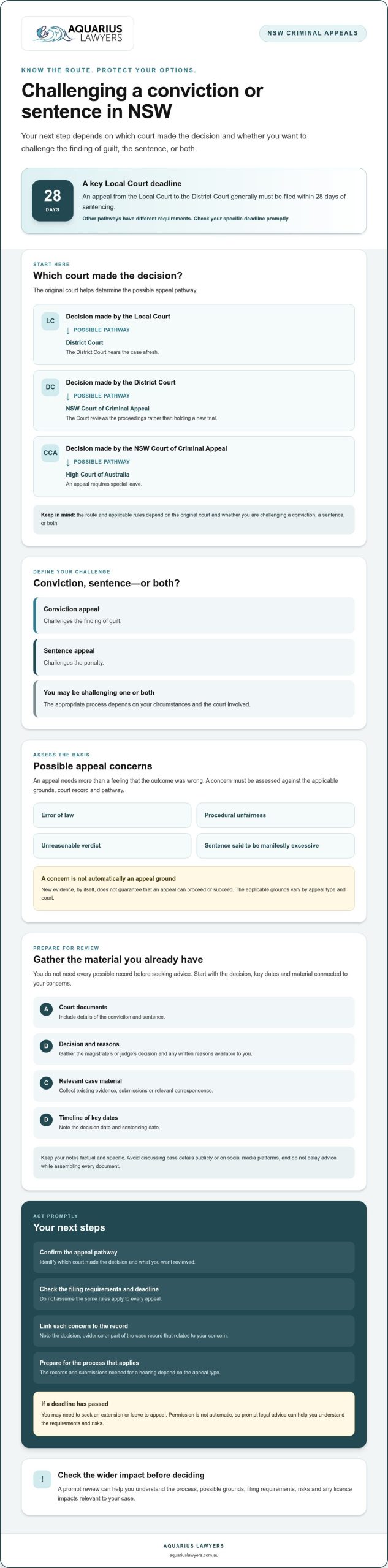
An appeal follows a specific legal pathway. It is not simply an opportunity to have the same case heard again. The court that made the decision matters, as does what you want to challenge. A conviction appeal disputes the finding of guilt, while a sentence appeal challenges the penalty. Depending on your circumstances, you may be challenging one or both.
If you’re searching for information about appealing a criminal conviction nsw, first identify the court that made the decision and the type of decision you want reviewed:
| Decision made by | Possible appeal pathway |
|---|---|
| Local Court | Appeal to the District Court, which hears the case afresh. |
| District Court | Appeal to the NSW Court of Criminal Appeal, which reviews the proceedings rather than holding a new trial. |
| NSW Court of Criminal Appeal | An appeal to the High Court of Australia requires special leave. |
The NSW Court of Criminal Appeal is part of the Supreme Court of NSW and hears criminal appeals from lower courts. The route and applicable rules depend on the original court and whether you’re challenging a conviction or sentence. Before filing, check the current legislation and court procedure for your specific pathway.
Does the court that convicted you determine where you appeal?
It helps determine the possible route, but the type of decision also matters. A Local Court conviction appeal and a challenge to a District Court sentence follow different processes. Deadlines and filing requirements can also vary, so get advice promptly rather than assuming the same rules apply to every case. For broader context on criminal matters, see our criminal defence and court representation guide.
How to Assess Grounds and Prepare an Appeal in NSW
A successful appeal needs more than a feeling that the outcome was wrong. You need to identify a recognised appeal ground and explain how it relates to the court record and the rules for your pathway. Depending on the case, concerns may involve an error of law, procedural unfairness, an unreasonable verdict or a sentence said to be manifestly excessive. The applicable grounds vary by appeal type and court. The Supreme Court of NSW explains the grounds for appeal considered by the Court of Criminal Appeal.
To make your concerns easier to assess, link each one to a specific part of the decision or case record. For example, note a direction you believe was wrong, identify evidence you think was misunderstood, or record why you consider the sentence excessive. These concerns may be relevant, but they do not automatically establish an appeal ground. New evidence, for instance, does not by itself guarantee that an appeal can proceed or succeed. A solicitor can assess the material against the applicable law and explain the risks, including any licence impacts relevant to your case.
What should you gather before speaking with a criminal lawyer?
Organise the documents you already have. You do not need to collect every possible record before seeking advice. Start with the decision, key dates and material connected to your concerns. A lawyer can then explain what else may be needed.
- The court documents, including details of the conviction and sentence.
- The magistrate’s or judge’s decision and any written reasons available to you.
- Existing case material, such as evidence, submissions or relevant correspondence.
- A timeline of key dates, including the decision and sentencing dates.
Keep your notes factual and specific. Avoid discussing case details publicly or on social media platforms, and don’t delay getting advice while trying to assemble every document. A prompt review can help clarify your options and the time limits that may apply. For criminal law advice and representation, ask a solicitor to assess the decision, available records and relevant deadlines.
What Happens Next After You Decide to Appeal a NSW Conviction?
Once you decide to explore an appeal, act promptly. The steps depend on the court that made the decision and whether you’re challenging the conviction, sentence or both. First confirm the correct pathway and the current filing requirements and deadlines. Then work out what records and submissions need to be prepared for the hearing. The NSW Director of Public Prosecutions appeal guide outlines the main NSW appeal routes and process.
Deadlines can be short. For example, an appeal from the Local Court to the District Court generally must be filed within 28 days of sentencing. Other pathways have different requirements, so don’t assume one deadline applies to every case. If you miss a deadline, you may need to seek an extension or leave to appeal. Permission is not automatic, so get advice as soon as possible.
The hearing and possible outcome also depend on the appeal type. A District Court appeal from the Local Court is reheard, while the Court of Criminal Appeal reviews the original proceedings rather than holding a new trial. The court’s powers and the outcomes available depend on the applicable law and your case. An appeal does not guarantee that the decision will change.
How can legal advice help you make an informed decision?
A lawyer can review the decision and case records, assess whether there may be an appeal ground, and explain procedural risks before you commit to a pathway. Ask about the conviction and sentence separately, as well as any legally relevant consequences such as licence impacts. This can help you weigh your options against the deadlines and steps involved. While local matters require NSW counsel, those managing cross-border affairs or facing complex criminal proceedings in Chile can explore Representación y defensa jurídica en materia penal through specialist firms such as Meriño y Abogados Asociados.
If you’re considering appealing a criminal conviction nsw, get case-specific advice promptly. Discuss your criminal law matter with Aquarius Lawyers.
Take the next step with a clear appeal plan
Appealing a criminal conviction nsw starts with identifying which court made the decision and whether you’re challenging the conviction, sentence or both. Those details affect the appeal pathway, possible grounds and deadline. Gather the decision and available case records, note your specific concerns, and seek advice promptly.
A legal review can help you understand the process, assess risks and consider related consequences, including licence impacts where relevant. Aquarius Lawyers provides criminal law services and can advise on the records and deadlines relevant to your matter. No appeal outcome can be promised, but clear advice can help you make an informed decision about your options.
Check the time limits that apply to your case as soon as possible. Discuss your criminal law matter with Aquarius Lawyers to clarify your next step and get a plan based on your circumstances.
Frequently Asked Questions
How long do you have to appeal a criminal conviction in NSW?
The deadline depends on which court made the decision. If you’re appealing a criminal conviction in NSW from the Local Court to the District Court, you generally have 28 days from sentencing to file. A late appeal may be possible by seeking leave within three months of the sentence date. Appeals to the Court of Criminal Appeal have different notice requirements, so check your specific pathway promptly.
Can you appeal a criminal conviction in NSW after pleading guilty?
A guilty plea doesn’t automatically rule out every possible challenge, but it can affect what you may be able to appeal and on what basis. A lawyer needs to review how the plea was entered, the court record and the legal grounds available. If your concern is the penalty rather than the plea or finding of guilt, ask whether a sentence appeal may apply.
Is appealing a conviction different from appealing a sentence?
Yes. A conviction appeal challenges the finding that you’re guilty, while a sentence appeal challenges the penalty imposed. Depending on your case and the relevant rules, you may seek to appeal one or both. The distinction matters because the grounds, court process and possible outcomes can differ. Get advice on the precise decision you want the appeal court to review.
What happens if you miss the deadline to appeal a conviction in NSW?
Missing a deadline can put your right to appeal at risk, but the next step depends on the court and appeal type. For a Local Court matter, you may apply for leave to appeal within three months of sentencing and show it’s in the interests of justice. After that period, there’s no right of appeal to the District Court. Seek legal advice immediately.
Disclaimer
Please note that legal rules change and this is not a substitute nor construed as legal advice. It is general information only.