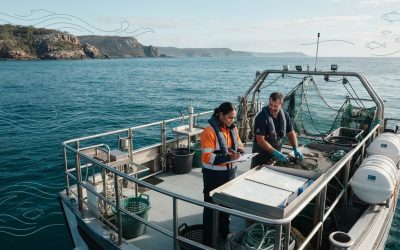
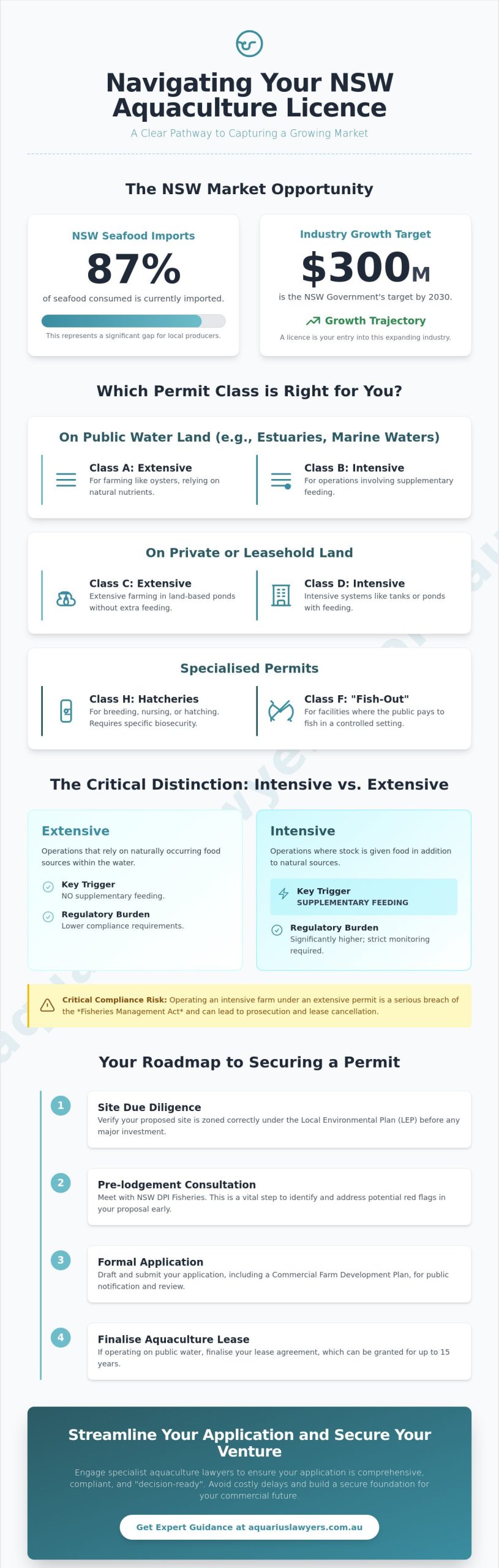
Did you know that while NSW consumers currently import 87% of their seafood, the state government has set a bold target to grow the local industry to $300 million by 2030? Securing an aquaculture licence nsw is the essential first step to capturing this market gap, yet the path through the Fisheries Management (Aquaculture) Regulation 2024 is rarely a straight line. It’s easy to feel overwhelmed by the mountain of biosecurity plans and environmental requirements demanded by the DPI. You want to focus on your stock, not the stress of a potential application refusal.
We understand that the bureaucracy can feel like a barrier rather than a bridge. This guide provides a clear pathway to approval, showing you how to navigate the permit process with confidence while avoiding the legal pitfalls that often sink startups. Precise documentation plus regulatory alignment equals a faster path to production. We’ll break down the 2025-26 fee schedules, the specific permit classes, and how to build a compliant business plan that secures your commercial future and minimizes the risk of regulatory prosecution.
Key Takeaways
- Identify the legal framework under the *Fisheries Management Act 1994* and how the NSW DPI regulates your specific sector.
- Follow a clear roadmap to secure your aquaculture licence nsw, starting with site due diligence and essential pre-lodgement consultations.
- Determine whether an intensive or extensive pathway suits your project by comparing the different environmental and water quality obligations.
- Pass the ‘Fit and Proper Person’ test by understanding the Minister’s review criteria and avoiding common data errors that delay approvals.
- Learn how professional legal guidance in aquaculture law can streamline the application process and provide a secure foundation for your venture.
Understanding the NSW Aquaculture Licensing Framework
Under the Fisheries Management Act 1994, aquaculture is defined as the commercial cultivation of fish or marine vegetation. This legal definition forms the bedrock of every aquaculture licence nsw issued by the state. The NSW Department of Primary Industries (DPI) acts as the primary regulator, overseeing the Fisheries Management (Aquaculture) Regulation 2024. In the current 2026 regulatory landscape, the DPI isn’t merely a permit issuer. They’re the architects of a state-wide strategy aiming to grow the industry to $300 million by 2030. Understanding this framework is vital because your permit defines your operation’s scope, environmental footprint, and eventual business valuation.
The broader context of Aquaculture in Australia shows a clear shift toward high-tech, sustainable systems. The NSW licensing structure reflects this evolution by categorising permits based on the intensity of the farm and the type of land used. Choosing the wrong class doesn’t just lead to administrative headaches; it can result in a total halt of operations if your activities exceed your authorised limits.
The Core Permit Classes (A to H)
The NSW system organises permits into specific classes to match the risk profile of the venture. Identifying your class early is essential for a successful aquaculture licence nsw application. The main categories include:
- Class A and B: These cover aquaculture on public water land, such as estuaries or marine waters. Class A is for extensive farming (like oysters), while Class B handles intensive operations.
- Class C and D: These apply to land-based aquaculture on private or leasehold land. Class C is extensive, and Class D is intensive.
- Class H: This is a specialised permit for hatcheries. It’s a critical link in the supply chain that requires distinct biosecurity protocols.
- Class F: Specifically for “fish-out” facilities where the public pays to fish in a controlled environment.
Extensive vs. Intensive: The Legal Distinction
The primary legal trigger that separates an intensive permit from an extensive one is “supplementary feeding.” If you provide food to your stock rather than relying on natural nutrients in the water, your operation is legally classified as intensive. This distinction is non-negotiable. Intensive permits, such as Class B or D, carry a significantly higher regulatory burden. They require more rigorous environmental impact assessments and stricter water quality monitoring.
Operating an intensive farm under an extensive permit is a serious breach of the Fisheries Management Act. It can trigger immediate prosecution and the cancellation of your lease. From a commercial perspective, an intensive permit often increases the valuation of a business because it allows for higher density and more predictable growth cycles. However, you must be prepared for the increased compliance costs that come with managing discharge and biosecurity risks. Accurate site mapping and clear operational plans are your best defence against these regulatory hurdles.
Step-by-Step: Securing Your NSW Aquaculture Permit
Securing an aquaculture licence nsw requires more than just filling out a form. It demands a strategic alignment of property law, environmental regulation, and commercial planning. The process begins with rigorous due diligence on your chosen site. You must ensure the Local Environmental Plan (LEP) permits aquaculture in your specific zone before you spend a cent on infrastructure. Once the site is vetted, your next move is a pre-lodgement meeting with NSW DPI Fisheries officers. This isn’t just a courtesy. It’s a vital step to identify potential red flags in your proposal before formal submission. You can find detailed aquaculture permit information through government portals to help prepare for this initial consultation.
Following the meeting, you’ll draft your formal application. This stage involves a public notification period where neighbours and stakeholders can voice concerns. If you’re operating on public water land, you’ll also need to finalise an aquaculture lease, which can be granted for up to 15 years. For those seeking to expedite this complex journey, engaging specialist aquaculture lawyers can ensure your application is “decision-ready” from day one, significantly reducing the risk of DPI requests for further information.
The Commercial Farm Development Plan (CFDP)
The CFDP is the most scrutinised legal document in your application because it outlines your operational commitment for the next five years. It isn’t just a business plan; it’s a binding document that must integrate comprehensive biosecurity protocols and lease maintenance strategies. The CFDP serves as the legal blueprint for your farm’s operations. In the 2026 regulatory environment, the quality of your evidence, such as specific species impact data, is what separates successful applicants from those who face months of delays. If your mapping is poor or your biosecurity measures are vague, the DPI will likely return the application for revision. Understanding the full scope of aquaculture business plan legal requirements across Australian jurisdictions can help you build a CFDP that satisfies the regulator’s expectations from the outset.
Zoning and Development Approval (DA)
Your Fisheries permit doesn’t exist in a vacuum. Most land-based projects require a Development Application (DA) through the local Council. Navigating the relationship between the Fisheries permit and local Council DA is often where startups stumble. You must also check if your project exceeds State Significant Development (SSD) thresholds. For instance, very large-scale intensive farms may be called up for state-level assessment rather than local council review. Securing a land-based aquaculture licence nsw often involves concurrent negotiations with both the DPI and the local planning authority to ensure your land-based depot or hatchery meets all local environmental planning instruments.
Intensive vs. Extensive: Choosing the Right Pathway
Choosing between an intensive or extensive pathway isn’t just an operational decision; it’s a legal one that dictates your long-term compliance costs. Class A (Extensive) permits, typically used for oyster farming, rely on natural food sources. In contrast, Class B (Intensive) permits involve supplementary feeding, which the DPI views as a higher environmental risk. This risk translates into stricter water quality monitoring and discharge regulations. You aren’t just farming fish; you’re managing an ecosystem with legal boundaries. If your discharge affects local waterways, you face potential litigation under environmental protection laws.
The financial stakes are also significant. For any aquaculture licence nsw involving Class A or B permits, the DPI requires a security bond. Currently, this is a refundable cash deposit or bank guarantee of $1,000 per hectare. This ensures that if a business fails or abandons a lease, the state isn’t left with the clean-up bill. Your choice of species further refines these legal conditions. Farming Sydney Rock Oysters, which accounted for $68.3 million of the state’s production value in 2023-24, requires different permit endorsements than intensive Murray Cod production, which led the land-based sector at $14.2 million in 2022-23.
Public Water Land vs. Private Land
The legal interplay between water-based leases and land-based depots is a common trap for new players. If you’re on public water land, you’re dealing with seagrass protections and the complex world of NSW oyster leases. Securing tenure involves more than just a new application; it often includes lease transfers or sublets, each requiring a $903 application fee for the first transfer. You also need to manage conflicts with recreational boaters and fishers. Your lease gives you the right to farm, but it doesn’t grant you exclusive ownership of the water column, making clear signage and community engagement essential legal safeguards.
Species-Specific Legal Considerations
Compliance with the NSW Oyster Industry Sustainable Aquaculture Strategy (OISAS) is mandatory for shellfish growers. This strategy provides a streamlined pathway for approvals but demands strict adherence to environmental standards. If you’re looking at native species, the rules are generally more permissive than for non-native varieties. However, specific permit endorsements are still required for every variety you cultivate. The recent trend of farming Pacific Oysters as a risk management strategy in certain estuaries shows how legal flexibility in your permit can protect your business against disease outbreaks or environmental shifts.
Navigating Compliance: Avoiding Common Pitfalls
The Minister doesn’t just look at your site; they look at you. The ‘Fit and Proper Person’ test is a critical hurdle for any aquaculture licence nsw. If you’re applying as a company, an up-to-date ASIC extract is mandatory to prove the entity’s standing and identify all directors. Many applicants stumble here by failing to provide complete data or accurate site mapping. This lack of precision leads to the DPI sending the application back, which adds months of unnecessary delays to your timeline. Accuracy is your best tool for efficiency.
Biosecurity isn’t just a buzzword; it’s a legal mandate under the Biosecurity Act 2015. We saw the devastating impact of these risks in 2023-24, when White Spot Syndrome Virus resulted in zero production of farmed Black Tiger Prawns across the state. Your biosecurity plan must be robust enough to satisfy the DPI that you won’t endanger the state’s $112.1 million aquaculture industry. Achieving total aquaculture legal compliance across overlapping state and federal biosecurity requirements is a complex undertaking, and if you’re unsure about your plan’s legal sufficiency, contact our aquaculture law specialists to review your documentation before you lodge it.
The Fit and Proper Person Test
The Minister considers your history and your wallet. You must disclose any previous fisheries convictions or environmental breaches. Financial viability is also assessed to ensure you can meet the $1,000 per hectare security bond and annual fees, such as the $574 permit contribution. A history of non-compliance can be a fatal flaw in an application. It’s better to be transparent about past issues and demonstrate your current commitment to compliance than to have the DPI discover a hidden record during their review.
Reporting and Record-Keeping Obligations
Once you’re operational, the paperwork doesn’t stop. Annual lease rent must be paid before 31 July each year, and production returns are legally required to be accurate and timely. Disease notification is perhaps the most urgent obligation. If you suspect an outbreak, your reporting window is often measured in hours, not days. Failing to report can lead to immediate prosecution. Remember that Aquaculture Compliance Officers have broad powers of entry to inspect your stock and records. Keeping your “legal house” in order isn’t just about avoiding fines; it’s about protecting your business from litigation and ensuring your licence remains a valuable, tradeable asset.
Strategic Legal Support for Your NSW Aquaculture Venture
Securing an aquaculture licence nsw is a significant commercial milestone, but it’s only the beginning of your legal journey. A permit is a business asset. Like any high-value asset, it requires protection through robust commercial contracts and secure lease agreements. Aquarius Lawyers specialises in turning complex regulatory requirements into clear operational pathways. We don’t just look at the law in isolation; we look at how it impacts your bottom line. By auditing your business plan against current DPI expectations, we ensure your venture is built on a compliant foundation from day one.
The synergy between niche expertise and proactive strategy is what keeps a project moving. When you’re managing the $1,000 per hectare security bonds and the annual research contributions mentioned earlier, you can’t afford administrative bottlenecks. We streamline the DPI application process by ensuring every biosecurity plan and site map meets the highest legal standards before submission. This precision reduces the likelihood of the regulator requesting further information, which is the most common cause of startup delays.
Why Specialised Legal Counsel Matters
Generic commercial law often misses the specific nuances of maritime and fisheries regulation. When an application gets “stuck” in the DPI system, it’s usually because a biosecurity or environmental requirement hasn’t been articulated in the language the regulator expects. We bridge that gap. Our approach combines traditional legal credentials with a modern, tech-savvy perspective. Niche expertise plus proactive government liaison equals a faster path to production. We speak the language of the regulator, which allows us to resolve issues before they escalate into costly disputes or application refusals.
The Aquarius Lawyers Advantage
Known in the industry as ‘The Fish Lawyer’, our principal brings a level of niche authority that is rare in the Australian legal market. We’ve represented clients across regional NSW estuaries and before international maritime tribunals, providing a breadth of experience that covers every facet of aquaculture law. We understand that startups need budget certainty. We offer fixed-fee options for specific permit applications and reviews, ensuring you can manage your capital with confidence. Whether you’re dealing with a lease transfer, a fisheries litigation matter, or a complex debt recovery issue, we provide the steady, common-sense guidance you need to succeed.
Don’t leave your commercial future to chance. Protecting your investment requires a legal partner who understands the water as well as the courtroom. Organise a strategy session with Aquarius Lawyers today to ensure your aquaculture venture is legally fortified and ready for growth.
Charting a Sustainable Path for Your Aquaculture Venture
The road to a successful aquaculture licence nsw is paved with regulatory precision and strategic planning. We’ve explored how the right permit class defines your operational limits and why a robust Commercial Farm Development Plan is your most valuable legal shield. Compliance isn’t just about ticking boxes; it’s about protecting the state’s biosecurity and ensuring your business remains a viable, long-term asset. Precision in your paperwork today prevents litigation tomorrow.
Expertise plus strategy equals results. Led by Katherine Hawes, known across the industry as ‘The Fish Lawyer’, Aquarius Lawyers brings over 20 years of maritime and commercial law experience to your project. We specialise in Fisheries Management Act compliance, helping you move from application to production with minimal friction. Don’t let bureaucracy stall your progress. Secure your aquaculture future with expert legal advice from Aquarius Lawyers and build your business on a foundation of certainty. The NSW industry is growing, and with the right legal partner, your farm can be a leader in that expansion.
Frequently Asked Questions
How much does an aquaculture licence in NSW cost in 2026?
For the 2025-2026 period, the application fee for a new Class A or B permit is $328, while more intensive Class D or H permits cost $822. You must also factor in an annual permit contribution of $574 and a refundable security bond of $1,000 per hectare for public land leases. These fees are adjusted annually in line with the Consumer Price Index, so it’s vital to check the current schedule before lodging your paperwork.
How long does it take for the NSW DPI to approve an aquaculture permit?
Approval timelines vary significantly based on the complexity of your project and the quality of your Commercial Farm Development Plan. While straightforward applications might progress steadily, those requiring extensive environmental impact assessments or public notification can take several months. Ensuring your data is complete and your site mapping is precise from the outset is the most effective way to prevent the DPI from requesting further information and stalling your progress.
Can I transfer an existing aquaculture lease to a new company?
Yes, you can transfer an existing lease, provided the new entity passes the ‘Fit and Proper Person’ test and the DPI approves the application. The current fee for the first lease transfer application is $903. This process requires a formal assessment of the incoming company’s financial viability and its ability to manage the biosecurity obligations associated with the aquaculture licence nsw.
What is the difference between a Class A and a Class B permit?
The distinction lies in the intensity of the farming method used on public water land. A Class A permit is for extensive aquaculture, such as oyster farming, where stock relies on natural food sources. A Class B permit is for intensive aquaculture, which involves supplementary feeding. Because intensive farming carries a higher risk of nutrient discharge, Class B holders face more rigorous environmental monitoring and water quality regulations.
Do I need a permit for a small private fish pond for personal use?
You typically don’t need an aquaculture licence nsw if the fish are for personal consumption and there is no commercial intent. The Fisheries Management Act 1994 specifically regulates the commercial cultivation of fish or marine vegetation. If you intend to sell, trade, or barter any of your stock, you must secure the appropriate permit class to avoid significant legal penalties and potential prosecution.
What happens if my aquaculture licence application is refused?
If your application is refused, the DPI will provide a statement of reasons outlining why you didn’t meet the criteria. You generally have the right to seek a review of the decision through the NSW Civil and Administrative Tribunal (NCAT). In many cases, refusals stem from inadequate biosecurity plans or poor site selection, which can often be rectified with professional legal guidance and a revised strategy.
Are there specific biosecurity requirements for NSW oyster farmers?
Oyster farmers must comply with the NSW Oyster Industry Sustainable Aquaculture Strategy (OISAS) and the mandatory reporting requirements under the 2024 Regulation. This includes a legal obligation to report suspected disease outbreaks within a very tight window, often just 24 hours. Given the industry’s $73 million dominance in the state’s aquaculture sector, these biosecurity protocols are strictly enforced to protect the broader marine ecosystem.
Is a local council development approval (DA) always required for aquaculture?
A local council DA is required for most land-based projects, though some extensive oyster farming activities on public water land are classified as “permitted without consent” under specific state policies. You must always verify the zoning requirements in the local Council’s Environmental Plan before beginning infrastructure work. Larger projects may even be classified as State Significant Development, requiring a more complex approval process through the Department of Planning.
Disclaimer
Please note that legal rules change and this is not a substitute nor construed as legal advice. It is general information only.