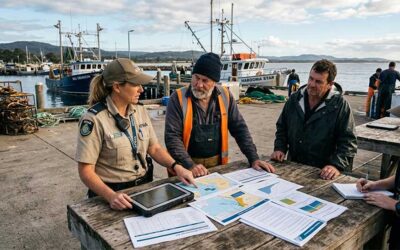

Australia’s marine environment is governed by an increasingly complex intersection of conservation law, fisheries regulation and international biodiversity commitments. As marine protected areas expand and environmental scrutiny intensifies, commercial fisheries are navigating a regulatory landscape where access to the resource is no longer determined solely by stock sustainability, but also by ecosystem protection, climate resilience and biodiversity preservation.
The relationship between marine conservation law and fisheries access is not inherently adversarial. Both frameworks seek long-term ecological stability. However, the mechanisms used to achieve conservation outcomes can create operational and economic pressure for commercial fishers. The future of Australia’s seafood industry will depend on how effectively regulators, industry and stakeholders manage conflict, pursue compromise and enable practical coexistence.
The Legal Architecture of Marine Conservation
Marine conservation in Australia operates across multiple legislative layers, including:
- The Environment Protection and Biodiversity Conservation Act 1999 (Cth)
- Commonwealth marine park legislation and management plans
- State and Territory marine park statutes
- Biodiversity conservation laws
- International treaty obligations
Marine parks and protected areas are established to conserve biodiversity, protect habitats and maintain ecological processes. Zoning arrangements within these parks may range from multiple-use areas permitting controlled fishing to highly protected no-take zones prohibiting extractive activities.
The expansion of marine conservation zones reflects both domestic environmental policy and Australia’s international commitments, including global biodiversity targets.
Fisheries Access Rights Under Australian Law
Commercial fishing rights are generally statutory entitlements rather than proprietary interests in marine resources. These rights may include:
- Fishing licences
- Quota units
- Effort allocations
- Vessel permits
- Access endorsements
While valuable and transferable in many cases, these rights are inherently subject to regulatory adjustment. Legislatures retain broad discretion to amend access conditions in pursuit of sustainability or conservation objectives.
This statutory structure shapes the legal balance between conservation measures and fisheries access.
Points of Conflict Between Conservation and Access
Tensions most commonly arise where conservation initiatives directly restrict fishing activity.
Examples include:
- Creation or expansion of no-take marine zones
- Gear restrictions aimed at habitat protection
- Seasonal closures to protect spawning aggregations
- Bycatch mitigation requirements
- Spatial protection of threatened species
From a conservation perspective, these measures safeguard ecosystems. From an industry perspective, they may reduce viable fishing grounds, increase operational costs and affect asset values.
Conflict is often amplified where:
- Consultation processes are perceived as limited
- Socio-economic impacts are underestimated
- Scientific evidence is contested
- Compensation is unavailable
Legal disputes may arise through judicial review applications challenging procedural fairness or statutory interpretation.
The Role of the EPBC Act in Fisheries Regulation
The EPBC Act plays a central role in reconciling conservation objectives with fisheries access.
Key mechanisms include:
- Strategic assessments of fisheries
- Wildlife Trade Operation approvals for export fisheries
- Listed threatened species protections
- Marine protected area declarations
Fisheries seeking export approval must demonstrate ecological sustainability and effective bycatch mitigation. Conservation law therefore indirectly shapes access by conditioning market participation on environmental performance.
Where threatened species interactions occur, fisheries may be required to:
- Modify gear
- Implement monitoring systems
- Adjust fishing practices
- Reduce effort
These requirements can generate operational complexity, but they also provide a structured pathway for coexistence.
Marine Protected Areas and Zoning Disputes
Marine protected area expansion remains one of the most contentious aspects of conservation law.
Issues frequently raised by commercial fishers include:
- Loss of historically productive fishing grounds
- Effort displacement into remaining areas
- Cumulative economic impact
- Insufficient transitional support
- Uncertainty regarding future rezoning
Governments must balance biodiversity objectives with regional economic considerations. While socio-economic assessments are typically undertaken, the weighting given to these factors can be controversial.
Courts generally defer to ministerial discretion where statutory processes have been followed, limiting legal remedies for affected operators.
Compensation and Adjustment Assistance
A recurring issue is whether commercial fishers are entitled to compensation when marine areas are closed for conservation purposes.
Key considerations include:
- Whether legislation expressly provides for compensation
- Whether an acquisition of property on just terms has occurred
- Whether structural adjustment packages are introduced as policy
In many cases, fishing rights are characterised as regulatory privileges rather than proprietary interests. As a result, compensation is not automatically triggered by spatial restrictions.
Where governments have provided adjustment assistance, it has typically been policy-driven rather than legally mandated.
Understanding the statutory basis of access rights is critical when assessing compensation prospects.
Scientific Evidence and Decision-Making
Scientific uncertainty often lies at the heart of conservation-access conflict.
Points of debate may include:
- Extent of habitat damage from particular gear types
- Effectiveness of no-take zones in improving stock biomass
- Spillover benefits to adjacent fisheries
- Climate resilience outcomes
Administrative law principles require that decision-makers consider relevant scientific material, but they are not required to adopt a particular scientific viewpoint.
Transparent, evidence-based processes reduce the likelihood of protracted disputes.
Climate Change as a Convergence Point
Climate change is increasingly invoked as justification for expanding marine protection.
Conservation arguments emphasise:
- Protecting climate refugia
- Enhancing ecosystem resilience
- Preserving blue carbon habitats
- Supporting species migration corridors
Fisheries managers simultaneously face climate-driven stock variability requiring adaptive harvest strategies.
This creates a convergence point where conservation and fisheries law both respond to environmental instability. The challenge lies in designing measures that achieve ecological protection without unnecessarily undermining commercial viability.
Indigenous Sea Country and Co-Management
Indigenous rights and interests play an expanding role in marine governance.
Opportunities for coexistence may arise through:
- Joint management agreements
- Indigenous Protected Areas
- Cultural fishing access recognition
- Employment in conservation programs
Engagement with Traditional Owners can reshape marine planning processes and foster collaborative stewardship models.
Constructive partnerships may mitigate conflict and create shared conservation objectives.
Pathways to Compromise
While conflict is common, mechanisms for compromise exist within the legal framework.
These may include:
- Zoning designs that preserve key commercial corridors
- Phased implementation of closures
- Voluntary buy-back schemes
- Co-management arrangements
- Adaptive management reviews
Early and meaningful consultation improves prospects for workable solutions.
Industry participation supported by robust socio-economic data tends to carry greater influence than purely oppositional advocacy.
Coexistence Through Regulatory Integration
True coexistence requires integration rather than separation of conservation and fisheries objectives.
Elements of integrated management may involve:
- Ecosystem-based fisheries management
- Real-time spatial closures rather than permanent bans
- Targeted gear innovation
- Electronic monitoring systems
- Collaborative research initiatives
Technological advancement may enable more precise conservation outcomes with reduced economic displacement.
Regulatory innovation can reduce zero-sum outcomes.
Governance and Risk Management for Fisheries Businesses
In an evolving conservation landscape, fisheries enterprises should adopt proactive governance strategies.
Practical measures include:
- Monitoring proposed marine park reforms
- Participating in consultation processes
- Reviewing contractual exposure to spatial closures
- Diversifying geographic or species portfolios
- Engaging legal advisers early in reform cycles
Boards should recognise that conservation expansion is a structural policy trend rather than a temporary initiative.
Forward planning reduces reactive vulnerability.
The Road Ahead
Marine conservation law will continue to expand in response to biodiversity decline and international commitments. Fisheries access will remain subject to adjustment as governments pursue environmental objectives.
Key trends likely to shape the future include:
- Expansion of highly protected marine areas
- Greater transparency in environmental performance
- Increased enforcement of bycatch and habitat protections
- Integration of climate resilience metrics
- Enhanced community participation in marine planning
The legal challenge is not simply balancing two competing interests, but designing governance systems capable of sustaining both ecological integrity and viable seafood production.
Conclusion
Marine conservation law and commercial fisheries access are often framed as opposing forces. In reality, both seek long-term sustainability of marine ecosystems.
Conflict arises where conservation measures disproportionately affect industry without sufficient consultation, data or transitional support. Compromise becomes possible where evidence-based decision-making, adaptive management and collaborative governance are prioritised.
Coexistence depends on recognising that conservation and commercial fishing need not be mutually exclusive. With transparent processes, integrated planning and proactive engagement, Australia’s marine governance framework can evolve to protect biodiversity while preserving a viable and responsible seafood sector.
The future of marine management will be shaped not by whether conservation expands, but by how effectively stakeholders navigate the path toward shared stewardship of the