
Introduction
Being asked to attend a police interview can be an intimidating experience. Whether police contact you by telephone, ask you to come to a police station, or arrest you and request an interview, many people are unsure of their rights or what they should do next.
One of the most common questions criminal defence lawyers hear is: “Should I answer the police’s questions or remain silent?”
The answer is rarely as simple as “always talk” or “never talk.” Every situation is different, and what you say—or choose not to say—can have a significant impact on your case.
Understanding your legal rights before participating in a police interview is one of the most important steps you can take to protect yourself.
This guide explains how police interviews work in New South Wales, your rights during questioning, when you should obtain legal advice and why early legal representation can make a substantial difference to the outcome of your matter.
What Is a Police Interview?
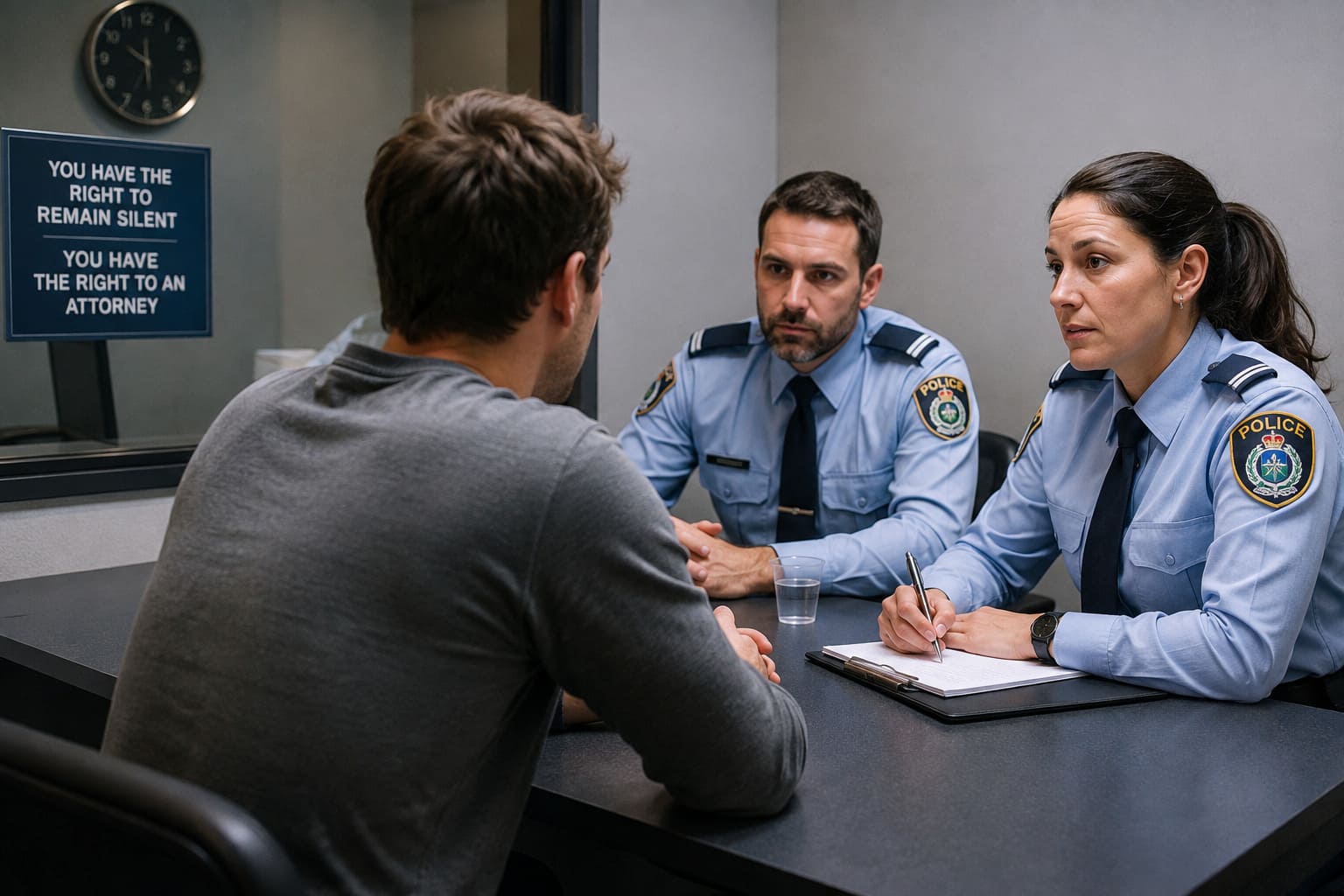
A police interview is a formal process during which police ask questions about an alleged offence.
The interview is usually electronically recorded and may later be played in court if criminal charges are laid.
Police interviews commonly occur:
- After an arrest.
- Following a voluntary attendance at a police station.
- During a criminal investigation.
- Before charges are laid.
- After police execute a search warrant.
The interview is designed to gather evidence.
It is not simply an informal conversation.
Why Do Police Want to Interview You?
Police may wish to interview you for several reasons.
You may be:
- A suspect.
- A person of interest.
- A witness.
- Someone who may have relevant information.
Sometimes people voluntarily attend believing they are only assisting police, only to discover they are the focus of the investigation.
For this reason, obtaining legal advice before any interview is extremely important.
Do You Have to Attend a Police Interview?
It depends on the circumstances.
If police invite you to attend voluntarily, you are generally not obliged to participate.
If you have been lawfully arrested, police may require you to accompany them to the police station, although this does not mean you must answer questions about the alleged offence.
The circumstances of every investigation differ, so legal advice should be obtained as early as possible.
Do You Have the Right to Remain Silent?
In many situations, yes.
One of the most important protections available under Australian criminal law is the right to remain silent.
Generally speaking, you are not required to answer questions that may incriminate you.
You are, however, usually required to provide certain identifying information, such as your name and address where legislation requires it.
Remaining silent should not be interpreted as an admission of guilt.
It is a legal right designed to protect every person from self-incrimination.
Should You Always Stay Silent?
Not necessarily.
Every case is different.
In some situations, providing an explanation may assist.
In others, answering questions may unintentionally strengthen the prosecution’s case.
The decision should never be made without understanding:
- The allegations.
- The available evidence.
- The potential charges.
- The legal consequences.
This is why experienced criminal defence lawyers generally recommend obtaining legal advice before participating in any formal police interview.
Can You Ask for a Lawyer?
Absolutely.
If police wish to interview you, you have the right to request legal advice.
You should clearly state that you wish to speak with a lawyer before answering questions.
Police will generally provide a reasonable opportunity for you to obtain legal advice.
Speaking to a criminal defence lawyer before an interview allows you to:
- Understand the allegations.
- Learn your legal rights.
- Receive advice tailored to your circumstances.
- Avoid making statements that may later be used against you.
Are Police Interviews Recorded?
Most formal interviews are electronically recorded.
This recording may include:
- Audio.
- Video.
- Time stamps.
- Your responses.
- Police questions.
The recording often becomes important evidence during criminal proceedings.
Everything you say may later be scrutinised by prosecutors, defence lawyers and the court.
Can Police Use What You Say in Court?
Yes.
Anything you say during a recorded police interview may potentially be relied upon by the prosecution.
Admissions, inconsistencies or explanations may all become evidence.
Even seemingly harmless comments can sometimes be interpreted differently once criminal proceedings commence.
For this reason, careful legal advice before the interview is often invaluable.
What If You Change Your Story Later?
Changing your account after a recorded interview can create difficulties.
The prosecution may argue that:
- Your later explanation is unreliable.
- Your evidence has changed.
- Earlier admissions are more credible.
This does not mean your defence automatically fails, but inconsistencies may become an important issue during court proceedings.
Obtaining legal advice before the interview helps reduce this risk.
Can Police Lie During an Interview?
Police interviewing techniques are designed to encourage people to speak.
During interviews, police may:
- Challenge your version of events.
- Suggest they have evidence.
- Ask repetitive questions.
- Test your responses.
The interview environment can feel stressful and confronting.
Remaining calm and obtaining legal advice before questioning is often the best approach.
What Should You Do During a Police Interview?
If you participate in an interview:
- Listen carefully to each question.
- Remain calm.
- Do not guess.
- Do not speculate.
- Do not exaggerate.
- Ask for clarification if necessary.
- Request legal advice if you are uncertain.
You should never feel pressured into answering questions simply because police ask them.
Common Mistakes People Make
Many people unintentionally damage their own case during police interviews.
Common mistakes include:
- Trying to “talk their way out” of the allegations.
- Guessing answers.
- Becoming argumentative.
- Providing inaccurate information.
- Speaking before obtaining legal advice.
- Agreeing with police simply to end the interview.
These mistakes may later complicate your defence.
What Happens After the Interview?
Once the interview concludes, police may decide to:
- Lay criminal charges.
- Continue their investigation.
- Release you without charge.
- Seek additional evidence.
- Take no further action.
The outcome depends upon the available evidence and the circumstances of the investigation.
If You Are Charged
If charges are laid, police may:
- Grant bail.
- Refuse bail.
- Issue a Court Attendance Notice.
Your matter will then proceed through the criminal court process.
At this stage, your lawyer will begin reviewing the prosecution evidence and advising you regarding your options.
Can an Interview Be Challenged?
Yes.
In some circumstances, issues arise regarding:
- Whether police acted lawfully.
- Whether admissions were voluntary.
- Whether legal rights were respected.
- Whether interview procedures were properly followed.
If legal issues exist, your lawyer may seek to challenge the admissibility of parts of the interview during court proceedings.
Young People and Vulnerable Persons
Special protections often apply where police interview:
- Children.
- Young persons.
- Individuals with cognitive impairment.
- Persons requiring interpreters.
Additional safeguards are designed to ensure interviews are conducted fairly and lawfully.
Why Early Legal Advice Matters
One conversation with police can significantly influence the direction of a criminal investigation.
Obtaining legal advice before participating in an interview allows you to understand:
- Your legal rights.
- The allegations.
- Potential consequences.
- The most appropriate strategy.
Early legal representation often prevents problems that become difficult to correct later.
Every Investigation Is Different
There is no universal answer to whether you should answer police questions or exercise your right to remain silent.
The appropriate approach depends upon:
- The allegations.
- The available evidence.
- Whether you are a suspect or witness.
- Your personal circumstances.
- The legal advice you receive.
Making informed decisions at the earliest stage often places you in the strongest possible position should criminal proceedings follow.
Speak to Aquarius Lawyers
If police have contacted you for an interview or you have been arrested in relation to a criminal investigation anywhere in Australia, obtaining legal advice before answering questions is one of the most important decisions you can make.
At Aquarius Lawyers, our experienced criminal defence team advises clients before police interviews, attends police stations where appropriate and provides strategic guidance throughout every stage of the criminal justice process. We protect your rights, explain your options in plain English and work to achieve the best possible outcome for your case.
If police want to speak with you, contact Aquarius Lawyers before making a statement.