
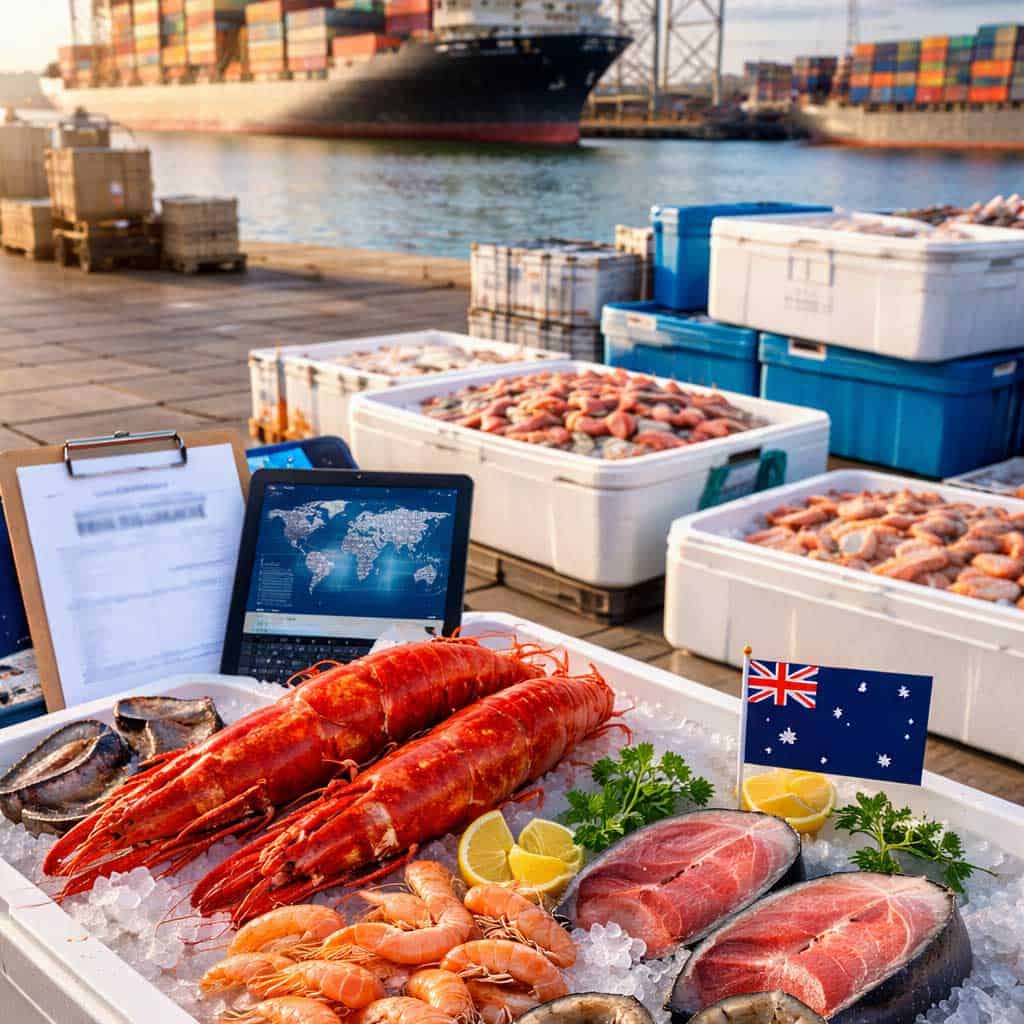
Australia’s seafood industry has long relied on export markets for growth, margin stability and product diversification. From premium rock lobster and abalone bound for China, to tuna for Japan, prawns for Southeast Asia and emerging opportunities in the Middle East, Australian seafood enjoys a strong global reputation.
However, export success is no longer driven solely by product quality and logistics efficiency. Market access is increasingly shaped by evolving trade law frameworks, sanitary and phytosanitary (SPS) measures, sustainability conditions, biosecurity controls, traceability requirements and geopolitical dynamics.
For Australian seafood exporters, the legal and regulatory landscape is becoming more complex — and more strategic. Understanding how export market access operates, where risks are emerging, and how to proactively manage compliance is now essential to protecting revenue and reputation.
1.Market Access: More Than Tariffs
Historically, trade discussions focused heavily on tariffs and quotas. Free Trade Agreements (FTAs) such as those with Japan, China and Korea significantly reduced or eliminated duties on many Australian seafood products.
Today, however, the most significant barriers are often non-tariff measures, including:
- Sanitary and phytosanitary (SPS) requirements
- Import licensing regimes
- Health certification and testing standards
- Sustainability and environmental compliance conditions
- Documentation and traceability obligations
- Sudden suspension or “technical” trade disruptions
These regulatory requirements can shift rapidly, sometimes with limited consultation or transition periods.
In this environment, exporters must treat compliance as a core commercial function — not merely an administrative process.
2.The Expanding Role of SPS and Biosecurity Controls
Sanitary and phytosanitary measures are designed to protect human, animal and plant health. In seafood exports, SPS requirements typically cover:
- Disease status of aquaculture products
- Processing facility approvals
- Residue limits (antibiotics, heavy metals, contaminants)
- Cold chain controls
- Health certification wording and format
While SPS measures are legitimate under World Trade Organization (WTO) rules, they can create substantial trade friction when:
- Importing countries change testing thresholds
- Export certification wording is rejected
- Approval lists for processing establishments are amended
- Inspections intensify at border entry points
For aquaculture producers in particular, disease declarations and compartmentalisation frameworks are becoming increasingly scrutinised.
Exporters must ensure alignment between:
- Australian domestic biosecurity approvals
- Department of Agriculture, Fisheries and Forestry (DAFF) export certification
- Importing country-specific protocols
A mismatch in any of these areas can lead to shipment delays, rejection or suspension of facility listing.
3.Sustainability as a Market Access Condition
Sustainability is no longer simply a branding advantage — in some markets it is becoming a de facto legal requirement.
Key developments include:
- EU Illegal, Unreported and Unregulated (IUU) fishing regulations
- Mandatory catch documentation schemes
- Corporate due diligence laws covering environmental impacts
- ESG-driven procurement policies by major retailers
- Carbon footprint disclosure expectations
The European Union’s increasing regulatory focus on environmental traceability and corporate accountability is particularly significant. Even exporters not currently shipping to Europe may be indirectly affected if global supply chains adopt EU-compliant standards as the benchmark.
In some cases, sustainability requirements extend beyond fishing practices to include:
- Labour standards compliance
- Modern slavery reporting
- Vessel monitoring systems
- Electronic catch documentation
Failure to meet these expectations can result in commercial exclusion, even where formal trade restrictions do not exist.
4.Traceability and Digital Compliance
Traceability is becoming central to seafood trade compliance.
Importing countries are increasingly requiring:
- Digital catch certificates
- Chain-of-custody verification
- Vessel identification documentation
- Real-time reporting
- QR-code or blockchain-based product tracing
This trend reflects concerns about IUU fishing, food fraud and biosecurity risks.
For exporters, this means internal systems must support:
- Accurate product identification at each stage
- Integration between harvest, processing and export documentation
- Secure record retention
- Audit-ready documentation
Small to medium enterprises may find the technology burden particularly challenging. However, the risk of shipment detention or reputational damage makes proactive investment essential.
5.Geopolitical Risk and Sudden Trade Disruptions
Recent years have demonstrated how quickly geopolitical tensions can impact seafood exports.
Trade suspensions, enhanced inspection regimes or customs slowdowns can arise from:
- Diplomatic disputes
- Anti-dumping investigations
- Political sanctions
- Biosecurity incidents
- Retaliatory trade measures
These disruptions may be framed as technical regulatory issues but can carry broader political undertones.
Exporters heavily reliant on a single market face particular vulnerability. Diversification strategies — while commercially complex — are increasingly part of risk mitigation planning.
6.Anti-Dumping and Countervailing Measures
Although Australia is often positioned as a premium supplier, seafood exporters are not immune from anti-dumping scrutiny.
Importing countries may initiate investigations where domestic producers allege that imported seafood is being sold below fair market value or benefiting from unfair subsidies.
Such investigations can result in:
- Provisional duties
- Long-term additional tariffs
- Retroactive financial exposure
- Reputational damage
Exporters should maintain clear pricing documentation and understand how their cost structures may be scrutinised under foreign trade law frameworks.
7.Export Controls Under Australian Law
Australian seafood exporters must also comply with domestic export controls, including:
- Export Control Act requirements
- Approved Arrangement (AA) obligations
- Establishment listing requirements
- Export certification procedures
- Biosecurity legislation compliance
Failure to meet domestic compliance standards can lead to:
- Suspension of export registration
- Withdrawal of establishment approvals
- Delays in certification
- Administrative penalties
Importantly, foreign market access often depends on Australia maintaining confidence as a regulatory partner. Domestic compliance failures can therefore have broader market implications.
8.Emerging Risk Areas
Several emerging areas warrant close attention:
1.Climate-Related Trade Measures
Carbon border adjustment mechanisms and emissions disclosure regimes are being considered or implemented in various jurisdictions. While seafood is not yet a primary target sector, transport emissions and processing energy intensity may become future scrutiny points.
2. Animal Welfare Standards
Some importing markets are introducing enhanced animal welfare considerations for aquaculture operations. This may affect stocking densities, slaughter practices and certification requirements.
3. Forced Labour and Supply Chain Due Diligence
Global regulatory focus on forced labour and human rights compliance is expanding. Seafood supply chains — particularly those involving offshore processing or third-party vessels — may face enhanced verification requirements.
4.Electronic Monitoring Mandates
Digital vessel monitoring systems and electronic logbooks are becoming prerequisites for access to certain markets.
9.What Are the Risks for Exporters?
The risks are not limited to shipment delays. They include:
- Contractual breach exposure
- Loss of buyer confidence
- Inventory spoilage
- Insurance disputes
- Regulatory investigations
- Financial penalties
- Long-term market exclusion
Export contracts should clearly allocate risk regarding:
- Regulatory changes
- Certification failures
- Border rejections
- Force majeure events
- Payment triggers
Without carefully drafted clauses, exporters may bear disproportionate financial exposure.
10.Strategic Steps for Seafood Exporters
In a rapidly evolving trade environment, seafood businesses should consider the following proactive measures:
1.Conduct a Market Access Audit
Review each export market to identify:
- Certification dependencies
- SPS risks
- Sustainability obligations
- Political exposure
- Overreliance on single jurisdictions
2.Strengthen Documentation Systems
Ensure internal compliance systems can withstand audit scrutiny and produce traceability records quickly.
3.Monitor Regulatory Developments
Engage with industry associations, government briefings and trade advisers to identify early warning signals of regulatory change.
4. Review Export Contracts
Confirm that commercial contracts properly address:
- Regulatory risk allocation
- Change-of-law clauses
- Dispute resolution mechanisms
- Termination rights
5. Diversify Markets
While diversification carries cost, spreading export exposure reduces vulnerability to sudden trade disruption.
6. Engage Early With Regulators
Where new requirements emerge, early communication with Australian authorities and importing country regulators can prevent escalation.
7. The Role of Trade Law and Legal Advice
Trade law is no longer an abstract WTO concept — it directly shapes day-to-day seafood operations.
Legal advisers can assist with:
- Reviewing export compliance frameworks
- Interpreting SPS protocol changes
- Advising on anti-dumping investigations
- Structuring contracts to manage trade risk
- Engaging with government in dispute resolution processes
Early legal input often prevents significantly greater downstream cost.
Conclusion
Australian seafood remains globally respected for its quality, sustainability and regulatory integrity. Yet the rules governing access to international markets are becoming more layered, technical and politically sensitive.
Exporters who treat market access as a dynamic legal and regulatory environment — rather than a static approval — will be better positioned to protect revenue and reputation.
In the years ahead, competitive advantage will not be defined solely by premium product. It will also depend on regulatory fluency, documentation discipline and strategic trade risk management.
For seafood businesses navigating complex export frameworks, proactive compliance and careful legal structuring are no longer optional — they are central to sustainable growth.