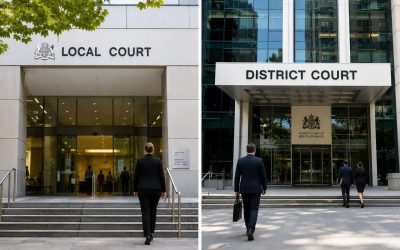

Explaining Apprehended Domestic Violence Orders (ADVOs) in 2026!
Apprehended Domestic Violence Orders (ADVOs) are one of the most commonly used legal tools in Australia to protect individuals from violence, intimidation, harassment, or stalking in domestic or personal relationships. Despite how frequently they are used, many people misunderstand what an ADVO is, how easily one can be applied for, and the serious consequences that can follow.
This article breaks down what an ADVO is, when it can arise (including situations many people wouldn’t expect), how the legal process works, and what to do if you find yourself facing one.
What Is an ADVO?
An ADVO is a court order made to protect a person (the protected person) from another person (the defendant). It does not require a criminal conviction to be made, but breaching an ADVO is a criminal offence.
ADVOs typically arise in situations involving:
- Family Or Domestic Relationships (Partners, Ex-Partners, Family Members, People Living Together)
- Situations Involving Intimidation, Harassment, Stalking, Or Threats
- Behaviour That Causes A Person To Fear For Their Safety Or Wellbeing
Importantly, the threshold is not limited to physical violence. The law captures a wide range of conduct.
When Can an ADVO Be Applied For?
One of the most misunderstood aspects of ADVOs is how broadly they can apply.
An ADVO can be sought where a person fears:
- Physical Violence
- Threats Or Intimidation
- Harassment Or Stalking
- Damage To Property
- Emotional Or Psychological Harm
Everyday Conduct That Can Lead to an ADVO
While serious violence clearly falls within scope, ADVOs can also arise from behaviour that may seem minor or situational. For example:
- Unwanted Physical Contact: Persisting With A Hug, Touching, Or Physical Closeness When Someone Has Clearly Said “No”
- Repeated Messaging Or Calling After Being Asked To Stop
- Turning Up Uninvited At Someone’s Home Or Workplace
- Verbal Intimidation, Even Without Physical Violence
- Monitoring Or Controlling Behaviour, Including Online Activity
The key question is whether the behaviour causes the other person to fear for their safety. Intent is less important than the impact on the other person.
Police vs Private ADVOs
There are two main types of ADVO applications:
1. Police ADVOs
- Applied For By NSW Police On Behalf Of The Protected Person
- Common In Domestic Incidents Or Where Police Are Called
- Often Accompanied By Criminal Charges (E.G. Assault, Intimidation)
- Police May Issue A Provisional ADVO Immediately, Which Takes Effect Before Court
2. Private ADVOs
- Applied For Directly By An Individual Through The Local Court
- Used Where Police Are Not Involved Or Decline To Act
- The Applicant Must Present Their Own Evidence
Key Difference
Police ADVOs tend to move faster and carry greater weight, particularly where there is an alleged incident attended by police. Private applications rely more heavily on the applicant’s own evidence and initiative.
The Legal Process
Step 1: Application
- Police Or A Private Individual Files An Application In The Local Court
- In Urgent Cases, A Provisional Order May Be Made Immediately
Step 2: First Court Appearance (Mention)
- The Defendant Attends Court
Options at this stage:
- Consent To The Order (With Or Without Admissions)
- Contest The Order
- Seek An Adjournment To Obtain Legal Advice
Step 3: Interim Orders
- The Court May Impose Interim Conditions While The Matter Is Ongoing
- These Can Restrict Contact, Movement, Or Behaviour Immediately
Step 4: Hearing (If Contested)
- Evidence Is Presented
- Witnesses May Be Cross-Examined
- A Magistrate Decides Whether To Make A Final ADVO
What To Do If You Are Accused or Charged
If you are served with an ADVO or charged with related offences, how you respond early can significantly affect the outcome.
1. At the Time of Police Contact
- Remain Calm
- Do Not Argue Or Escalate The Situation
2. During Police Interview
You have the right to:
- Ask For A Lawyer
- Decline To Answer Questions
The safest approach is usually:
- “I Would Like To Speak To A Lawyer Before Answering Any Questions.”
Anything you say can be used as evidence.
3. Do Not Breach Conditions
Even if you disagree with the order:
- Follow All Conditions Strictly
- Do Not Contact The Protected Person (Even Indirectly)
- Do Not Attempt To “Sort Things Out”
A breach is a criminal offence, regardless of your intentions.
4. Get Legal Advice Early
A lawyer can help you:
- Understand The Strength Of The Case
- Decide Whether To Consent Or Contest
- Negotiate Conditions
- Prepare A Defence If Necessary
Likely Outcomes
1. Consent Without Admissions
- You Agree To The Order But Do Not Admit Wrongdoing
- Often Used To Avoid Lengthy Proceedings
- Still Results In A Final ADVO
2. Consent With Admissions
- You Accept The Allegations
- May Be Relevant If Criminal Charges Are Also Involved
3. Final ADVO After Hearing
- Court Finds Sufficient Grounds To Make The Order
4. Dismissal
- Application Is Rejected If Evidence Is Insufficient
Conditions of an ADVO
Typical conditions may include:
- Not Assault, Threaten, Or Harass The Protected Person
- Not Approach Or Contact Them
- Not Go Near Their Home, Workplace, Or School
- Restrictions On Social Media Or Communication
Additional conditions can be tailored depending on the situation.
Impact on Your Life
Even though an ADVO is not itself a criminal conviction, it can have serious consequences.
1. Criminal Risk
Breaching an ADVO can result in:
- Fines
- Criminal Conviction
- Imprisonment
2. Employment
- Certain Professions (E.G. Law Enforcement, Security, Government Roles) May Be Affected
- Background Checks May Reveal The Existence Of An ADVO
3. Firearms and Licences
ADVOs typically result in:
- Immediate Suspension Or Cancellation Of Firearms Licences
- Restrictions On Other Regulated Licences
4. Family Law Implications
ADVOs can influence:
- Parenting Arrangements
- Court Assessments Of Risk In Family Law Proceedings
5. Housing and Movement
- You May Be Excluded From Your Home
- Restrictions On Where You Can Go Or Who You Can See
6. Reputation and Relationships
- Personal And Professional Relationships May Be Impacted
- Social Consequences Can Be Significant, Even Without A Conviction
Key Takeaways
- ADVOs Are Protective Orders, Not Criminal Convictions—But Breaching Them Is A Crime
- The Threshold For Making An ADVO Is Broader Than Many People Realise
- Behaviour Does Not Need To Be Violent To Trigger An Application
- Early Legal Advice Is Critical
- Strict Compliance With Conditions Is Essential
Final Thoughts
ADVOs are designed to protect people from harm, but they also carry serious consequences for those subject to them. Understanding how they work—and how quickly everyday conduct can escalate into legal proceedings—is essential.
If you are involved in an ADVO matter, whether as an applicant or defendant, informed decisions early on can make a significant difference to the outcome.