
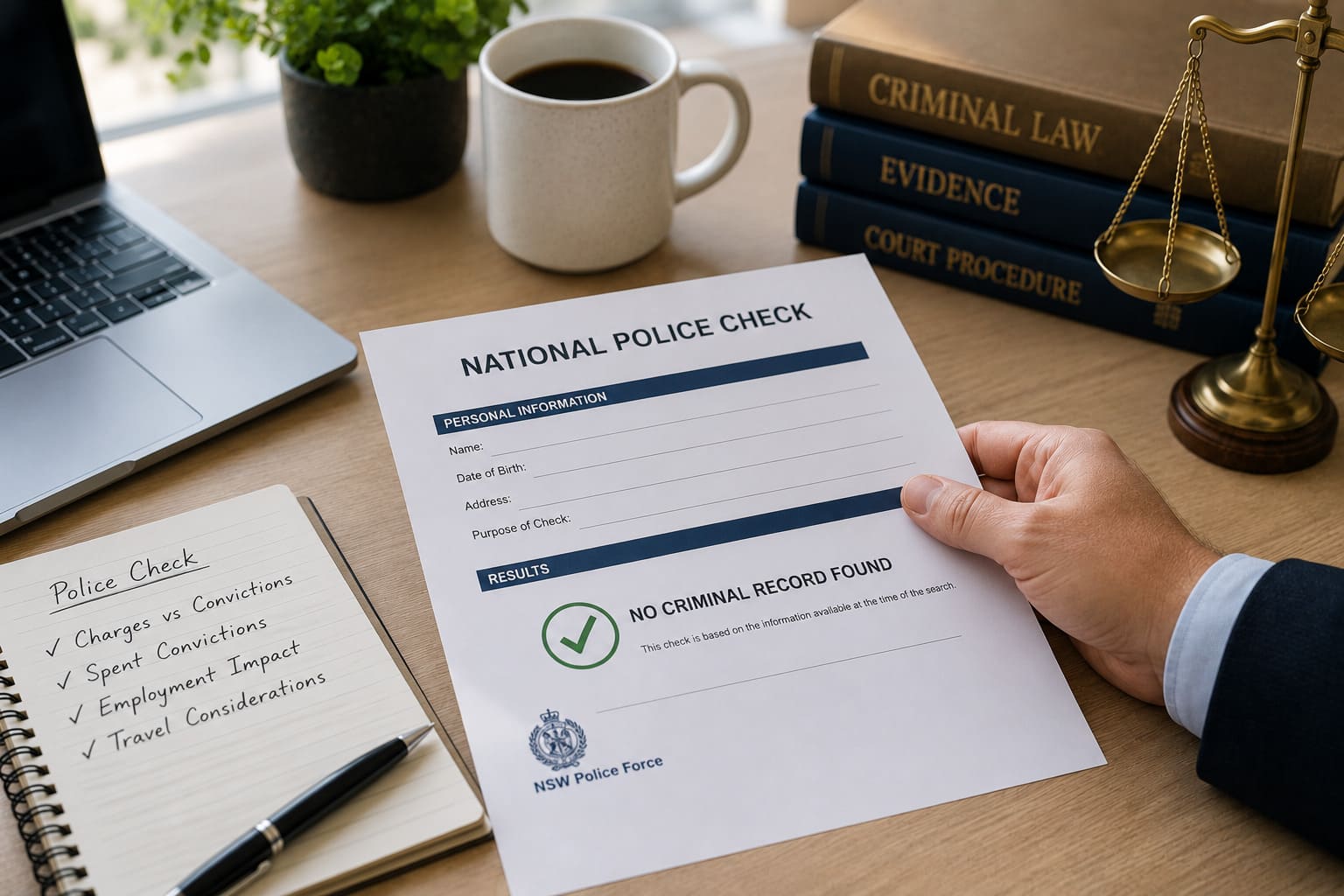
One of the first questions many people ask after being charged with a criminal offence is, “Will this show up on a police check?”
The answer is not always straightforward. Whether a charge or conviction appears on a police check depends on several factors, including whether the matter is still before the courts, whether you were convicted, the type of police check being conducted, and the purpose for which it is requested.
Many people are surprised to learn that being charged with an offence is not the same as having a criminal conviction, and not every interaction with the criminal justice system will necessarily appear on every type of police check.
Understanding how criminal records work in NSW can help you make informed decisions about your case and appreciate why obtaining early legal advice is so important.
This guide explains the difference between charges and convictions, how police checks work, and the long-term impact a criminal record may have on your employment, travel and future opportunities.
What Is a Police Check?
A police check—often called a Nationally Coordinated Criminal History Check—is a search of police information held across Australian jurisdictions.
Police checks are commonly requested for:
- Employment
- Professional Licensing
- Volunteer Positions
- Government Employment
- Visa Applications
- Security Clearances
- Working With Vulnerable People
The information disclosed depends on the purpose of the check and the applicable legislation governing the release of criminal history information.
Is Being Charged the Same as Having a Criminal Record?
No.
This is one of the biggest misconceptions about criminal law.
A criminal charge is simply an allegation made by police.
A conviction occurs only after:
- You Plead Guilty And The Court Records A Conviction
- You Are Found Guilty Following A Defended Hearing Or Trial And A Conviction Is Recorded
Simply being charged does not automatically mean you have a criminal record.
Can Charges Appear on a Police Check?
Sometimes.
Whether pending charges appear depends on:
- The Type Of Police Check
- The Organisation Requesting It
- The Purpose For Which It Is Conducted
- Applicable Legislation And Information Release Policies
Some employment-related police checks may disclose pending criminal matters where relevant to the position being sought.
Other standard police checks may only disclose court outcomes rather than allegations that have not yet been determined.
Because different agencies apply different disclosure rules, there is no universal answer.
What Is a Criminal Conviction?
A criminal conviction is a formal finding recorded by a court after a person has either:
- Pleaded Guilty
- Been Found Guilty
Once a conviction is recorded, it may remain part of your criminal history unless legislation provides otherwise.
A conviction may affect many aspects of your personal and professional life long after the court proceedings have finished.
Can You Be Found Guilty Without Receiving a Conviction?
Yes.
NSW courts have sentencing options that allow certain offenders to avoid having a conviction recorded.
These include:
- Dismissals Without Conviction
- Conditional Release Orders (CROs) Without Conviction
These outcomes are often available only in appropriate circumstances and are never guaranteed.
Avoiding a conviction can significantly reduce the long-term consequences of criminal proceedings.
What Is a Spent Conviction?
Under the Criminal Records Act 1991 (NSW), many convictions become “spent” after a crime-free period, provided certain eligibility requirements are met.
A spent conviction generally does not need to be disclosed in many circumstances.
However, important exceptions apply.
Some occupations, licences and government agencies may still require disclosure despite a conviction becoming spent.
Whether a conviction qualifies as spent depends on:
- The Type Of Offence
- The Sentence Imposed
- The Time That Has Passed
- Whether Further Offences Have Occurred
Understanding the spent conviction scheme is important when considering the long-term impact of a criminal matter.
Do All Employers Receive the Same Information?
No.
Different employers request different types of background checks.
For example:
- A Standard Employment Police Check May Disclose Different Information To A Working With Children Check
- Government Security Clearances Involve Separate Assessment Processes
- Professional Licensing Bodies Often Have Independent Disclosure Requirements
Certain industries impose higher standards because employees work with vulnerable people, sensitive information or public safety.
Working With Children Checks
Many people assume a Working With Children Check is simply another police check.
It is not.
Working With Children Checks involve a broader risk assessment process.
Authorities may consider:
- Criminal Convictions
- Pending Charges
- Certain Non-Conviction Information
- Relevant Findings From Other Investigations
Whether a person passes depends upon the applicable legislation and the nature of any criminal history.
Professional Registrations and Licensing
Many professions require disclosure of criminal matters.
Examples include:
- Lawyers
- Police Officers
- Teachers
- Nurses
- Doctors
- Security Licence Holders
- Financial Advisers
- Real Estate Agents
Professional regulators often consider:
- The Nature Of The Offence
- Whether It Relates To Honesty Or Violence
- Whether Rehabilitation Has Occurred
- Whether The Conduct Affects Professional Suitability
Each profession applies its own regulatory framework.
Can a Criminal Record Affect Overseas Travel?
Yes.
Many countries ask visitors whether they have:
- Criminal Convictions
- Pending Criminal Charges
- Previous Imprisonment
Some countries also conduct independent background checks when processing visa applications.
Whether travel is affected depends on:
- The Destination Country
- The Offence
- The Sentence Imposed
- Immigration Laws Applying At The Time
Obtaining legal advice before overseas travel is often advisable where criminal proceedings are involved.
Can Charges Be Removed from Your Record?
There is no simple process for removing criminal charges from police records.
However, the outcome of the proceedings is important.
For example:
- Charges Withdrawn By Police Are Treated Differently From Convictions
- Matters Dismissed By The Court Have Different Implications From Guilty Findings
- Non-Conviction Outcomes May Reduce Long-Term Disclosure Consequences
The best opportunity to protect your future usually begins before the criminal matter is finalised.
Common Misunderstandings About Police Checks
Many myths surround criminal records.
Common misconceptions include:
- Every Charge Automatically Appears Forever
- Every Police Check Contains Identical Information
- A Charge Is The Same As A Conviction
- Minor Offences Never Matter
- A First Offence Automatically Disappears
The reality is considerably more complex.
Every case depends on the type of offence, the court outcome and the purpose of the police check.
Why Early Legal Advice Matters
Many criminal cases involve decisions that may significantly affect future employment opportunities.
An experienced criminal defence lawyer can advise on:
- Whether A Conviction Can Potentially Be Avoided
- Available Sentencing Options
- The Likely Effect On Future Employment
- Professional Registration Implications
- Travel Consequences
- The Preparation Required To Achieve The Best Possible Outcome
Seeking advice early often provides more options than waiting until after a conviction has been recorded.
Every Criminal Matter Is Different
There is no single answer to whether a charge will appear on a police check.
The answer depends upon:
- Whether Proceedings Are Still Before The Court
- Whether A Conviction Was Recorded
- The Type Of Police Check Requested
- The Purpose Of The Disclosure
- The Applicable Legislation
Each person’s circumstances should be assessed individually before assumptions are made about the future impact of criminal proceedings.
Protecting Your Future Starts Early
One of the most valuable aspects of criminal defence representation is not simply defending the charge—it is protecting your future.
The decisions made early in a criminal matter may affect:
- Employment
- Professional Licences
- International Travel
- Insurance
- Government Clearances
- Future Opportunities
Understanding those consequences allows better decisions to be made throughout the court process.
Speak to Aquarius Lawyers
If you have been charged with a criminal offence and are concerned about how it may affect your criminal record, employment or future police checks, obtaining experienced legal advice early is essential.
At Aquarius Lawyers, we advise clients throughout Australia on criminal charges, police checks, spent convictions and sentencing options. We work proactively to protect your legal rights while minimising the long-term consequences of criminal proceedings wherever possible.
If you are unsure whether a charge or conviction may appear on a police check, contact Aquarius Lawyers for practical advice tailored to your circumstances.
Conclusion
Whether a criminal charge or conviction appears on a police check depends on several factors, including the outcome of your case, the type of police check being conducted and the purpose for which it is requested. Understanding these differences is essential to protecting your future.
- A Criminal Charge Is Not The Same As A Criminal Conviction
- Different Police Checks May Disclose Different Information
- Non-Conviction Outcomes Can Reduce Long-Term Consequences
- Criminal Records May Affect Employment, Travel And Professional Licensing
- Early Legal Advice Can Help Protect Your Future Opportunities
Every criminal matter is different, and obtaining experienced legal advice early can make a significant difference to both the immediate outcome of your case and its long-term impact.