
What if the signed terms don’t match how your business actually operates? A contract may read clearly yet leave responsibility for delivery, quality, payment, delays or risk uncertain. A commercial contract review should test the wording against the way the deal is meant to work. If you’re searching for a commercial contract review service Australian businesses can use, focus on advice that connects the legal terms with your practical responsibilities.
You may already know a proposed agreement needs close attention. The challenge is identifying which terms affect your operations and what information will help your adviser assess them. This guide explains what a review should examine, how to prepare and what questions to raise before signing or negotiating. Aquarius Lawyers provides commercial legal advice, drawing on experience negotiating large retail contracts for agribusiness produce providers involving cold-storage logistics. That commercial context can help make the advice relevant to the agreement in front of you.
Key Takeaways
- Before signing, decide whether to proceed, negotiate, seek a review or pause to clarify unclear responsibilities.
- A commercial contract review should assess whether the written terms match how the relationship will work in practice.
- Prepare the draft agreement, explain the transaction and your priorities, then list questions about responsibilities, timeframes and changes.
- Aquarius Lawyers’ commercial law experience includes negotiating agribusiness retail contracts involving cold-storage logistics.
Commercial contract review: what is at stake before you sign?
Should you sign, negotiate, seek a review or pause for clarification? Start by checking whether the agreement reflects the deal you intend to make. A commercial contract review considers the wording alongside the transaction and your business objectives, helping you understand how the terms may apply in practice.
Unclear responsibilities can quickly create friction. If an agreement doesn’t say who supplies information, approves changes or coordinates delivery, each party may expect the other to take charge. That can lead to delays or disputes, even when both businesses intended to work cooperatively. The Commercial Law context matters, but so does the operational detail of your arrangement.
When should a business seek a commercial contract review?
Consider a review before entering an agreement, renewing an existing one or accepting significant changes. Seek clarification when a term is unfamiliar or its practical effect is uncertain. Reviewing the document before you commit gives you an opportunity to raise questions and consider whether to negotiate the wording. The aim is to connect legal analysis with how the deal is meant to function, not just identify clauses in isolation.
Why a template may not fit the deal
A template can be a useful starting point, but it may not capture the specific responsibilities, processes or expectations agreed between your business and the other party. A clause can appear clear yet fail to explain how work, approvals or handovers will happen. The issue isn’t that templates are automatically unsafe; it’s whether the terms fit this transaction. If the concern is instead alleged offending, the focus shifts to criminal law advice, rather than the commercial terms of your deal.
Test the document against the working relationship. Does it say what each party will do, who makes decisions and what happens if plans change? If not, note the gaps and identify what needs clarification before you commit. Clear terms support a shared understanding, while practical context helps you spot where the written deal and the intended arrangement may diverge.
What a commercial contract review should examine
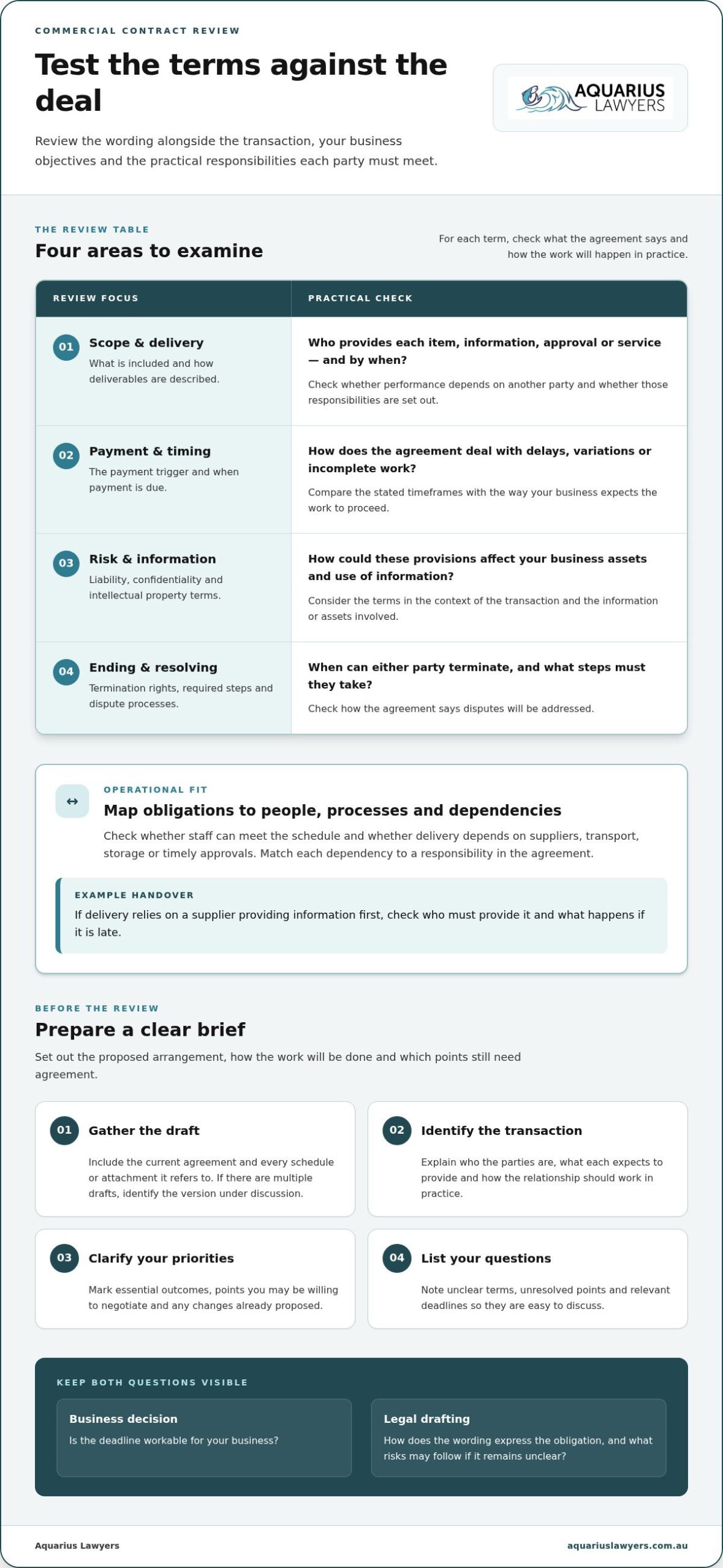
A useful review follows the agreement from the parties’ first obligations through to completion or termination. Check who is bound, what each party must provide and whether the written terms support the intended transaction. The priorities depend on the agreement and your business context. Legal analysis is most useful when it reflects how your business will carry out the deal.
- Scope and delivery: Check what is included, how deliverables are described and whether performance depends on information, approvals or services from another party. Identify who must provide each item and by when.
- Payment and timing: Identify what triggers payment, when it is due and how the agreement handles delays, variations or incomplete work.
- Risk and information: Review liability, confidentiality and intellectual property terms. Consider how these provisions may affect your business assets and use of information.
- Ending or resolving the arrangement: Understand when either party can terminate, what steps must be taken and how the agreement says disputes will be addressed.
Connect contract terms to business operations
Read each obligation against the people and processes needed to perform it. Will staff need to meet a particular schedule? Does delivery depend on suppliers, transport, storage or timely approvals? Map each dependency to the responsibility set out in the agreement. For example, if your delivery relies on a supplier providing information first, check whether the contract explains who must provide it and what happens if it is late. This can reveal where a missed handover or delayed approval could affect your own commitments.
Separate commercial questions from legal questions
A reviewer can identify wording that is unclear, inconsistent or difficult to apply, then separate those points from the business decisions you need to make. You may need to decide whether a deadline is workable. Legal advice can explain how the drafting expresses that obligation and what risks may follow if it remains ambiguous. Keep both questions visible before deciding how to respond.
For advice that considers both the agreement and its business context, explore Aquarius Lawyers’ commercial law support.
How to prepare for a commercial contract review
A focused briefing helps your reviewer understand both the document and the deal behind it. Before sharing the draft, set out what the parties intend to do, how the work will be performed and which points still need agreement. This gives your adviser a clearer view of your priorities and the practical questions to address.
- Gather the draft: Include the current agreement and every schedule or attachment it refers to. If there are multiple drafts, identify the version currently under discussion.
- Identify the transaction: Explain who the parties are, what each expects to provide and how the relationship should work in practice.
- Clarify your priorities: Mark essential outcomes, points you may be willing to negotiate and any changes already proposed.
- List questions: Note unclear terms, unresolved points and relevant deadlines so they’re easy to discuss.
What information helps the reviewer understand the deal?
Alongside the draft, gather relevant correspondence and background documents that explain how the parties reached the proposed arrangement. Flag terms you don’t understand, provisions that seem inconsistent with the intended working relationship and changes you want considered. Be specific: explain which process or responsibility you think the wording should reflect, rather than simply marking a clause as concerning. If you’re relying on a particular delivery or approval process, describe it so the reviewer can compare it with the contract.
Turn review findings into a decision
Organise the findings into three groups: questions needing an explanation, points you may wish to negotiate and matters requiring a business decision. Record who needs to decide each issue and any deadline for responding. This makes it easier to weigh legal concerns against operational priorities without assuming every point requires the same response. For example, a wording issue may need clarification, while a proposed delivery schedule may require a decision about your team’s capacity.
Prepare your draft and questions, then seek practical commercial legal advice to help assess your next step.
Commercial contract review with Aquarius Lawyers: practical advice for your next step
A contract decision involves more than deciding whether the wording looks acceptable. Consider how the proposed terms fit your business priorities and what you may need to discuss before proceeding. Aquarius Lawyers provides commercial legal advice to help you assess the agreement and consider a practical response.
A practical, business-focused approach to legal advice
Bring your intended outcome and key concerns to the discussion. Aquarius Lawyers can explain legal issues clearly and relate them to the choices in front of you. That can help you distinguish between points that need clarification, terms you want to raise with the other party and commercial decisions that remain yours to make. Advice can clarify your options, but it can’t guarantee the other party’s response or a particular result.
What to do before you commit
Before signing, make sure you understand the obligations your business would accept and address any material uncertainty. If a term doesn’t make sense in practice, seek clarification rather than relying on an assumption. Consider whether the agreement supports the outcome you want and whether you’re comfortable with the responsibilities it sets out.
You don’t have to make that decision without guidance. Discuss the agreement and your priorities with Aquarius Lawyers, then choose your next step with a clearer understanding of the issues. Book a Legal Strategy Session.
Make your next contract decision with confidence
A signature is not just the end of a negotiation. It marks the point where agreed responsibilities become part of your business’s working relationship. Before you commit, consider whether the people responsible for carrying out the agreement understand what it requires and can put the agreed processes into practice.
A commercial contract review service sydney businesses choose should make legal advice useful to the decisions ahead, including how to respond to proposed terms and communicate changes. Clear advice can give you a sounder basis for deciding what to accept, what to raise and what needs further thought. The decision remains yours, informed by your commercial priorities and the advice you receive.
Take a deliberate next step. Discuss your proposed agreement and the outcome you want with Aquarius Lawyers. Book a Legal Strategy Session to explore the issues and consider a practical way forward.
Frequently Asked Questions
Can a lawyer review a contract before I sign it?
Yes. A lawyer can review a proposed agreement before you sign and explain how its terms relate to the transaction and your business priorities. You can use that advice to decide what to clarify, discuss or accept. For example, ask how a delivery obligation could affect your planned process and what the agreement says if a required approval is delayed. A commercial contract review can inform your decision, but it can’t guarantee a particular commercial outcome.
What types of commercial contracts can be reviewed?
Commercial agreements vary with the parties and transaction. Businesses may seek advice on supplier, customer, contractor or other business agreements. A supply arrangement, for example, may raise different practical questions from an agreement for contracted work. Share the context and intended outcome with your adviser so the review can focus on the terms that matter to that relationship.
Can I ask for changes after a contract review?
Yes. You can raise proposed changes if the review identifies wording that needs clarification or doesn’t match the arrangement you intend. Explain the business reason behind each request, such as needing an approval process that fits how your team works. The other party may or may not agree. Legal advice can help you understand proposed wording and decide which points are worth raising, but it can’t ensure the changes will be accepted.
What should I send for a commercial contract review?
Send the version currently under discussion, including any schedules or attachments, and identify whether it replaces or changes an existing agreement. If there have been revised drafts, make clear which version you’re considering. You can also note the decision you need to make and the date by which you need to respond. That context helps distinguish current terms from earlier proposals and keeps the discussion focused.
Is a commercial contract review useful for a small business?
It can be useful whenever an agreement affects how your business operates, whatever its size. For a small business, a commitment to provide services during a particular period may affect staff capacity and other customer work. Reviewing the agreement can help you understand those practical implications and decide whether the proposed arrangement fits your plans. The relevant issues depend on the transaction, not simply your organisation’s size.
Disclaimer
Please note that legal rules change and this is not a substitute nor construed as legal advice. It is general information only.