A marine insurance claim dispute lawyer helps you test an insurer’s decision against the policy wording, the cargo evidence and the circumstances of the loss. They can work with claims teams, surveyors and loss adjusters to clarify what happened, identify gaps in the evidence and challenge a denial or disputed assessment. If the dispute remains unresolved, possible pathways include internal review, a complaint to AFCA or court proceedings.
It’s frustrating when damaged or missing cargo leads to a dispute over liability, cover or the value of a loss. The outcome often turns on the policy wording and how clearly the documents link the damage to the insured journey.
This article explains how marine lawyers work through insurance disputes, what evidence to preserve and how to consider AFCA or court action in Australia. You’ll also learn what to look for when choosing legal support, so you can take a practical next step with a clearer understanding of your options.
Key Takeaways
- Compare the insurer’s reasons with the policy wording, including exclusions, conditions and the journey covered.
- Preserve cargo records, photographs, reports and correspondence to help establish what was damaged and when.
- Use bills of lading and chain-of-custody records to connect the cargo, its handling and the claimed loss.
- Understand how an insurer’s internal review, an AFCA complaint and court proceedings differ before choosing a dispute pathway.
- Look for legal support with marine insurance claims, cargo liability and the practical demands of working with technical experts.
How do marine lawyers work with insurance claims teams?
In Australia, the Marine Insurance Act 1909 (Cth) is the primary legislation governing marine insurance. Marine insurance law also recognises a duty of utmost good faith, requiring parties to deal honestly and disclose relevant information.
A marine insurance dispute lawyer reviews your policy, the insurer’s reasons and the evidence behind the claim. They can coordinate with claims staff, surveyors, loss adjusters and technical experts, while giving you legal advice on contractual obligations and recovery options.
Start with the policy wording. Check the insured subject matter, voyage or transit, covered events, exclusions, conditions and claim requirements. Wording varies between policies and countries, so a term’s meaning depends on its context and the contract as a whole. For example, an insurer may rely on a seaworthiness condition and allege undisclosed corrosion. Compare that position with the policy, maintenance records and survey evidence.
Coverage disputes can also concern repair scope or whether damage makes a vessel a constructive total loss. The lawyer tests the insurer’s assessment against survey reports, repair estimates and expert opinions. Insurable interest matters too: the insured must have a legal or equitable relation with the vessel or other insured subject matter. Ownership, finance or contractual rights may help show that connection.
Common reasons for rejection include insufficient evidence, nondisclosure, failure to comply with policy conditions, alleged dishonesty or fraud, and an inactive policy. An unpaid premium or failure to renew may affect whether a policy remains active. Ask the insurer to identify the exact clause and evidence it relied on, then compare each reason with your policy and claim documents.
Claims teams and lawyers may divide the work: adjusters investigate technical matters, while lawyers assess contractual duties and possible recovery from third parties. Relevant material may include witness statements, correspondence, survey reports and expert opinions. If you dispute the insurer’s position, request an internal review and escalate the matter to a senior claims manager, supported by a clear chronology and relevant evidence.
Consider legal advice if the insurer denies cover, disputes the amount, raises seaworthiness or disclosure concerns, or delays while cargo deteriorates. An early review can help you preserve records and respond to the stated grounds before positions harden. Keep every communication from the insurer and note reporting steps or deadlines in your policy.
Before accepting a settlement or signing a release, read its scope and effect. It may resolve more than the immediate payment, including further claims arising from the same loss. Ask which claims the release covers, whether it affects recovery against another party and whether the proposed amount accounts for the documented loss.
Cargo liability evidence and documentation
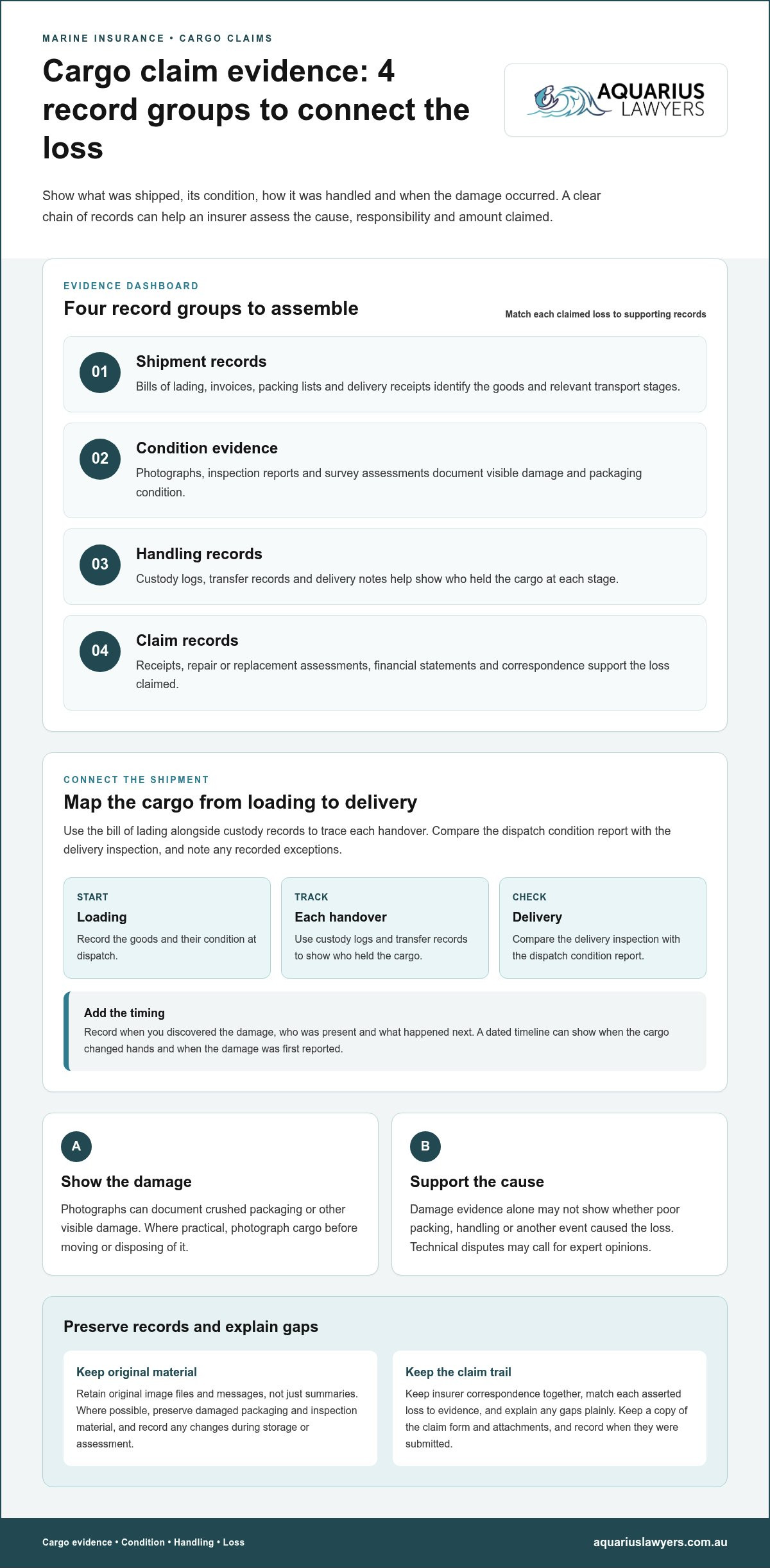
For a cargo claim, evidence should show what was shipped, its condition, how it was handled and when the damage occurred. Build a clear chain from loading to delivery. Gaps in the records may let an insurer dispute the cause, the responsible party or the amount claimed. Legal analysis can assess how the documents support recovery under the insurance policy and relevant transport contracts.
Notify the insurer, document the loss, submit its claim form and cooperate with its assessment. Record when you discovered the damage, who was present and what happened next. Where practical, photograph the cargo before moving or disposing of it. Keep images in their original form and note the date, location and item shown. If goods are deteriorating, document their condition promptly and retain communications about urgent handling.
Gather records that connect the shipment, damage and claimed loss:
- Shipment records: bills of lading, invoices, packing lists and delivery receipts identify the goods and relevant transport stages.
- Condition evidence: photographs, inspection reports and survey assessments document visible damage and packaging condition.
- Handling records: custody logs, transfer records and delivery notes help show who held the cargo at each stage.
- Claim records: receipts, repair or replacement assessments, financial statements and correspondence support the loss claimed.
Use the bill of lading alongside custody records to map each handover. For example, compare the dispatch condition report with the delivery inspection and note any recorded exceptions. Keep original files and messages, not just summaries. A dated timeline can show when cargo changed hands, when damage was first reported and which records support each event.
Separate evidence of damage from evidence of its cause. A photograph may show crushed packaging, but not whether poor packing, handling or another event caused it. For technical disputes, parties may obtain expert opinions on cargo damage causation, vessel seaworthiness or safe port compliance. Preserve damaged packaging and inspection material where possible, and record any changes made during storage or assessment.
Check whether charter party terms affect cargo-handling responsibilities or liability. A lawyer reviewing the claim may assess the charter party, bills of lading, available evidence and potential recovery from another party. Keep all insurer correspondence together, including information requests and your responses. This helps identify missing documents before they delay the assessment or weaken your account.
Before sending the claim, match each asserted loss to supporting evidence and explain any gaps plainly. Keep a copy of the completed form and attachments, then record when they were submitted and any follow-up requested. If you need help assessing how the records support your position, seek advice on marine legal issues as you prepare for the insurer’s assessment.
Complaints to AFCA or court proceedings
In Australia, you can challenge a denied or rejected insurance claim. A usual pathway is to ask the insurer for an internal review, then consider a complaint to the Australian Financial Complaints Authority (AFCA) or court proceedings. The right route depends on the dispute, the policy and the outcome you seek.
Time limits may apply under the policy and to legal proceedings. Marine claims may also involve time bars, while cargo deterioration can make a prompt response important. Check the policy’s claim and dispute clauses, note any dates in the insurer’s letters, and get advice before a deadline passes. The applicable limit depends on the wording and the nature of the claim.
For an internal review, respond to the insurer’s stated reasons rather than simply repeating your original claim. Identify the policy clause in dispute, explain why you contest the insurer’s interpretation and refer to relevant supporting records. Ask for the insurer’s final position in writing. If the insurer unreasonably delays a claim, it may have to pay penalty interest.
AFCA provides dispute resolution between insurers and policyholders. Set out the decision you challenge, the outcome you want and the key documents supporting your position. These may include the policy, denial letter, claim correspondence and relevant assessments. Keep your submission focused. For example, explain how a disputed cargo valuation relates to the evidence already provided.
Court proceedings may be appropriate when the dispute requires a court’s decision or another resolution pathway has not resolved it. Maritime lawyers can also help parties consider negotiation, mediation or arbitration. Arbitration may provide a final resolution mechanism, with the relevant panels issuing binding decisions. The contract and policy wording may affect which options are available.
Keep insurance coverage issues distinct from maritime regulatory compliance. Maritime law concerns activities, contracts and disputes on navigable waters. Maritime lawyers may help clients comply with regulations set out by the Australian Maritime Safety Authority, Maritime Safety Queensland, foreign maritime administrations and the International Maritime Organisation. A regulatory issue may provide background, but it does not by itself determine whether cargo damage is covered.
Before choosing a pathway, organise the policy, the insurer’s internal review decision, claim evidence and a short chronology. A marine lawyer can assess the contractual dispute, explain practical differences between AFCA and court proceedings, and help prepare a focused response. Act promptly if correspondence identifies a deadline or cargo condition is worsening.
Finding marine insurance lawyers in Australia
Choose an Australian lawyer who understands marine policy wording, claims procedures and the evidence relevant to your type of loss. Boat, cargo and commercial vessel disputes raise different coverage and liability questions, so match the lawyer’s experience to your claim.
Boat and cargo disputes
For a boat claim, look for experience with vessel damage, seaworthiness allegations, repair scope and total-loss assessments. Ask how the lawyer would compare the policy with survey findings and maintenance records. Cargo disputes depend on different evidence: bills of lading, handling records and the chain of custody can help establish when damage occurred and who may be liable. Relevant experience means understanding both the insurance contract and transport documents.
Commercial vessel disputes
Commercial vessel claims can involve insurance cover alongside charter party terms, cargo-handling responsibilities and third-party liability. Look for a lawyer who can assess these connected issues and work with surveyors, loss adjusters and technical experts. If an insurer disputes repairs or alleges a policy breach, the lawyer should explain how the contract, operational records and expert evidence relate to the claim.
Use an initial discussion to assess the lawyer’s approach, not just their familiarity with marine terminology. Ask how they would evaluate the insurer’s reasons, identify missing documents and keep you informed as the matter progresses. A clear explanation should link the policy clause, the evidence needed and the available dispute pathway.
Useful selection criteria include:
- Relevant claim experience: Ask about work involving similar cargo liability, vessel damage or insurance disputes.
- Claims-procedure knowledge: Check that they can review insurer correspondence, internal review steps and relevant policy requirements.
- Expert coordination: Find out how they work with surveyors, loss adjusters and technical experts when causation is contested.
- Case strategy: Ask how they assess negotiation, mediation, arbitration, AFCA or court proceedings for your circumstances.
Assess a lawyer’s track record carefully. Similar matters may indicate relevant experience, but the facts, policy wording and evidence differ between claims. Ask how the lawyer evaluates possible compensation or recovery, communicates risks and manages the work involved. Don’t rely on a headline outcome without understanding whether the underlying dispute resembled yours.
Before making a decision, prepare a concise claim summary and provide the policy, denial or assessment letter, and key records. This lets the lawyer identify the central issue and explain a practical next step. For example, a cargo claim may need a closer review of custody records, while a vessel repair dispute may turn on survey evidence and policy terms. Contact Aquarius Lawyers to discuss your marine insurance dispute.
Aquarius Lawyers: Marine Law
Aquarius Lawyers provides Marine Law support for policyholders disputing a cargo or vessel insurance decision. Turn to the firm for help understanding policy terms, assessing an insurer’s position or considering a dispute pathway.
Marine claims can also intersect with commercial contracts, fisheries operations or aquaculture interests. Aquarius Lawyers can bring its Marine Law knowledge together with relevant Fisheries Law, Aquaculture Law or Commercial Law advice where those issues affect your claim. The focus is on clarifying the legal issues and helping you choose a practical next step.
To discuss a marine insurance claim dispute, contact Aquarius Lawyers.
Set a clear direction for your marine claim
Before choosing your next move, decide what a useful resolution would achieve. You may want payment for cargo loss, clarity about the insurer’s position or a practical way to limit disruption to your business. Defining that priority helps keep discussions focused and gives your legal representative a clear basis for assessing the options.
A marine insurance claim dispute lawyer can help you weigh the legal position against the commercial consequences of delay or an unresolved claim. That perspective matters when a dispute affects supply commitments, customer relationships or decisions about future shipments. Keep your preferred outcome realistic and grounded in the documents and evidence available.
A focused discussion can identify the immediate issue, the decision you need to make and a worthwhile next step. You can also explain how the dispute affects your operations, rather than treating the insurance question in isolation.
Contact Aquarius Lawyers about your marine claim to discuss a way forward. A clear plan can help you approach the next stage with greater confidence.
Frequently Asked Questions
What is the principle of subrogation in marine insurance?
Subrogation generally allows an insurer that has paid an insured loss to seek recovery from a third party responsible for it. For example, after paying a cargo claim, an insurer may pursue a party whose conduct caused the damage. The policy and circumstances shape those rights. If another party may be responsible, keep relevant contract notices and communications, and consider the implications before making statements that could affect recovery.
How do I challenge a denied marine insurance claim in Australia?
Ask the insurer to identify the specific policy wording and factual assumptions behind its decision. Then address each point directly. For example, if the decision relies on an alleged delay, compare that claim with the shipment timeline and explain any discrepancy. Keep your response factual and consistent with the original claim. If the insurer’s explanation is unclear, ask focused questions before deciding whether to request an internal review or pursue another pathway.
What are the steps for making a complaint to an insurer and AFCA about a marine insurance dispute?
In a written complaint to the insurer, set out the decision you dispute, the outcome you want and the reasons supporting your position. Keep a copy and record when you sent it. If the insurer’s internal process does not resolve the issue, consider lodging a complaint with the Australian Financial Complaints Authority (AFCA). Provide a concise chronology and explain the decision’s practical effect on your business or shipment.
How much do marine insurance dispute lawyers in Australia charge?
The work involved depends on the dispute’s scope, the policy issues and whether technical or contractual questions need attention. A claim involving one disputed assessment may require a different approach from a matter involving several parties and complex shipping records. Start by defining the legal issue and the outcome you need. This gives you a clearer basis for discussing the appropriate scope of assistance.
How do I compare Australian lawyers who handle marine insurance disputes?
Compare lawyers by their experience with your type of claim and how clearly they explain the issues. Ask how they would assess your policy, communicate with insurers and work with relevant marine experts. A marine insurance claim dispute lawyer should explain the reasoning behind a proposed strategy in plain English. Consider whether their approach addresses both the legal dispute and its effect on your operations.
What evidence and documents should I gather for a marine insurance dispute?
Keep the policy, claim form, insurer correspondence, reports, photographs and records supporting the loss. For cargo, identify who created each key record and what it shows. For example, note whether an inspection report records damage before or after a particular handover. Keep documents in their original form where possible, and create a working index so you can find relevant material quickly when responding to a specific issue.
Disclaimer
Please note that legal rules change and this is not a substitute nor construed as legal advice. It is general information only.