
What if your licence status isn’t what you think it is? If you’re facing a charge for driving with a suspended licence nsw, uncertainty about whether you were suspended or disqualified can quickly raise concerns about court and further licence impacts.
A suspension and a disqualification are different, but driving while either applies can lead to serious consequences. A charge can involve a court appearance, so read your documents carefully and act promptly.
This guide explains the difference between suspension and disqualification, what may happen after a charge, and practical steps to take before your matter proceeds. You’ll learn how to check your licence status, understand a Court Attendance Notice and prepare to respond. Start by establishing exactly what restriction applied on the date of the alleged driving. That gives you a clearer basis for deciding what to do next.
Key Takeaways
- Check your current licence status before driving. A suspension and a court-ordered disqualification are different restrictions.
- For driving with a suspended licence nsw, the consequences depend on the charge, the current law and your circumstances. They may include court proceedings and further licence impacts.
- If you’re charged, stop driving, keep your suspension notice and charge documents, and note any court dates and response requirements.
- Criminal law advice can help you understand the charge, review relevant documents and consider practical options for your circumstances.
Driving with a suspended licence in NSW: first confirm your licence status
Driving while a suspension is active can create a separate legal problem, even if you believed you were entitled to drive. Before drawing conclusions about a charge, establish what restriction applied on the date of the alleged driving. The notice, its effective dates and your official licence record all matter. If the allegation concerns driving with a suspended licence nsw, these details can help clarify your status at the time.
In brief: A suspension generally temporarily prevents you from driving under an administrative or police action. A disqualification is a court order that prohibits you from driving for a specified period. Check the document and your current record to identify which applies.
What is the difference between suspension and disqualification?
A suspension may be imposed by Transport for NSW, for example, or arise from police action. A disqualification is imposed by a court. The decision-maker and process differ, so don’t rely on everyday wording or assume the terms are interchangeable. Check the notice or court order and use its wording when discussing your matter.
If you’re unsure how to read the document, verify your current status through an official Transport for NSW or Service NSW channel. This is particularly important if you’ve received more than one notice or court order, as one restriction may not tell the whole story.
How can you check whether your licence is suspended?
Find the suspension notice and note the stated reason, start date and any end date. Keep the full document, including instructions about what happens next. Compare it with your current official licence record rather than relying on memory, an old message or an assumption that the restriction has ended.
Not knowing about a notice, or not receiving it, doesn’t by itself confirm that you were entitled to drive. The circumstances and communications may matter if a charge follows, so keep letters, emails and other relevant records. An outdated address can make a notice easier to miss, but that alone doesn’t prove the restriction did not apply.
Before driving, confirm that you’re currently eligible to do so. An end date on one document may not resolve every question about your status. If the paperwork is unclear, or you’re charged with driving with a suspended licence nsw, get advice based on the notice, official record and charge documents. Criminal law advice can help you understand the allegation and consider your response without assuming a particular court outcome.
What can happen after driving with a suspended licence in NSW?
A charge can bring you into criminal proceedings and may affect your ability to drive in future. The precise consequences depend on the charge, the law that applies and the facts of your case. A court may need to determine the matter, and an outcome can carry further licence impacts. Don’t assume every case is dealt with in the same way.
The phrase driving with a suspended licence nsw can cover different situations. The reason for the suspension, its dates, the allegation and your driving history may all matter. General information can explain the process, but it can’t predict what will happen in your case. The current law and the documents filed in your matter need to be considered together.
Does not knowing about the suspension change the situation?
Not seeing a notice doesn’t automatically remove the legal risk or resolve a charge. The notice, how it was sent, the address held on record and other communications may help explain what you knew and when. Those facts may be relevant, but their effect depends on the evidence and the law applying to the charge.
Keep the suspension notice, envelopes, emails, messages and records showing any change of address or communication with authorities. Don’t discard or alter them. A lawyer can review this material alongside the allegation and advise how it may relate to your response.
Can the consequences differ between cases?
Yes. The charge details, your licence history and the circumstances of the alleged driving can affect how a matter is assessed. For example, the reason the licence was suspended and the dates recorded in official documents may be relevant. These are factors to review, not guarantees of a particular result.
Depending on the charge and proceedings, you may need to attend court and respond to the allegation. Any penalty or additional restriction must be assessed under current NSW law. Don’t rely on an old online figure or assume a particular disqualification will apply. Check authoritative NSW information and get advice on how the law relates to your documents and circumstances.
Before entering a plea or making decisions about your response, have the charge and supporting documents reviewed. Criminal law advice can help clarify the allegation, possible licence impacts and practical options. It can’t guarantee a court result, but it can help you make an informed decision about the next step.
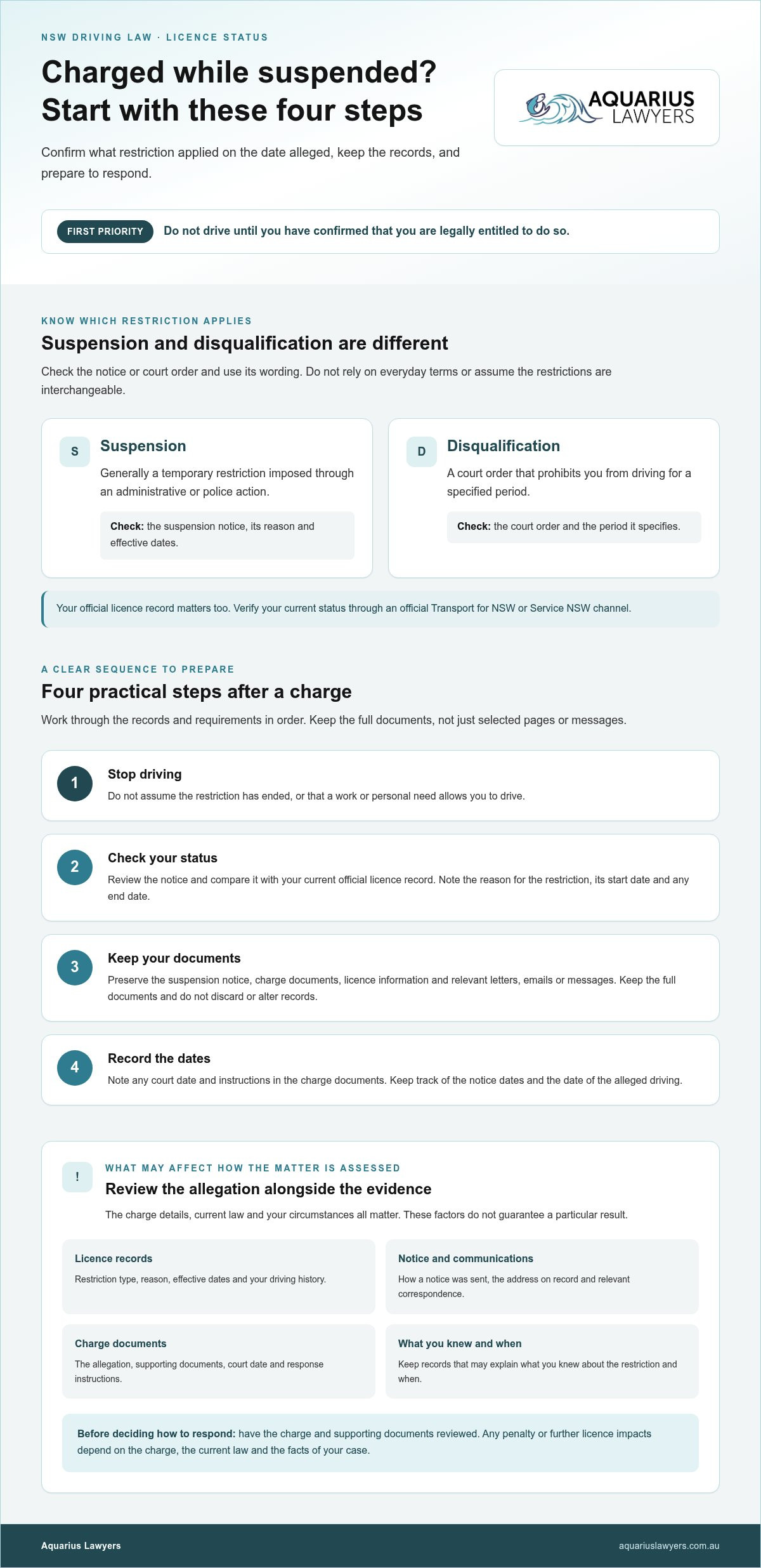
Charged with driving while suspended in NSW? Take these practical steps
A charge can feel daunting, but a clear sequence can help you protect your position and prepare to respond. Don’t drive until you’ve confirmed you’re legally entitled to do so. Then work through these steps:
- Stop driving. Don’t assume the restriction has ended or that a work or personal need allows you to drive.
- Check your status. Review the suspension notice and verify your current licence record through an official channel.
- Keep your documents. Preserve the notice, charge documents, licence information and relevant letters, emails or messages.
- Record the dates. Note any court date and instructions in the charge documents. Put the date somewhere you’ll see it and act promptly if anything is unclear.
- Seek legal advice. Get help understanding the allegation, the documents and your options before making decisions about your plea or court preparation.
What documents and details should you organise?
Keep relevant records together, including the suspension notice, charge documents, licence details and correspondence with authorities. Write down what happened in date order while your memory is fresh. Include when you became aware of the suspension and any steps you took to check your status. Keep the original material intact. Don’t delete messages, edit documents or selectively share records without first getting advice.
An organised set of information makes it easier to identify what is clear, what needs checking and which questions to raise. This can be especially useful if the reason for the suspension or the timing of a notice is disputed.
What should you expect from the court process?
Read every charge document carefully. It should set out the allegation and indicate the next step and relevant date. The required response depends on the document and current NSW procedure, so follow the instructions for your matter rather than guessing from general online guidance.
Ignoring a formal document or missing a court date can create further problems. If you may be unable to attend, or you’re unsure what to do, get legal advice promptly. Preparation may include reviewing the allegation and available material, clarifying your instructions and considering how to respond. For tailored help with a driving while suspended charge, seek criminal law advice before your matter proceeds.
How criminal law advice can help you respond to a NSW suspended-licence charge
A charge involving driving with a suspended licence nsw can raise questions about the notice, the alleged driving and what happens next. Legal advice helps you understand the allegation and make decisions based on your documents and circumstances, rather than assumptions. It can also help you identify how a potential outcome could affect your ability to drive.
What can a lawyer assess in your matter?
A lawyer can review the charge documents alongside the suspension notice, licence information and timeline you provide. The details matter. For example, the date the suspension took effect and the date of the alleged driving may need to be compared with the records and documents available.
A lawyer can also identify questions that need legal analysis, such as whether the documents clearly describe the allegation and what evidence may be relevant. This helps distinguish what is known from what needs clarification. Your driving history and personal circumstances may also affect the advice, including the possible licence impacts of different legal pathways.
Advice should explain your options in plain English, including the practical steps and risks associated with each. It shouldn’t promise that a charge will be withdrawn or that a particular court result will follow. The aim is to help you understand the process and choose a considered response.
When should you seek legal advice?
Act promptly after receiving charge documents or learning that you have a court date. Early advice gives you time to understand what the documents require, raise questions and prepare for the next step. Waiting can leave less time to resolve uncertainty, particularly if you’re unsure how the suspension dates relate to the allegation.
Before speaking with a lawyer, gather your notices, charge documents, licence information and relevant communications. A clear timeline can help explain what happened and when. Be open about facts that may seem unhelpful; accurate advice depends on the full picture.
A criminal lawyer can help you assess the charge, relevant records and practical options without assuming an outcome. If you need guidance on your matter, arrange a discussion with Aquarius Lawyers about your charge and next steps.
Take the next step with clarity
A charge for driving with a suspended licence nsw can leave you weighing decisions that may affect your licence and day-to-day responsibilities. You don’t need to make those decisions based on assumptions. A focused discussion can help you understand what needs attention first and which questions to resolve before your matter proceeds.
Aquarius Lawyers provides Criminal Law services, with Katherine Hawes as Principal Solicitor. Advice can be tailored to the details of your charge and circumstances, helping you consider your next steps with a clearer understanding of the issues. No particular court outcome can be promised, but informed decisions start with understanding your position.
Book a consultation with Aquarius Lawyers to discuss your next steps. Take action now and move forward with a practical plan.
Frequently Asked Questions
Is driving with a suspended licence a criminal offence in NSW?
Yes. Driving while a suspension is active can lead to a separate charge under NSW law. The allegation and possible consequences depend on the charge details, the law in force and your circumstances. Don’t assume that a short trip or an urgent reason removes the risk. Check the notice and your official licence status, and get legal advice if you’re unsure how the charge applies to you.
Can you drive if you have not received a suspension notice?
Not receiving or seeing a notice doesn’t, by itself, establish that you’re entitled to drive. For example, a notice may have gone to an address you no longer use, so check your official licence information and any documents available to you. Don’t drive until you’ve confirmed your status. If you’ve already been charged, keep relevant correspondence and seek advice about how it may relate to your case.
What happens if police charge you with driving while suspended in NSW?
The charge documents explain the allegation and the next step, which may require you to attend court. Read them carefully, note every date and keep the originals. Ignoring a formal document or missing a required court date can make it harder to address your matter. The process and possible consequences depend on the charge and circumstances, so get advice based on your paperwork rather than assuming a particular outcome.
How do you check when a NSW licence suspension ends?
Start with the suspension notice, then verify your current status through the relevant official NSW channel. A date on the notice is useful, but don’t treat it alone as confirmation that you can drive. Another restriction may apply, or the record may need clarification. If the notice and official information appear inconsistent, avoid driving until you resolve the uncertainty. Seek legal advice if a charge is involved.
Can a lawyer help if you are charged with driving while suspended?
Yes. A lawyer can explain what the charge alleges, review your licence and suspension documents, and identify issues to address before you respond. This can help you understand which facts are relevant and what questions to ask about the next stage. Advice should reflect your circumstances and current NSW law. Legal representation can guide your decisions, but it can’t guarantee a specific court result.
Is a suspended licence the same as a disqualified licence in NSW?
No. Suspension and disqualification are different licence statuses and can involve different decision-makers and processes. The wording on your notice or court order is a practical starting point, but confirm that it matches your current official record. For example, don’t assume a suspension notice answers whether a separate court order also affects you. Check your full status before driving, especially if you’ve received several documents.
Disclaimer
Please note that legal rules change and this is not a substitute nor construed as legal advice. It is general information only.