
Do you need a criminal lawyer for a matter at Penrith Local Court, or can you manage it alone? The court hears criminal and traffic cases, including assault, drink driving and Apprehended Domestic Violence Order matters. Aquarius Lawyers provides national representation and can help you understand the charge, prepare for court and make informed decisions about your response.
It’s reasonable to want clear advice before a court date. The outcome can affect your record, your freedom and, in traffic matters, your licence. Experienced representation for Penrith Local Court matters can assist with bail applications, charge negotiations and professional advocacy during local court proceedings.
This guide covers the types of matters heard at Penrith, key stages such as a first mention, and how preparation can shape your response. You’ll also learn what information a lawyer needs to assess your case and how expert legal representation can help you navigate the process with confidence.
Key Takeaways
- Penrith Local Court hears a range of criminal and traffic matters, so identifying the type of charge helps clarify the next steps.
- A lawyer can prepare a bail application around the circumstances of the case and the person’s situation.
- Charge and police fact negotiations can shape what issues proceed to court and how the matter is prepared.
- Knowing what to expect at a mention and during local court proceedings helps you make informed decisions about your response.
- Consider legal representation early, particularly when bail, a possible conviction or licence impacts are at stake.
What kinds of matters are heard at Penrith courts?
Penrith Local Court deals with criminal and traffic matters arising in its local area. Its jurisdiction helps determine where a charge proceeds and what representation may be relevant.
Criminal matters at Penrith Local Court
Penrith Local Court hears criminal charges such as assault, domestic violence offences and Apprehended Domestic Violence Order applications. NSW Police prosecutions from the local area are also handled there. The Local Court of New South Wales states that Penrith Local Court is located at 64-72 Henry Street, Penrith, NSW 2750. Defendants under 18 have their cases heard in the Children’s Court, not Penrith Local Court.
The type and seriousness of a charge affect the court pathway. According to the Judicial Commission of New South Wales, offences carrying a maximum penalty of no more than 2 years’ imprisonment must generally be dealt with summarily, subject to statutory exceptions. The Local Court hears summary matters, while indictable proceedings may move to a higher court. A lawyer can explain how the charge affects your next step.
Traffic offences and drink driving
Traffic matters at Penrith include drink driving and other driving offences. The alleged conduct, available evidence and your driving history can all matter. If a charge could affect your licence, ask how that consequence relates to your plea, the evidence and your court response.
Some traffic matters may involve appeals as well as criminal proceedings. The issue might concern a charge, a licence suspension or the process that led to it. A lawyer can identify which decision is being challenged and explain the relevant process. The distinction matters: an appeal and a response to a new traffic charge are different tasks.
When choosing a criminal defence lawyer for a Penrith Local Court matter, look for experience with your type of charge and the relevant court process. Ask how they will assess the police case, explain your options and address possible licence consequences. Clear advice should connect the evidence and legal issues to your intended outcome.
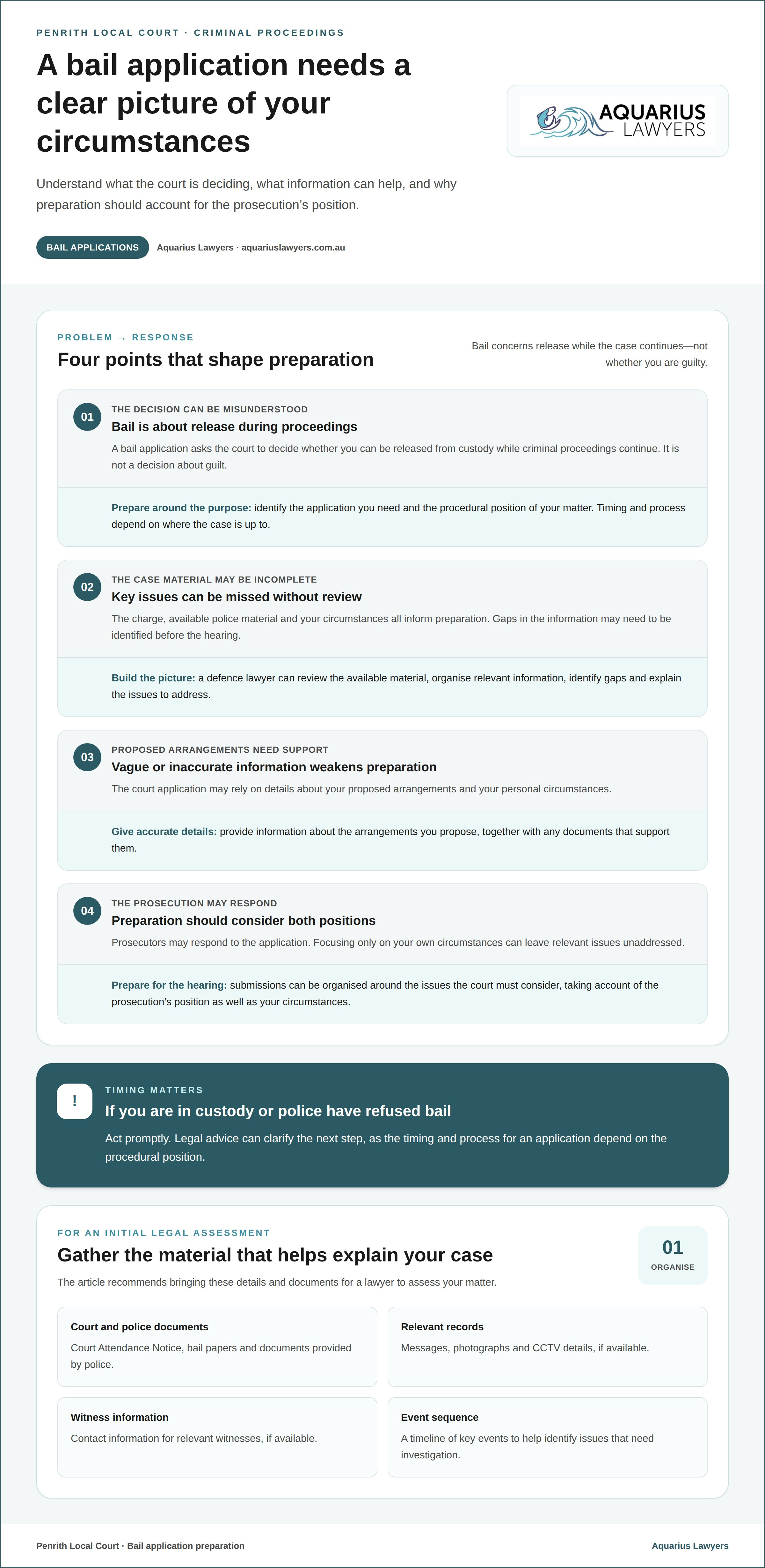
For an initial legal assessment, bring your Court Attendance Notice, bail papers and any documents provided by police. Include relevant messages, photographs, CCTV details or witness contact information, if available. A timeline of key events can help the lawyer identify issues that need investigation.
You can ask Legal Aid NSW whether you qualify for assistance and whether a duty lawyer can help on your court date. Ask what support is available for your matter. Brief court assistance may not include preparation or ongoing representation.
You aren’t required to have a lawyer at Penrith Local Court, but representing yourself can make it harder to assess evidence, understand procedure and make informed decisions about a plea. A traffic charge, for example, may raise both evidentiary questions and licence concerns. A lawyer can explain how those issues interact before you respond.
Bail applications
At Penrith, bail and related applications can affect what happens before a criminal matter is resolved. Identify the application you need, its purpose and the documents relevant to your circumstances.
Applying for bail
A bail application asks the court to decide whether you can be released from custody while criminal proceedings continue. A defence lawyer can review the charge, available police material and your circumstances, then prepare submissions for the court. Give the lawyer accurate information about your proposed arrangements and any documents supporting them. Careful preparation helps focus the application on the issues the court must consider.
Act promptly if you are in custody or police have refused bail. The timing and process for an application depend on the procedural position, so legal advice can clarify the next step. For example, someone charged with drink driving may need advice about bail and the separate steps in the prosecution. A domestic violence charge or apprehended order can raise different practical concerns, particularly if proposed arrangements involve another person.
Before the hearing, a defence lawyer can organise available information, identify gaps and explain the issues to address. Prosecutors may respond to the application, so preparation should account for their position as well as your circumstances. If a matter later proceeds in the District Court, its procedural stage may affect how the application is handled. Bail is not a decision about guilt: it concerns release while the case continues.
Section 10 applications and conditional release orders
For many offences at Penrith, a section 10 outcome or Conditional Release Order may avoid a conviction. Whether this is appropriate depends on the offence, your record and how the matter is prepared. Legal advice can assess those factors against the case material and explain what information may support the application. The outcome is not automatic.
Mental health diversion is another pathway to discuss where relevant. The Mental Health and Cognitive Impairment Forensic Provisions Act 2020 (NSW) includes section 14 applications, and Penrith Local Court hears these applications on Fridays. A lawyer can assess whether this application relates to your circumstances and organise relevant supporting material. This process is distinct from seeking bail or a sentencing outcome.
Annulment applications require separate advice about the court decision being challenged and the procedural step available. Start by gathering the court documents, including the notice of the original listing and any outcome paperwork. A lawyer can review those records, identify the issue and explain the application process. Don’t assume an annulment request replaces a bail application, section 14 application or response to current charges. Each addresses a different point in the proceedings.
For any application, give your lawyer the charge documents, previous court notices and information relevant to your circumstances. These materials help distinguish the immediate question from the wider criminal case and prepare a focused response.
Charge and police fact negotiations
A charge sets out the offence police allege and the facts they rely on. At Penrith Local Court, those details shape your response, the evidence that matters and whether negotiations may help narrow disputed issues. An assault allegation, for example, may involve disagreement about what happened or who was involved. A driving charge may rely on different evidence, such as police observations or recorded material.
Start by comparing the Court Attendance Notice with the police facts and available evidence. A lawyer can assess whether the charge reflects the alleged conduct and explain your options. The review may include witness accounts, photographs, messages or CCTV footage. If an important detail differs between documents, raise the discrepancy before deciding how to plead.
Charge negotiations involve communicating with police or prosecutors about the allegations and the facts relied upon. Depending on the case, discussions may clarify the alleged conduct, address evidentiary concerns or consider whether a different charge is appropriate. For instance, each person’s alleged role in an assault may affect how the facts are presented. Negotiations do not determine the court’s decision or guarantee a particular outcome.
Police fact negotiations focus on the prosecution’s account of events. A lawyer can assess whether the proposed facts align with witness statements, recordings and other material. If you intend to plead guilty, the facts put before the court matter because they describe the conduct you admit. Understand and agree with those facts before entering a plea. A guilty plea does not require you to accept an inaccurate account.
Traffic charges also need careful review. Evidence in a driving matter may include police records or observations relevant to the alleged offence. A lawyer can identify what is disputed and explain how the evidence relates to each element of the charge. This helps distinguish a disagreement about the facts from a legal challenge to the charge itself.
Possible consequences make early, informed decisions important. A conviction may affect your record, while a driving offence can also raise licence concerns. The right approach depends on the charge, evidence and your instructions. A defence lawyer can explain the consequences of pleading guilty or not guilty, and whether to consider a negotiated position before the matter proceeds.
Keep discussions accurate and focused. Give your lawyer the charge documents and relevant material, then explain what you agree or disagree with. They can use that information to assess the police case and communicate your position. At Penrith Local Court, careful preparation considers the charge, proposed facts and plea decision together, rather than treating them as separate questions.
Local and courtroom experience
Local knowledge matters because court routines can affect how your defence is prepared and presented. Practical courtroom experience helps your lawyer anticipate the next procedural step at Penrith.
Local courtroom experience
Penrith Local Court runs three courtrooms and hears matters every sitting day. Matters may be called in any order, and represented matters are generally dealt with first. A lawyer familiar with these routines can help you understand when to attend and how your matter may progress. Arrive at least 30 minutes before your listed time.
Your first court date is called a mention. You may plead guilty or not guilty, or seek more time to obtain legal advice. If you plead guilty and are ready for sentencing, the matter may finish that day; otherwise, the court may adjourn it. A lawyer can prepare for the relevant step rather than treating every mention as a final hearing.
Local listings also follow specific patterns. Domestic violence matters, including Apprehended Domestic Violence Order applications and related charges, are listed on Tuesdays. Traffic matters are listed on Thursdays. The District Court shares the Penrith court building, and serious indictable charges may be committed there or to the Supreme Court. Ask whether a lawyer can explain both Local Court procedure and what happens if the case moves to a higher court.
Checking lawyer experience and reviews
Ask whether the lawyer is admitted to practise in NSW and regularly handles criminal defence matters like yours. Look for specific client feedback about communication, preparation and courtroom representation, rather than relying on a rating alone. During a consultation, ask who will appear for you and how they will explain each court step.
Useful local experience means more than knowing the building. It includes understanding how a mention differs from a defended hearing, when a matter may be adjourned, and how a serious charge can proceed to the District Court. Ask for a clear explanation of the proposed defence, the evidence that needs attention and the decisions you may face. The answers should relate directly to your charge.
For example, a lawyer preparing for a Tuesday domestic violence listing should understand the connection between an order application and any related criminal charge. A Thursday traffic listing may require attention to driving evidence and possible licence consequences. Local familiarity helps organise preparation around the actual listing, while sound criminal defence experience keeps the focus on evidence and procedure.
If your court date is approaching, arrange a criminal law consultation to discuss representation, the listing and the next step in your matter.
Aquarius Lawyers: Criminal Law
Aquarius Lawyers provides criminal law advice and representation for people facing charges or court proceedings. Turn to the firm for help understanding a charge, preparing for a bail application, assessing police facts or planning your response at Penrith Local Court.
Effective preparation starts with the documents and evidence, then connects them to the legal issues and decisions ahead. Aquarius Lawyers can help you consider your options and prepare for the next step, including when traffic charges or possible licence impacts are involved.
If you’re facing criminal proceedings in Penrith, contact Aquarius Lawyers to discuss your matter.
Take the next step with a clear plan
Base your next decision on the case documents, court timetable and consequences you need to manage. A criminal lawyer for Penrith Local Court proceedings can help you consider these factors before you enter a plea or attend a hearing. Seeking advice early gives you time to understand your options and prepare a focused response.
If your legal concerns also involve a regulated marine or fishing business, Aquarius Lawyers offers Marine Law, Fisheries Law and Aquaculture Law alongside criminal law. This broader legal perspective may be useful when separate issues affect the same business or person.
You don’t need to map out every court step alone. Contact Aquarius Lawyers for advice about your circumstances and the practical next step. A clear plan can help you approach the proceedings with greater confidence.
Frequently Asked Questions
Need a Lawyer at Penrith Local Court?
You can represent yourself, but a criminal lawyer can help you understand the charge, assess the evidence and make informed decisions about your plea. A lawyer handling a Penrith Local Court matter can also explain how the outcome may affect your record or licence. If you’re unsure what a Court Attendance Notice requires, seek advice before responding or entering a plea.
What time should I get to court?
Arrive at least 30 minutes before your listed time at Penrith Local Court. Check your Court Attendance Notice for the courtroom and listing details, and allow time to find the correct place in the court building. Your matter may not be called at the exact time shown, so stay available and follow any directions from court staff or your lawyer.
Can my Penrith matter be dealt with without a conviction?
Yes, some matters may result in an outcome without a conviction. In Penrith, a section 10 outcome or Conditional Release Order may be available for some offences. The offence, your record and how the matter is prepared are relevant. These outcomes aren’t automatic, so get advice on whether the facts and circumstances of your case support seeking one.
Do I have to attend in person, or can you appear for me?
Don’t assume that having a lawyer means you can miss court. Whether you must attend depends on the matter and the court’s requirements. Read your court documents and get clear advice about your listing before making plans. If you’re unable to attend, tell your lawyer promptly so they can explain the appropriate next step and the risks of absence.
Can I change my lawyer during a criminal case?
You can ask about changing your legal representation during a criminal case. Before deciding, discuss the current stage, upcoming court dates, work completed and documents that may need to be transferred. A new lawyer will need to understand the file and prepare for the next step. If you have concerns about communication or strategy, raise them promptly and ask how a transition could affect preparation for your next court date.
What are the most common Criminal Law matters in Penrith, NSW?
Penrith Local Court hears a range of criminal and traffic matters, including assault, domestic violence offences, Apprehended Domestic Violence Order applications, drink driving and other driving offences. The court also handles NSW Police prosecutions arising in its local area. Your court notice identifies the charge, and legal advice can clarify what it means for your next step.
Disclaimer
Please note that legal rules change and this is not a substitute nor construed as legal advice. It is general information only.