
A shareholders’ agreement can help prevent disputes over control, dividends and exits. But share value can still become a flashpoint if the valuation process is unclear. A practical answer to how to avoid shareholder disputes is to agree on decision-making rules and a workable method for valuing shares before a disagreement arises.
When you’re building a company with other shareholders, clear rules can help prevent conflicting expectations from affecting business decisions. A shareholders’ agreement can set out each person’s rights and responsibilities, how key decisions are made, and what happens when someone wants to leave. It can also define how shares will be valued and who will determine that value, reducing uncertainty at a difficult time.
This article explains which companies can benefit from a shareholders’ agreement, how it works alongside the company constitution, and what to consider when setting share valuation terms. It also covers common triggers for disputes and options for addressing disagreements early, helping you plan for change as well as day-to-day governance.
Key Takeaways
- Identify how unclear roles, competing priorities and disagreements about dividends or exits can put shareholder relationships under strain.
- See how a shareholders’ agreement can clarify decision-making, dispute resolution and the terms for a shareholder’s exit.
- Understand why the company constitution should work consistently with the shareholders’ agreement and applicable replaceable rules.
- Consider how clear share valuation terms can reduce uncertainty when a shareholder leaves or shares need to be transferred.
- Explore how negotiation and mediation may help shareholders address a disagreement before it escalates.
What causes shareholder disputes?
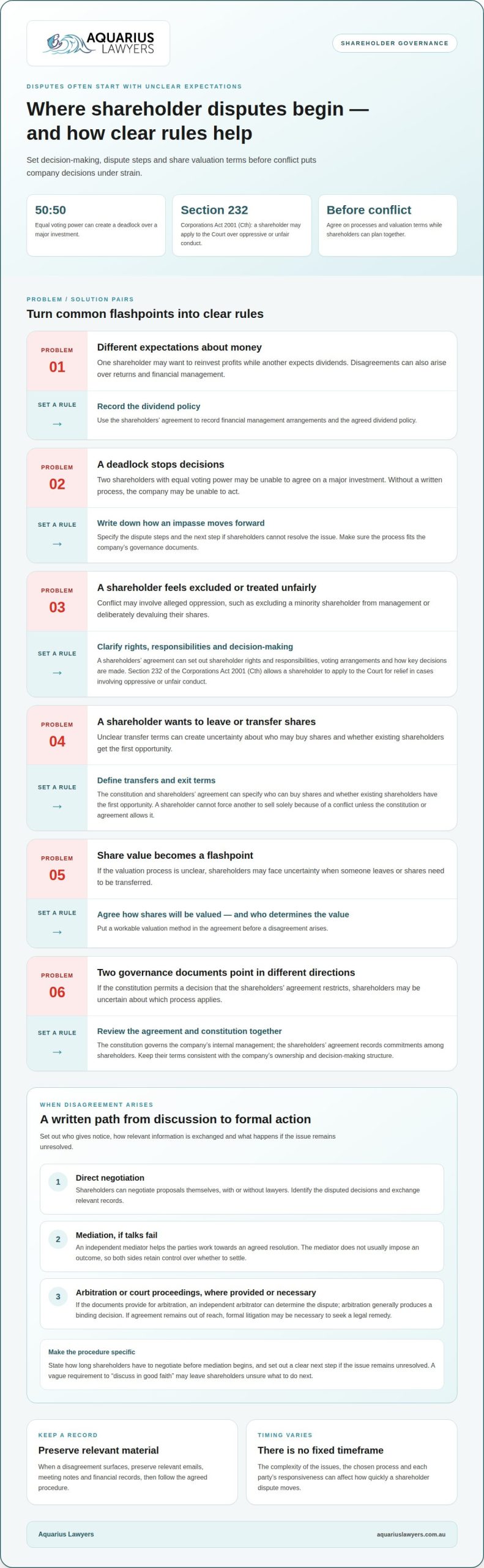
Shareholder disputes often start when expectations about control, contribution or returns diverge. One shareholder, for example, may want to reinvest profits while another expects dividends. Disagreements can also involve business direction, workload, management style, access to information, share transfers or succession. If a shareholder feels excluded or treated unfairly, the conflict can disrupt decisions and operations.
Unclear governance can turn a disagreement into a deadlock. Imagine two shareholders with equal voting power who cannot agree on a major investment. Without a written process for resolving the impasse, the company may be unable to act. A dispute may also involve alleged oppression, such as excluding a minority shareholder from management or deliberately devaluing their shares. Section 232 of the Corporations Act 2001 (Cth) allows a shareholder to apply to the Court for relief in cases involving oppressive or unfair conduct.
A dispute resolution clause can set out the steps shareholders must take before litigation. It may require direct negotiation first, followed by mediation if talks fail. Shareholders can negotiate proposals themselves, with or without lawyers. In mediation, an independent mediator helps the parties work towards an agreed resolution. The mediator does not usually impose an outcome, so both sides retain control over whether to settle.
There is no fixed timeframe for resolving a shareholder dispute in Australia. Negotiations may progress once the parties identify the disputed decisions and exchange relevant records. Mediation requires the parties to participate, while litigation follows formal court steps. The complexity of the issues, the chosen process and each party’s responsiveness can affect how quickly the matter moves.
A lawyer can help address a shareholder deadlock by reviewing the agreement and constitution, identifying the disputed decisions and clarifying the options available. They can support structured negotiations, explain a mediation clause and help develop workable proposals, such as a decision process or share exit. If the documents provide for arbitration, an independent arbitrator can determine the dispute. Unlike mediation, arbitration generally produces a binding decision.
Put the process in writing before conflict arises. Specify who gives notice of a dispute, how shareholders exchange relevant information, and how long they have to negotiate before mediation begins. Set out a clear next step if the issue remains unresolved, such as arbitration or court proceedings, and ensure the clause fits the company’s governance documents. A vague requirement to “discuss in good faith” may leave shareholders unsure what to do next.
When a disagreement surfaces, preserve relevant emails, meeting notes and financial records, then follow the agreed procedure. Early legal advice can help shareholders distinguish a commercial difference from conduct that may raise statutory concerns. Negotiation or mediation may preserve working relationships. If agreement remains out of reach, formal litigation may be necessary to seek a legal remedy.
What types of companies need shareholders’ agreements?
Any Australian company with more than one shareholder can benefit from a written shareholders’ agreement. It is particularly useful when owners invest different amounts, contribute different skills or hold equal stakes. For example, shareholders with a 50:50 stake may need clear rules for major decisions, voting and what happens if they cannot agree. Setting those terms early helps turn different expectations into a shared framework.
A shareholders’ agreement is a legally binding contract among a company’s shareholders. It can record their rights and responsibilities, voting arrangements, financial management, dividend policy and dispute resolution process. It can also cover a shareholder’s death or incapacity, a change in contribution, and the circumstances in which someone may leave. These provisions give owners a shared reference point as the company changes.
For owners considering how to avoid shareholder disputes, the agreement should reflect the company’s actual governance arrangements. A constitution governs the company’s internal management, while a shareholders’ agreement records commitments among shareholders. If one permits a decision that the other restricts, uncertainty can arise over which process applies. A lawyer can review both documents together and tailor their terms to the company’s ownership and decision-making structure.
In an Australian proprietary company, the constitution and any shareholders’ agreement can govern the process for transferring shares. They may specify who can buy shares and whether existing shareholders have the first opportunity to purchase them. A shareholder cannot force another shareholder to sell solely because of a conflict unless the constitution or agreement allows it. Clear transfer terms matter when an owner wants to leave or sell to an outside buyer.
Failing to document shareholder decisions can leave the parties with different accounts of what they agreed. An informal conversation about profit-sharing, for example, may not settle what happens when the company changes its dividend approach. Emails, meeting notes and other written records can help establish what was discussed, but a clear agreement gives shareholders a more reliable framework for their responsibilities and obligations.
Written agreements also help when business partners hold shares but have different roles. If one founder manages operations and another contributes capital, the agreement can describe each person’s responsibilities and how important decisions are made. A partnership agreement may address the partners’ working arrangements, while a shareholders’ agreement covers company ownership and governance. The documents should reflect how the business actually operates.
If you’re considering how to avoid shareholder disputes as your company grows, review the agreement when a new investor joins, a shareholder’s role changes, or an exit or succession plan becomes relevant. Updating it and checking it against the constitution can keep the rules aligned with ownership and shareholders’ expectations.
Company constitutions and replaceable rules
A company constitution sets internal management rules, while replaceable rules can govern a company that does not have a constitution. Their practical effect depends on the company’s structure and the terms its shareholders have adopted.
Under the Corporations Act 2001 (Cth), replaceable rules apply where a company does not have a constitution, subject to statutory exceptions. A constitution can give more tailored guidance about board processes, shareholder involvement and voting. Section 140 gives a constitution contractual effect between the company and each shareholder, directors and secretary, and between shareholders. Aligning it with other governance documents helps prevent competing procedures.
According to the Federal Register of Legislation, the Corporations Act imposes directors’ duties under Part 2D.1, in addition to directors’ fiduciary duties at general law. These duties may be relevant when shareholders question how directors have managed company resources. For example, a concern about company funds being used for a director’s personal benefit calls for close attention to the transaction, its approval and the records explaining the decision.
Access to records and financial information
Access to company records and financial information means obtaining documents and updates about the company’s affairs. This matters when a shareholder needs to understand a transaction, assess a director’s conduct or take part in an informed discussion.
Shareholders have limited rights to inspect company books and records, and a court order may be required to authorise an inspection. Directors have a statutory right of access to company records under section 290 of the Corporations Act. A constitution or shareholders’ agreement can also set information rights and reporting arrangements, helping clarify what financial updates shareholders receive and when.
Disputes in small companies
In a small company, owners may also be directors or employees, so a governance disagreement can quickly affect daily operations. For example, a dispute over who can approve a significant purchase may leave staff unsure which direction to follow.
Clear decision-making roles, reporting expectations and meeting procedures can help separate a board decision from a shareholder concern. If company affairs are oppressive or unfair, a shareholder may apply to the Court under section 232 of the Corporations Act 2001 (Cth). The Court may order a company wound up on just and equitable grounds. That serious possibility makes accurate records and usable internal procedures particularly important when the owners’ interests diverge.
Review the constitution when the company changes its ownership or governance arrangements. Check whether its voting rules, information provisions and dispute process still fit how directors and shareholders make decisions. If a business adds an investor, for instance, its documents should clarify how that person receives company information and participates in decisions. Consistent rules give shareholders a clear basis for raising concerns before they disrupt operations.
Share valuation disputes
A share valuation dispute can arise when shareholders disagree about the value of an ownership stake, especially during an exit, transfer or buyout. One party may focus on the company’s assets, while another expects future performance to affect the value. If the agreement leaves the valuation process unclear, the parties may argue about both the figure and how it was reached.
Carefully drafted terms can reduce uncertainty by stating when a valuation is required and which date it must use. For example, the agreement might set the valuation date as the date a shareholder gives notice of an intended sale. It should also explain whether the valuation applies to the company as a whole or to the specific shares being transferred.
Agree on the valuation process before an exit becomes contentious. The documents can specify how an independent expert valuer is selected, what information the expert receives, and how the expert’s conclusion will be treated. If the parties expect the valuation to be binding, they should understand that consequence before appointing the expert.
Shareholders should get legal advice before appointing an independent expert valuer, particularly if the valuation will bind the parties. This can help clarify the wording, scope and practical effect of the appointment. For example, shareholders can define the question the expert must answer and identify the documents needed to assess the company’s position.
Valuation terms should also address circumstances that could affect the result. A company’s financial position, assets, liabilities and trading outlook may influence an assessment. The agreement can explain how the valuer should treat those matters, along with any assumptions or information supplied by the parties. Clear instructions reduce arguments about whether relevant factors were overlooked.
Minority shareholders should consider how the transfer process affects their rights and interests. For instance, a clause allowing a majority shareholder to sell the company may interact with a minority shareholder’s ability to participate in that sale. The agreement should clarify how transfer rights relate to valuation terms, rather than leaving the parties to interpret them during negotiations.
When shareholders cannot agree on an expert or the valuation outcome, a dispute resolution clause can provide a next step. It might require negotiation first, followed by mediation or another agreed process. Where possible, separate the valuation question from wider relationship disputes. This helps the parties focus on the evidence and the agreed terms, rather than reopening every disagreement about company management.
If you’re drafting or reviewing share valuation terms, seek legal advice on your shareholder agreement before a transfer or exit is underway. Clear valuation instructions, expert appointment rules and dispute procedures can make the process easier to apply when shareholders’ interests diverge.
Aquarius Lawyers
Aquarius Lawyers advises businesses on Commercial Law, including shareholder dispute risks. Turn to the firm when setting up a company, bringing in an investor, reviewing governance documents or facing a disagreement about decision-making, share transfers or valuation terms.
Clear legal advice can help you understand how your shareholders’ agreement and constitution work together, identify gaps in their dispute procedures, and consider practical options when shareholders reach an impasse. If a dispute has already started, early advice can clarify the documents, the parties’ rights and the available resolution pathways.
Contact Aquarius Lawyers to discuss your company’s shareholder arrangements or an existing dispute.
Set clear terms before your next business decision
Shareholder arrangements are easier to shape before a new investment, ownership change or disagreement forces decisions under pressure. If you’re considering how to avoid shareholder disputes, treat your documents as part of your company’s ongoing governance, not paperwork to revisit only after conflict starts.
Aquarius Lawyers advises businesses on Commercial Law, as well as Marine Law, Fisheries Law and Aquaculture Law. This breadth is relevant when shareholder arrangements intersect with operational interests such as a fishing business, marine assets or an aquaculture venture. Legal advice can help you consider how ownership terms fit your business’s commercial realities.
Whether you’re planning a new venture or dealing with a shareholder issue, take the next step while you can still consider options carefully. Contact Aquarius Lawyers for advice about your company’s arrangements. Clear decisions now can help you move forward with greater confidence.
Frequently Asked Questions
What Is a Company Constitution?
A company constitution is a document setting rules for how an Australian company is managed. It can address how directors are appointed, how meetings are conducted and how decisions are made. Under section 140 of the Corporations Act 2001 (Cth), it has contractual effect between the company and its shareholders, directors and secretary, and between shareholders. For example, it may clarify voting procedures when shareholders disagree about a proposed company decision.
What happens if the relationship between shareholders completely breaks down?
If shareholders cannot work together, the company’s constitution and shareholders’ agreement may set out next steps, such as negotiation, mediation or a share sale process. A shareholder cannot force another shareholder to sell solely because of a conflict unless the company documents allow it. If the dispute remains unresolved, court proceedings may be considered. In appropriate circumstances, a court can order a company wound up on just and equitable grounds.
What is considered oppressive conduct by shareholders or directors?
Oppressive conduct may include excluding a minority shareholder from company information or decisions, unfairly diluting their shares, or blocking a fair-value exit. Refusing to pay dividends or deliberately devaluing shares may also raise concerns. The specific conduct and its effect on shareholders’ interests matter. Section 232 of the Corporations Act 2001 (Cth) allows a shareholder to apply to the Court for relief where company affairs are oppressive or unfair.
What causes shareholder disputes in Australian companies?
Disputes can arise when shareholders disagree about business direction, management decisions, dividend payments or reinvestment. Conflict may also follow an imbalance in contributions, unclear responsibilities, financial concerns or disagreement about a shareholder’s exit. One owner, for example, may expect profits to fund expansion while another wants distributions. A dispute can intensify when shareholders have different expectations about control or someone believes they are being excluded from company affairs.
How can an Australian shareholders agreement prevent disputes?
A shareholders’ agreement can record how shareholders intend to manage ownership and make decisions, giving them a shared reference point when views diverge. It can state which matters need special approval and how a shareholder can propose a sale. It can also set out a process for resolving disagreements before they disrupt company decisions. The agreement should reflect the company’s actual arrangements and remain consistent with its constitution.
What clauses should a shareholders agreement include in Australia?
Useful clauses may cover voting and decision-making, financial reporting, dividends, share transfers, exit arrangements and dispute resolution. A deadlock clause can set a pathway for situations where shareholders cannot agree on a decision. Valuation terms can explain how shares will be assessed during a transfer or buyout, including how an independent expert is appointed. The right provisions depend on the company’s ownership and governance arrangements, so tailor the agreement rather than relying on generic wording.
Disclaimer
Please note that legal rules change and this is not a substitute nor construed as legal advice. It is general information only.