
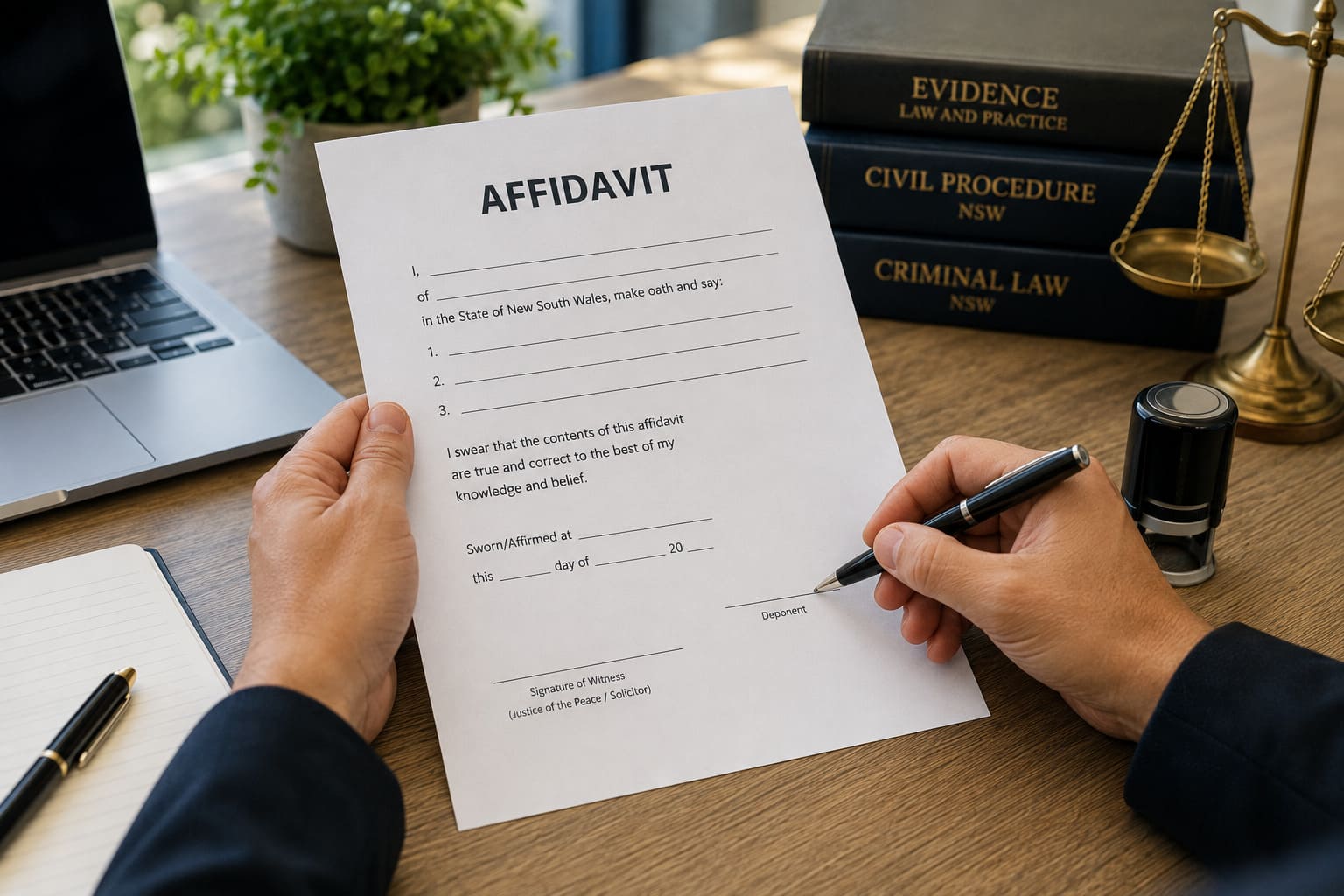
An affidavit is one of the most important legal documents used in Australian courts. Whether you are involved in criminal proceedings, civil litigation, family law, probate or commercial disputes, you may be asked to prepare or sign an affidavit as evidence before the court.
For many people, the idea of writing an affidavit is intimidating. Questions such as “What should I include?”, “Can I tell my side of the story?” or “What happens if I make a mistake?” are common.
Unlike an ordinary letter or witness statement, an affidavit is a sworn or affirmed legal document. The contents must be truthful, relevant and presented in a way that complies with court rules. Signing an affidavit that contains false information can have serious legal consequences.
This guide explains what an affidavit is, when it is used, how to prepare one correctly and the common mistakes that should be avoided.
What Is an Affidavit?
An affidavit is a written statement of facts that is sworn or affirmed to be true before an authorised witness, such as a solicitor or Justice of the Peace.
Once sworn or affirmed, it becomes evidence that may be relied upon by the court.
Unlike verbal evidence given in the witness box, an affidavit allows the court to consider written evidence before or during legal proceedings.
Affidavits are commonly used because they:
-
Present evidence in an organised manner.
-
Save court time.
-
Clarify disputed facts.
-
Assist judges and magistrates in understanding the issues.
When Are Affidavits Used?
Affidavits are used in many different areas of law. Common examples include:
-
Criminal proceedings.
-
Family law matters.
-
Probate applications.
-
Commercial disputes.
-
Civil litigation.
-
Debt recovery.
-
Property disputes.
-
Employment matters.
-
Administrative law proceedings.
Each court has its own rules governing when affidavits are required and how they must be prepared.
An Affidavit Is Evidence
Many people mistakenly believe an affidavit is simply a letter explaining what happened. It is much more than that.
Once filed with the court, an affidavit becomes evidence.
The person signing it is declaring that every statement is true to the best of their knowledge. If required, they may later be cross-examined about its contents. For this reason, accuracy is critical.
Who Can Prepare an Affidavit?
Any person with personal knowledge of the relevant facts may prepare an affidavit. This may include:
-
A party to the proceedings.
-
A witness.
-
An expert witness.
-
A professional providing evidence.
-
A family member in appropriate circumstances.
Each person should only include matters they personally know unless court rules specifically allow otherwise.
What Should an Affidavit Contain?
A well-prepared affidavit should contain factual information relevant to the issues before the court. Generally, it should include:
-
The person’s name.
-
Occupation.
-
Address (where appropriate).
-
The facts they personally know.
-
Relevant dates.
-
Relevant events.
-
Any documents referred to.
-
Exhibits where necessary.
Each paragraph should deal with one topic or event to make the document easy to follow.
Stick to Facts, Not Opinions
One of the biggest mistakes people make is filling an affidavit with opinions, assumptions or arguments.
For example, instead of writing: “The other party is dishonest and always lies.”
It is usually better to write: “On 12 June 2026, I attended the meeting at approximately 2.00 pm. During the meeting the defendant stated…”
Courts are interested in facts. Judges decide what conclusions should be drawn from those facts.
Only Include What You Personally Know
An affidavit should generally contain information based upon your own knowledge. Avoid including:
-
Rumours.
-
Gossip.
-
Assumptions.
-
What another person supposedly said (unless relevant and admissible).
-
Speculation.
If you did not personally observe something, you should be cautious before including it. This helps ensure the affidavit remains credible and reliable.
Use Clear and Chronological Language
The most effective affidavits are easy to read. Present events in chronological order wherever possible. For example:
-
How the matter began.
-
What occurred next.
-
Important conversations.
-
Relevant documents.
-
The outcome.
Avoid jumping backwards and forwards between events. A logical timeline assists both the court and the lawyers involved.
Supporting Documents
Where appropriate, documents may be attached as exhibits. These might include:
-
Contracts.
-
Emails.
-
Text messages.
-
Photographs.
-
Medical reports.
-
Receipts.
-
Bank records.
-
Police documents.
The affidavit should clearly identify each exhibit and explain its relevance. Simply attaching documents without explanation may reduce their usefulness.
Swearing or Affirming an Affidavit
Before an affidavit becomes valid, it must be properly sworn or affirmed. The person signing the affidavit must do so in the presence of an authorised witness.
Common authorised witnesses include:
-
Solicitors.
-
Justices of the Peace.
-
Certain court officers.
-
Other persons authorised by legislation.
The witness confirms that the person signing has declared the contents to be true.
What Happens If an Affidavit Contains False Information?
An affidavit should never contain information that you know to be false. Providing false evidence may constitute:
-
Perjury.
-
Contempt of court.
-
Other criminal offences.
It may also damage your credibility and significantly weaken your case. If you are uncertain about a particular fact, it is better to state that clearly than speculate. Honesty is essential.
Common Mistakes When Preparing an Affidavit
Many affidavits contain avoidable errors. Common mistakes include:
-
Including irrelevant information.
-
Arguing rather than stating facts.
-
Using emotional language.
-
Making assumptions.
-
Including hearsay where inappropriate.
-
Failing to attach relevant exhibits.
-
Omitting important dates.
-
Signing the affidavit incorrectly.
These mistakes may reduce the value of the affidavit or, in some cases, result in the court refusing to accept it.
Affidavits in Criminal Matters
Affidavits are used in various criminal law proceedings, although oral evidence often remains central to criminal trials. Examples where affidavits may arise include:
-
Bail applications.
-
Certain procedural applications.
-
Appeals.
-
Sentencing material.
-
Applications relating to subpoenas or warrants.
The role of an affidavit depends upon the particular application before the court.
Affidavits in Probate and Estate Matters
Affidavits are frequently required when administering a deceased estate. They may be used to:
-
Support probate applications.
-
Explain missing original wills.
-
Confirm searches undertaken.
-
Verify family relationships.
-
Explain unusual circumstances.
Accuracy is particularly important because probate applications rely heavily upon documentary evidence.
Affidavits in Commercial Disputes
Commercial litigation often depends upon documentary evidence. Affidavits may explain:
-
Business transactions.
-
Contract negotiations.
-
Payments.
-
Financial records.
-
Meetings.
-
Correspondence.
Well-prepared affidavits frequently become central pieces of evidence in commercial proceedings.
Why Legal Advice Is Important
Preparing an affidavit may appear straightforward, but legal drafting requires careful attention. An experienced lawyer can assist by:
-
Identifying relevant facts.
-
Removing inadmissible material.
-
Ensuring compliance with court rules.
-
Organising evidence logically.
-
Preparing exhibits correctly.
-
Reviewing the affidavit before it is sworn.
Professional preparation often strengthens the effectiveness of the evidence presented to the court.
Every Matter Is Different
No two affidavits are the same.
The content required in a criminal matter will differ from that required in family law, probate or commercial litigation. The purpose of the affidavit, the applicable court rules and the issues in dispute all influence how the document should be prepared.
For that reason, generic templates downloaded from the internet are rarely suitable for important legal proceedings.
Good Preparation Builds Stronger Cases
An affidavit is often one of the first documents a judge or magistrate reads when considering your case.
A clear, accurate and professionally prepared affidavit can assist the court in understanding the relevant facts quickly and efficiently.
Taking the time to prepare the document properly—and obtaining legal advice where appropriate—can significantly improve the presentation of your case.
Speak to Aquarius Lawyers
If you need assistance preparing an affidavit or responding to court proceedings, Aquarius Lawyers can help.
Our experienced legal team advises clients throughout Australia in criminal law, commercial disputes, probate, property matters and civil litigation. We prepare affidavits that comply with court requirements and present your evidence clearly, accurately and persuasively.
If you have been asked to prepare an affidavit or are unsure what information should be included, contact Aquarius Lawyers for practical legal advice tailored to your circumstances.