
A property transaction can turn on what happens before you sign, not just on settlement day. A conveyancing lawyer can advise you on a contract, prepare sale documents and represent you through settlement. The work involved depends on the transaction, so understanding the support you need is a practical first step.
It’s reasonable to want clarity before committing to a property transaction. Contract terms, timing and settlement obligations can shape your decisions, and problems may be harder to address once you’ve signed. Getting legal advice early can help you understand the documents and identify issues to resolve before the transaction progresses.
This guide explains how conveyancing support works across Australia, including contract advice, preparation and settlement coordination. It also covers factors that shape the work involved and what to consider when arranging legal support, so you can take the next step with a clearer understanding of the process.
Key Takeaways
- Get legal advice before making an offer so potential contract issues can be considered before you commit.
- A contract review can clarify your rights, responsibilities and obligations before you sign.
- Contract preparation involves more than filling in a template; the documents need to reflect the transaction.
- Settlement support helps coordinate the steps needed to complete the property transfer.
- Understand what legal work your transaction needs and how it will be handled from contract stage through settlement.
Settlement preparation and representation
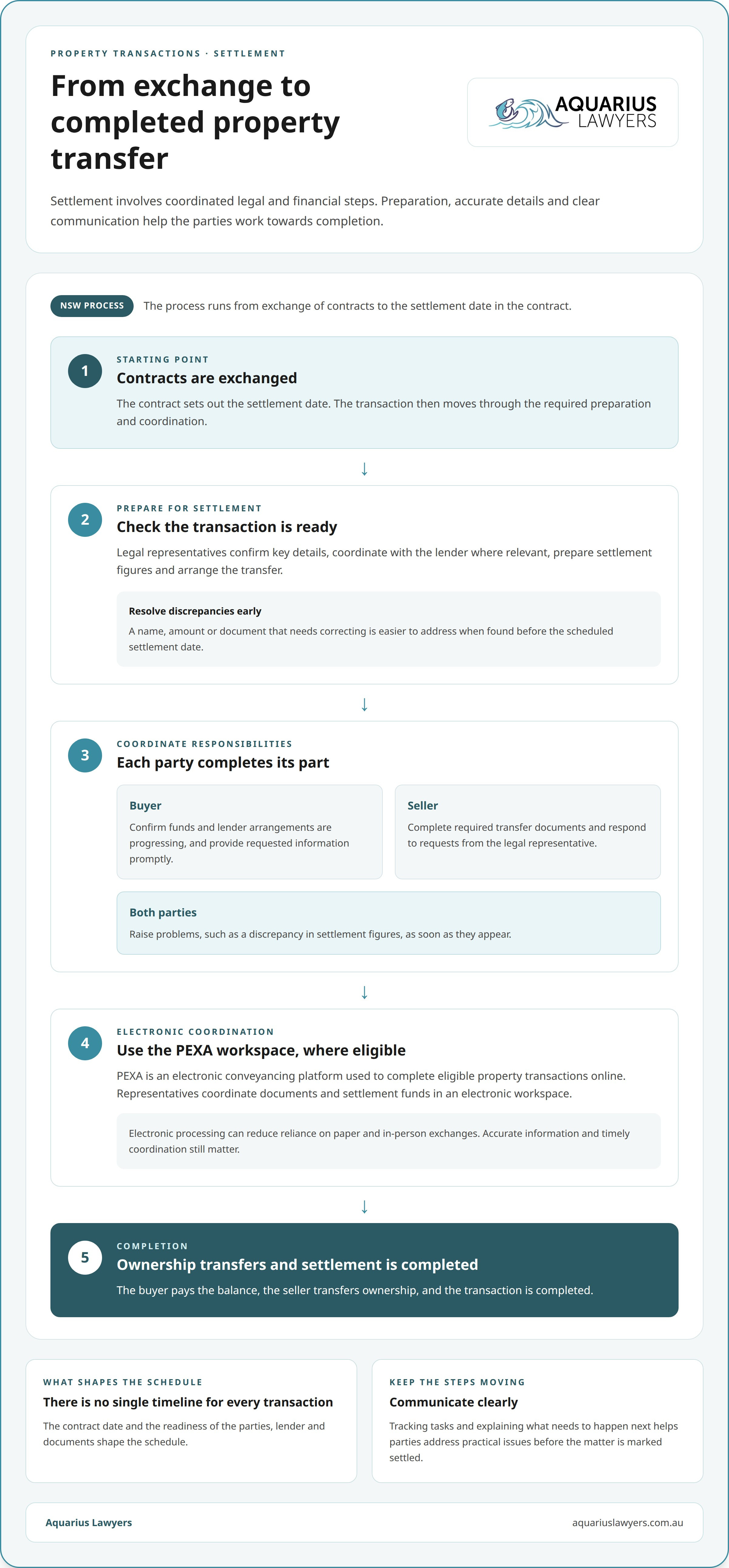
Settlement is when the buyer pays the balance, the seller transfers ownership and the transaction is completed. Aquarius Lawyers coordinates the legal and financial steps, communicates with the other side and helps address issues that could delay completion. For example, a buyer’s lender may need final documents before releasing funds, while the seller must meet the agreed transfer requirements.
In NSW, the process runs from exchange of contracts to the settlement date set out in the contract. The buyer’s representative coordinates funding and transfer arrangements; the seller’s representative prepares the transfer and works through settlement requirements. There is no single timeline for every transaction: the contract date and the readiness of the parties, lender and documents shape the schedule. Aquarius Lawyers tracks the steps and explains what needs to happen next.
Preparation means checking that the transaction is ready to settle, rather than waiting until the scheduled date. The legal representatives confirm key details, coordinate with the lender where relevant, prepare settlement figures and arrange the transfer. If a name, amount or document needs correcting, finding the issue before settlement gives the parties time to address it. Clear communication helps keep each task moving.
- For a buyer: confirm the funds and lender arrangements are progressing, and provide requested information promptly.
- For a seller: complete required transfer documents and respond to requests from Aquarius Lawyers.
- For both parties: raise a problem, such as a discrepancy in settlement figures, as soon as it appears.
PEXA is an electronic conveyancing platform used to complete eligible property transactions online. Representatives use an electronic workspace to coordinate documents and settlement funds. This can reduce reliance on paper and in-person exchanges, but accurate information and timely coordination still matter. Aquarius Lawyers manages the transaction through the platform and addresses practical issues before the matter is marked settled.
When comparing professionals for your property matter, look for reviews describing clear communication, careful coordination and support through settlement, then consider the firm’s relevant property experience. A review saying “highly recommend” is useful context, but a specific example of how the legal team handled a delay or explained a step tells you more.
Settlement volume also matters for businesses buying or selling several properties as they grow. Multiple transactions may involve different contracts, lenders and settlement dates, so a clear task schedule helps prevent details being missed. You can ask how Aquarius Lawyers tracks each matter and communicates progress. That process shows what remains outstanding and supports an organised path to completion.
Conveyancing legal advice before making an offer
Before making an offer, seek advice from a conveyancing solicitor at a registered firm. Early review can help identify legal issues in the proposed transaction before you commit.
Review title searches and legal due diligence
A title search records key information about a property, while legal due diligence considers documents that may affect your purchase. A solicitor can review the search alongside the contract and explain issues relevant to your plans. For example, a recorded interest or a discrepancy in property details may need clarification before you decide whether to proceed.
Choose a conveyancer or property lawyer
Choose a professional whose experience and communication suit your transaction. Ask who will handle the work, how they’ll explain contract issues and how they’ll keep you updated. A solicitor can advise on legal matters arising from the purchase, while a licensed conveyancer can assist with conveyancing work within their role. Consider the complexity of your property law questions when deciding what support you need.
Reviews can offer insight into how a professional communicates and manages a matter. Look for comments describing clear explanations or careful handling of a specific issue, rather than relying on a general recommendation alone.
Understand services involved in conveyancing
Clarify which tasks the professional will handle throughout your transaction. These may include reviewing the contract and title information, preparing or reviewing documents, communicating with the other party and coordinating settlement. Ask how they’ll address additional legal issues, such as a title discrepancy or a proposed contract change. A clear scope helps you understand who is responsible for each step.
Also discuss how you’ll receive updates and how to raise questions as the matter progresses. A defined communication process can help you make timely decisions when the other party requests information or responds to proposed changes.
Compare local conveyancing options
For a Richmond, NSW property transaction, you can consider a professional based locally or in a nearby area such as Penrith. Location is only one factor. Compare relevant experience, how the work is managed and whether explanations are clear enough for you to understand the decisions involved.
Ask how the professional approaches pre-offer advice and what information they need to review the property documents. A conveyancing lawyer in Richmond, NSW can help you understand how the contract relates to your intended purchase and identify issues to resolve before submitting an offer.
Cathy Stevenson began her career as a journalist in the 90’s before becoming a lawyer.
Advice on rights and responsibilities before contracts are signed
Before signing a residential contract in the Hawkesbury, get advice on what each clause requires from you. A review can explain key dates, deposit arrangements, inclusions and the consequences of failing to meet an obligation.
In NSW, cooling-off rights and deposit arrangements depend on the transaction and contract terms. Before signing, have a solicitor explain whether a cooling-off right applies, when it ends and what happens to the deposit if you withdraw.
For a buyer, the contract covers more than the agreed purchase amount. It can set out the settlement date, included items and conditions affecting how the transaction proceeds. For example, if you expect a dishwasher or another fixture to remain, the contract should make that clear. Verbal discussions can be difficult to rely on if the written terms say something different.
Sellers also have responsibilities. The contract and supporting documents need to describe the property and agreed terms accurately. If a seller has agreed to leave particular appliances, the documents should reflect that agreement. Advice before signing can identify unclear wording, missing details or a mismatch between the parties’ understanding and the written contract.
- Dates: identify when the contract requires actions or payment.
- Deposit: understand the amount, due date and handling terms written into the contract.
- Inclusions: specify items such as appliances if they form part of the agreement.
- Conditions: clarify what each condition requires and how it affects the parties.
When selling, legal advice can help you understand what you must provide and which obligations continue through settlement. When buying, it can clarify what you’re agreeing to do, what the seller has promised and which details need resolving before you sign. Each point should be tied to the actual wording, not an assumption about what a standard contract usually says.
A law firm can explain a clause in plain English and identify where its wording may not match your plans. For instance, if a buyer needs a particular arrangement before settlement, the lawyer can consider whether the contract addresses it. It can be useful to raise questions before signing, while the contract is still under discussion.
In the Hawkesbury, buying or selling a residential property can involve several moving parts, including contract dates, deposit terms and agreed inclusions. A conveyancing lawyer can help you understand your rights and responsibilities before commitment, so you can make decisions with the contract’s detail in view.
Cooling-off rights do not apply on identical terms to every transaction; whether a right applies and when it ends depend on the transaction and contract. The contract sets the deposit amount, due date and handling terms, including what happens to it if the buyer withdraws.
Contract of sale review and preparation
A contract of sale records the terms agreed for a property transaction. Before buying in Richmond, ask a solicitor to review the draft and explain how its clauses apply to your circumstances. For a seller, preparation means assembling accurate property details and reflecting agreed terms in the documents. In Australia, a contract should be read as a whole, not treated as a signature page alone.
A review can compare the property description with the transaction documents and flag details needing clarification. For example, the contract may refer to a parking space, storage area or appliance that matters to your plans. The solicitor can identify the relevant wording and explain what the document says. If the parties have discussed an alteration, compare the written contract with that agreement before signing.
Contract preparation also involves organising the information used to produce the draft. The seller’s representative can gather the property particulars, sale terms and agreed inclusions, then prepare documents for review. The buyer’s solicitor can examine the draft, raise questions and communicate proposed changes to the other party. Check each revision against the parties’ instructions, so an earlier version is not mistaken for the current draft.
- Property details: confirm the draft identifies the property involved in the transaction.
- Agreed terms: compare the written wording with discussions about included items or arrangements.
- Dates and obligations: identify the steps and timeframes the contract assigns to each party.
- Revisions: ensure changes are reflected in the current draft before signing.
During a property transaction, precise communication matters. If a buyer expects a particular item to remain, the solicitor can locate the relevant clause and explain its effect. If a seller has agreed to an arrangement, the representative can check whether the draft reflects it. This focused review helps both sides understand the written terms instead of relying on assumptions about a conversation.
Ask the solicitor to explain unfamiliar terms in plain English and distinguish the contract’s obligations from your expectations. A proposed change should be clear enough for both parties to understand before deciding whether to proceed. This step-by-step approach supports a more orderly document process, while the scope of conveyancing services should match the work your transaction requires.
For support with property documents and contract review, arrange a property contract review before signing. A clear explanation of the draft can help you identify questions while there is still an opportunity to discuss its terms.
Aquarius Lawyers
Aquarius Lawyers can help when a property transaction also raises commercial or specialist legal issues. For example, a purchase or sale involving business assets, a marine operation or aquaculture interests may need advice beyond the property documents. The right legal support depends on the issues your transaction raises and the decisions you need to make.
If your property transaction connects with a business agreement, commercial law advice can help you consider the related legal arrangements. Where marine, fisheries or aquaculture interests are involved, those specialist areas may also be relevant. Contact Aquarius Lawyers to discuss the legal issues connected with your transaction.
Take your next step with a clear plan
A property transaction is also a major decision about timing, commitments and what comes next. Before proceeding, consider what matters most to you, such as certainty around the contract, a particular settlement arrangement or coordination with another business decision. Sharing those priorities with your legal representative helps focus the discussion on the issues that could shape your transaction.
If you’re looking for a conveyancing lawyer in Richmond, NSW, choose support that explains the practical effect of the documents and keeps your decisions grounded in the terms. You don’t need to wait until settlement approaches to raise a concern. Early discussion can help you understand the pathway ahead and identify where legal advice fits.
For a clear next step, contact Aquarius Lawyers about your conveyancing matter. Explain where you are in the transaction and what you need help understanding. A focused conversation can help you move forward with greater clarity and confidence.
Frequently Asked Questions
What information should I provide to a conveyancing lawyer?
Provide the property address, whether you’re buying or selling, and any contract or correspondence you already have. Include known deadlines and details of arrangements discussed with the other party, such as items expected to remain at the property. If another person or business is involved, explain their role. This gives the lawyer context to identify what needs attention first.
Can a conveyancing lawyer help if I’m buying with another person?
Yes. Tell the lawyer who will be involved in the purchase and how you intend to hold the property. The lawyer can review the transaction documents for the named parties and explain questions raised by your proposed arrangement. For example, if a family member is contributing funds but won’t be named as a buyer, raise that before proceeding so the legal implications can be considered.
What should I do if a property search raises a concern?
Ask your legal representative to explain what the search result relates to and how it may affect the property or your plans. Provide relevant documents or details about your intended use. For example, a record that appears inconsistent with information provided by the seller may need clarification. Understanding the issue before proceeding helps you decide what questions to ask or action to take.
How can zoning, flood or bushfire information affect a Richmond property purchase?
Property matters are specific to each site, so don’t assume a broad description applies to an individual address. Ask for relevant records to be reviewed against the property and your intended use. If a document identifies a planning or environmental concern, ask what it means for the decisions you’re making. This can help you identify matters needing clarification before proceeding with the purchase.
Disclaimer
Please note that legal rules change and this is not a substitute nor construed as legal advice. It is general information only.