
Can’t find the right solicitor, or unsure whether you need a civil or criminal lawyer? Knowing how to choose a lawyer starts with identifying the kind of legal issue you’re facing, then looking for relevant experience and clear communication. With Aquarius Lawyers supporting clients nationwide, finding the right fit is not simply about picking the first name you find.
It’s reasonable to want a lawyer who understands your situation, explains the next steps clearly and makes you feel comfortable asking questions. Legal matters can involve important decisions and ongoing communication, so trust and clear explanations matter alongside relevant experience.
This guide explains how to assess whether a lawyer’s experience matches your matter and how civil and criminal law differ. You’ll also learn how to assess a lawyer’s approach and availability, so you can make an informed choice and stay aware of the legal issues and deadlines that may affect your next steps.
Key Takeaways
- Choose a lawyer you feel comfortable speaking with, and look for clear communication about your matter and next steps.
- Match the lawyer’s experience to the type of legal issue you’re facing, rather than relying on general claims.
- Discuss the work involved and any key dates before deciding how to proceed.
- Identify whether your issue is civil or criminal, as the type of matter shapes the legal help you need.
- Consider the lawyer’s availability and whether their approach suits your circumstances and priorities.
1. Finding a lawyer you feel comfortable working with
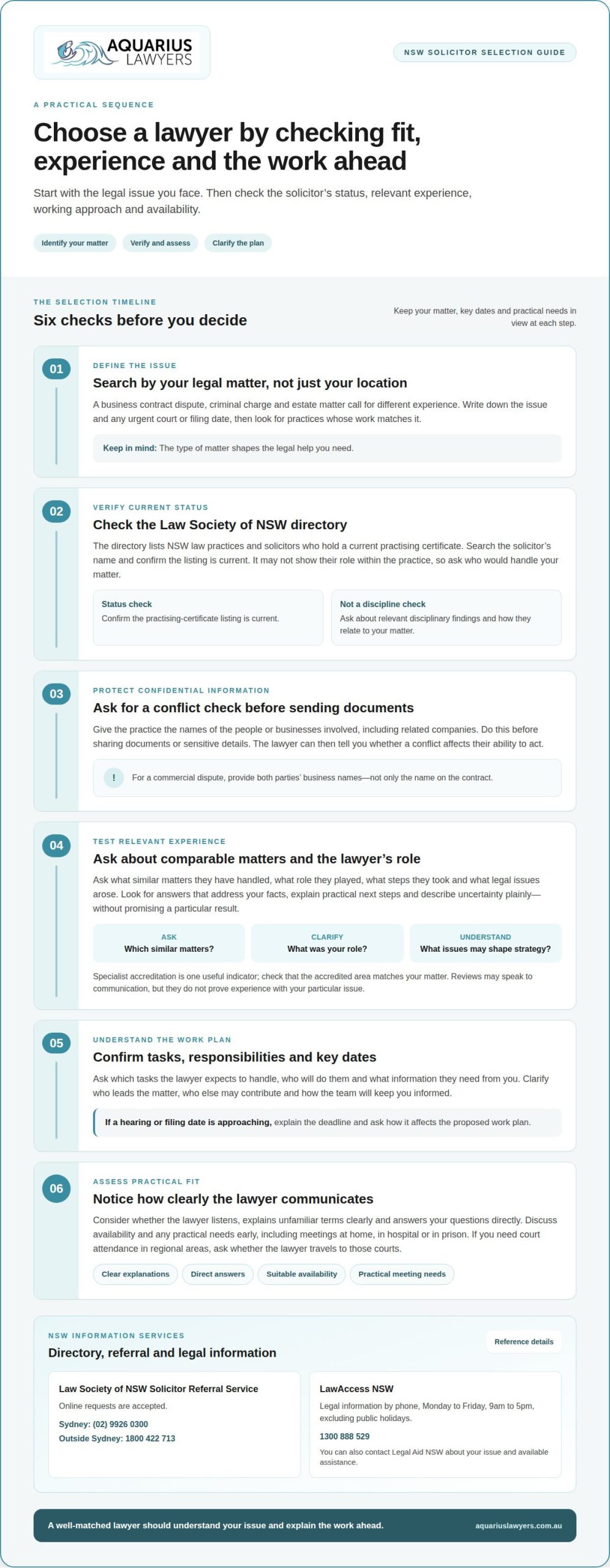
Start with the Law Society of NSW online directory. It lists NSW law practices and solicitors who hold a current practising certificate. Search by practice area and location to identify potential lawyers. If a solicitor doesn’t appear, contact the practice to clarify their current status. The directory may not show a solicitor’s role within a practice, so ask the firm who would handle your matter.
To check a lawyer’s practising certificate, search their name in the Law Society of NSW directory and confirm the listing is current. The directory isn’t a disciplinary-history check. Ask the lawyer about any relevant disciplinary findings and how they relate to your matter. Read Google reviews as one part of your assessment, not as a substitute for discussing your situation with the lawyer.
Search by the legal issue, not just “Sydney lawyer”. A business contract dispute, criminal charge and estate matter call for different experience. Write down the issue and any urgent court or filing date, then look for practices whose work matches it. If the directory doesn’t reveal a suitable solicitor, the Law Society of NSW Solicitor Referral Service accepts online requests. You can also call (02) 9926 0300 in Sydney or 1800 422 713 outside Sydney.
For legal information in NSW, contact LawAccess NSW on 1300 888 529, Monday to Friday, 9am to 5pm, excluding public holidays. You can also contact Legal Aid NSW about your legal issue and available assistance. If you’re considering a private lawyer, use the Law Society directory to find a solicitor, then discuss your matter and practical needs directly. In regional Sydney, ask whether the lawyer travels to the courts you may need to attend.
Before sharing confidential details, give the practice the names of the people or businesses involved, including related companies, and ask it to run a conflict check. Do this before sending documents or sensitive information. The lawyer can then tell you whether a conflict affects their ability to act. For example, in a commercial dispute, provide both parties’ business names, not just the name on the contract.
Comfort is practical, not cosmetic. Notice whether the lawyer listens, explains unfamiliar terms clearly and answers your questions directly. If you need meetings at home, in hospital or in prison, raise that early. If you want to change lawyers, tell your current lawyer directly and discuss the transition and any upcoming dates. For a complaint about a private lawyer, first try to resolve the problem with them; if it remains unresolved, contact the Office of the Legal Services Commissioner on (02) 9377 1800 in Sydney or 1800 242 958 outside Sydney.
2. Assessing a lawyer’s experience with similar cases
Compare Sydney lawyers by the matters they handle, their relevant specialisation and how clearly they explain their work. Reviews may offer insight into communication, but they don’t prove experience with your particular issue. Read case studies where available and look for examples relevant to your circumstances, such as a contract dispute involving similar terms or a criminal matter with comparable charges.
Focus on the type of work, not only how long a lawyer has practised. A lawyer may have broad experience but limited exposure to the specific issue affecting you. Ask what role they played in similar matters, what steps they took and what legal issues arose. Their answer should help you understand how they would assess your matter without promising a particular result.
The Law Society of NSW solicitor directory includes details of specialists accredited in NSW, including practitioners from other Australian states and territories. Treat accreditation as one useful indicator, then check whether the specialist’s area matches your matter. For example, a business owner dealing with a shareholder disagreement needs experience relevant to business disputes, not just a general commercial-law label.
Ask who will manage the work day to day. In a complex dispute, the person you meet first may not handle every document, negotiation or court appearance. Clarify who will lead the matter, who else may contribute and how the team will keep you informed. If a hearing or filing date is approaching, explain the deadline and ask how it affects the proposed work plan.
Reviews can reveal recurring themes, such as whether clients mention clear explanations or timely updates. Compare those comments with your own discussion with the lawyer. A positive review doesn’t prove experience with a case like yours, and a critical review may not explain the full circumstances. Look for specific, relevant details rather than relying on a star rating alone.
Use a short, consistent set of questions when comparing candidates: which similar matters have they handled, what was their role, and what issues could shape the strategy? Then note whether each answer addresses your facts, identifies practical next steps and explains uncertainty plainly. For example, an employment dispute and a criminal charge call for different legal knowledge, even if both involve the same workplace incident.
Consider whether the lawyer’s experience fits the legal and practical demands of your case. A matter involving several parties, extensive records or a court hearing may call for a different approach from a straightforward negotiation. Look for relevant experience, clear communication and a realistic explanation of the work ahead.
3. Comparing and understanding a lawyer’s approach
Before engaging a lawyer, clarify the work your matter may involve. Ask which tasks they expect to handle, who will do them and what information they need from you. A contract dispute, for example, may involve reviewing correspondence, assessing the agreement and communicating with the other party. Understanding the proposed work helps you decide whether the approach fits your priorities.
Ask the lawyer to explain the likely stages in plain English. Find out what decisions may arise and what information could affect the next step. For a business disagreement, relevant documents might include the contract, invoices and key correspondence. Knowing what the lawyer needs helps you prepare without sending unrelated material.
Clarify the scope of the proposed work. Ask whether the lawyer’s role includes communicating with the other party, preparing documents or appearing at a hearing. If a new issue arises, ask how any change to the work plan will be discussed and agreed. A clear scope helps prevent misunderstandings about responsibilities and keeps you involved in important decisions.
Discuss how you’ll work together. Ask who will be your main contact, how to provide instructions and how you’ll receive updates. If a court date is approaching, for example, establish how urgent developments will be communicated. Agreeing on practical arrangements early can help you respond promptly as your matter progresses.
Don’t choose a lawyer based only on online reviews. Reviews describe individual experiences, but don’t establish whether a lawyer’s approach suits your legal issue. Consider whether the lawyer listens, explains the proposed work clearly and answers your questions. A clear discussion about the work and communication plan gives you a more useful basis for deciding.
Before giving instructions, confirm what you need to provide and which decisions remain yours. If you’re responding to a claim, ask what documents will help the lawyer assess the other party’s position. Keep copies of key correspondence and note important dates. These practical steps help the lawyer understand your matter and keep your instructions organised.
Tell the lawyer promptly about new events as your matter progresses. A changed deadline, additional party or new document may affect the legal issues and work required. Ask the lawyer to explain the implications and discuss any proposed change in approach before proceeding. This helps keep the work aligned with your objectives.
Choose a lawyer whose proposed approach is clear, relevant and manageable for you. Make sure you understand what they’ll do, what they need from you and how decisions will be made. If any part of the plan is unclear, ask for an explanation before giving instructions. A shared understanding is a practical foundation for working through the matter.
4. Choosing between a civil and criminal lawyer
Start by identifying the legal problem. Civil law can involve relationships between individuals, government bodies and organisations, including relationships created by contracts. Criminal law covers alleged offences such as theft, property damage, traffic offences and white-collar offences. The type of matter, rather than simply the location or people involved, helps identify the right lawyer.
A contract dispute is generally a civil matter. For example, if a supplier and a business disagree about whether goods met the contract, the issue concerns their legal relationship and obligations. A lawyer handling civil disputes can assess the contract, the records and the outcome you’re seeking. Ask about experience with the specific issue, such as interpreting contract terms or resolving a business disagreement.
A criminal matter involves an allegation that a person committed an offence. If police charge you with theft, malicious damage or a traffic offence, look for a lawyer whose work includes criminal proceedings. The work may involve reviewing the allegations and evidence, advising you about the process and representing you in court. Tell the lawyer about any court date or bail issue at the outset.
Some events can raise both civil and criminal issues. Imagine a business dispute involving alleged property damage. One party might seek a civil remedy, while police investigate whether an offence occurred. These are different legal questions and may involve separate processes. Explain every part of the situation when seeking advice rather than assuming one lawyer’s experience covers both issues.
To choose between a civil and criminal lawyer, describe the immediate problem in one sentence: “I’m responding to a contract claim” or “I’ve been charged with a traffic offence.” Then ask whether the lawyer regularly handles that type of matter, what their role would involve and which deadlines need attention. If the facts span both categories, ask how each issue will be addressed and whether separate legal advice is needed.
Don’t choose based only on a broad label such as “litigation”. A civil dispute may turn on contract wording, correspondence or business records. A criminal case may require analysis of the alleged offence and prosecution evidence. Relevant experience means the lawyer can explain the issues that matter in your type of case, not just name a general practice area.
Consider the practical consequences of the matter, too. A criminal charge may raise concerns about licence impacts, while a civil business dispute may affect contractual relationships or commercial assets. Explain these consequences when discussing your goals. The lawyer’s advice should address both the legal issue and its practical effect on your work, business or daily life.
The key distinction is straightforward: a dispute about rights or obligations usually points to civil law, while an allegation of an offence points to criminal law. If your situation involves both, describe the full picture before deciding what legal experience you need.
Aquarius Lawyers
Aquarius Lawyers can be a suitable next step when your matter involves a business, marine, fisheries or aquaculture issue. Its practice areas include Commercial Law, Marine Law, Fisheries Law and Aquaculture Law. These areas may be relevant to commercial agreements, disputes affecting marine assets or questions involving an aquaculture licence.
When deciding how to choose a lawyer in Sydney, match the legal issue to the lawyer’s practice area and ask how they would approach your circumstances. If your matter falls within these areas, contact Aquarius Lawyers to discuss the legal support you need.
Take the next step with a clear plan
Your first conversation with a lawyer will be more useful if you arrive with a clear account of what happened and what you need resolved. Note the key dates, people or organisations involved, any immediate deadline and the outcome you’re seeking. Gather relevant documents, but don’t send sensitive material before the lawyer has considered any conflict of interest.
Choosing how to choose a lawyer in Sydney comes down to finding the right match for your legal issue and circumstances. If your matter relates to marine, fisheries or aquaculture law, Aquarius Lawyers works in these areas. A focused discussion can help you explain the issue and decide whether its legal services fit your needs.
Take a practical next step: contact Aquarius Lawyers to discuss your matter. A clear starting point can help you move forward with greater confidence.
Frequently Asked Questions
Can’t find a solicitor?
Use the Law Society of NSW Solicitor Referral Service if your search hasn’t identified a suitable solicitor. It accepts online referral requests. Briefly describe your legal issue and mention any court date or filing deadline so the request reflects your immediate needs. You can also broaden your search terms to include the specific issue, such as a contract dispute or criminal charge.
How much experience do you have in this area of work?
Aquarius Lawyers has more than 20 years of legal and business experience, with a specialist focus on marine, fisheries and aquaculture law. For your matter, ask the lawyer to explain their relevant practice experience and role in similar work. The key is whether they can connect that experience to your legal issue and explain the practical issues they would assess, rather than relying on a broad tenure claim alone.
How will my matter be managed?
Ask who will lead your matter, who will be your main contact and how you’ll receive updates. You can also ask how the practice records instructions and handles new documents or urgent developments. If you receive correspondence from the other party, for example, find out where to send it and whether you should respond yourself. Clear responsibilities help prevent missed information and duplicated instructions.
What type of lawyer do I need for my legal issue in Sydney?
Choose a lawyer based on the legal issue, not just the people involved. A disagreement about an unpaid invoice is generally civil, while a police charge for alleged theft is criminal. If an incident leads to both a compensation claim and a criminal investigation, explain both processes when seeking advice. They raise different legal questions, and one shouldn’t be mistaken for the other.
What questions should I ask a lawyer before hiring them?
Ask what the first practical step is, what information the lawyer needs from you and what decisions may arise early. Clarify how you’ll approve significant work and how the lawyer will explain your options in plain English. If you’re responding to a claim, for example, ask what documents would help assess the other party’s position. The answers should give you a clear picture of how you’ll work together.
Disclaimer
Please note that legal rules change and this is not a substitute nor construed as legal advice. It is general information only.