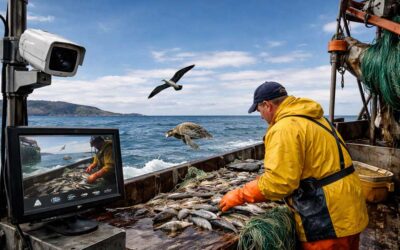

Indigenous corporations are quietly reshaping Australia’s seafood industry – from small coastal fishing enterprises to sophisticated aquaculture and processing ventures. They are not just commercial players, but custodians of Sea Country, cultural knowledge and community wellbeing.
This article looks at how many Indigenous corporations we’re talking about, the key legal risks they need to manage, what “good” governance looks like under the CATSI Act, and how to stay on top of annual reporting so growth isn’t derailed by compliance problems.
How many Indigenous corporations are active in seafood?
There is no single published statistic that isolates “seafood” as a category for Aboriginal and Torres Strait Islander corporations.
What we do know:
- As at 30 June 2024 there were 3,473 Aboriginal and Torres Strait Islander corporations registered under the Corporations (Aboriginal and Torres Strait Islander) Act 2006 (CATSI Act).(Registrar of Indigenous Corporations)
- These corporations span land and sea management, health, housing, community services, cultural enterprises and increasingly, fisheries and aquaculture.(NIAA)
- A growing number are directly involved in or adjacent to seafood:
- Aboriginal Sea Company, an Indigenous-controlled national seafood enterprise, works with communities and industry to create First Nations seafood jobs and supply chains.(Skills Insight)
- Remote coastal corporations (for example in Maningrida, Arnhem Land) have piloted and operated Aboriginal-owned seafood enterprises and retail businesses, with new research examining how to better support their models.(Open Research Repository)
- Indigenous-owned businesses such as Ithangee Fisheries in the Torres Strait are building commercial rock lobster operations that pair local knowledge with premium export markets.(esparq.com.au)
On a reasonable reading of available case studies, funding programs and regional strategies, there are dozens of Indigenous corporations with a primary seafood focus, and many more whose broader economic activities include commercial fishing, aquaculture, seafood processing, tourism and ranger-based sea management.
For directors, the key takeaway isn’t the exact number—it’s that Indigenous corporations are now clearly “in the market” in seafood, often in joint ventures or grant-funded pilots, and must meet the same (and sometimes higher) governance and compliance expectations as any other industry player.
The legal risk landscape for Indigenous seafood corporations
Because seafood businesses sit at the intersection of corporations law, resource management, native title and cultural responsibilities, the risk profile is more crowded than for a “vanilla” service organisation. Common legal risks include:
1. Governance and director duties
Under the CATSI Act, directors and officers owe duties similar to those in the Corporations Act – to act with care and diligence, in good faith in the best interests of the corporation, for a proper purpose, and to avoid improper use of position or information.(Federal Register of Legislation)
Risks to manage:
- Inexperienced boards approving major fishing or aquaculture ventures without understanding cashflow, quota risk or contractual obligations.
- Conflicts of interest, especially where directors (or their families) also hold licences, operate boats, or supply services to the corporation.
- Weak documentation of decisions, making it hard to show directors discharged their duties.
2. Licensing, quota and fisheries compliance
Seafood operations are heavily regulated under state/territory fisheries laws and Commonwealth frameworks. For Indigenous corporations, this can include:
- Commercial fishing licences and quota shares
- Aquaculture permits and environmental approvals
- Conditions tied to grants, such as the Aboriginal Fishing Trust Fund in NSW, which funds Aboriginal corporations pursuing fishing and aquaculture projects.(NSW Department of Primary Industries)
Failure to comply can result in fines, suspension or loss of licences – which in turn can jeopardise grant funding, joint ventures and community trust.
3. Native title and Sea Country rights
Where activity occurs on Sea Country, the corporation may be:
- a Registered Native Title Body Corporate (RNTBC/PBC) managing native title rights, or
- working closely with a PBC, land council or Indigenous Land and Sea Corporation (ILSC).(Wikipedia)
Risks to manage:
- Aligning commercial activity with native title determinations, ILUAs and cultural protocols
- Ensuring free, prior and informed consent from the relevant Traditional Owner groups
- Managing complex internal politics if there are competing claims over sea resources.
4. Workplace, safety and vessel risks
Fishing and aquaculture are high-risk workplaces. Corporations must manage:
- WHS duties for staff and crew
- Vessel safety, crewing and maritime compliance
- Fatigue, remote-work risks and cultural obligations (for example, time away for ceremony) in rostering.
5. Financial, funding and contract risk
Indigenous seafood corporations often rely on a patchwork of income:
- commercial catch or product sales
- government grants and loans (for example, programs specifically supporting First Nations fisheries businesses)(National Indigenous Times)
- impact investors and joint venture partners.
Key risks:
- Cashflow gaps between seasons or while building stock (e.g. in aquaculture)
- Funding milestones not met due to weather, stock failure or regulatory delays
- Joint venture agreements that erode long-term community control over licenses or IP.
6. Record-keeping and reporting risk
The CATSI Act requires proper books and records, including financial records and corporate registers; poor record-keeping is a common driver of ORIC complaints and interventions.(Indigenous Corporations Registrar)
For seafood corporations, this intersects with:
- Catch and effort logs
- Environmental and biosecurity reporting
- Contract deliverables (e.g. training and employment targets).
Governance structures that actually reduce risk
Strong governance isn’t about making corporations “more bureaucratic”; it’s about keeping directors out of trouble and keeping the doors open. For an Indigenous seafood corporation, a practical governance framework typically includes:
1. A clear, culturally informed rule book
Under the CATSI Act, every corporation must have internal governance rules (a “rule book”) that comply with the Act and its regulations.(Indigenous Corporations Registrar)
For seafood corporations, the rule book should:
- Spell out membership and voting in a way that reflects cultural authority and decision-making, while still being legally robust.
- Clarify who elects and removes directors, term limits, and what happens if directors miss meetings.
- Provide specific rules around conflict of interest, related-party benefits and use of corporation assets (boats, vehicles, infrastructure).
- Build in an obligation to respect cultural protocols and Sea Country responsibilities in decision-making – for example, requiring consultation with elders or cultural advisers on environmental impacts.
2. A fit-for-purpose board
The CATSI Act sets minimum director numbers based on membership size, with flexibility to have more in the rule book.(Indigenous Corporations Registrar)
For seafood industry risk, boards should aim for:
- Skills diversity – a mix of cultural leaders, people with fisheries or aquaculture expertise, finance/ accounting skills and legal or governance understanding.
- Independent voices – consider one or two independent directors (with clear accountability to members) where projects are large or complex.
- Board training – formal induction and ongoing governance training, including ORIC director duty workshops and industry-specific compliance briefings.
3. Committees and delegated authority
As operations grow, it’s unrealistic for the full board to manage every detail. Common risk-reducing structures include:
- Audit & Risk Committee – overseeing financial reporting, budgets, risk register and audit findings.
- Sea Country / Fisheries Committee – providing community and cultural input on fishing practices, environmental issues, and research partnerships.
- Clear delegations policy – setting out who can sign contracts, approve expenditure, or commit to new projects, and where board approval is mandatory.
4. A living risk register
A simple, regularly updated risk register can be one of the most powerful governance tools. For a seafood corporation, it should cover:
- Regulatory risks (licences, quotas, permit renewals)
- Financial risks (price fluctuations, debt, reliance on grants)
- Operational risks (weather, disease, equipment failure)
- People and culture risks (board succession, community conflict, staff retention).
The board should review this at least quarterly and link it directly to actions – new policies, training, insurance or contract changes.
Annual reporting: staying compliant under the CATSI Act
Under the CATSI Act, all Aboriginal and Torres Strait Islander corporations must prepare and lodge at least a general report every financial year, and give it to members as well as ORIC.(Indigenous Corporations Registrar)
This general report typically covers:
- Contact and governance details
- Membership and director information
- Key activities and outcomes
- Basic financial and staffing information.
Size and income drive the extra reports which depends on:
- your corporation’s registered size – small, medium or large; and
- its consolidated gross operating income (CGOI) for the period.(Indigenous Corporations Registrar)
In broad terms (not legal advice and noting thresholds are being reviewed):
- Small corporations – lodge a general report; may not have to lodge a full financial report unless income crosses certain thresholds.
- Medium and large corporations – must also lodge financial reports (prepared under Australian Accounting Standards), and in many cases an audit report and directors’ report.(Indigenous Corporations Registrar)
Directors need to check the latest ORIC guidance each year, as thresholds and requirements can shift over time.
Charities and dual regulation
Many Indigenous seafood corporations are also registered charities. The Australian Charities and Not-for-profits Commission (ACNC) recognises that corporations regulated by ORIC generally meet their ACNC financial reporting obligations through ORIC’s regime, avoiding duplicate reporting.(acnc.gov.au)
However, directors must still ensure:
- charity details on the ACNC register stay up to date; and
- governing documents and activities continue to align with the stated charitable purpose.
Practical steps to “manage yourself” around annual reporting
To avoid last-minute scrambles and compliance risk, seafood corporations should:
1.Map the reporting calendar
- AGM and reporting due dates under the CATSI Act
- Grant acquittal deadlines
- Audits, bank reports, major contract milestones.
2.Align bookkeeping with reporting needs
- Use accounting software that can separate project, grant and commercial income/costs.
- Keep complete financial records – invoices, catch revenue, payroll, asset registers, tax and GST records – in a single, secure system.(Indigenous Corporations Registrar)
1.Engage the right advisors early
- Accountants and auditors who understand Indigenous corporations and the seafood sector
- Lawyers who can link reporting to obligations in your rule book, funding agreements and joint ventures.
2. Use ORIC tools
- myCorp for online lodgement and forms(mycorp.oric.gov.au)
- Fact sheets and templates on director duties, record-keeping and reporting.
3. Treat reporting as a governance opportunity, not just a chore
- Use the annual report to tell the story: economic outcomes, jobs, language and culture, Sea Country protection and partnership building. This helps with future funding, community support and industry relationships.
Pulling it together
Indigenous corporations in the seafood industry sit at a powerful junction: commercial activity, cultural continuity and sea rights. The rewards can be significant – but so are the governance and legal expectations.
Key messages for boards and managers are:
- You are part of a growing, visible sector: funders, regulators and industry partners are watching.
- The CATSI Act gives you a tailored corporate framework – use it well, especially your rule book, board composition and record-keeping.(Indigenous Corporations Registrar)
- Annual reporting is not optional, and the obligations become more intensive as your income and scale grow.
- Good governance – culturally grounded, but technically competent – is your best risk-mitigation tool.
With the right structures in place, Indigenous seafood corporations can protect directors, honour Sea Country and build enduring, community-controlled seafood economies.