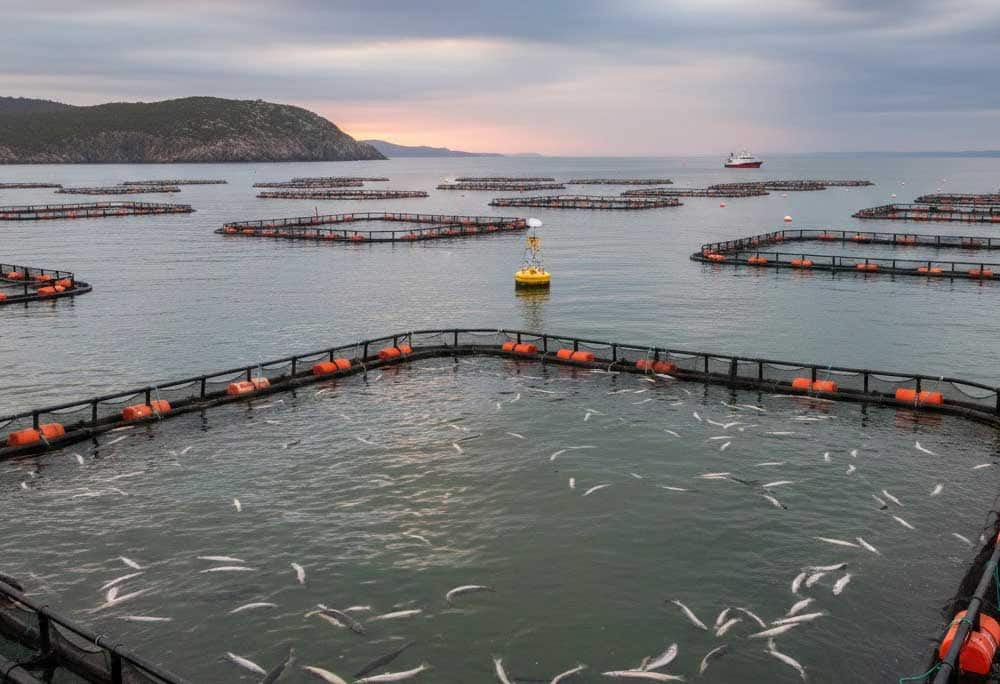
Climate-driven mass mortalities in Tasmanian salmon aquaculture are no longer a “once in a decade” anomaly. Warmer waters, lower dissolved oxygen, shifting currents, and more frequent marine heatwaves can push farm systems past biological limits fast—sometimes within days. When that happens, the legal questions arrive just as quickly: Who is responsible, what standards apply, what must be reported (and when), and what enforcement pathways actually work when the trigger is “climate” but the impacts are local, visible, and commercially significant?
This article looks at the regulatory gaps exposed by large-scale salmon deaths in Tasmanian waters and proposes practical frameworks for liability and enforcement that better match the realities of climate-era aquaculture.
1.What “climate-driven” mortality means in legal terms
A recurring challenge is that “climate-driven” can sound like an “act of nature” defence, even when there are controllable risk factors in play (stocking density, site selection, feeding regimes, oxygenation capacity, contingency planning, monitoring, and response time).
- Climate factors commonly implicated
- Marine heatwaves and prolonged elevated sea temperatures
- Low dissolved oxygen events (often worsened by stratification)
- Harmful algal blooms and pathogens proliferating in warmer conditions
- Storm-driven mixing events and sudden water-quality swings
- Why the label matters legally
- It can influence how regulators frame causation
- It can shape public expectations of accountability
- It can blur the line between “unavoidable” events and preventable harm
- Key legal takeaway
- “Climate” can be a contributing cause without being a complete answer to responsibility. In most compliance regimes, the question becomes whether the operator took reasonably available measures to prevent, minimise, and respond.
2.The regulatory architecture in Tasmania: multiple levers, uneven fit
Tasmanian salmon farming is regulated through a layered structure: environmental approvals, marine and coastal planning permissions, fisheries/aquaculture licences, animal welfare expectations, and pollution control frameworks. The problem isn’t that there are no laws—it’s that the tools don’t always align with sudden, climate-driven mortality events.
- Typical regulatory touchpoints
- Environmental approvals and licence conditions (including water quality, benthic impacts, and monitoring)
- Biosecurity and disease management obligations
- Pollution and waste disposal controls (including mortalities handling)
- Planning and marine management instruments governing site suitability and cumulative impacts
- Where the fit becomes strained in mortality events
- The legal “trigger” may be written for steady-state operations, not acute crises
- Reporting thresholds may not reflect the speed and scale of mortality
- Enforcement pathways may be slower than the harm timeline
- Community impacts (odour, debris, wildlife interactions) may sit awkwardly across agencies
- Practical outcome
-
- The response can look fragmented, with separate agencies addressing pieces of the event rather than a single end-to-end incident management framework.
3.The core regulatory gaps exposed by large-scale mortalities
Mass mortality events stress-test the system. They reveal where compliance settings assume normal conditions, not climate volatility.
- Gap A: Event definition and clear escalation pathways
- Many frameworks lack a crisp definition of “mass mortality incident” tied to mandatory escalation steps
- Uncertainty about when an issue becomes a “notifiable incident” can delay coordinated response
- Gap B: Monitoring standards that lag climate reality
- Monitoring regimes may emphasise periodic sampling, not real-time risk detection
- Climate stress indicators (temperature persistence, oxygen minima, stratification risk) may be underweighted
- Baselines may become outdated as climate trends shift
- Gap C: Cumulative impact and carrying capacity settings
- Even if each farm complies individually, cumulative biomass in a region can increase systemic risk
- Carrying capacity models may not be routinely recalibrated for warming trends
- Adaptive management triggers may be too weak or too discretionary
- Gap D: Transparent reporting and community confidence
- Public confidence erodes when mortality numbers, response actions, and timelines are unclear
- Reporting obligations may not include consistent public-facing disclosure (or standard formats)
- Gap E: Waste and pollution incident framing
- Large volumes of dead fish can create pollution-like impacts even where “pollution” is not the operator’s intent
- The line between “operational issue” and “pollution incident” can be blurry—especially where odour, debris, or water-quality impacts follow
4.Liability pathways: where legal exposure can arise
When mass mortalities occur, liability can attach in multiple ways, depending on facts, approvals, and impacts.
- Regulatory liability (administrative/civil/penalty)
- Breach of licence conditions (monitoring, stocking limits, response requirements)
- Failure to notify regulators within required timeframes
- Non-compliance with environmental quality objectives or discharge controls
- Inadequate contingency measures where conditions require them
- Environmental harm and pollution-style exposure
- Improper disposal, leakage, or secondary impacts (water quality degradation, debris, odour nuisance)
- Failure to prevent foreseeable environmental harm where prevention measures were available
- Potential negligence and duty of care arguments (context-specific)
- Claims may arise if third parties suffer demonstrable loss (e.g., adjacent users) and foreseeability is established
- The existence of an “industry standard” response plan, or warnings from prior events, can shape what is “reasonable”
- Misleading conduct / disclosure risk (corporate-facing)
- If public statements, market disclosures, or stakeholder communications are inconsistent with known facts
- If “climate event” framing is used without acknowledging controllable contributors
- Contractual exposure across the supply chain
- Supply contracts may be tested on force majeure, quality specs, delivery failures, and mitigation duties
- Insurance disputes may hinge on definitions, exclusions, and compliance with conditions precedent
5.Causation in a climate context: moving from “why” to “what was reasonably done”
Regulators and courts often focus less on proving a single cause and more on whether the operator met legal and reasonable-management obligations.
- Why single-cause narratives fail
- Mortality events typically involve interacting stressors (heat + oxygen + disease + density + response lag)
- Climate may raise the baseline risk, but operational settings determine the margin for error
- The practical legal test that often emerges
- What did the operator know (or should have known) from forecasts, monitoring, and prior events?
- What controls were available (stocking reductions, harvesting, oxygenation, relocation, feeding adjustments)?
- How quickly did the operator act, and were actions documented?
- Were regulators notified promptly and accurately?
- Documentation as a liability pivot
- Real-time logs, sensor records, decision timelines, and internal escalation notes can become decisive.
6.What a stronger enforcement framework could look like
Effective enforcement in climate-era aquaculture needs to be both predictable and adaptive: clear triggers, rapid response, and consequences proportionate to harm and preventability.
- Framework 1: A “Mass Mortality Incident” trigger with mandatory steps
- Define incident thresholds (e.g., mortality rate over time, biomass affected, disposal volume, or welfare indicators)
- Mandatory immediate notification and incident management plan activation
- Clear agency lead and coordination rules
- Minimum public reporting requirements (timelines, quantities, actions taken)
- Framework 2: Climate-adjusted licence conditions
- Temperature and dissolved oxygen “action thresholds” tied to required operational changes
- Rolling biomass caps responsive to seasonal forecasts and marine heatwave outlooks
- Mandatory contingency capacity (e.g., oxygenation, harvest logistics, storage/disposal arrangements)
- Real-time monitoring and auditability standards
- Framework 3: Adaptive carrying capacity and cumulative impact governance
- Regular recalibration of models using recent climate data
- Transparent trigger points for reduced stocking across regions
- Independent review mechanisms after major events
- Framework 4: Enforcement that recognises foreseeability
- Escalating consequences where:
- prior warnings existed,
- repeat events occur, or
- mitigation measures were available but not used
- Use of enforceable undertakings focused on system improvements, not only penalties
- Stronger audit powers for data integrity (sensors, calibration, reporting)
- Escalating consequences where:
7.A practical “liability matrix” for climate-era salmon farming
Operators can anticipate how regulators are likely to assess an event by mapping obligations to “control points.”
- Control point: Risk forecasting and preparedness
- What forecasts were reviewed?
- What seasonal risk plan existed?
- What pre-emptive measures were implemented?
- Control point: Monitoring and early warning
- Were sensors adequate and maintained?
- Were alarm thresholds set appropriately?
- Was there 24/7 escalation for acute risk windows?
- Control point: Stocking and operational decisions
- Was stocking density appropriate for forecast conditions?
- Were feeding and husbandry adjusted as conditions deteriorated?
- Control point: Response speed and effectiveness
- Did response actions occur quickly enough to reduce harm?
- Were emergency harvest and welfare protocols workable and used?
- Control point: Reporting, transparency, and disposal controls
- Were regulators notified on time?
- Were quantities and impacts accurately recorded?
- Was disposal lawful, secure, and environmentally protective?
8.What seafood businesses should do now: legal risk minimisation steps
The best time to manage liability is before the heatwave arrives.
- Strengthen incident readiness
- Create a “mass mortality playbook” aligned with approvals and reporting duties
- Pre-negotiate disposal logistics and contingency suppliers
- Conduct simulation exercises ahead of summer risk periods
- Upgrade monitoring and decision governance
- Ensure real-time temperature/oxygen monitoring with auditable records
- Set action thresholds that trigger automatic operational responses
- Document decision-making clearly (who decided what, when, and why)
- Revisit contracts and insurance
- Stress-test force majeure and mitigation clauses
- Confirm insurance coverage aligns with compliance obligations and incident definitions
- Build supplier/customer communication protocols into contracts
- Engage early with regulators and communities
- Establish transparent disclosure formats and liaison pathways
- Participate in cumulative impact consultations and policy reviews
- Treat trust as a compliance asset, not only a PR issue
9.Conclusion: climate volatility requires legal clarity, not ambiguity
Mass mortalities in Tasmanian salmon aquaculture expose an uncomfortable truth: the regulatory system is often calibrated for gradual impacts, while climate change delivers shocks. The path forward is not to treat these events as unavoidable “natural” disasters, but to embed climate realism into approvals, monitoring, incident triggers, and enforcement.
- A climate-fit framework should:
- Define “mass mortality” clearly and require rapid escalation
- Make licences adaptive to climate risk thresholds
- Account for cumulative biomass and carrying capacity
- Incentivise prevention, transparency, and verifiable response actions
For operators, the strongest legal position is built on anticipation, auditable monitoring, rapid welfare-forward response, and transparent communication. For regulators, legitimacy and effectiveness will increasingly depend on whether the rules can respond at the speed climate events now demand.