
Introduction
If you have been charged with a criminal offence in New South Wales, one of the first questions you may have is, “Which court will hear my case?”
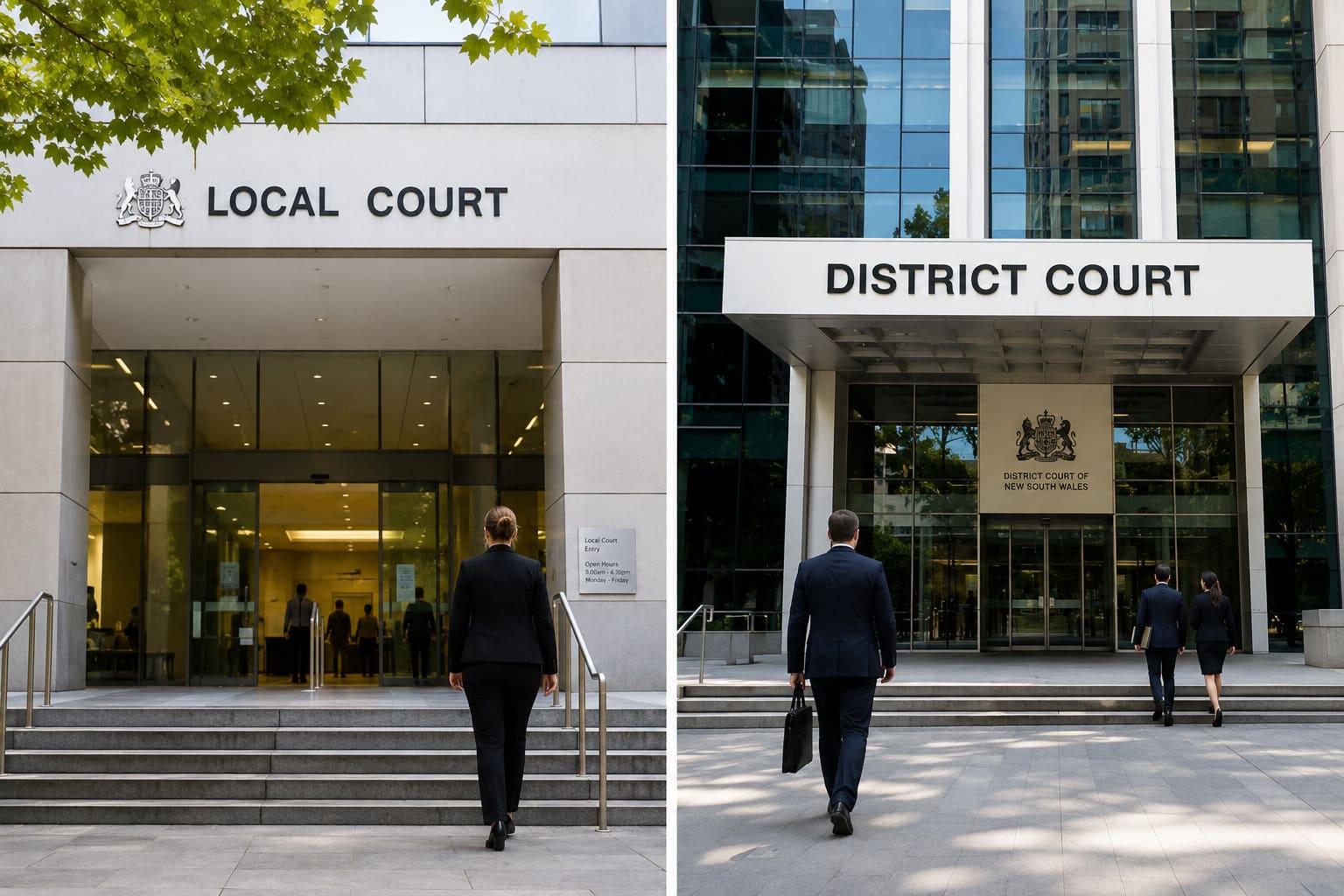
Many people have heard of the Local Court and the District Court, but few understand the differences between them. The court in which your matter is heard can affect everything from the procedures that apply to the seriousness of the penalties available and whether your case will be decided by a magistrate or a jury.
Understanding the court process can remove much of the uncertainty associated with criminal proceedings and help you make informed decisions about your case.
This guide explains the roles of the Local Court and District Court in NSW, the types of matters each court hears, how criminal cases move through the system and what you can expect if you find yourself facing criminal charges.
Understanding the NSW Court Hierarchy
The New South Wales court system is made up of several different courts, each with its own jurisdiction.
In criminal matters, the most common courts are:
- Local Court.
- District Court.
- Supreme Court.
Most criminal cases begin in the Local Court, even if they eventually proceed to a higher court.
Understanding the role of each court helps explain why your matter may move through different stages before it is finalised.
What Is the Local Court?
The Local Court is the busiest court in New South Wales.
It deals with the overwhelming majority of criminal matters and is often the first point of contact for people charged with an offence.
Local Courts are located throughout metropolitan and regional NSW, making them accessible to people across the State.
A Local Court matter is generally heard by a Magistrate rather than a jury.
What Types of Criminal Matters Does the Local Court Hear?
The Local Court has jurisdiction to hear a wide range of criminal offences.
These commonly include:
- Drink driving offences.
- Drug possession.
- Common assault.
- Apprehended Violence Orders (AVOs).
- Traffic offences.
- Offensive behaviour.
- Property damage.
- Minor theft.
- Breach of court orders.
Many of these matters are finalised entirely within the Local Court.
Serious Criminal Matters Begin in the Local Court
Even very serious criminal charges usually commence in the Local Court.
These may include allegations such as:
- Drug supply.
- Sexual offences.
- Armed robbery.
- Serious assault.
- Break and enter.
- Fraud.
- Firearms offences.
Although the Local Court begins the process, it does not conduct the final trial for most indictable offences.
Instead, after preliminary procedures are completed, the matter is committed to the District Court or, in the most serious cases, the Supreme Court.
What Is the District Court?
The District Court hears more serious criminal matters than the Local Court.
Unlike Local Court proceedings, criminal trials in the District Court are generally conducted before:
- A Judge.
- A Jury of Twelve Members of the Public (unless a judge-alone trial is ordered).
The District Court also hears appeals from decisions made in the Local Court.
What Types of Matters Are Heard in the District Court?
The District Court commonly deals with offences including:
- Drug supply.
- Sexual assault.
- Serious assault.
- Robbery.
- Break and enter.
- Fraud.
- Firearms offences.
- Large-scale dishonesty offences.
- Commercial drug offences.
These matters often involve more complex evidence and longer hearings than Local Court proceedings.
Who Decides the Case?
One of the biggest differences between the courts is who determines the outcome.
In the Local Court:
- A Magistrate decides both guilt and sentence.
In the District Court:
- A Jury generally decides whether the accused is guilty.
- The Judge determines the appropriate sentence if there is a conviction.
This distinction significantly changes how criminal cases are prepared and presented.
Do All District Court Matters Have a Jury?
Not always.
Although jury trials are common in the District Court, some matters proceed as judge-alone trials where permitted by law.
Whether a judge-alone trial is appropriate depends on the particular circumstances and legislative requirements.
How Does a Criminal Matter Move to the District Court?
For serious offences, the process usually begins in the Local Court.
The prosecution serves the Brief of Evidence.
The defence reviews that material.
The Local Court then conducts procedural hearings before determining whether the matter should be committed to the District Court.
Once committed, the District Court manages the matter through further directions hearings before any trial or sentence.
The Role of the Brief of Evidence
The Brief of Evidence is one of the most important documents in any criminal prosecution.
It commonly contains:
- Witness statements.
- CCTV footage.
- Police body-worn camera recordings.
- Forensic reports.
- Photographs.
- Medical reports.
- Expert evidence.
Your lawyer carefully reviews this material before advising whether a guilty or not guilty plea is appropriate.
What Happens at a Local Court Mention?
Many people expect their first court appearance to be a trial.
In reality, the first appearance is usually administrative.
The court may:
- Confirm legal representation.
- Set future dates.
- Order service of evidence.
- Discuss negotiations.
- Grant adjournments where appropriate.
Many matters require several appearances before being finalised.
Sentencing Powers
Another important difference between the courts involves sentencing powers.
The Local Court has limits on the maximum penalties it can impose.
The District Court has significantly broader sentencing powers and deals with offences carrying much higher maximum penalties.
The seriousness of the alleged offending often determines which court ultimately hears the matter.
Appeals from the Local Court
If a person believes the Local Court reached the wrong decision, they may have appeal rights.
Depending upon the circumstances, appeals may relate to:
- Conviction.
- Sentence.
- Legal errors.
- Procedural fairness.
Many appeals from the Local Court are heard by the District Court.
Strict time limits generally apply, making early legal advice essential.
Do Civil Cases Also Go to These Courts?
Yes.
Although this article focuses on criminal law, both courts also deal with certain civil matters.
The Local Court hears smaller civil disputes.
The District Court hears higher-value civil litigation, including commercial disputes and personal injury claims within its monetary jurisdiction.
Different procedural rules apply to civil matters.
Why Legal Representation Matters
Every court has its own rules, procedures and expectations.
An experienced criminal defence lawyer can assist by:
- Explaining the court process.
- Reviewing prosecution evidence.
- Advising on plea options.
- Negotiating with prosecutors.
- Preparing sentencing material.
- Representing you during hearings.
- Protecting your legal rights throughout the proceedings.
Good preparation often begins well before the first substantive hearing.
Common Misunderstandings About NSW Courts
Many people believe:
- Every criminal matter goes before a jury.
- Serious charges immediately start in the District Court.
- A first court appearance determines guilt.
- Police decide the outcome of criminal cases.
None of these assumptions are correct.
Understanding how the court system operates helps reduce unnecessary anxiety and allows informed decisions to be made throughout the proceedings.
Preparing for Court
Whether your matter remains in the Local Court or proceeds to the District Court, preparation is essential.
This may involve:
- Reviewing the evidence.
- Gathering supporting documents.
- Obtaining character references.
- Preparing medical material.
- Engaging expert witnesses where necessary.
- Understanding court procedures.
The earlier preparation begins, the stronger your position is likely to be.
Every Criminal Matter Is Different
No two criminal cases follow exactly the same path.
Some matters are resolved quickly in the Local Court.
Others involve complex legal issues, multiple hearings and District Court trials.
The seriousness of the allegations, the available evidence and your individual circumstances all influence how the proceedings unfold.
For this reason, obtaining personalised legal advice is always preferable to relying on general information alone.
Speak to Aquarius Lawyers
If you have been charged with a criminal offence and are unsure whether your matter will be heard in the Local Court or District Court, Aquarius Lawyers can help.
Our experienced criminal defence team represents clients throughout Australia in criminal proceedings ranging from traffic offences and AVOs to serious indictable offences. We explain every stage of the court process, provide strategic advice tailored to your circumstances and work to achieve the best possible outcome.
Whether your matter remains in the Local Court or proceeds to the District Court, Aquarius Lawyers will stand beside you every step of the way.