
A template alone won’t protect your online store if its terms don’t reflect how you sell. Drafting terms and conditions for e-commerce means setting clear rules for purchases, including product information, prices, payment, delivery, returns and what happens when an order goes wrong. In Australia, your terms must comply with the Australian Consumer Law (ACL), and they can’t exclude consumer guarantees.
It’s reasonable to want a ready-made starting point. But terms copied from another business may not match your products, checkout process or customer commitments. Unclear wording can leave both you and your customers unsure about what applies.
This guide explains what e-commerce terms and conditions cover and how to adapt a template to your business. You’ll also learn how to address business-to-consumer (B2C) sales, returns and refunds, customer acceptance, privacy and fair terms, so your checkout sets clear expectations without overstating what your terms can do.
Key Takeaways
- Set out the purchase essentials clearly, including what you sell, how customers pay and how delivery works.
- Adapt any template to your products, checkout process and business practices rather than copying another seller’s terms.
- Make your terms easy to find and give customers a clear way to accept them before completing a purchase.
- Explain your returns process while keeping Australian Consumer Law protections and consumer guarantees in view.
- Review how your terms handle customer data, disputes and changes to your business before publishing them.
What are eCommerce Terms and Conditions?
For an Australian online store, terms and conditions set the rules for buying products or services. They explain what customers can expect and how your business handles payment, delivery, returns and problems.
Build the clauses around your actual checkout process. Each step below turns a customer-facing promise into a clear, practical rule.
-
Set out prices and payment methods
List the payment methods your checkout accepts, such as cards or other available online options. State when customers are charged and whether displayed prices include delivery or other charges. Make the total payable clear before customers place an order.
Check that product pages, promotions and checkout display consistent prices. If a product has options, explain how the selected size, quantity or configuration affects the price. Avoid wording that gives you unrestricted power to change the price of an accepted order.
-
Explain delivery and late-payment terms
Set out the delivery methods, expected delivery times, charges and any restrictions that apply to your products. For merchants shipping physical goods that require tailored transit protection, collaborating with providers like Packaging For Industry (PFI) can help ensure products arrive safely and minimise dispute risks. If some products can only be sent to certain locations, say so before checkout. Make sure the delivery clause matches the options customers can actually select.
For orders invoiced after purchase, state when payment is due and what happens if it’s late. Explain the steps you may take, such as contacting the customer about an overdue amount or pausing further supply. Don’t promise a delivery date your dispatch process can’t support.
-
Address promotions, refunds and payment issues
Set out promotion conditions, including eligibility, expiry and any limits on combining offers. Explain how customers request a refund or return, what information you need and how you handle returned products. Your terms must not remove consumer guarantees under Australian Consumer Law.
Explain what happens if a payment transaction fails, including whether you’ll notify the customer and how you’ll handle an unpaid order. A chargeback is a payment dispute raised through the customer’s payment provider. State how you respond to a disputed transaction and which order records you may use.
-
Review online terms for fairness
Check each clause for claims that could mislead customers, including statements about product features, delivery or refunds. Australian businesses may face penalties for false, misleading or deceptive claims. Protections against unfair terms also apply to standard-form contracts offered on a take-it-or-leave-it basis to individual customers or other small businesses.
Remove broad clauses that let you cancel orders or change prices without a clear basis. Make unusual restrictions visible before checkout and explain their effect in plain English. Clear terms help customers understand the deal, but they cannot override Australian Consumer Law.
Using and customising a terms and conditions template
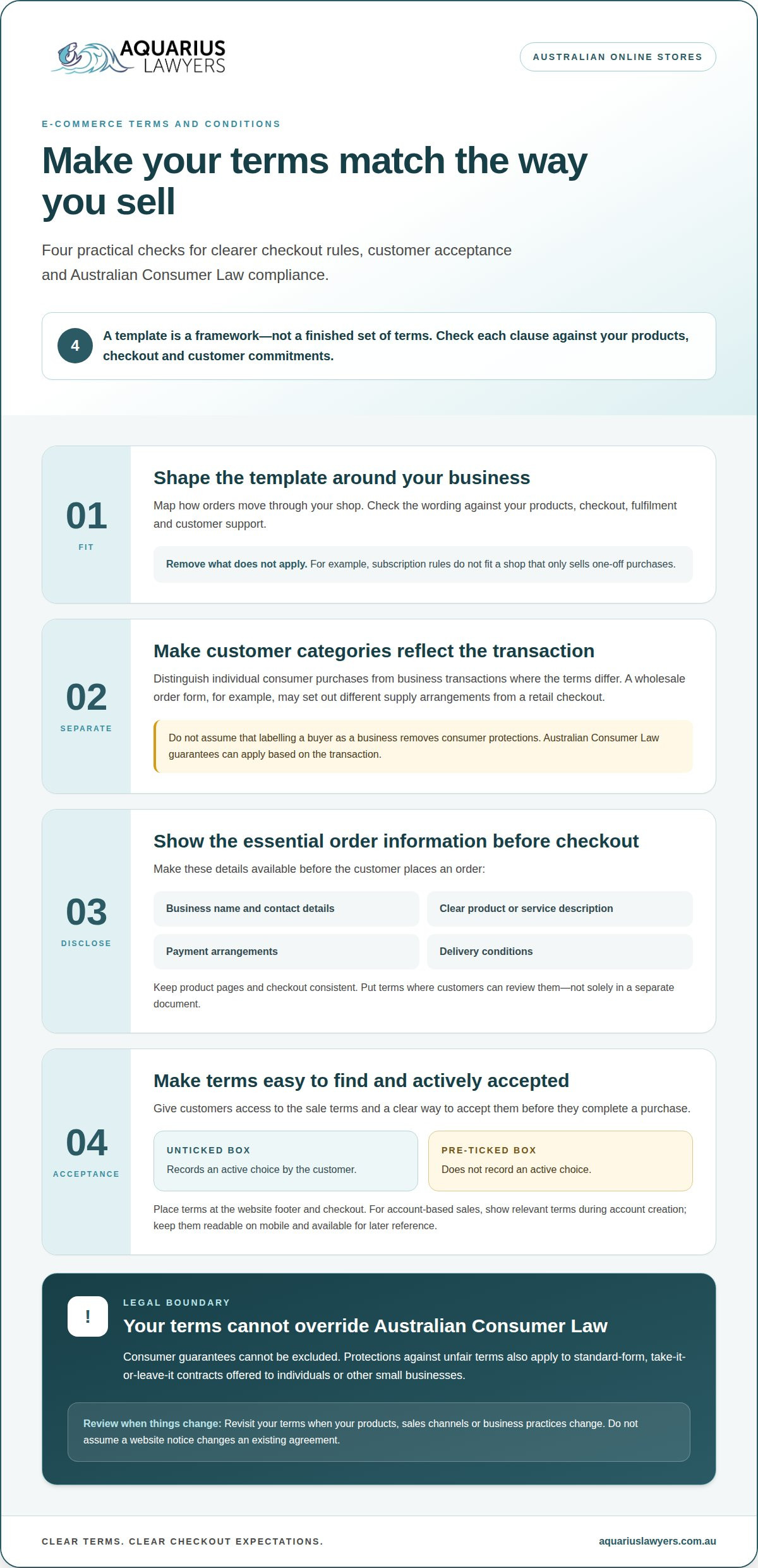
Before an Australian customer orders, disclose your business name and contact details, product or service information, price, payment arrangements and delivery conditions. Put these details where customers can review them before checkout, not solely in a separate document.
A template provides a framework, not terms ready to publish. Adapt each clause to your sales model, customer journey and the rules that apply to your business.
-
Customise and structure the template
Map your sales process before editing a template. Check every clause against your products, checkout, fulfilment and customer support. Remove provisions that don’t match your business, such as subscription rules for a shop selling one-off purchases. Keep the wording aligned with how orders are actually processed.
Separate website-use rules from purchase conditions when they cover different obligations. Use plain English and identify the applicable state or territory law. Seek legal advice if a clause’s effect is unclear, particularly if it affects how an order is accepted or handled.
-
Separate business and consumer customers
Identify whether each transaction is with an individual consumer or a business, then make the relevant terms easy to find. For example, a wholesale order form may set out supply arrangements that differ from a retail checkout. Use customer categories that reflect the actual transaction, not just the label entered in an account.
Don’t assume that calling a buyer a business removes consumer protections. Australian Consumer Law guarantees can apply based on the transaction, and your terms can’t exclude them. Review the distinction in light of how you sell and who buys your products or services.
-
Disclose order information to customers
Before customers place an order, show your business name and contact details, a clear description of the products or services, the price, payment options and delivery conditions. Make sure product pages and checkout agree, including any charges or conditions that apply to the order.
Give customers access to the sale terms and a clear way to accept them. An unticked checkbox records an active choice; a pre-ticked box doesn’t. Keep the terms readable on mobile screens, where checkout information may appear in a compact layout.
-
Display terms and notify customers of changes
Place a link to your terms in the website footer and at checkout so customers can review them before ordering. For account-based sales, show the relevant terms during account creation. Make the terms available for later reference, including in a downloadable format customers can keep.
Review the document when your products, sales channels or business practices change. Display the current version and explain where customers can find updates. Don’t assume a website notice changes an existing agreement. Consider how revisions affect existing orders and customer arrangements.
Consumer cooling-off and refund rights
Australian refund terms should distinguish a change-of-mind request from a claim under consumer guarantees. When drafting terms and conditions for e-commerce, explain the returns process clearly without suggesting that customers give up rights under Australian Consumer Law.
Use these steps to explain what customers can do and how your business handles requests.
-
Set out refund and returns policies
Explain how customers start a return, what details they should provide and how you assess the request. Describe any applicable return conditions and who arranges return delivery. For example, tell customers whether you need the order number and a description of the problem before assessing a returned item.
Separate your voluntary change-of-mind policy from consumer guarantees. A “no refunds” disclaimer must not imply that customers lose their rights when a guarantee applies. Explain how you communicate the outcome and process an approved refund, while keeping the policy consistent with the remedies available under Australian Consumer Law.
-
Explain cooling-off and cancellation rights
State whether your store offers a change-of-mind period and describe its conditions. Don’t present a voluntary store policy as a universal cooling-off right for Australian online purchases. Explain how customers request cancellation and how you handle orders at different stages, such as processing, dispatch or delivery.
Match cancellation wording to your order workflow. If an order has left your warehouse, explain how customers can submit a return request instead. Avoid promising an automatic refund for every cancellation. Assess requests against your stated policy and any applicable consumer guarantee.
Australian online stores must not use return terms to exclude consumer guarantees. For faulty goods, explain how customers report a fault and how your business assesses the appropriate response. Don’t treat a fault claim as a change-of-mind return or require customers to follow a voluntary policy as though it replaces their legal rights.
Make the process practical. Name the channel customers use, such as a returns form, and specify the order details they should provide. Explain how you’ll update them and what happens while you assess the item. A clear procedure helps customers act without blurring the distinction between your store policy and their legal rights.
Tailor the wording to what you sell. A physical product, service booking and digital content may need different return steps. Describe any commercial guarantee or after-sales service that applies, and make sure your product pages and terms don’t make conflicting promises. Careful drafting connects those promises to a process your team can follow.
Train the staff who handle requests to follow the process consistently. Record the customer’s reason, the information provided and the decision. Those records can help your team respond consistently and identify recurring product issues that may need attention.
B2C e-commerce terms and conditions
For Australian business-to-consumer (B2C) sales, your terms should explain the agreement in plain English and match the checkout. Australian Consumer Law (ACL) prevents businesses from excluding consumer guarantees; a separate privacy policy should explain personal information handling, with a cookie reference where relevant.
-
Identify clauses for e-commerce terms
List the clauses that explain who is selling, what the customer is buying and how the order works. Include the business name and contact details, product or service descriptions, payment arrangements, delivery, returns, customer responsibilities and a process for raising problems.
Check the terms against the full customer journey. For example, explain whether an order acknowledgement confirms receipt or accepts the order. State when the sale agreement forms, such as when goods are dispatched or a service begins, and make sure the checkout wording reflects that process.
-
Check Australian Consumer Law requirements
Review every clause against ACL consumer guarantees. Your terms must not exclude or restrict those guarantees, even if a customer accepts the document or the business labels a sale “final”. A disclaimer cannot remove a consumer’s rights when the guarantees apply.
Also check standard-form terms offered on a take-it-or-leave-it basis. Protections against unfair terms apply when these contracts are used with individual customers or other small businesses. Avoid clauses that give your business broad unilateral powers, such as cancelling orders without a clear basis, and explain significant limitations plainly.
-
Address privacy, cookies and data security
Use a standalone privacy policy and link to it from your sale terms. Explain what customer information you collect, how you manage and protect it, how long you retain it and what you permanently delete. Keep these statements aligned with your actual checkout and record-keeping practices.
State whether your website uses cookies and direct customers to your privacy policy for related information. If your store uses cloud-based systems, establish whether customer data is held in or outside Australia, then reflect relevant information in your privacy policy. Don’t promise security measures your business doesn’t follow.
-
Make the customer agreement clear
Show the terms before customers place an order and provide an active way to accept them. Draw attention to unusual, onerous or complex provisions, including liability limits or dispute procedures. A buried clause may not give customers a fair opportunity to understand an important restriction.
Finally, check that the order confirmation describes the customer’s order, price and key terms, with a link to the sale conditions. Keep a copy of the terms version shown at checkout. That record can help clarify what the customer accepted if a disagreement arises.
Aquarius Lawyers: Marine Law
Aquarius Lawyers advises on commercial terms for online businesses connected with marine, fisheries or aquaculture operations. If your store sells seafood, marine equipment or aquaculture products, your terms need to reflect the transaction, supply arrangements and customer relationship.
Commercial Law advice can help you review how your terms fit your sales model and related agreements. Where online sales involve marine or fisheries operations, Marine Law, Fisheries Law or Aquaculture Law may also be relevant to the wider business context.
For advice on commercial terms connected with these sectors, contact Aquarius Lawyers.
Make your terms part of your business process
Make your terms a working document, not a file you publish and forget. Assign someone to review them whenever your products, sales channels, fulfilment arrangements or payment systems change. Then compare the published version with the checkout customers actually use. This routine helps keep your written agreement aligned with your business practices.
Drafting terms and conditions for e-commerce is also an opportunity to plan for growth. If your business sells marine, fisheries or aquaculture products, consider how sector-specific transactions and supply arrangements fit your online sales model. Aquarius Lawyers advises businesses in these areas on Marine Law, Fisheries Law and Aquaculture Law.
For guidance on legal issues affecting your business and its online sales, contact Aquarius Lawyers to discuss your situation. Clear terms can support a confident next step as your business evolves.
Frequently Asked Questions
Can e-commerce terms exclude or limit consumer guarantees in Australia?
No. Australian businesses can’t use online terms to exclude consumer guarantees that apply under Australian Consumer Law. A clause saying “no refunds” won’t remove those rights if goods or services fail to meet a guarantee. For example, distinguish a change-of-mind policy from a customer’s rights concerning faulty goods. Review any liability limitation carefully so it doesn’t suggest customers have fewer rights than the law provides.
What rules govern online pricing, discounts, shipping fees and surcharges in Australia?
Australian businesses may face penalties for false, misleading or deceptive claims, so make every price and promotion accurate. Check that a discount reflects the offer customers will actually receive, and show applicable delivery fees and surcharges before purchase. If a delivery charge varies by location, make that clear before checkout. Keep product pages, promotional messages and the final order total consistent; for instance, if you review AI social media content tool pricing to help automate promotional campaigns, ensure any generated social posts align strictly with your store’s advertised offers.
What terms should cover delivery delays, lost parcels and international shipping?
Explain how customers can report a late or missing parcel, what order details to provide and how you’ll communicate next steps. State any delivery areas or restrictions, and describe how international delivery options and conditions differ from domestic orders. If your fulfilment process provides tracking details, explain where customers can find them. If you sell into multiple markets, tailor terms to the rules that apply in each market.
How should an Australian e-commerce business draft and obtain acceptance of its terms and conditions?
Write terms in plain English, tailor them to your actual sales process and display them before customers place an order. Use an unticked checkbox or another clear action to record acceptance, rather than relying only on a footer link or pre-ticked box. Keep a record of the version shown and the customer’s acceptance alongside the order. Review the document when your sales process or business changes.
Disclaimer
Please note that legal rules change and this is not a substitute nor construed as legal advice. It is general information only.