
Introduction
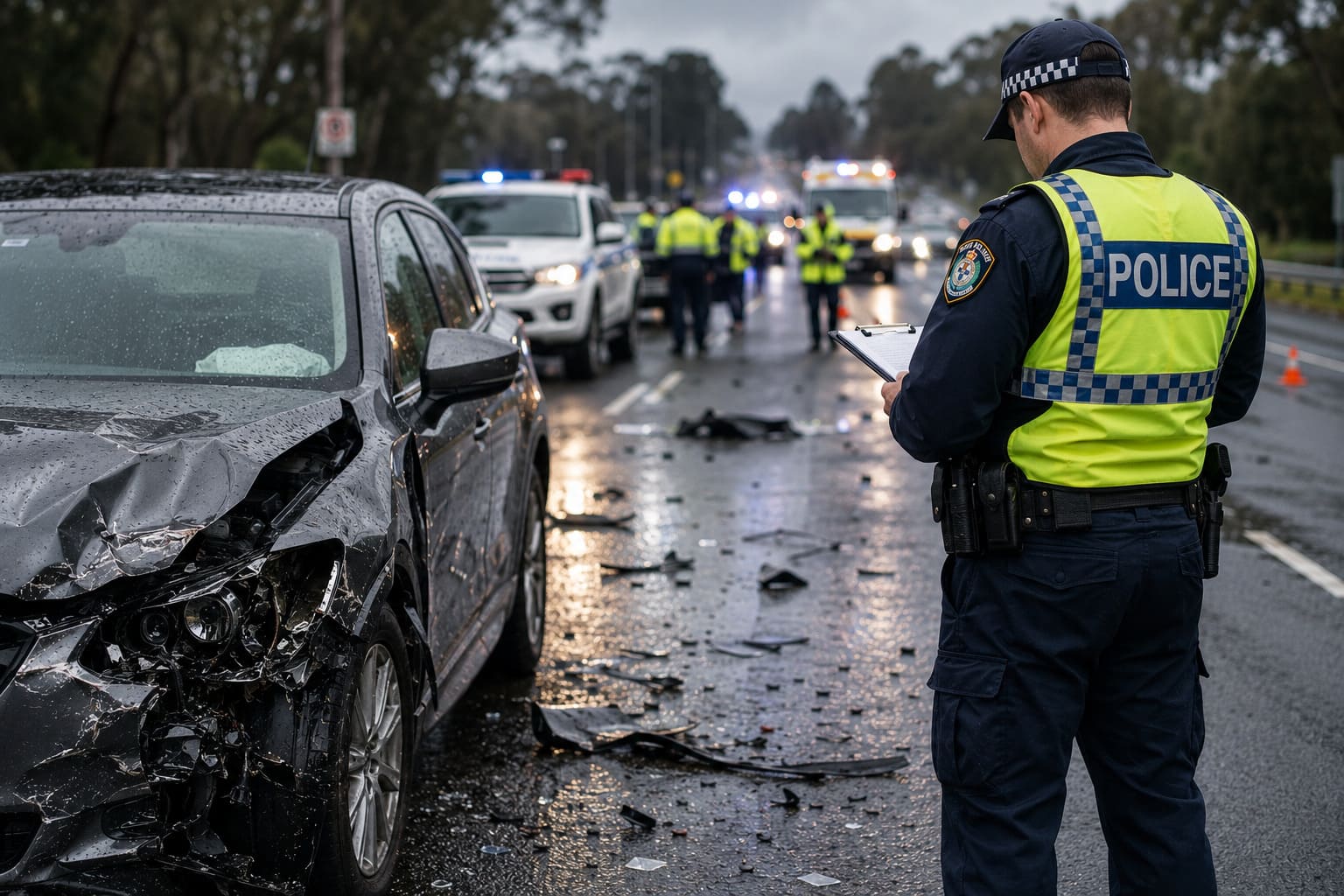
Every year, thousands of motor vehicle accidents occur across New South Wales. While many collisions result in insurance claims and civil disputes, some accidents lead to criminal investigations where police believe a driver has committed a traffic or criminal offence.
Serious crashes involving injury or death may result in allegations of dangerous driving, negligent driving, or more serious offences under the Crimes Act 1900 (NSW) and the Road Transport Act 2013 (NSW). These investigations are often complex, involving crash reconstruction experts, forensic evidence, witness statements and electronic vehicle data.
Being charged after a car accident does not automatically mean you are guilty of a criminal offence. Police must prove every element of the alleged offence beyond reasonable doubt, and depending on the circumstances, legal defences may be available.
This article explains the most common criminal charges arising from motor vehicle accidents in NSW, how police investigate serious crashes, the penalties that may apply, and what you should do if you are under investigation.
When Does a Car Accident Become a Criminal Matter?
Not every motor vehicle accident results in criminal charges.
Police generally investigate more closely where an accident involves:
- Serious injury
- Death
- Dangerous driving
- Excessive speed
- Alcohol
- Illicit drugs
- Fatigue
- Reckless behaviour
- Stolen vehicles
- Failure to stop
- Multiple traffic offences.
The seriousness of the collision usually determines the extent of the police investigation.
Dangerous Driving
Dangerous driving offences are among the most serious traffic offences prosecuted in NSW.
A driver may face allegations where police believe they drove in a manner that was dangerous to the public having regard to factors including:
- Speed
- Manner of driving
- Road conditions
- Traffic conditions
- Visibility
- Weather conditions.
Dangerous driving charges become considerably more serious where death or grievous bodily harm results.
Negligent Driving
Negligent driving is different from dangerous driving.
Negligence generally involves failing to exercise the degree of care expected of a reasonable driver.
Examples may include:
- Failing to keep a proper lookout
- Inattention
- Failing to give way
- Following too closely
- Careless lane changes
- Driver distraction.
Although generally less serious than dangerous driving, negligent driving can still attract substantial penalties.
Drink Driving Following an Accident
Police routinely investigate whether alcohol contributed to a collision.
Depending upon the circumstances, drivers may be required to undergo:
- Roadside breath testing
- Breath analysis
- Blood testing.
Where alcohol is involved, drivers may face both drink driving charges and additional charges arising from the accident itself.
Drug Driving
Police may also investigate whether illicit drugs or certain prescription medications contributed to the collision.
Investigations may involve:
- Roadside drug testing
- Oral fluid analysis
- Blood samples
- Toxicology reports.
Drug driving allegations frequently accompany more serious driving offences.
Dangerous Driving Causing Death
Dangerous driving causing death is one of the most serious offences involving motor vehicles.
Police will investigate matters including:
- Excessive speed
- Alcohol
- Drugs
- Fatigue
- Mobile phone use
- Dangerous overtaking
- Deliberate risk-taking.
These offences carry significant maximum penalties and commonly proceed to the District Court.
Dangerous Driving Causing Grievous Bodily Harm
Where a person suffers serious injuries but survives, police may allege dangerous driving occasioning grievous bodily harm.
These investigations often involve extensive medical evidence together with expert crash reconstruction.
Police Crash Investigations
Serious crashes are investigated thoroughly.
Evidence commonly includes:
- Photographs
- CCTV footage
- Dashcam recordings
- Witness statements
- Tyre marks
- Vehicle damage
- Electronic vehicle data
- Mobile phone records
- Toxicology reports
- Forensic mapping
- Drone photography.
Specialist crash investigators frequently reconstruct the collision using scientific analysis.
Vehicle Examinations
Police may seize vehicles for forensic examination.
Experts may inspect:
- Braking systems
- Steering
- Tyres
- Airbags
- Mechanical defects
- Onboard computers
- Collision damage.
Mechanical issues occasionally become relevant to determining liability.
Mobile Phone Evidence
Mobile phone records frequently form part of modern crash investigations.
Police may investigate whether a driver was:
- Texting
- Making calls
- Using social media
- Operating navigation systems
- Distracted immediately before impact.
Electronic evidence often becomes an important part of the prosecution case.
Witness Evidence
Witnesses may include:
- Passengers
- Other motorists
- Pedestrians
- Emergency services
- Nearby residents
- Business owners.
Witness accounts are important but are not always consistent.
Experienced criminal lawyers carefully examine inconsistencies between statements.
Common Criminal Charges Following an Accident
Police may lay charges including:
- Dangerous driving
- Negligent driving
- Drink driving
- Drug driving
- Failing to stop after an accident
- Dangerous operation of a motor vehicle
- Driving whilst suspended
- Speeding offences
- Using a mobile phone while driving.
Multiple charges frequently arise from a single incident.
Penalties
The penalties imposed depend upon:
- Seriousness of the collision
- Injuries sustained
- Criminal history
- Driving history
- Alcohol or drug involvement
- Speed
- Cooperation with police.
Possible sentencing outcomes include:
- Fines
- Licence disqualification
- Conditional Release Orders
- Community Correction Orders
- Intensive Correction Orders
- Imprisonment.
The more serious the injuries, the greater the potential penalties.
Possible Defences
Every criminal case depends upon its own facts.
Potential defences may include:
Police Cannot Prove Dangerous Driving
The prosecution must prove the manner of driving satisfied the legal test.
Expert evidence sometimes challenges police conclusions.
Mechanical Failure
Occasionally accidents result from:
- Brake failure
- Steering failure
- Tyre defects
- Unexpected mechanical problems.
Independent mechanical experts may become important witnesses.
Medical Emergency
Unexpected medical episodes such as:
- Heart attacks
- Seizures
- Diabetic emergencies
may provide a defence depending upon the circumstances.
Identification
Police must prove who was driving.
Where multiple occupants were present, identification may become an issue.
Causation
The prosecution must establish that the accused’s driving caused the relevant injury or death.
Sometimes other factors contribute to the collision.
Expert accident reconstruction may assist in determining causation.
Police Cannot Prove the Case
The prosecution bears the burden of proof.
If reasonable doubt exists regarding any essential element, the accused must be acquitted.
Should You Participate in a Police Interview?
Police frequently invite drivers to attend formal interviews.
Before participating:
- Obtain legal advice
- Understand the allegations
- Review available evidence where possible
- Avoid guessing answers
- Remain polite and cooperative.
Statements made during interviews often become important prosecution evidence.
Will a Conviction Affect My Licence?
Yes.
Depending upon the offence, drivers may face:
- Licence suspension
- Licence disqualification
- Increased insurance premiums
- Employment consequences
- Restrictions on overseas travel where imprisonment results.
For professional drivers, the consequences may extend well beyond the criminal proceedings.
Why Early Legal Advice Matters
An experienced criminal lawyer can:
- Review police evidence
- Identify weaknesses in the prosecution case
- Obtain expert reports
- Advise on available defences
- Negotiate with prosecutors
- Prepare sentencing material where appropriate
- Represent you throughout court proceedings.
Early legal advice frequently improves the prospects of achieving the best possible outcome.
How Aquarius Lawyers Can Help
Aquarius Lawyers represents clients throughout NSW facing serious traffic and criminal charges arising from motor vehicle accidents.
We can assist by:
- Reviewing police evidence
- Advising on dangerous and negligent driving allegations
- Obtaining independent expert reports
- Representing clients during police interviews
- Appearing in Local and District Courts
- Negotiating with prosecutors where appropriate
- Preparing detailed sentencing submissions where necessary.
Every accident is different. The surrounding circumstances, available evidence and your personal history all influence the outcome.
If you have been contacted by police following a serious motor vehicle accident or have been charged with a driving offence, obtain legal advice before participating in a formal interview. Early representation can help protect your rights and maximise your prospects of achieving the best possible outcome.
Tags