
A defensible reason for dismissal is only part of the defence. In Australia, defending a wrongful termination claim means addressing the reason for the dismissal, whether the process was fair, and whether the outcome was harsh, unjust or unreasonable in the circumstances.
The Fair Work Act 2009 (Cth) governs unfair dismissal claims in Australia, according to the Federal Register of Legislation. An employee may also allege adverse action if they believe they were treated unfavourably for exercising a workplace right, so the type of claim matters.
This guide explains what unfair dismissal means, how the Small Business Fair Dismissal Code applies to employers with fewer than 15 employees, and which records can help support a defence. You’ll also learn about common employer mistakes and examples of alleged wrongful termination, so you can better understand where a dismissal decision may be challenged.
Key Takeaways
- Understand how the Small Business Fair Dismissal Code applies to employers with fewer than 15 employees, including the steps involved when serious misconduct is not alleged.
- See why a valid reason alone may not be enough: the dismissal process and the employee’s opportunity to respond also matter.
- Recognise common process gaps, such as incomplete investigations, inconsistent treatment and missing records, that can weaken an employer’s position.
- Explore examples of alleged wrongful termination and how the circumstances behind a dismissal can shape a claim.
- Learn what employment records and correspondence can help support an employer’s response to a claim.
What is the Small Business Fair Dismissal Code?
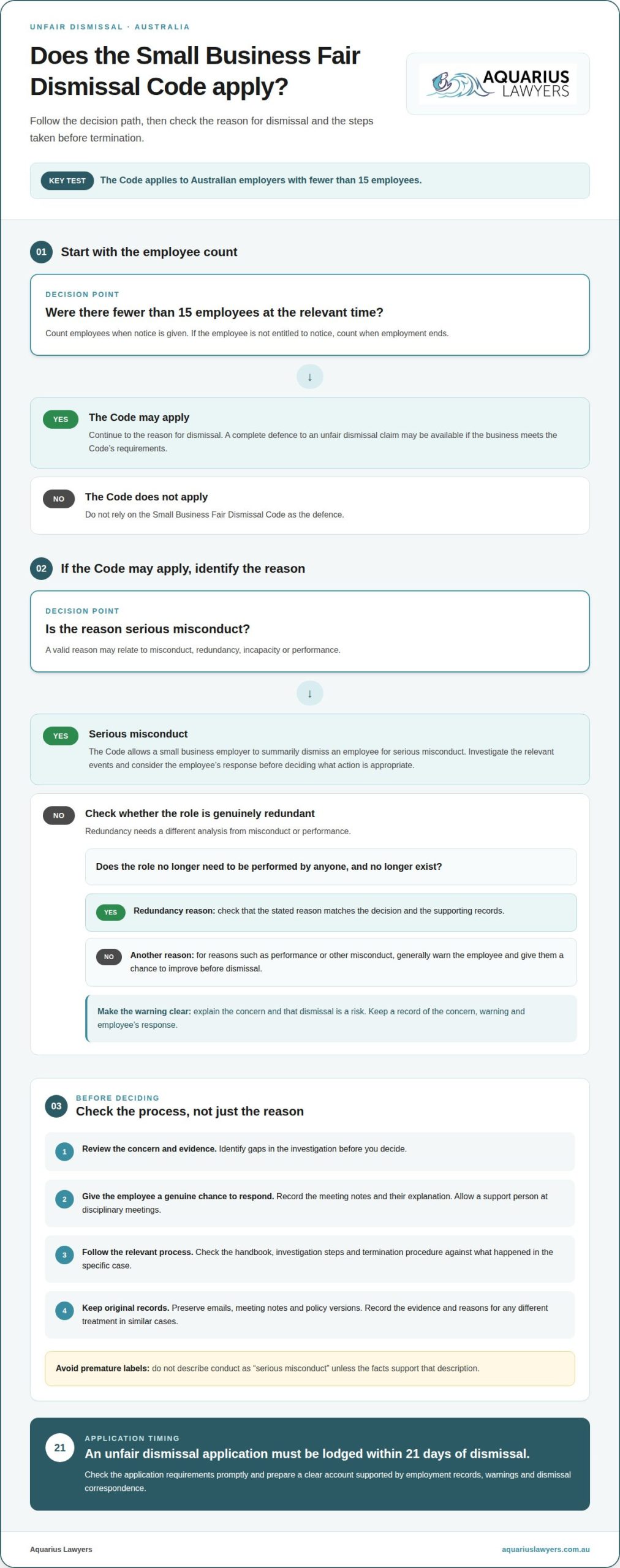
The Code applies to Australian employers with fewer than 15 employees. A lawyer can assess whether it applies, test the dismissal process and help you address procedural fairness before termination.
Valid Reasons for Dismissal
A valid reason may relate to misconduct, redundancy, incapacity or performance. For a small business, following the Small Business Fair Dismissal Code can provide a complete defence to an unfair dismissal claim. The business must meet the Code’s requirements; a genuine concern alone does not establish a fair dismissal.
For serious misconduct, the Code allows a small business employer to summarily dismiss an employee. Employers should generally warn employees and give them a chance to improve before dismissal for other reasons. The warning should make clear that dismissal is a risk. Keep records of the concern, warning and employee’s response.
Redundancy requires a different analysis from misconduct or performance. The role must no longer be required to be performed by anyone and must no longer exist. A lawyer can examine whether the stated reason matches the decision and supporting records. That distinction matters if an employee challenges the dismissal as unfair.
The employee count is assessed when notice is given, or when employment ends if the employee is not entitled to notice. This timing can affect whether the Code applies. Record the staffing position at that point, rather than relying on a later headcount.
Procedural Fairness Before Termination
A lawyer can review the allegations, evidence and proposed reason before you decide to dismiss. They can identify gaps in an investigation, help explain the concerns to the employee and assess whether the employee has had a genuine chance to respond. This clarifies the decision-making process and creates a record of the steps taken.
For performance concerns, formal performance management should come before dismissal. Set out the required improvement in writing, explain the risk of dismissal, and record discussions and progress. For alleged misconduct, investigate the relevant events and consider the employee’s response before deciding what action is appropriate.
An outsourced HR professional may help organise meetings, maintain performance records and document warnings. That support can assist with administration, while a lawyer assesses legal risks and the proposed response. Clear roles help keep the investigation, employee communications and final decision consistent.
A lawyer can also assess jurisdictional objections. These may depend on the employee’s remuneration, whether an award covers them and when the application was made. The employee must lodge an unfair dismissal application within 21 days of dismissal. Checking these matters early helps determine whether the claim can proceed, alongside any response on its merits.
Common employer mistakes
A sound reason can be undermined by rushed decisions, inconsistent treatment or incomplete records. In Australia, employers should review each step, from the initial investigation through to communications after dismissal.
Handbooks and Termination Policies
An outdated employee handbook can leave managers applying unclear conduct standards or disciplinary steps. Review the handbook’s expectations, investigation process and termination procedure against the steps taken in the specific case.
For example, if the policy calls for a written warning before further action, departing from that sequence needs careful consideration. Employment law advice can help identify gaps between the written policy, the reason for dismissal and the employer’s actual steps.
Consistent Treatment of Employees
Different outcomes for similar conduct can prompt claims that a dismissal was unjust or unreasonable. Compare the employee’s circumstances with relevant past cases, including the conduct, available evidence and action taken.
Keep written records explaining why the cases differ. For example, a manager might treat repeated misconduct differently from a first incident. Clear reasons help show that the decision followed the evidence and a valid reason, rather than personal preference.
Communication can create another risk. After termination, respond calmly to the former employee or their lawyers, and keep correspondence focused on the decision and relevant records. Avoid making new allegations, debating the dispute informally or promising an outcome before reviewing the facts.
Employers also weaken their position when they investigate allegations incompletely or decide before hearing the employee’s response. Record the allegation, relevant evidence, meeting notes and the employee’s explanation. Allow the employee to have a support person at disciplinary meetings. Avoid labelling conduct “serious misconduct” unless the facts support that description.
After being served with an unfair dismissal application, employers should promptly review the response requirements. A lawyer can review the application, identify the employer’s position and prepare a response grounded in employment records, warnings and dismissal correspondence. Missing the deadline or providing an unclear account can complicate the employer’s response.
Before filing, lawyers can test whether the stated reason matches the documents and whether the process followed the employer’s policies. They can also help organise a clear timeline, identify relevant witnesses and address points the former employee disputes. This gives the Fair Work Commission a coherent account rather than scattered records.
Preserve original emails, meeting notes and policy versions. These records can help explain both the decision and any differences from earlier cases.
What is Unfair Dismissal?
The Fair Work Act 2009 (Cth) governs unfair dismissal claims in Australia, according to the Federal Register of Legislation. The Fair Work Commission assesses whether a dismissal was harsh, unjust or unreasonable. It considers the reason, the employee’s response opportunity and whether required warnings were given.
An unfair dismissal claim differs from a general protections claim because the legal issue is different. General protections or adverse action claims may arise when an employee alleges unfavourable treatment for exercising a workplace right. Unlawful termination is a separate statutory claim, not an assessment of whether a dismissal was harsh, unjust or unreasonable.
Eligibility also matters. An employee generally needs at least 6 months’ service, or 12 months if employed by a small business. They must be covered by the national workplace relations system and an award or enterprise agreement, or earn below the high income threshold. Previous service may count after a change in business ownership.
An employee must lodge an unfair dismissal application within 21 days of dismissal. The Fair Work Ombudsman does not investigate these complaints; employees apply to the Fair Work Commission. For employers, the application identifies the employee’s allegations and starts a formal response process. Check the dismissal date and application details promptly.
The Commission’s primary remedy is reinstatement. It may also order compensation, which is capped at the lesser of 26 weeks’ pay or half the high income threshold. For 2026, the stated maximum is A$95,050. The outcome depends on the findings and remedy the Commission considers appropriate in the case.
Conciliation gives the parties an opportunity to resolve the dispute before a formal hearing. The Commission encourages mediation in many unfair dismissal matters. If no agreement is reached, the matter may proceed to a hearing, where the Commission considers evidence and submissions. Clear records help the employer present a consistent account.
Lawyers can help employers prepare for Commission proceedings by reviewing the application, organising relevant documents and shaping submissions around the disputed issues. They can also assist with representation before applicable courts and tribunals. The employer’s response should address each allegation and explain how the decision was made, using records that support its position.
Examples of alleged wrongful termination
Termination disputes turn on the reason given, the employee’s conduct and how the employer reached its decision. A dismissal may be challenged as unfair if the reason lacks support, the process was unreasonable or the outcome appears unjust in context. The examples below show why the facts and records matter more than the label attached to a decision.
In the David Sharp case, the dismissal was found unfair. The employer was ordered to reinstate Mr Sharp and restore his lost pay. For employers, the practical lesson is to ensure the stated reason aligns with the evidence and action taken. A record explaining the decision can help show how the employer assessed the employee’s conduct.
Another example involved an employee dismissed while attending a mediation intake. On August 7, 2026, the Fair Work Commission ordered a $67,741.44 payout in that case. The circumstances illustrate a risk where an employee’s participation in a workplace-related process may be relevant to the termination. Employers should identify the reason for dismissal and examine its timing alongside the surrounding communications.
A different outcome followed in the case involving Ms Budgen. The Fair Work Commission found that she had been afforded procedural fairness and awarded her no remedy. This highlights the importance of examining the steps actually taken, not just the employee’s allegation. Records of meetings, explanations and decision-making can help establish what happened.
Some allegations concern adverse action rather than unfair dismissal. An employee may claim they were treated unfavourably because they exercised a workplace right. For example, a worker may link a termination decision to raising a workplace concern. The employer’s response should distinguish the alleged workplace right from the reason relied on for dismissal, then address the relevant documents and timeline for each issue.
These examples are not templates for other disputes. The Fair Work Commission considers the circumstances of each matter, including the reason, conduct, employee response and process followed. A misconduct allegation, for instance, needs evidence supporting the employer’s account and a response to the employee’s explanation. An unsupported label such as “serious misconduct” does not establish that the decision was justified.
For a practical review, align the dismissal letter, investigation material, meeting notes and contemporaneous correspondence. Then identify gaps or differences in the accounts. This can clarify which facts are disputed and which records support the employer’s position before a Commission conference or hearing.
Get legal advice about a dismissal dispute before responding to allegations or preparing for a Fair Work Commission proceeding.
Aquarius Lawyers
Aquarius Lawyers can help you assess a business partnership dispute, review relevant agreements and consider your options. Turn to the firm when a business partner wants to leave, disputes a decision or disagrees about the business’s direction. A clear review can identify the issues, documents and practical steps that matter to your business.
For business owners, the next step is to bring together the partnership agreement, relevant correspondence, records of decisions and any other business documents. This gives a legal review a practical foundation and helps clarify what needs a response. If the dispute also affects ownership or operations, that wider context may be relevant to the advice you need.
Contact Aquarius Lawyers to discuss your partnership dispute and the response you need.
Protect your business with clear contracts
A business contract can affect your responsibilities, cash flow and ability to resolve a disagreement. Before you sign, check that the terms clearly set out each party’s obligations, payment arrangements, timeframes and how disputes will be handled. Make sure everyone involved understands the agreed position.
Getting advice before you sign can help you identify unclear terms and assess how they may affect your business. A considered review connects the legal terms with your practical needs and helps you decide whether to negotiate changes.
Aquarius Lawyers also works with businesses on commercial matters, including Marine Law, Fisheries Law and Aquaculture Law. If a contract involves wider business arrangements or commercial assets, that context may be relevant to the advice you need.
Discuss your business contract with Aquarius Lawyers and take the next step with a clearer plan.
Frequently Asked Questions
What Constitutes Wrongful Termination?
“Wrongful termination” is often used broadly, so start by identifying the actual claim in the employee’s application. The Fair Work Commission process depends on the legal pathway and allegations made. A claim about the fairness of a dismissal raises different issues from an allegation that termination followed an employee exercising a workplace right. The application’s particulars help define the employer’s response.
What must an employer prove to defend an unfair dismissal claim in Australia?
An employer needs evidence supporting the decision made at the time, rather than reasons assembled after a dispute begins. Compare the termination communication with the manager’s records and the sequence of events. If the stated reason changed during internal discussions, explain the difference using the relevant documents. A clear chronology can show which concerns informed the decision and which matters arose later.
What are the Fair Work Commission time limits for filing and responding to an unfair dismissal claim?
The employee’s filing period runs from dismissal, while the employer’s Form F3A response period starts when the application is served. These are separate trigger points. Make sure the person receiving Commission documents records the service date and promptly sends the application to the people preparing the response. That practical handover helps prevent an internal delay from consuming the employer’s response period.
What evidence can a lawyer help an employer preserve when defending a wrongful termination claim?
Beyond individual performance records, a lawyer can help preserve material relevant to eligibility and the employer’s structure. This may include payroll information, records showing award or enterprise agreement coverage, staffing records and documents relating to a change in business ownership. These materials can clarify the employment relationship and circumstances surrounding the application, particularly if service history or coverage is disputed.
How does the Fair Work Act define a valid reason for dismissal?
The Fair Work Act framework asks whether the reason relates to the employee’s capacity or conduct. For an incapacity-related decision, the employer’s assessment should focus on the employee’s ability to perform the role. If illness or injury affects that ability, consider whether a suitable alternative role is available. This can help distinguish a genuine capacity issue from a decision made without considering the employee’s circumstances.
How does the Small Business Fair Dismissal Code affect an employer’s defence?
The Code is relevant to an unfair dismissal claim, but it does not resolve every type of termination dispute. An employee may raise concerns about treatment connected with exercising a workplace right. In that situation, the employer needs to address the specific allegation and evidence as well as any Code issues. Treating each claim pathway separately helps avoid an incomplete response.
Disclaimer
Please note that legal rules change and this is not a substitute nor construed as legal advice. It is general information only.