
If the person you trust to speak for you is unclear about what they can decide, confusion can follow when decisions need to be made. An enduring guardianship appointment NSW residents can make gives your chosen guardian authority over personal, lifestyle and health decisions if you lose capacity to make them yourself. It does not give them authority over your finances.
Choosing the right person is only part of the process. You also need to understand the paperwork, witnessing requirements and how this appointment differs from an attorney or an advance care directive. Clarifying those boundaries now can help your documents work together when they are needed.
This guide explains what an enduring guardian can and cannot decide, how to make and document an appointment in NSW, and what to consider when choosing someone. It also covers how to align the appointment with your wider estate plan, so your personal, health and financial arrangements are clear and distinct.
Key Takeaways
- An enduring guardian can make personal, lifestyle and health decisions for you if you lose capacity, but cannot manage your finances.
- An enduring guardianship appointment NSW requires the prescribed form and correct signing and witnessing. Follow the current process carefully.
- Choose someone you trust to understand your wishes, and consider whether to appoint a substitute or more than one guardian.
- Review the appointment as your circumstances or wishes change, and check it fits alongside your financial arrangements and wider estate plan.
What does an enduring guardianship appointment in NSW allow someone to decide?
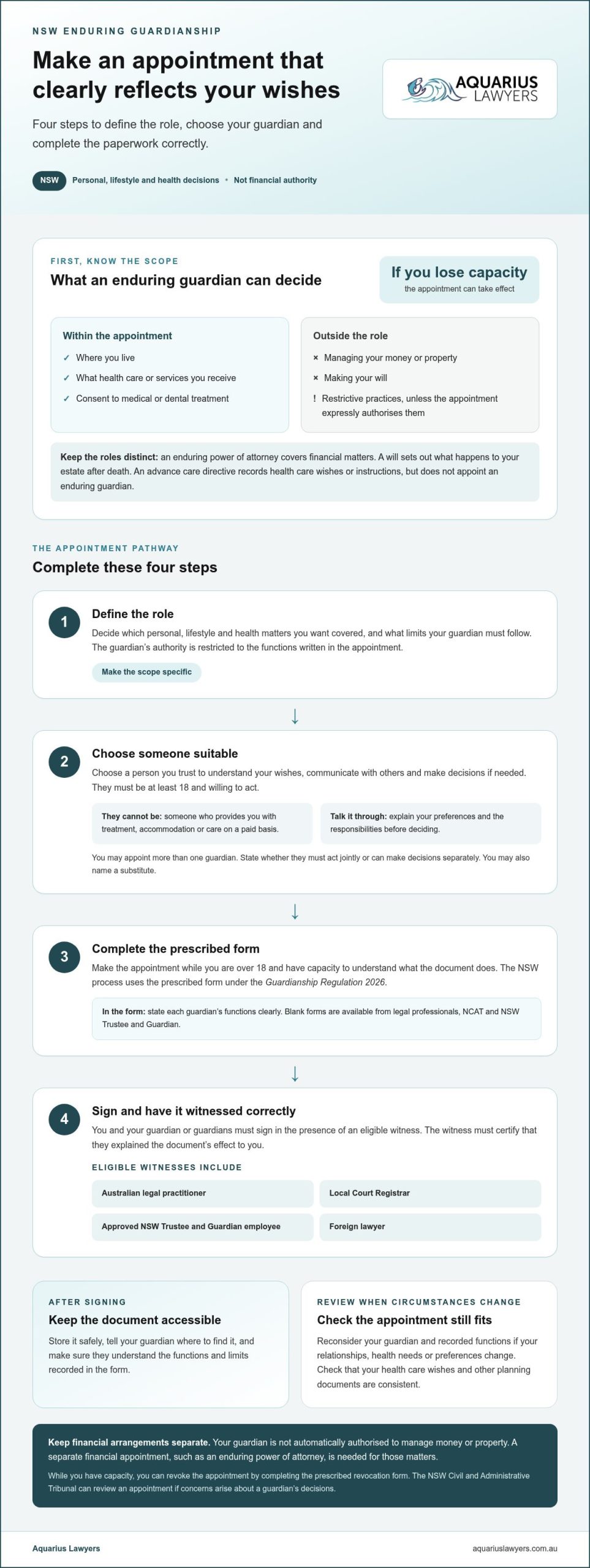
An enduring guardian is someone you appoint to make specified personal, lifestyle and health decisions if you lose the capacity to make those decisions yourself. Under the Guardianship Act 1987 (NSW), the appointment can cover matters such as where you live, what health care or services you receive, and consent to medical or dental treatment. The guardian’s authority is limited to the functions in the appointment, so define those functions carefully.
Some decisions have specific limits. For example, an enduring guardian can consent to restrictive practices only if the appointment expressly gives them that authority. A guardian also cannot make your will or manage your finances. A sound enduring guardianship appointment nsw therefore depends on choosing a suitable person and clearly defining their decision-making powers.
How is an enduring guardian different from an attorney or advance care directive?
An enduring guardian makes personal, lifestyle and health decisions within the scope of the appointment. An enduring power of attorney appoints someone to manage financial matters, such as money or property. A will sets out what should happen to your estate after your death and can appoint an executor. Each document serves a different purpose.
An advance care directive records your health care wishes or instructions. It can help communicate what matters to you, but it does not appoint an enduring guardian. Do not assume one document replaces another. Consider how each document reflects your circumstances and wishes. Estate planning services can help you consider how your guardianship appointment fits within your wider estate plan.
How to make an enduring guardianship appointment in NSW
Make the appointment while you are over 18 and have capacity to understand what the document does. The enduring guardianship appointment NSW process uses a prescribed form under the Guardianship Regulation 2026. Before completing it, decide which personal, lifestyle and health decisions you want covered and what limits you want your guardian to follow.
Who should you appoint as your enduring guardian?
Choose someone you trust to understand your wishes, communicate with others and make decisions if needed. They must be at least 18. A person who provides you with treatment, accommodation or care on a paid basis cannot be appointed. Talk through your preferences and the responsibilities with your proposed guardian before deciding. If you appoint more than one guardian, specify whether they must act jointly or can make decisions separately. You may also name a substitute.
Use this practical sequence:
- Define the role: identify the personal, lifestyle and health decisions you want covered, within the law.
- Choose your guardian: confirm they are willing to act and understand your preferences.
- Complete the prescribed form: state the guardian’s functions clearly. Blank forms are available from legal professionals, NCAT and NSW Trustee and Guardian.
- Sign and witness it correctly: you and your guardian or guardians must sign in the presence of an eligible witness. This can be an Australian legal practitioner, a Local Court Registrar, an approved NSW Trustee and Guardian employee or a foreign lawyer. The witness must certify that they explained the document’s effect to you.
Once completed, keep the document safely and tell your guardian where to find it. Make sure the person you appoint understands the functions and limits recorded in the form. Legal guidance can help clarify the appointment’s scope and how it reflects your wishes. Explore estate planning services for related planning support.
What to review before relying on an enduring guardian appointment in NSW
An enduring guardian is not automatically authorised to manage your finances or property. That requires a separate financial appointment, such as an enduring power of attorney. Check that your documents cover each type of decision. Your guardian’s authority will not fill a gap in your financial arrangements.
Review the appointment if your relationships, health needs or preferences change. Is your chosen guardian still willing and able to act? Do the functions recorded still reflect the decisions you want them to make? Check that your written health care wishes and other planning documents are consistent. While you have capacity, you can revoke the appointment by completing the prescribed revocation form. The NSW Civil and Administrative Tribunal can review an appointment if concerns arise about a guardian’s decisions.
When should you seek legal guidance about the appointment?
Seek advice if you are unsure about the guardian’s authority, want to appoint multiple guardians, or have documents that may express different wishes. Legal guidance can help you understand the appointment’s effect, define its scope and consider how it fits with your will and financial arrangements.
For support considering your appointment as part of your wider plan, explore estate services.
Put your wishes into a clear plan
A well-considered enduring guardianship appointment nsw starts with choosing someone you trust and clearly defining the personal, lifestyle and health decisions they may make if you lose capacity. It does not give them financial authority, so consider your financial arrangements and will separately as part of your estate plan.
Review the appointment when your circumstances or wishes change. Confirm that your chosen guardian remains suitable and that your documents work together without conflicting instructions.
Aquarius Lawyers brings more than 20 years of legal and business experience, along with over 25 years of combined experience in the education industry. For help making your appointment part of a considered estate plan, get clear guidance on your estate planning. A clear plan can help the people you trust understand your wishes when it matters.
Frequently Asked Questions
Who can appoint an enduring guardian in NSW?
In NSW, you can appoint an enduring guardian if you are over 18 and have the mental capacity to understand the nature and effect of the appointment. Your chosen guardian must also be at least 18. A person who provides you with treatment, accommodation or care on a paid basis cannot be appointed. Choose someone willing and able to make decisions in line with your wishes.
What decisions can an enduring guardian make in NSW?
An enduring guardian can make personal, lifestyle and health decisions if you lose capacity to make those decisions yourself. Their authority is limited to the functions specified in your appointment, which may include decisions about accommodation or medical treatment. They can consent to restrictive practices only if the appointment expressly authorises this. Consider the powers you grant and the limits you want recorded.
Does an enduring guardian control your money in NSW?
No. An enduring guardian does not automatically have authority over your money, property or financial affairs. You need a separate financial arrangement, such as an enduring power of attorney, to appoint someone to manage financial matters. A guardian also cannot make a will for you. Keep your personal decision-making appointment and financial documents distinct, and review how they fit together in your estate plan.
Can you change or revoke an enduring guardianship appointment in NSW?
Yes. If you still have capacity, you can revoke your appointment by completing the prescribed revocation form. If you want a different guardian or to change the functions, follow the current requirements for making a new appointment rather than relying on an informal change. Revisit your document if your wishes or circumstances change, so it continues to reflect the decisions you want made.
Disclaimer
Please note that legal rules change and this is not a substitute nor construed as legal advice. It is general information only.