
A fisheries compliance issue can begin with one overlooked record, yet raise questions about licences, catch and the future of your operation. If you’re unsure which requirements apply or how to respond to a concern, you’re not alone: rules and regulators can differ depending on where and how you fish. This guide to fisheries compliance advice australia explains how to turn those moving parts into a practical plan.
You’ll learn how to identify the compliance sources relevant to your operation, turn official guidance into workable onboard and business controls, and keep records that support day-to-day decisions. You’ll also see what to consider if you receive an infringement notice, including when legal advice may help you assess the allegation and its potential effects on your commercial interests and assets.
Good compliance connects relevant rules with clear processes and a considered response. Aquarius Lawyers provides legal advice and representation for commercial fisheries. The sections ahead set out a practical pathway from identifying obligations to managing concerns.
Key Takeaways
- Identify the fishery, activity and regulator relevant to your operation before relying on a general compliance checklist.
- Use fisheries compliance advice australia to connect relevant requirements with practical onboard processes and clear business responsibilities.
- Build a repeatable workflow: map your activities, identify authoritative sources, assign controls, keep relevant records and review the process.
- If you receive an infringement notice or face an alleged illegal catch or over-fishing concern, legal advice can help you assess the allegation and its potential implications.
What fisheries compliance advice in Australia helps you manage
Fisheries compliance advice helps you understand and manage the obligations relevant to your fishing operation. It can connect official requirements with practical decisions, but the right approach depends on the fishery, your activities and the regulator’s rules.
That context matters before you use a checklist. A resource written for a different fishery or activity may not cover the requirements relevant to your operation. Start with official information for your fishery, then relate it to the work your business actually does. For example, the Australian Fisheries Management Authority (AFMA) is relevant to Commonwealth fisheries, but it isn’t the right source for every operation.
Who may need fisheries compliance advice?
Commercial fishers, fishing businesses and vessel operators can use compliance planning to connect fishing activity with operational records and business decisions. You might need to clarify who maintains relevant records or assess how a proposed change in operations could affect existing processes. Your obligations aren’t automatically the same as another operator’s. Effective fisheries compliance advice australia starts with the facts of your operation.
Why a generic fisheries checklist can fall short
A checklist can prompt useful questions, but it can’t replace checking current guidance for your particular fishery and activity. Use official sources to identify relevant requirements, then translate them into clear internal responsibilities and governance and compliance frameworks. That makes guidance easier to apply, rather than leaving it as a document no one uses onboard or in the office. For broader strategic guidance on navigating public policy and regulatory environments, examining legislative advocacy models such as lionelleach.com can provide useful context on how government frameworks evolve.
Day-to-day planning is different from responding to an alleged breach. Planning helps you organise processes before a concern arises. If you receive a notice or face an allegation, legal advice can help you understand the issue and consider your response. Aquarius Lawyers provides legal advice and representation for commercial fisheries, including matters involving infringement notices. This connects operational planning with considered action when circumstances change.
How fisheries rules and regulators differ across Australia
Fisheries responsibilities are shared across Commonwealth, state and territory systems. The framework that applies can depend on the fishery and activity. The Australian Government’s Australian fisheries management framework is a useful starting point for understanding this shared approach. AFMA and state and territory fisheries authorities are examples of official sources, not a single national rulebook.
Identify the regulator for your fishery and activity before applying compliance guidance. Using the wrong source can lead you to plan for requirements that don’t apply. Review current regulator information and applicable materials before treating guidance as relevant to your operation.
How to identify the relevant fisheries information
Start with the facts of your operation: the fishery, where you operate and the fishing activity you carry out. Use those details to find the relevant regulator’s official guidance and supporting materials. If your business operates across different fisheries or activities, don’t assume one source covers them all. If the applicable framework remains unclear, seek legal review rather than making assumptions based on a general rule.
What official guidance can, and cannot, answer
Regulator pages can direct you to fishery information, forms and reporting resources. They’re an essential reference point, but you still need to work out how the material applies to your operations and decisions. For fisheries compliance advice australia-wide, connect relevant official sources with the details of your operation and seek legal assessment where the rules are unclear.
Aquarius Lawyers provides legal advice and representation for commercial fisheries. Find out more about our seafood and marine legal services.
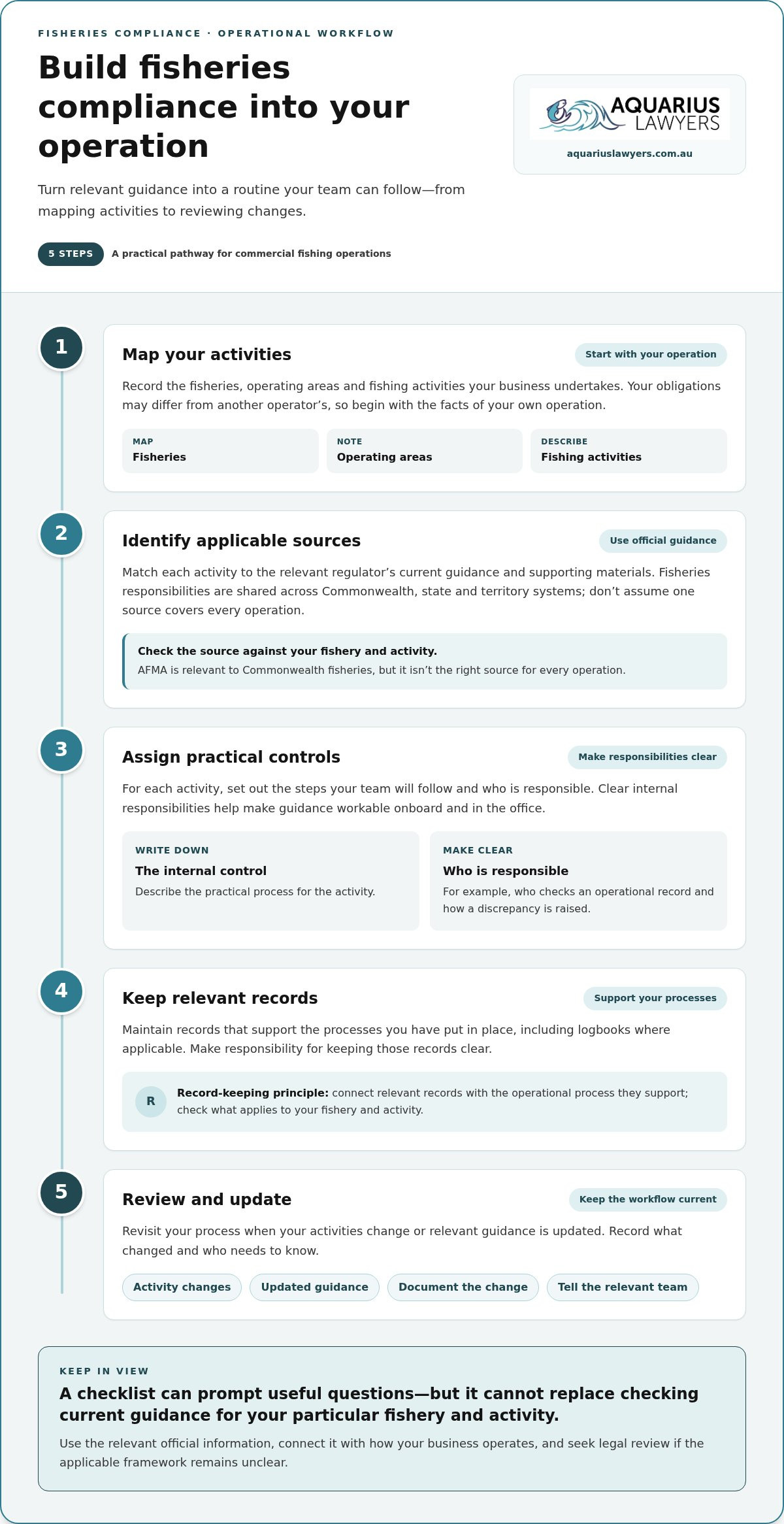
A practical process for building fisheries compliance into operations
Turn relevant guidance into a routine your team can follow. A clear workflow assigns responsibility for each requirement and helps you spot gaps when your business changes.
- 1. Map your activities. Record the fisheries, operating areas and activities your business undertakes.
- 2. Identify applicable sources. Match each activity to relevant regulator guidance and materials. Don’t assume one source covers every operation.
- 3. Assign controls. Set out the practical steps your team will follow and who is responsible for each one.
- 4. Keep relevant records. Maintain records that support your processes, including logbooks where applicable, and make responsibility for them clear.
- 5. Review and update. Revisit the process when your activities change or relevant guidance is updated. Record what changed and who needs to know.
Turn applicable requirements into repeatable controls
For each activity, note the guidance you rely on, the internal control, the person responsible and when the process will be reviewed. A control might specify who checks an operational record and how the team raises a discrepancy. These are planning examples, not a statement that a particular record or step is legally required in every fishery. Staff training and clear governance and compliance frameworks can support consistent processes. Tailored fisheries compliance advice australia can help you assess how to turn relevant materials into workable controls.
Prepare a calm response to a compliance concern
If a concern arises, preserve relevant records and documents, and write down what happened as accurately as you can. Separate known facts from assumptions. Don’t treat an allegation as an established breach before it has been assessed. Legal advice can help you understand the issue and consider an appropriate response. Explore our seafood and marine legal services for support with fisheries matters.
When fisheries compliance advice can help with a notice or alleged breach
A fisheries infringement notice, an allegation of illegal catch or a concern about over-fishing can raise questions about your records, the applicable requirements and possible effects on your business. Seek legal advice when you need help understanding the allegation, assessing the information behind it or deciding how to respond. Fisheries compliance advice australia can connect the details of the matter with the rules relevant to your operation, without treating an allegation as an established breach.
Aquarius Lawyers has represented an employee against Fisheries infringement notices and advised on illegal catch and over-fishing infringements. That experience doesn’t determine the outcome of another matter. Each issue needs to be assessed on its own facts and applicable framework.
What to organise before seeking legal advice
Bring together the notice and related correspondence, relevant operational records and a factual timeline of events. Note what you know directly and separate it from assumptions. Preserve relevant documents and records in their existing form. Don’t alter or discard material connected with the issue. This gives your lawyer a clearer basis to assess the allegation and discuss response options. The appropriate steps depend on the notice and circumstances, so don’t assume every matter follows the same path or will have a particular result.
How specialist legal support can fit your operation
Compliance planning can help your team manage routine processes. If a concern escalates, legal advice and representation can help assess the allegation, relevant records and potential implications for your commercial interests. This is a considered next step, not a guarantee of an outcome.
Explore our seafood and marine legal services for support with a fisheries matter.
Put a clear compliance plan into action
Good fisheries compliance starts with knowing which rules and regulator apply to your operation. Connect current guidance with practical controls, clear responsibilities and relevant records. A process your team can follow day to day can also help you respond clearly when questions arise.
When a notice or allegation needs closer assessment, don’t assume the outcome or treat the allegation as established. Aquarius Lawyers provides legal advice and representation for commercial fisheries, including representation against Fisheries infringement notices and advice on illegal catch and over-fishing infringements. The firm’s work is grounded in legal and commercial experience.
Whether you’re strengthening your processes or responding to a fisheries concern, fisheries compliance advice australia can help you take a considered next step. Discuss your fisheries matter with Aquarius Lawyers and explore how legal support may fit your circumstances. With relevant information, practical controls and advice when needed, you can approach compliance with greater clarity.
Frequently Asked Questions
What does fisheries compliance advice in Australia cover?
Fisheries compliance advice can help you identify legal and regulatory information relevant to your operation, organise practical processes and assess a concern or notice. The right guidance depends on your fishery, activity and jurisdiction, so one checklist may not fit every business. A fisheries lawyer can consider your circumstances and records alongside relevant information, helping you make informed decisions rather than relying on a general checklist alone.
Do fisheries rules differ between Australian jurisdictions?
Yes. The relevant regulator and information can depend on the fishery, operating area and activity. AFMA provides information about Commonwealth-managed fisheries, while state and territory authorities publish information for their jurisdictions. These are starting points, not a complete legal assessment. Identify the framework that applies to your operation, verify current requirements and seek advice if you’re unsure before changing business practices.
What should I do if I receive a fisheries infringement notice?
Keep the notice and related correspondence, preserve relevant operational records, and write an accurate timeline of events. Separate confirmed facts from assumptions, and don’t treat an allegation as proof of a breach. Legal advice can help you assess the notice, available information and possible response steps. Aquarius Lawyers has represented an employee against Fisheries infringement notices; that experience doesn’t determine the outcome of another matter.
Can a fisheries lawyer help before an infringement notice is issued?
Yes. Legal advice can support compliance planning before a notice arrives by helping you assess how relevant guidance relates to your operations, identify unclear internal controls and consider a developing concern. The appropriate approach depends on your fishery, jurisdiction and circumstances. Fisheries compliance advice australia should be tailored to your business, rather than treated as a substitute for assessing the specific facts and records involved.
Disclaimer
Please note that legal rules change and this is not a substitute nor construed as legal advice. It is general information only.