
A commercial lease agreement review is best done before you sign or commit to the premises. You’re not legally required to have a lawyer review the lease, but its terms can bind your business for 3 to 10 years and may be difficult to amend later.
It’s reasonable to focus first on rent and location. But make-good obligations can leave you responsible for restoring the premises when the lease ends, while a personal guarantee may put your individual assets at risk if your business cannot meet its obligations.
Aquarius Lawyers provides national support to help you understand when to seek legal advice and what to review before signing, ensuring you can understand your commitments and address concerns while there is still room to negotiate.
You’ll also learn what a review can cover, how make-good and guarantee terms may affect you, and what to expect when preparing or signing a commercial lease.
Key Takeaways
- Seek legal advice before signing, while there is still room to negotiate lease amendments and clarify your obligations.
- Understand how make-good requirements could affect your exit, and whether a personal guarantee puts your individual assets at risk.
- A review can cover the lease, Heads of Agreement and disclosure documents, helping bring the terms into one clear picture.
- Look beyond base rent to outgoings, rent increases, renewal options, assignment rules and any relocation clause.
- Plan for fit-out approvals and building work, and make sure the lease terms account for when rent starts and trading can begin.
When should you get a commercial lease reviewed?
Seek legal advice before signing or committing to premises, while you can still negotiate changes with the landlord. A commercial lease can bind your business for years, and changing its terms after signing can be difficult and expensive.
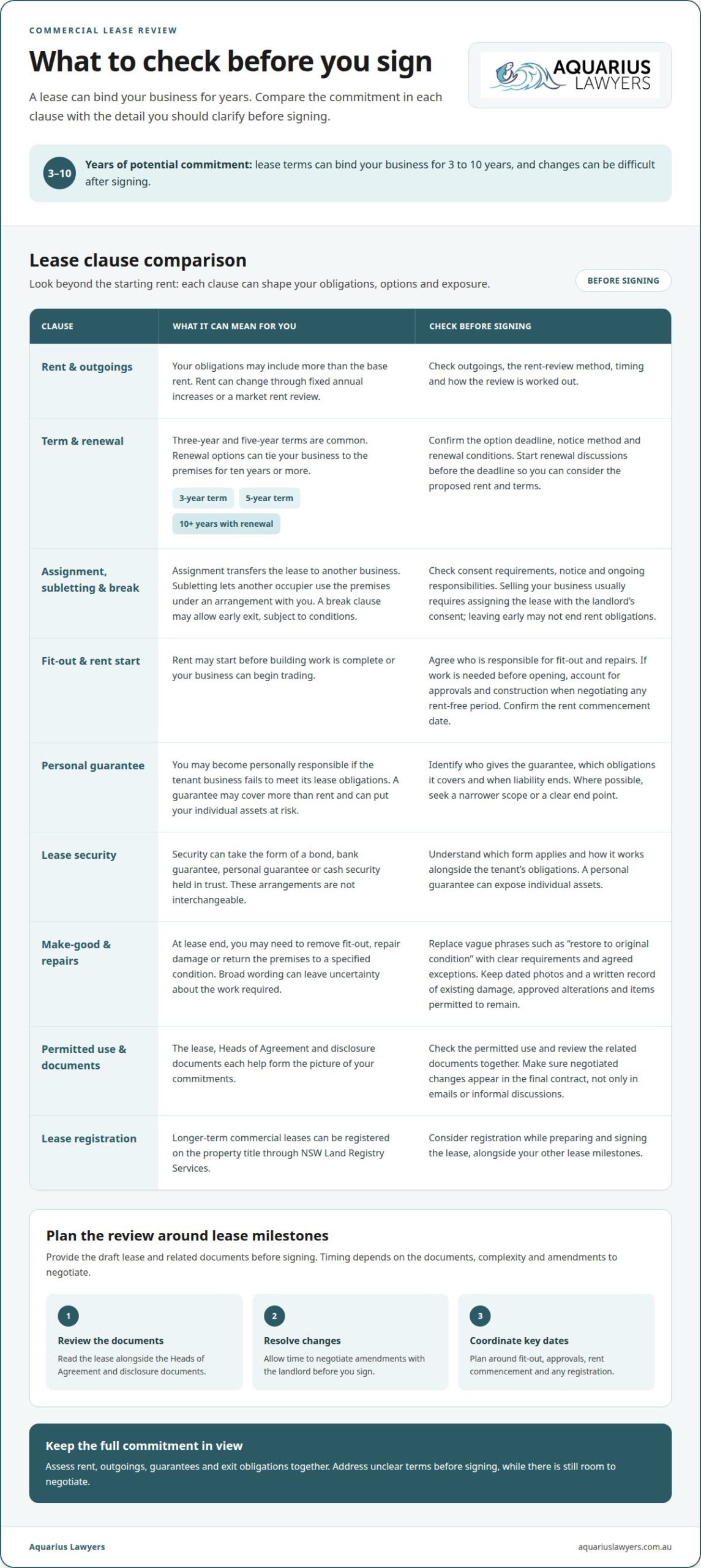
A commercial lease agreement review in Sydney can help you understand the contract before its obligations take effect. Key clauses to check include rent and reviews, outgoings, permitted use, repairs, renewal options, assignment, early termination and make-good requirements.
Lease negotiations and amendments
A review should identify unclear or unfavourable wording and help you negotiate amendments with the landlord before signing. Make sure agreed changes appear in the final contract rather than relying on emails or informal discussions.
Check how the lease allocates responsibility for repairs, outgoings and fit-out. If you need building work before operating, negotiate a rent-free period that accounts for approvals and construction. Confirm when rent starts, as payments may begin before work is complete or trading can begin.
Early advice can identify terms to address before they bind your business. You aren’t legally required to have a lawyer review the lease, but negotiating after signing can be difficult.
Rent, duration and renewal terms
Assess the rent-review mechanism as well as the starting rent. Some Sydney leases use fixed annual increases, while others provide for a market rent review during the term. Check the timing and method stated in the contract to understand how rent may change.
The lease term also affects your commitment. Three-year and five-year terms are common, while renewal options can tie a business to premises for ten years or more. Check the option deadline, notice method and renewal conditions so you can make a timely decision.
Start renewal discussions before the option deadline. This gives you time to consider the proposed rent, duration and other terms before deciding whether to stay.
Assignment, subletting and break clauses
Assignment transfers the lease to another business; subletting lets another occupier use the premises under an arrangement with you. The lease sets out the process and any consent requirements. A break clause may give you an early exit, subject to its conditions.
These clauses matter if you sell your business, change premises or restructure operations. Selling a business usually requires assigning the lease with the landlord’s consent. Without an effective exit right, leaving early may not end your rent obligations.
Check the notice requirements, conditions and ongoing responsibilities attached to each option. Clear terms help you understand the steps to take if your business plans change.
Review timing and lease milestones
There is no single review timeframe for a commercial lease. Timing depends on the documents involved, the lease’s complexity and the amendments the parties negotiate. Provide the draft and related documents before signing, allowing time to resolve proposed changes with the landlord.
Build the review into your leasing schedule alongside fit-out planning, approvals and the proposed rent commencement date. Longer-term commercial leases can be registered on the property title through NSW Land Registry Services. Consider registration while preparing and signing, rather than leaving it until after other milestones.
A commercial lease agreement review in Sydney is also useful before you act on an early termination clause. Breaking a lease early may leave you responsible for ongoing rent, advertising for a replacement tenant, agent fees, legal costs and the landlord’s loss.
Make-good obligations and personal guarantees
A commercial lease allocates responsibilities during the term and when you leave. Review repair, security and exit obligations together, because a broad clause can affect both your business and personal assets.
Personal guarantees and rent obligations
A personal guarantee may make you personally responsible if the tenant business fails to meet its lease obligations. Before signing, identify who gives the guarantee, which obligations it covers and when liability ends. A guarantee may extend beyond rent to other amounts or obligations under the lease, so read its wording alongside the tenant’s responsibilities.
Commercial lease security can take different forms, including a bond, bank guarantee, personal guarantee or cash security held in trust. These are not interchangeable: a personal guarantee can expose individual assets, while other security arrangements work differently. Where possible, ask for the guarantee’s scope to be narrowed, such as by limiting the obligations it covers or defining when it ends.
Rent obligations can continue for the full lease term, even if business conditions change. A landlord isn’t generally required to reduce rent because your business performs poorly or release you because you’re losing money, sick or dealing with family problems. Review rent, outgoings and any guarantee together before committing. The combined obligations matter more than the rent figure alone.
Make-good and lease-end obligations
Make-good clauses set out what you must do to the premises at the end of the lease. The wording may require you to remove fit-out, repair damage or return the premises to a specified condition. Replace vague phrases such as “restore to original condition” with a clear description of the required work and any agreed exceptions.
Compare the lease requirements with the premises’ condition and fit-out at the start. Keep dated photographs and a written record of existing damage, approved alterations and items the landlord has agreed can remain. This evidence can help resolve disputes about whether damage occurred during your tenancy or whether items must be removed.
Repair and maintenance clauses also need close attention. Check whether the tenant’s obligations cover particular building components, structural repairs or only damage caused by the tenant. A broad repair clause can create responsibilities beyond routine upkeep. Identify who handles each item and how the lease distinguishes ordinary wear from damage.
For retail premises, the Retail Leases Act 1994 (NSW) is relevant to lease obligations. Retail lease disputes go to NCAT after compulsory mediation through the NSW Small Business Commissioner. Set out lease-end expectations in writing early; clear detail can reduce disagreement when the tenancy ends.
Commercial lease agreement preparation and review
Before committing to premises, have the lease and related documents reviewed together. Provide the draft lease, any Heads of Agreement and the disclosure documents so the review can explain the proposed rights, obligations and financial exposure.
Review scope and preparation
A commercial lease is a legally binding contract. A review considers how its clauses work together, not just whether the rent seems manageable. For example, a rent increase can affect your budget differently when the lease also requires you to pay outgoings.
The review should identify both the tenant’s and landlord’s responsibilities, then explain their practical effect. It can cover the lease term, rent reviews, outgoings, repairs, fit-out conditions, renewal rights and make-good requirements. This gives you a clearer basis for deciding which terms to negotiate before signing.
Lease terms can shape your interests for years. A commercial lease may bind a business for 3 to 10 years. Some leases provide fixed annual increases of four percent, while others include a market rent review in year five. These mechanisms affect future commitments differently, so check the timing and method stated in your draft.
Documents for the review
Provide the draft lease, Heads of Agreement and Disclosure Documents. Together, they show the proposed terms and information provided about the tenancy. If a term appears in one document but differs in another, address the inconsistency before signing.
Include any written amendments or landlord correspondence recording agreed changes. For example, if the landlord has agreed that particular fit-out items can remain, include that agreement with the lease materials. This helps assess whether the final contract reflects the parties’ discussions.
For a retail tenancy, the Retail Leases Act 1994 (NSW) is relevant. The Act provides for minimum five-year lease terms in many cases and includes landlord obligations such as mandatory disclosure statements. The review can consider whether the tenancy is a retail lease and how the Act relates to the documents provided.
Scrutinise outgoings carefully. A lease may require tenants to contribute to council rates, water rates, strata levies, building insurance, land tax, or common-area cleaning and maintenance. Ask the review to explain which outgoings the draft assigns to you and how those obligations operate during the lease term.
Preparation also means identifying decisions to resolve before signing. Set out your intended use, proposed fit-out and key commercial priorities, then compare them with the written terms. For instance, a lease allowing only a narrow business use may not suit a tenant planning to expand its operations. Reviewing the documents carefully can reveal that mismatch while the terms can still be discussed.
What does a commercial lease review in Sydney include?
A review examines the lease terms together, including the rights, obligations and financial exposure they create for you. In Sydney, that means looking beyond the rent clause to outgoings, permitted use, fit-out conditions, renewal options and any terms that could disrupt how your business operates.
Start with the rent and outgoings provisions. Outgoings may include council rates, water rates, strata levies, building insurance, land tax, and common-area cleaning and maintenance. The review considers which items the lease passes to you, how they are calculated and when payment is due. For example, a clause requiring a contribution to building maintenance deserves attention alongside any clause defining the landlord’s repair responsibilities.
For a retail tenancy, the Retail Leases Act 1994 (NSW) may affect the lease obligations and disclosure process. The review considers the Disclosure Documents alongside the contract, including whether the documents present consistent information about the premises and tenancy. It also examines whether the lease contains a relocation clause. Some Sydney retail leases allow a landlord to move a tenant within the building in certain circumstances, so the clause’s triggers and process matter to your business planning.
Pay close attention to the permitted-use clause. Compare its wording with the business activities you intend to carry out at the premises. A narrow description could create problems if your operations change. If you plan fit-out work, examine approval conditions, responsibility for the work and any lease terms connected to building changes. For example, conditions on alterations may affect your planned layout or trading arrangements.
Review the lease term and renewal provisions alongside rent-review clauses. The review can explain when a rent change takes effect and how the mechanism works. Fixed increases and market reviews operate differently, so identify the relevant dates and decision process in the contract. Check option deadlines too, as a renewal right may depend on giving notice in the manner the lease requires.
Registration can affect what happens if the property changes hands. A registered commercial lease in New South Wales generally continues to bind a new owner if the property is sold during the lease term. The review can identify whether registration is relevant to the proposed lease and clarify the signing and registration steps. This gives you a clearer picture of how the tenancy may continue if ownership changes.
Have your lease terms assessed before signing so you can address unclear obligations while there is still room to negotiate. Arrange a commercial lease review before committing to the premises.
Aquarius Lawyers: Commercial Law
Aquarius Lawyers can help assess commercial lease terms before signing, during a renewal or when a dispute arises. Its Commercial Law work can clarify how the lease affects your business, including obligations around rent, outgoings, repairs and make-good requirements.
Turn to Aquarius Lawyers for advice on proposed lease terms, amendments or the practical effect of a clause you’re being asked to accept. If your premises support marine, fisheries or aquaculture operations, related Marine Law, Fisheries Law or Aquaculture Law considerations may also matter to your business.
Bring the draft lease and any Heads of Agreement or Disclosure Documents so the relevant terms can be considered together. Contact Aquarius Lawyers to discuss your commercial lease.
Make your next lease decision with clarity
A commercial lease agreement review in Sydney can turn complex clauses into clear decisions before your business commits. Treat the lease as part of your operating plan: consider how the premises, permitted use and obligations fit your next stage of business, not only your immediate move.
For businesses in the marine, fisheries or aquaculture sectors, lease arrangements may sit alongside industry-specific legal considerations. Aquarius Lawyers offers Marine Law, Fisheries Law and Aquaculture Law, which may be relevant when your premises support those operations.
Bring forward the lease documents and the questions that matter to your business. A focused discussion can help identify the issues that need attention and clarify your next steps. Contact Aquarius Lawyers about your lease and move towards signing with greater clarity.
Frequently Asked Questions
Does the Retail Leases Act 1994 (NSW) apply to my Sydney lease?
It may apply if your tenancy is a retail lease covered by the Act; the premises and lease arrangement matter. The Act provides for minimum five-year lease terms in many cases and includes landlord disclosure obligations. A business name or shopfront alone doesn’t determine whether the Act applies. Have the lease and disclosure documents assessed together to identify the provisions relevant to your tenancy.
Can you act for landlords as well as tenants?
Yes. Aquarius Lawyers’ commercial leasing lawyers can represent landlords and tenants in NSW commercial leasing disputes at NCAT. The legal issues differ by role: a tenant may need to respond to a claim about lease obligations, while a landlord may need to pursue or defend a dispute. The lease wording, correspondence and outcome sought help shape the appropriate advice and representation.
Should the lease be registered?
Registration is worth considering for a longer-term lease, particularly if you want the tenancy recorded on the property title. In New South Wales, longer-term commercial leases can be registered through NSW Land Registry Services. Discuss registration while preparing the signing documents so the parties can address the process and any required documentation before completion.
What happens if you break the lease early?
Leaving before the term ends doesn’t automatically end your contractual responsibilities. The lease may set out a break right, notice requirements or conditions for an agreed exit. Without a clear exit arrangement, a landlord may seek ongoing rent and other losses. Before vacating, review the termination terms and discuss a written surrender or transfer arrangement with the landlord.
What is a make-good clause and why does it matter?
A make-good clause describes the work you must complete before handing the premises back. For example, it may require removing shelving or partitions installed for your business, repairing damage, or leaving agreed fixtures in place. The clause matters because unclear scope can lead to disagreement at handover. Record the premises’ condition and agreed fit-out items at the start of the tenancy.
What laws govern commercial leases in New South Wales?
The signed lease sets out the landlord’s and tenant’s contractual rights and obligations. For retail premises, the Retail Leases Act 1994 (NSW) may also apply, including its landlord disclosure requirements. Which rules affect your tenancy depends on its type and circumstances. Identify the premises’ use and review the lease alongside any disclosure documents to understand the applicable framework.
Disclaimer
Please note that legal rules change and this is not a substitute nor construed as legal advice. It is general information only.