
Incorporating a company involves more than just filing paperwork. While Aquarius Lawyers supports businesses right across Australia, setting up a solid foundation often starts with tailored local guidance. A business incorporation lawyer can advise on the right structure, guide you through setting up the company and prepare key contracts while explaining your ongoing governance responsibilities.
You may already know that incorporation creates a formal business structure, but the decisions made at setup can affect ownership, control and how the business operates as it grows. This guide explains what a corporate lawyer does, how incorporation works in Australia and what to consider before choosing a structure.
You will also learn when a company may suit your plans, what legal support can cover during setup and why a growing enterprise may need to review its arrangements. The aim is to provide a clear path from initial decisions to a structure that fits your business.
Key Takeaways
- Review your business structure as ownership, operations or growth plans change, and consider whether your current setup still fits.
- Get legal guidance on incorporation steps, initial contracts and the responsibilities that come with running a company.
- Compare a sole trader structure with a company by weighing governance obligations and ongoing administration against your business needs.
- Plan for Australian business obligations, including tax and regulatory compliance, as part of setting up your operation.
- For a business involving marine, fisheries or aquaculture matters, Aquarius Lawyers can provide relevant legal support alongside commercial law guidance.
Reviewing business structure as a business grows
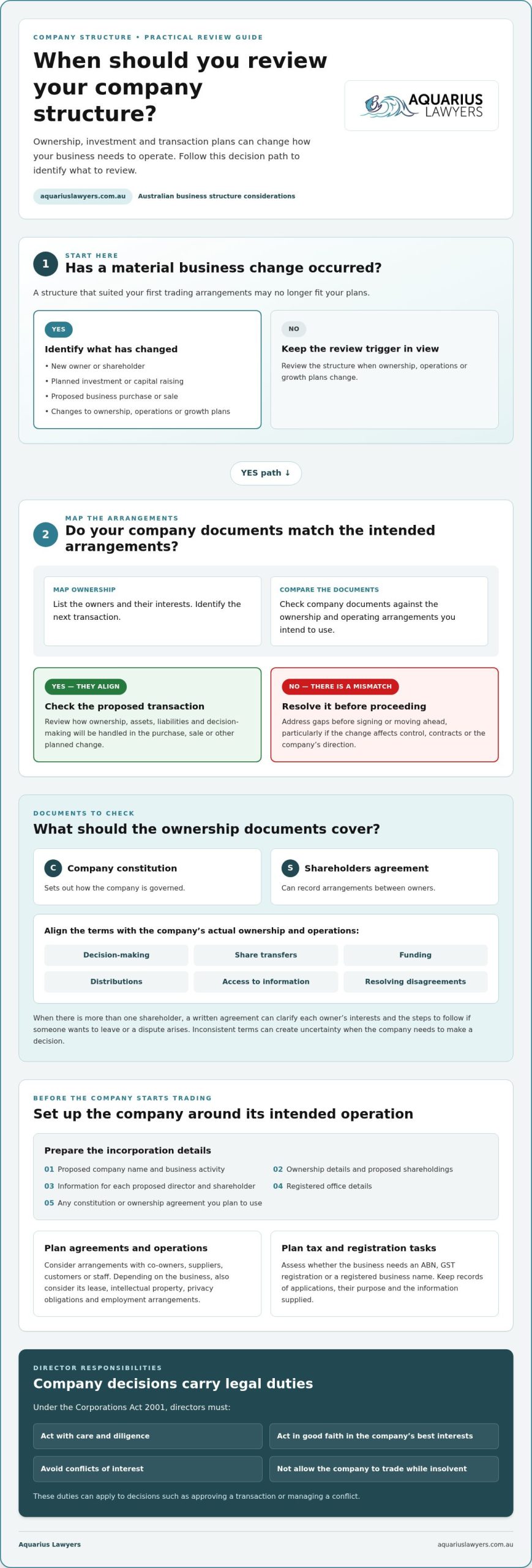
A structure that suited your first trading arrangements may no longer fit new owners, investment or a planned sale. Review the entity, ownership documents and business contracts whenever those arrangements change.
Business structuring and transaction support
Business structuring advice can compare formation options with the transaction you plan to make. Before bringing in an investor, map out who will own shares, how decisions will be made and what rights the investor expects. Corporate law focuses on a corporation’s interests and transactions, while business law also covers wider issues affecting owners and operators.
For a purchase or sale, review the proposed structure alongside the transaction documents. Check how ownership, assets, liabilities and decision-making will be handled, then identify any gaps before signing. This helps owners assess how the transaction may affect control and the company’s ongoing arrangements.
Choosing a business incorporation lawyer
How do you choose a business incorporation lawyer? Look for experience with company formation, ownership arrangements and the transactions your business expects to undertake. Ask how the advice will address your structure, contracts and decision-making, rather than treating incorporation as a form-filling exercise.
Give the lawyer a clear picture of your plans: who will own the business, whether you expect to raise capital, and whether a purchase or sale is on the horizon. A lawyer advising Australian businesses should explain the legal and practical implications in plain language, including where disputes could arise and how litigation might affect continuity.
Constitution and shareholders agreement coverage
What should a company constitution and shareholders agreement cover? A constitution sets out how the company is governed, while a shareholders agreement can record arrangements between owners. Consider decision-making, share transfers, funding, distributions, access to information and a process for resolving disagreements.
When a company has more than one shareholder, a written agreement can clarify each owner’s interests and the steps to follow if someone wants to leave or a dispute arises. Match the documents to the actual ownership and operating arrangements. Inconsistent terms can create uncertainty when the company needs to make a decision.
Review the structure when a material change occurs, such as a new shareholder, proposed capital raising or business acquisition. For capital raising, the Corporations Act 2001 (Cth), according to the Federal Register of Legislation, governs relevant disclosure requirements. The proposed deal structure and information provided to investors therefore matter.
Use a practical review sequence: list the owners and their interests, identify the next transaction, then compare company documents with the intended arrangements. If a planned change affects control, contracts or direction, resolve any mismatch before proceeding. Clear documents can help owners address disputes early and keep decisions focused on the company’s needs.
Business setup and incorporation legal services
Company setup involves more than lodging a registration. Legal advice can align your formation documents, ownership plans and agreements with the way you intend to operate. It can also help identify decisions to resolve before the company starts trading.
Setup and ongoing legal support
Registering a company yourself means handling the process without legal advice. A lawyer can advise on the proposed structure, review documents and identify legal issues that affect your plans. Ask what work is included, who will prepare each document and how you’ll receive updates. A clear scope makes it easier to coordinate incorporation with your other business decisions.
Directors also take on legal responsibilities. Under the Corporations Act 2001, directors must act with care and diligence, act in good faith in the company’s best interests, avoid conflicts of interest and not allow the company to trade while insolvent. Advice can explain how these duties apply to decisions such as approving a transaction or managing a conflict.
Legal considerations when starting a business
Before trading, map out the company’s activities, ownership and planned agreements. Identify arrangements needed with co-owners, suppliers, customers or staff, then ensure the terms reflect each party’s role. Depending on its operations, a business may also need to address its lease, intellectual property, privacy obligations and employment arrangements.
Plan tax and registration tasks alongside incorporation. Australian businesses have obligations to the Australian Taxation Office (ATO). Assess whether your activities require an ABN, GST registration or a registered business name. Keep a record of each application, its purpose and the information supplied to maintain consistent business records.
Incorporation information and documents
Prepare the proposed company name, business activity, ownership details and information for each proposed director and shareholder. Gather identification and contact details, proposed shareholdings, registered office details, and any constitution or ownership agreement you plan to use. Organising these materials helps ensure the registration reflects the company you intend to establish.
A lawyer can review the proposed structure, explain the company documents and assist with incorporation. They can also draft agreements and identify matters to resolve before trading, such as inconsistent ownership records or unclear arrangements between founders.
Defining the scope of legal work
Before engaging a lawyer, describe the work you need and the decisions still to be made. For example, clarify whether you need incorporation support, document preparation or advice on an issue affecting the company’s first transaction. Ask which documents the lawyer will prepare, what information you must provide and how the agreed work will be communicated.
ASIC handles company registration, while the company’s owners and directors remain responsible for making and documenting business decisions. Keep registration details, signed agreements and company records together. A clear record gives directors a practical reference when making decisions or updating the company’s arrangements.
Company incorporation and the difference between a sole trader and a company
Choosing between a sole trader structure and a company affects ownership, administration and how you document business decisions. Compare each option with your current work, future plans and the people who will hold rights in the business.
A sole trader runs the business personally, while a company operates through a registered entity with its own governance requirements. This distinction affects how you name the business in contracts, record decisions and organise ownership. For example, a consultant working alone may prefer a simpler structure, while co-owners planning to issue shares may need a company framework.
Australian companies generally have more corporate governance compliance requirements than sole traders. They also typically involve more setup and ongoing administration. Before incorporating, map the tasks each structure requires and decide who will maintain records, handle company decisions and track changes in ownership. Keep these practical obligations in mind alongside the business’s growth plans.
- Ownership: Record who owns the business and how that ownership may change.
- Decision-making: Set out who can approve major commitments, such as taking on a new contract.
- Administration: Identify the records and governance processes the structure requires.
- Future plans: Consider whether you expect new owners, investment or a sale.
Incorporation can provide a defined framework for adding shareholders and allocating ownership rights, but it does not remove the need for clear agreements. If two founders plan to contribute different expertise or assets, document their roles, shareholdings and decision-making arrangements before trading through the company. Clear terms give owners a practical process for resolving disagreements.
Intellectual property also needs deliberate attention. If a founder creates a brand, software or other business material before incorporation, identify who owns it and how the company may use it. Then align the relevant agreements and business records. This avoids uncertainty about ownership when the company enters a new contract, brings in an investor or prepares for a sale.
To compare structures, write down your current arrangement and the next business change you expect. A sole trader considering a co-owner, for example, should assess how the new person will gain rights and share responsibilities. A company planning an investment should examine its ownership records and governance documents. These steps help show whether the existing structure still fits the business.
Neither structure is automatically right for every Australian business. Assess the actual ownership, administration and transaction plans rather than choosing a company solely because it appears more formal. If the business changes direction, revisit the structure and related contracts before the change takes effect. That review can identify documents or decision-making processes that need updating.
Business establishment in Australia
Setting up an Australian business means planning its operations alongside its legal obligations. Start by listing the activities you’ll undertake, the people involved and the documents needed to trade. A retailer, for example, may need customer terms, supplier agreements and a premises lease. Similarly, product-focused ventures collaborating with technical specialists like formaqam.com.au for CAD design and prototyping must establish clear supply and IP agreements. A business hiring staff should also prepare employment documents that reflect the roles and working arrangements.
Map your tax and registration tasks early. Australian businesses have obligations to the Australian Taxation Office (ATO), so identify which registrations apply to your activities and entity. Consider whether you need an Australian Business Number, GST registration or business name registration. These are separate steps from incorporating a company. Seeking guidance from a tax specialist such as Stewart Private Accounting can help you navigate business tax deductions and regulatory compliance from the outset. Keep a record of each application, its purpose and the business details supplied.
Next, check the rules that apply to your operations. Australian businesses must consider privacy obligations under the Privacy Act, and privacy policies should align with the Australian Privacy Principles. If your business collects customer details through an online form, document what information it collects and how the policy explains its handling. Employment contracts must comply with the Fair Work Act and NSW regulations, so make those checks before staff begin work.
- Contracts: List the agreements needed with customers, suppliers, landlords and staff.
- Privacy: Review customer information practices against your policy and Australian Privacy Principles.
- Employment: Match each employment document to the role and working arrangement.
- Records: Keep registration details, signed agreements and key business decisions together.
Review a commercial lease carefully before committing to premises. In Sydney, the Retail Leases Act is among the NSW laws relevant to commercial leases. Have the lease examined for compliance, rent review terms and hidden liabilities. Record important dates and obligations in a central system so the business can track notices, reviews and required actions.
Commercial law advice can connect these documents with the way your business operates. For example, check that customer terms reflect the services you actually provide and that supplier agreements allocate responsibilities clearly. If your business changes its activities, review affected contracts and policies rather than assuming the existing wording still fits. The aim is a working set of documents that supports daily decisions and helps prevent avoidable disputes.
Before trading, prepare a simple compliance register listing each obligation, the person responsible and the relevant document. Include ATO matters, registrations, privacy policies, employment agreements and lease dates where applicable. Review it whenever the business adds staff, changes premises or introduces a new service. A commercial law review of your setup can help identify gaps before they become operational problems.
Aquarius Lawyers: Marine Law
Aquarius Lawyers is a natural next step for businesses operating in marine, fisheries or aquaculture industries. Its Marine Law, Fisheries Law and Aquaculture Law services address legal matters specific to those operations, while Commercial Law supports broader business issues.
Turn to the firm when a commercial decision involves a commercial fishing vessel, fisheries interests, an aquaculture licence or a related business agreement. Legal advice can help you understand issues affecting your operations and commercial assets, including an aquaculture licence transfer. The right support depends on the issue you need to resolve.
If your company setup connects with marine or fisheries activities, explain how it operates, who owns it and what decision you face. That context helps focus the legal discussion on your business needs. Contact Aquarius Lawyers to discuss your circumstances.
Put your company plans into action
Your next step is to turn your business plans into a clear set of decisions. Write down who will own the company, what you need it to do and which changes you expect next. Bring those priorities to a business incorporation lawyer who advises Australian businesses, so the advice can focus on the structure and documents your plans require.
Make the timing practical. Before you sign a major agreement, bring in a new owner or commit to a significant change, consider whether your company arrangements still support the decision. Addressing the legal pathway early can help you move forward with a clearer understanding of the issues and responsibilities involved.
Aquarius Lawyers can discuss the legal questions connected with your company setup and business plans. Take the next step when you’re ready to work through the decisions that matter to your business.
Contact Aquarius Lawyers about incorporation and move your plans forward with clarity.
Frequently Asked Questions
What does a corporate lawyer do?
A corporate lawyer advises on a company’s transactions, governance and legal obligations. For example, they may help structure a capital raising, review a proposed business acquisition or explain how directors’ duties relate to a decision. They can also assess disclosure requirements and shareholder interests when a company seeks investment. This advice focuses on the company’s legal position and the practical effects of a proposed transaction or operational change.
What does a small business lawyer do?
A small business lawyer helps you address legal matters that arise as you establish and operate a business. This can include reviewing supplier or customer contracts, advising on intellectual property protection and helping resolve a commercial dispute. For example, if a customer challenges an invoice, legal advice can clarify the contract terms and possible responses. The work should match the issue, whether it concerns a new agreement or an existing disagreement.
How much does it cost to incorporate a company with a Sydney lawyer?
The amount depends on the work included and the complexity of your proposed setup. A straightforward registration involves different tasks from a matter requiring tailored governance documents, negotiations between owners or advice on a planned transaction. Ask for a written quote that sets out the legal work and its scope. This gives you a clear basis for understanding what the quoted amount covers before instructing a lawyer.
What are the steps to register a proprietary limited company in Australia?
Start by deciding the proposed company name, who will own shares and who will act as director. Prepare the company details and decide whether to use a constitution or rely on replaceable rules. Then lodge the registration with ASIC. Once registered, organise the company’s records and assess which ATO, ABN, GST and business name registrations apply. Keep signed documents and registration details together for future company decisions.
What legal structure is best for a Sydney startup: sole trader, partnership, or company?
The suitable structure depends on who owns the business, how decisions will be made and what administration you can manage. A sole trader structure may suit an individual starting alone; a partnership may fit people operating together, provided their roles and arrangements are clear. A company can provide a formal framework for shareholders, with additional governance requirements. Compare these factors with your plans for ownership changes, investment and growth before choosing.
What tax, ABN, GST, and business name registrations are needed after incorporation?
Australian businesses have obligations to the ATO. Assess whether your activities require an ABN, GST registration or a registered business name, and record each application and the information supplied.
Disclaimer
Please note that legal rules change and this is not a substitute nor construed as legal advice. It is general information only.