Climate change is no longer a distant environmental variable in Australian fisheries management. It is a present and accelerating operational reality. Marine heatwaves, shifting stock distributions, ocean acidification, altered spawning patterns and increased frequency of extreme weather events are reshaping both wild capture fisheries and aquaculture operations. As ecological baselines shift, so too do legal expectations.
Australian fisheries law has traditionally focused on sustainability, stock conservation and ecosystem protection. Increasingly, however, climate adaptation is being embedded—explicitly and implicitly—into regulatory frameworks, licence conditions, harvest strategies and corporate governance standards. Fisheries participants must now consider whether their management systems, reporting processes and strategic planning adequately account for climate-driven change.
This article examines the evolving adaptation obligations under Australian fisheries law and outlines the legal and commercial implications for fishers, aquaculture operators and seafood enterprises.
Statutory objectives and ecologically sustainable development
At Commonwealth and State levels, fisheries legislation is generally underpinned by principles of ecologically sustainable development (ESD).
These objectives typically require decision-makers to:
- Ensure The Sustainability Of Fish Stocks
- Apply The Precautionary Principle Where Scientific Uncertainty Exists
- Protect Marine Ecosystems And Biodiversity
- Promote Long-Term Economic Viability Of Fisheries
- Consider Intergenerational Equity
Climate change directly affects each of these statutory objectives. Where stock productivity, distribution or recruitment patterns are altered by warming waters, regulators may be legally obliged to adjust management settings.
For licence holders, this means:
- Total Allowable Catch (TAC) Adjustments May Occur More Frequently
- Harvest Strategies May Incorporate Climate Risk Indicators
- Spatial Closures May Expand Or Shift
- Environmental Impact Assessments May Require Updated Climate Modelling
Climate adaptation is therefore not a separate regulatory regime; it is increasingly integrated into existing sustainability mandates.
Precautionary principle and scientific uncertainty
Climate change introduces heightened scientific uncertainty in fisheries science.
Under the precautionary principle, where there is risk of serious or irreversible environmental harm, lack of full scientific certainty must not be used as a reason to postpone protective measures.
In practical terms, this may justify:
- Conservative Catch Limits In The Face Of Uncertain Recruitment Projections
- Earlier Intervention In Declining Stock Indicators
- Restrictive Gear Modifications To Reduce Ecosystem Stress
- Temporary Closures During Marine Heatwave Events
Industry participants sometimes perceive precaution as regulatory overreach. However, statutory objectives frequently compel regulators to err on the side of conservation where climate impacts are uncertain.
Challenging such decisions through judicial review is difficult unless procedural fairness or statutory interpretation errors are evident.
Adaptive management in harvest strategies
Modern fisheries management increasingly relies on adaptive harvest strategies—frameworks designed to adjust automatically based on biological reference points.
Climate variability is influencing the design of these strategies, including:
- Incorporation Of Temperature Anomalies Into Stock Assessment Models
- Revised Biomass Reference Points Reflecting Shifting Productivity
- Shorter Assessment Cycles
- Real-Time Data Monitoring Requirements
Operators should expect more dynamic regulatory settings rather than static, multi-year allocations.
From a compliance perspective:
- Licence Holders Must Maintain Accurate Catch And Effort Reporting
- Data Integrity Becomes Critical In Informing Adaptive Adjustments
- Failure To Report Accurately May Distort Climate-Sensitive Management Decisions
Adaptive management reduces regulatory lag but increases compliance expectations.
Spatial management and shifting stock boundaries
As ocean temperatures change, fish stocks are migrating poleward or into deeper waters.
This raises complex jurisdictional and allocation issues, including:
- Overlapping State And Commonwealth Fisheries Boundaries
- Reallocation Of Quota Between Sectors
- Access Disputes Where Stocks Move Into Previously Closed Areas
- Indigenous Fishing Rights Considerations
Regulators may respond through:
- Revised Management Plans
- Spatial Closures To Protect Climate-Stressed Habitats
- Adjustment Of Quota Entitlements
Quota holders should be aware that while quota is a valuable statutory right, it remains subject to variation in accordance with legislative objectives.
Legal risk emerges where:
- Climate-Induced Shifts Significantly Reduce Stock Availability In A Licensed Area
- Management Adjustments Disproportionately Affect Particular Sectors
- Compensation Claims Are Considered Following Major Structural Reforms
Understanding the legal character of fishing entitlements is critical in assessing adaptation-related risk.
Aquaculture licensing and climate resilience
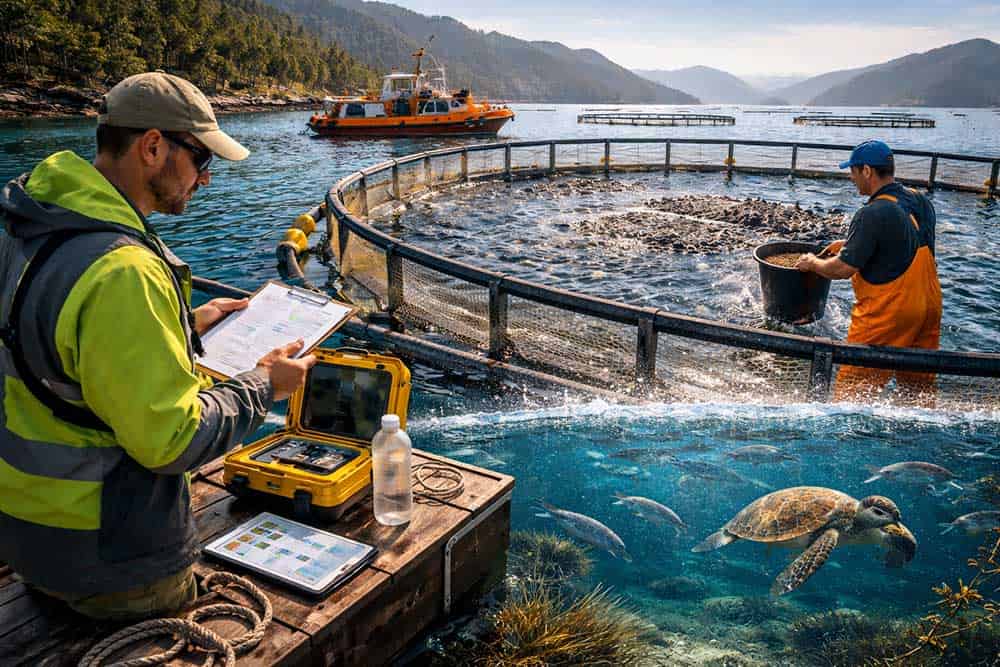
Aquaculture operators face direct climate exposure through:
- Marine Heatwaves
- Harmful Algal Blooms
- Reduced Dissolved Oxygen Levels
- Increased Storm Intensity
Licences and development approvals often include environmental performance conditions requiring operators to manage risks to surrounding ecosystems.
Climate adaptation obligations may arise through:
- Requirements To Update Environmental Management Plans
- Monitoring And Reporting Conditions Linked To Water Quality
- Infrastructure Resilience Standards
- Stock Density Controls During High-Temperature Events
Operators who fail to adapt infrastructure or management practices to foreseeable climate risk may face regulatory action if environmental harm results.
In extreme cases, authorities may vary or suspend licences to prevent environmental damage.
Environmental impact assessment and project approvals
New fisheries developments and aquaculture expansions are subject to environmental impact assessment (EIA) processes under State and Commonwealth law, including the Environment Protection and Biodiversity Conservation Act 1999 (Cth) (EPBC Act).
Climate considerations increasingly form part of assessment criteria, including:
- Projected Temperature Impacts Over The Project Life
- Cumulative Ecosystem Stress
- Emissions Associated With Infrastructure And Operations
- Resilience Of Proposed Sites
Failure to adequately consider climate risk in environmental impact documentation can expose approvals to legal challenge.
Proponents should ensure:
- Climate Modelling Is Incorporated Into Baseline Assessments
- Adaptive Management Measures Are Clearly Articulated
- Long-Term Environmental Monitoring Commitments Are Robust
Climate resilience is becoming a core component of defensible project approvals.
Marine protected areas and climate refugia
Climate adaptation strategies often include expansion or reconfiguration of marine protected areas (MPAs) to safeguard biodiversity and climate refugia.
For commercial fishers, this can result in:
- Reduced Access To Traditional Fishing Grounds
- Increased Operational Costs Due To Displacement
- Gear Modification Requirements In Buffer Zones
While MPAs are typically established following consultation processes, statutory conservation objectives may prevail over sectoral economic interests.
Fishers should:
- Engage Early In Consultation Processes
- Provide Economic Impact Data
- Seek Clarity On Transitional Arrangements
Participation at policy formation stage is more effective than challenge after declaration.
Corporate governance and climate disclosure
Larger seafood enterprises are increasingly subject to corporate governance frameworks requiring climate risk disclosure.
Directors’ duties under the Corporations Act 2001 (Cth) require reasonable care and diligence in identifying material risks to the business.
Climate-related fisheries impacts may constitute:
- Operational Risk
- Supply Chain Risk
- Asset Impairment Risk
- Regulatory Risk
Boards should ensure:
- Climate Risk Is Incorporated Into Enterprise Risk Management Systems
- Scenario Analysis Considers Stock Variability
- Insurance Coverage Is Reviewed For Climate-Related Events
- Public Disclosures Are Accurate And Not Misleading
Inadequate disclosure or risk oversight may expose directors to scrutiny from regulators or investors.
Indigenous fisheries and cultural rights
Climate change also intersects with Indigenous fishing rights and cultural practices.
Shifting species distribution may affect:
- Traditional Harvest Areas
- Cultural Species Availability
- Co-Management Arrangements
Regulatory adaptation measures must consider native title rights and statutory cultural fishing entitlements.
Engagement with Traditional Owners is essential where adaptation measures alter access or management frameworks.
Failure to consult appropriately may expose regulatory decisions to legal challenge.
Insurance and financial risk
Climate-related fisheries disruptions can trigger:
- Business Interruption Losses
- Stock Mortality Claims
- Infrastructure Damage
However, insurance policies may exclude gradual environmental change or impose strict notification requirements.
Enterprises should:
- Review Coverage In Light Of Increased Marine Heatwave Frequency
- Confirm Whether Government-Imposed Closures Trigger Business Interruption Cover
- Integrate Insurance Review Into Adaptation Planning
Financial resilience forms part of broader climate adaptation strategy.
Strategic adaptation planning
Effective adaptation is both operational and legal.
Seafood enterprises should consider:
- Diversification Of Target Species Where Biologically Feasible
- Geographic Diversification Of Operations
- Investment In Climate Monitoring Technology
- Participation In Cooperative Research Initiatives
- Review Of Contractual Force Majeure Clauses To Address Climate Events
- Engagement In Harvest Strategy Consultations
Proactive adaptation demonstrates regulatory good faith and reduces enforcement risk.
Regulatory evolution and future reform
Australian fisheries law is likely to continue evolving in response to climate pressures.
Future developments may include:
- Formal Climate Adaptation Objectives Embedded In Legislation
- Mandatory Climate Risk Reporting For Larger Operators
- Greater Integration Between Fisheries And Marine Spatial Planning Regimes
- Enhanced Ecosystem-Based Management Frameworks
Industry participants who anticipate reform rather than react to it will be better positioned to influence outcomes.
Conclusion
Climate change is transforming the biological and regulatory landscape of Australian fisheries. Adaptation obligations arise not from a single statute but from the cumulative effect of sustainability objectives, precautionary decision-making, licensing conditions, environmental assessment requirements and corporate governance standards.
For fishers and aquaculture operators, climate resilience is no longer solely an environmental concern — it is a legal and commercial imperative.
Embedding adaptive management, robust reporting systems, infrastructure resilience and strategic engagement into business planning is essential. As marine conditions continue to shift, regulatory frameworks will follow.
The future of Australian fisheries will depend not only on ecological sustainability but on legal preparedness and adaptive governance