
A blocked shared driveway or a drainage route being used beyond its recorded purpose can quickly put neighbours at odds. If you’re dealing with easement disputes nsw, start by establishing what the registered right allows before deciding how to respond. Assumptions can escalate a disagreement or cause you to overlook relevant evidence.
You may be unsure which documents to check, what to do if access is restricted, or whether another owner’s use goes beyond the easement’s scope. This guide explains how to identify the terms and land affected, organise useful evidence and take sensible early steps. It also compares negotiation, mediation and legal action, so you can consider a pathway that fits your rights, risks and objectives.
Key Takeaways
- Check the registered easement terms to understand which land benefits, which land is burdened and what use is permitted.
- For easement disputes nsw, connect the issue to clear evidence, such as relevant plans, dated photographs and correspondence.
- Compare direct discussion, lawyer-assisted negotiation and mediation before deciding whether formal legal action may be appropriate.
- The right next step depends on the easement, available evidence, parties involved and outcome you’re seeking.
Easement Disputes in NSW: What the Registered Right Actually Allows
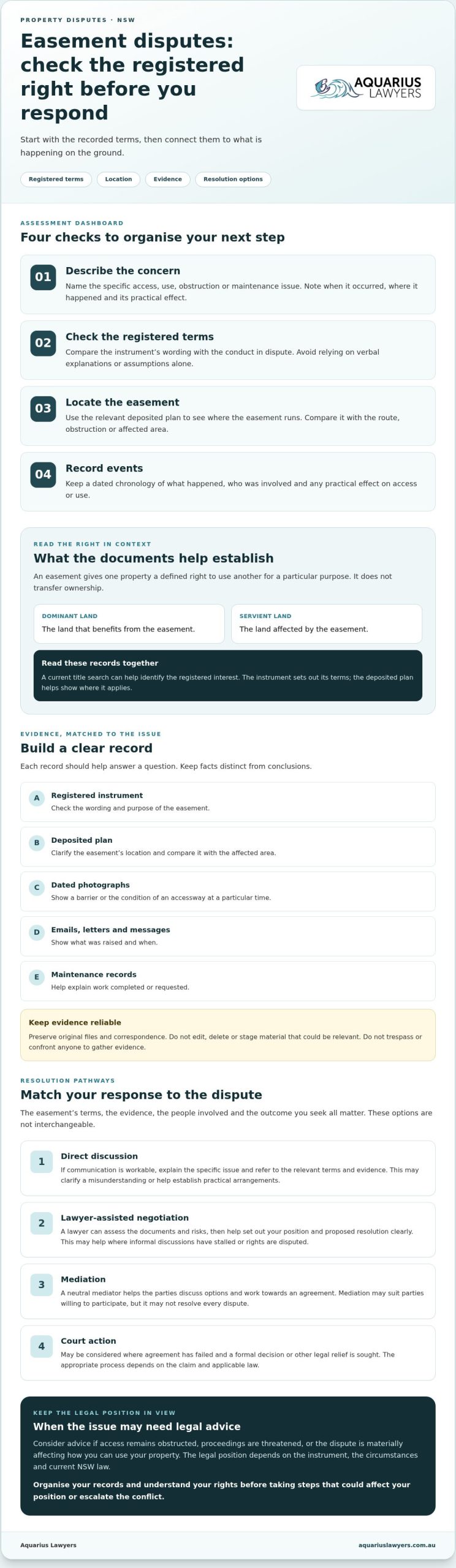
An easement gives one property a defined right to use another property for a particular purpose. It doesn’t transfer ownership. The land that benefits is the dominant land; the land affected by the right is the servient land. For a plain-language overview of these concepts, see this explanation of an easement. The registered terms are the starting point for working out the scope of the right, rather than either owner’s assumptions.
Disagreements can arise when an owner blocks a shared driveway, disputes how an access route may be used, or argues that use has gone beyond the easement’s purpose. Drainage rights can also lead to disputes, as can questions about maintaining the affected area. The practical impact matters, but it needs to be considered alongside the recorded right.
Which documents help explain an easement in NSW?
Start with a current title search, the registered instrument that records the easement, and the relevant deposited plan. The title search can help identify the registered interest; the instrument sets out its terms, while the plan helps show where it applies. Read these documents together. For example, if the dispute concerns a driveway, compare the route shown on the plan with the location of the obstruction and the wording of the instrument. A general description or informal arrangement may not settle what use is permitted.
If the documents are unclear or the parties interpret them differently, get legal advice before taking steps that could escalate the dispute. Reviewing the documents alongside your objectives can help clarify your rights, risks and practical options. Read about property legal services for support with a property issue.
How to Assess an Easement Dispute in NSW Before Taking Action
Before you challenge a neighbour’s use or respond to an allegation, separate what you know from what you suspect. A title entry is important, but it may not resolve a disagreement about what the instrument means or whether particular conduct falls within its scope. In easement disputes nsw, a clear record helps connect the written right to what is happening on the ground.
Work through the issue in order:
- Describe the concern: Identify the specific access, use, obstruction or maintenance issue, and when it occurred. For a blocked route, note where the obstruction is and how it affects access.
- Check the registered terms: Compare the instrument’s wording with the conduct in dispute. Don’t rely on verbal explanations or assumptions alone.
- Locate the easement: Use the relevant plan to understand where it runs, then compare it with the route or affected area being used.
- Record events: Keep a dated chronology of what happened, who was involved and any practical effect on access or use.
What evidence can clarify access, use or obstruction?
Each record should help answer a question. The registered instrument addresses wording; the plan helps clarify location; dated photographs may show a barrier or the condition of an accessway at a particular time. Emails, letters and messages can show what was raised and when. Maintenance records may help explain work completed or requested. Preserve original files and correspondence, and don’t edit, delete or stage material that could be relevant.
Keep facts distinct from conclusions. “A vehicle was parked across the entrance on this date” is more useful than assuming the other owner intended to block access. Don’t trespass or confront anyone to gather evidence. The legal position depends on the instrument, the circumstances and current NSW law. If you need help assessing documents and evidence, property law advice can help clarify proportionate next steps.
Resolving an Easement Dispute in NSW: Compare Your Next Steps
The right resolution pathway depends on what the easement permits, the evidence available, the people involved and the outcome you’re seeking. A measured approach to easement disputes nsw starts by matching your response to the problem, rather than escalating before the facts are clear.
- Direct discussion: If communication is workable, explain the specific issue and refer to the relevant terms and evidence. This may clarify a misunderstanding or help you agree on practical arrangements.
- Lawyer-assisted negotiation: A lawyer can assess the documents and risks, then help set out your position and proposed resolution clearly. This can be useful where informal discussions have stalled or the parties dispute their rights.
- Mediation: A neutral mediator helps the parties discuss options and work towards an agreement. Mediation may suit parties willing to participate, but it may not resolve every dispute.
- Court action: Court proceedings may be considered where agreement has failed and a formal decision or other legal relief is sought. The appropriate process depends on the claim and applicable law.
These options are not interchangeable. The easement’s terms, the conduct in dispute and the remedy sought all matter. Get advice on your legal position before relying on a particular statutory pathway.
When should you get legal advice about an easement dispute?
Seek advice if access remains obstructed, proceedings are threatened, or the dispute is materially affecting how you can use your property. Aquarius Lawyers can assess the registered documents, available evidence and your objectives, then explain practical resolution options through its property law service. Organise your records and get advice before taking steps that could affect your rights or escalate the conflict. Discuss your property dispute with Aquarius Lawyers.
Take a Clear, Practical Next Step
In easement disputes nsw, the registered instrument and plan provide the starting point, but their terms must be considered alongside the location, evidence and conduct in question. Keep a clear record, avoid acting on assumptions and choose a resolution pathway that fits your circumstances. Direct discussion or mediation may suit some disputes; others may call for legal advice or formal action.
Aquarius Lawyers brings more than 20 years of legal and business experience to property law, litigation and mediation matters. Advice grounded in your documents, evidence and objectives can help clarify your rights and identify proportionate next steps.
Discuss your property dispute with Aquarius Lawyers. With the relevant information and a considered plan, you can move towards a clearer resolution.
Frequently Asked Questions
What is an easement dispute in NSW?
An easement dispute is a disagreement about a recorded right to use or access another person’s land for a specific purpose. For example, owners may disagree about whether a vehicle can use a right of way, whether access is obstructed, or who should maintain an affected area. In easement disputes NSW, the registered instrument and plan help establish the right’s terms and location.
How do I find out what an easement allows in NSW?
Review a current title search, the registered easement instrument and the relevant deposited plan. The instrument records the terms, while the plan helps show the area affected. Read them together, as wording and location both matter. If the terms are unclear or the other owner interprets them differently, get legal advice before treating an assumption or informal arrangement as definitive.
Can I resolve an easement dispute without going to court?
Yes. Depending on the dispute and the parties’ willingness to engage, you may be able to resolve it through direct discussion, lawyer-assisted negotiation or mediation. These options can help clarify the disagreement and explore practical arrangements. Keep the discussion focused on the registered right, relevant evidence and the outcome you seek. If agreement isn’t reached, legal advice can help you assess formal options.
What should I do if my neighbour blocks an easement?
Check the registered terms and plan, then record what is blocked, where and when. Keep dated photographs and relevant correspondence, and note how the obstruction affects access. Avoid trespassing, removing barriers or escalating a confrontation. Raise the issue calmly and in writing if appropriate. If access remains blocked or your rights are disputed, seek legal advice about proportionate next steps.
Disclaimer
Please note that legal rules change and this is not a substitute nor construed as legal advice. It is general information only.